
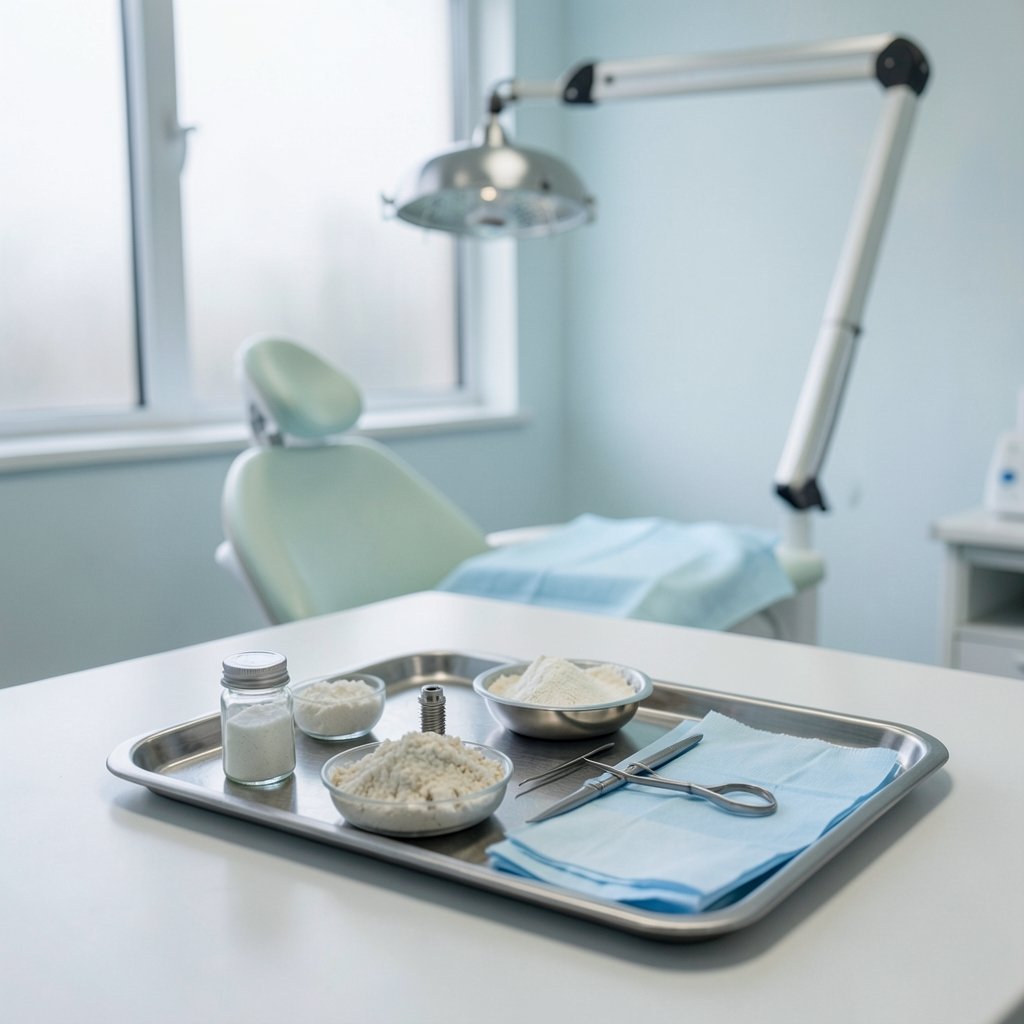
What happens when a tooth comes out and the jawbone underneath quietly starts to shrink? That question sits at the center of nearly every dental bone graft conversation. A dental bone graft is a procedure that places graft material into a spot where jawbone is missing or too thin. Most of the time, the goal is simple: build enough solid bone to hold a dental implant, or rebuild what was lost after an extraction or gum disease.
It sounds dramatic. In practice, it has become routine. Still, patients deserve a clear picture of what goes in, how long it takes, and where the honest uncertainties lie.
Why Jawbone Disappears in the First Place
Bone is lazy in a very efficient way. It rebuilds itself where it is used and melts away where it is not. Once a tooth is gone, the bone that once anchored it stops receiving chewing forces. The result is resorption — a gradual loss of bone height and width that can begin within months of an extraction and continue for years.
Gum disease adds another path to the same destination. Chronic infection erodes the bone that supports teeth, sometimes leaving a ridge too narrow for an implant even while teeth are still present. Trauma, cysts, and long-term denture wear can do similar damage.
The practical consequence is straightforward: a dental implant needs a certain volume of healthy bone to sit in. When that volume is not there, grafting is how clinicians create it.
The Four Main Types of Graft Material
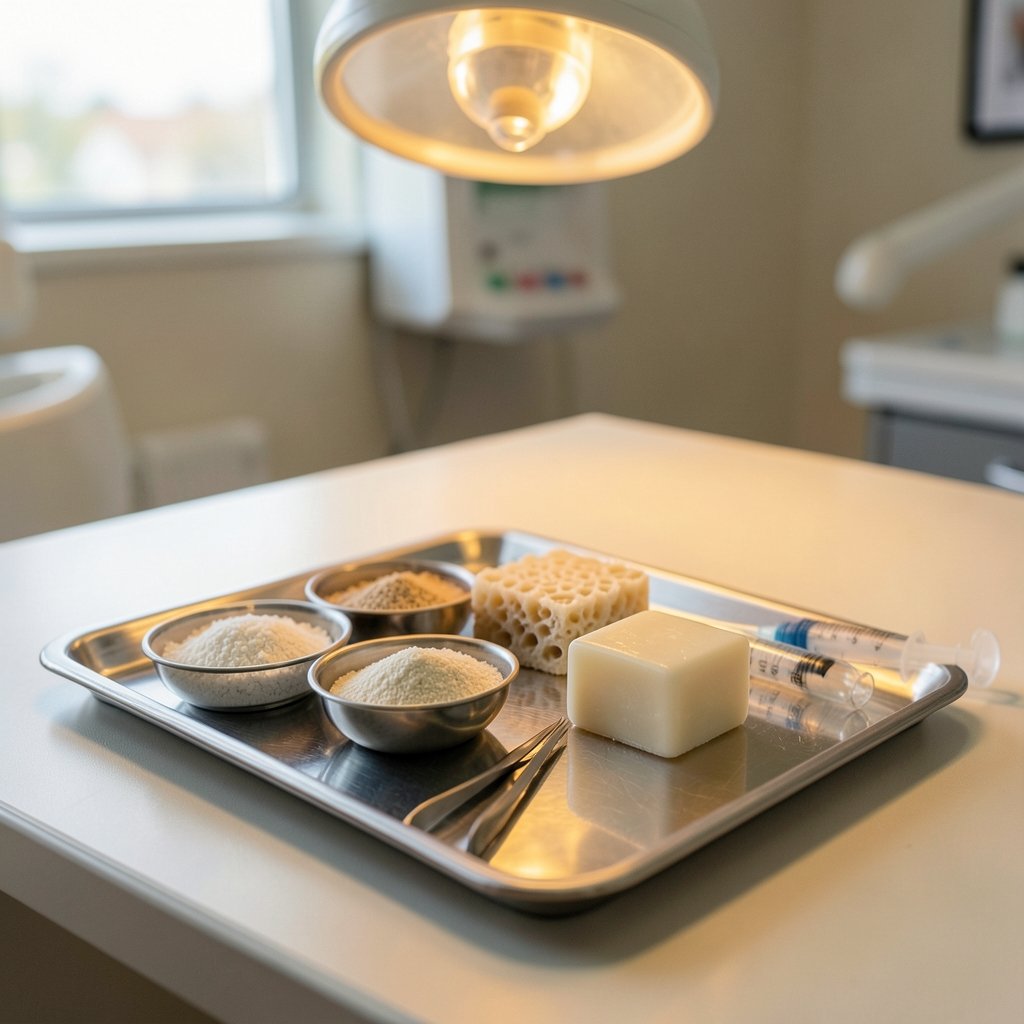
Graft materials are classified by where they come from. Each has trade-offs, and no single option wins in every situation.
| Graft type | Source | Typical strengths | Typical drawbacks |
|---|---|---|---|
| Autograft | The patient’s own bone | Living bone cells; strong bone-forming potential | Requires a second surgical site; extra discomfort |
| Allograft | Donor bone, usually processed and freeze-dried | No second surgical site; widely available | Very low but non-zero disease transmission risk |
| Xenograft | Usually bovine bone mineral | Slow, stable volume maintenance | Does not carry living cells; longer turnover |
| Alloplast | Synthetic materials such as hydroxyapatite or bioactive glass | Predictable supply; no donor tissue | Variable bone-forming response |
Autograft is often described as the gold standard because it brings living cells and growth factors along with structure. That advantage comes at a cost: harvesting bone from the chin, jaw, or hip means a second wound and a second recovery. Many patients and clinicians choose an allograft or xenograft instead to avoid that.
Here is where honesty matters. Reviews comparing materials often find too few high-quality head-to-head trials to crown a winner. In real practice, the choice tends to follow the site, the amount of bone needed, the healing time available, and clinician preference more than any universal “best” material.
Socket Preservation: Grafting Right After Extraction
The most common bone graft is also the least dramatic. When a tooth is removed and an implant is planned for later, the clinician may fill the fresh socket with graft material and cover it. This is called ridge preservation or socket preservation.
The logic is preventive. Leaving a socket to heal on its own leads to measurable bone loss in height and width. Grafting the socket reduces that loss, which can make a later implant simpler or even possible without a second, larger graft. Systematic reviews, including a Cochrane review updated in 2018, support a benefit from ridge preservation compared with unassisted healing, though the size of the effect and the ideal material remain debated.
A practical point patients often miss: socket preservation is far easier, cheaper, and less uncomfortable than rebuilding a collapsed ridge a year later. When an implant is even a possibility down the road, asking about it at the time of extraction is worth the conversation.
Sinus Lifts: When the Upper Back Jaw Runs Short
The upper back jaw has a neighbor problem. The maxillary sinus sits just above the tooth roots, and when those roots are lost, the sinus floor can drop while the ridge shrinks from below. The gap between them narrows until an implant has nowhere safe to sit.
A sinus lift, or sinus floor elevation, solves this by lifting the sinus membrane and placing graft material beneath it. Two approaches dominate:
- The lateral window approach. A small window is made in the side of the jaw to access the sinus. This method is generally credited to Tatum in the mid-1970s and was published by Boyne and James in 1980. It allows a large volume of graft and is used when significant height is needed.
- The crestal approach. Instruments are passed up through the implant site itself to push the membrane upward. This approach is associated with Summers in 1994. It is less invasive but suits smaller gains in bone height.
Membrane perforation is the complication clinicians watch for most closely during these procedures. Most perforations are managed without long-term harm, but they can change the plan mid-surgery.
What the Procedure Actually Feels Like
For most grafting, the area is numbed with local anesthesia. Larger grafts, particularly block grafts or sinus work, may involve sedation. Patients typically feel pressure and movement rather than pain during the procedure itself.
Afterward, the first few days bring swelling and mild discomfort, managed with standard pain relievers. The more demanding part is the discipline: no smoking, no straws, no vigorous rinsing, and careful eating to protect the graft site. Smoking deserves special mention because it is one of the most consistent risk factors for graft failure and implant loss. Clinicians can often tell within weeks which patients protected their graft.
The Healing Timeline, Honestly
Graft consolidation and remodeling take months, not weeks. A common range is roughly three to six months before implant placement, with longer waits for large sinus grafts or block grafts. These figures are approximate and shift with the site, the material, and the patient.
What happens during that time is not inert. The graft acts as a scaffold. The body breaks it down slowly while laying down new bone, a process called remodeling. Xenografts tend to turn over slowly, which is why they hold volume well but take longer to convert. Autografts and some allografts move faster.
Patients sometimes worry that a graft “didn’t work” because a follow-up scan at six weeks shows the material still visible. That is expected. The material is supposed to be there early on.
Risks and Realistic Expectations
No surgical procedure is risk-free, and grafting is no exception. The main risks include:
- Infection at the graft site.
- Graft failure or resorption, where the material does not integrate as hoped.
- Membrane perforation, particularly in sinus lifts.
- Wound dehiscence, where the gum tissue opens over the graft.
- For allograft, a very low but non-zero risk of disease transmission, reduced by donor screening and processing.
In the United States, bone graft materials are regulated by the FDA as medical devices or biologics depending on the product, and human tissue products fall under 21 CFR Part 1271. That framework exists precisely because donor tissue carries theoretical risk, however small.
The realistic expectation is this: most grafts succeed, most patients heal without incident, and the ones that fail usually fail for identifiable reasons — infection, smoking, poor blood supply, or a membrane that could not be repaired.
Practical Tips That Actually Help
A few habits make a measurable difference, and a few common mistakes undermine otherwise good surgery.
Do ask about the plan for the extraction before it happens. Patients who discuss grafting at the extraction appointment avoid the harder conversation later.
Do not smoke. This is the single most repeated piece of advice in graft care, and it is repeated because it matters.
Do not judge the graft by how it looks or feels. Graft sites often look unremarkable while significant healing is underway beneath the surface.
Do follow the soft-food rules longer than feels necessary. Pressure on a maturing graft can compromise it.
Do keep every follow-up appointment. Small problems caught early are manageable; the same problems caught late are not.
For readers comparing hardware decisions in other areas of life, the same principle applies — fit and function beat marketing claims. That logic shows up in guides like open ear earbuds vs bone conduction which actually fits your needs, where the right answer depends entirely on the user’s situation rather than a universal winner.
How Grafting Fits Into a Bigger Treatment Plan
A bone graft is rarely the goal in itself. It is a step toward something: an implant, a bridge, a denture that fits properly, or simply preserving a ridge so future options stay open.
That framing changes how patients should think about cost and timing. A graft adds a procedure, a healing period, and expense. It also prevents a worse problem. A collapsed ridge can turn a straightforward implant into a complex reconstruction, or rule implants out entirely.
The same decision-making pattern appears in consumer technology, where a small upgrade now can save a much larger replacement later. Comparisons like Backbone Pro vs Kishi V3 vs GameSir G8: 2027 workflow guide – occcy show how choosing the right foundation early avoids compounding costs down the line. Dental planning works the same way.
There is also a repair analogy that fits well. Just as auto dent removal service paintless repair can cannot fix depends on how much structure remains intact, whether a ridge can be rebuilt with a simple graft or needs a block graft depends on how much bone is left. Small defects are forgiving; large ones are not.
And for anyone weighing equipment choices with long-term consequences, the reasoning in Xbox nano controller vs backbone vs razer actually matters mirrors the graft decision: the option that fits the actual use case beats the one with the best reputation.
Questions to Ask Before Saying Yes
Patients who ask good questions get better care. A short list worth bringing to a consultation:
- How much bone is missing, and how was that measured?
- Which graft material is being proposed, and why that one?
- Is a sinus lift needed, and which approach will be used?
- How long until an implant can be placed?
- What happens if the graft fails?
- What does the total timeline and cost include?
None of these questions are confrontational. They are the questions a careful clinician expects.
Conclusion
A dental bone graft is a rebuild job on the foundation of the mouth. It fills gaps that extractions, gum disease, and time create, and it exists mostly to keep future options open — especially implants. The materials vary, the healing takes months, and the evidence on which material is best remains genuinely unsettled. What is not unsettled is the basic logic: bone lost is easier to prevent than to replace, and a graft done at the right moment is usually simpler than one done after a ridge has collapsed.
For patients facing an extraction or an implant plan, the most useful move is a direct conversation about bone volume before anything is removed. Ask what is missing, ask what will be placed, and ask how long the wait will be. The answers will tell you more than any brochure.
Frequently Asked Questions
How long does a dental bone graft take to heal?
Graft consolidation and remodeling typically take several months before an implant can be placed. A common range is roughly three to six months, with longer waits for large sinus grafts or block grafts. Timelines vary by site, material, and individual healing.
Is a dental bone graft painful?
Most grafting is done under local anesthesia, so patients feel pressure rather than pain during the procedure. Afterward, swelling and mild discomfort for a few days are typical and are managed with standard pain relievers.
What is the difference between an autograft and an allograft?
An autograft uses the patient’s own bone, usually harvested from the chin, jaw, or hip, and brings living cells to the site. An allograft uses processed donor bone, which avoids a second surgical site but carries a very low, screened risk of disease transmission.
Can a dental bone graft fail?
Yes, though most succeed. Failure can result from infection, smoking, poor blood supply, or a wound that opens over the graft. Sinus lifts carry an additional risk of membrane perforation, which is usually manageable when identified during surgery.
Do I always need a bone graft after a tooth extraction?
No. Grafting is recommended when bone loss would complicate a future implant or change the treatment plan. Ridge preservation reduces bone loss compared with unassisted healing, so it is often discussed when an implant is planned later.
How much bone do you need for a dental implant?
It depends on the implant type and location, and on how the clinician measures the site. In the upper back jaw, the sinus floor often limits available height, which is why a sinus lift may be combined with grafting.



