
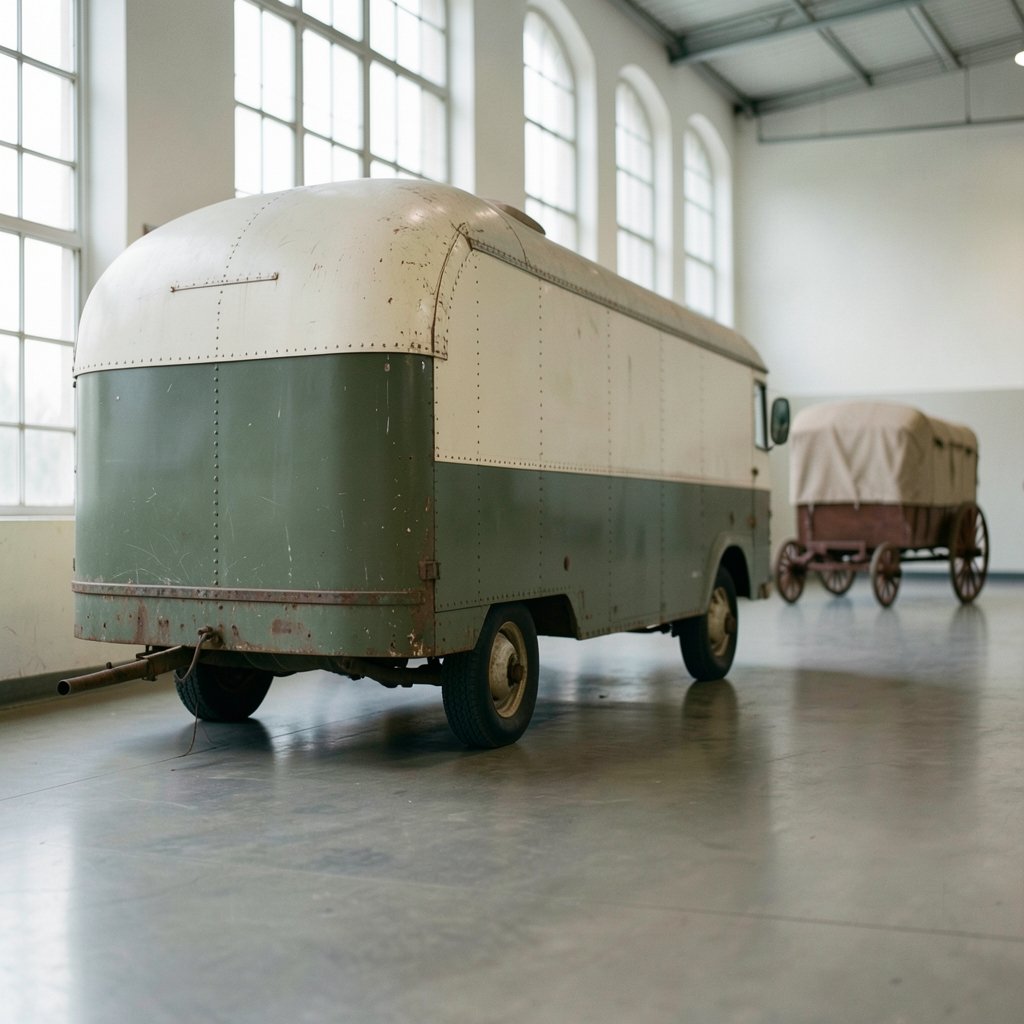
What do you picture when you hear the word “Conestoga”? Most people see a canvas-covered pioneer wagon rolling west. But say “Conestoga trailer” to a trucking historian, and a very different image appears: a bulbous, drop-frame semi-trailer with a rounded nose and a belly that nearly scrapes the pavement. Same name, two completely different machines. That confusion is the single biggest trap for anyone researching this topic, and it is where any honest explanation has to start. (Mass effect 5 trailer leak bioware closure claims whats)
This article untangles the two meanings, explains what made the trailer design distinctive, and gives readers a practical way to tell solid information from recycled guesswork.
Two Machines, One Borrowed Name
The Conestoga wagon was a heavy freight wagon built in southeastern Pennsylvania, in the Conestoga River valley region of Lancaster County. It was used mainly from roughly the mid-eighteenth to the mid-nineteenth century and was designed to haul cargo, not families. Its curved bed, arched canvas cover, and boat-like profile are the silhouette most people associate with westward migration.
The Conestoga trailer is a twentieth-century semi-trailer style. It typically features a rounded, drop-frame or “belly” shape, with a curved nose and a low-slung lower deck. It belongs to the era of motor trucking, not horse-drawn freight.
The name connection is a borrowing, not a lineage. The wagon’s fame made “Conestoga” a shorthand for heavy hauling, and later designers reached for that association. Anyone who states flatly that the trailer “descends from” the wagon is making a claim the evidence does not clearly support.
What Actually Defines a Conestoga Trailer
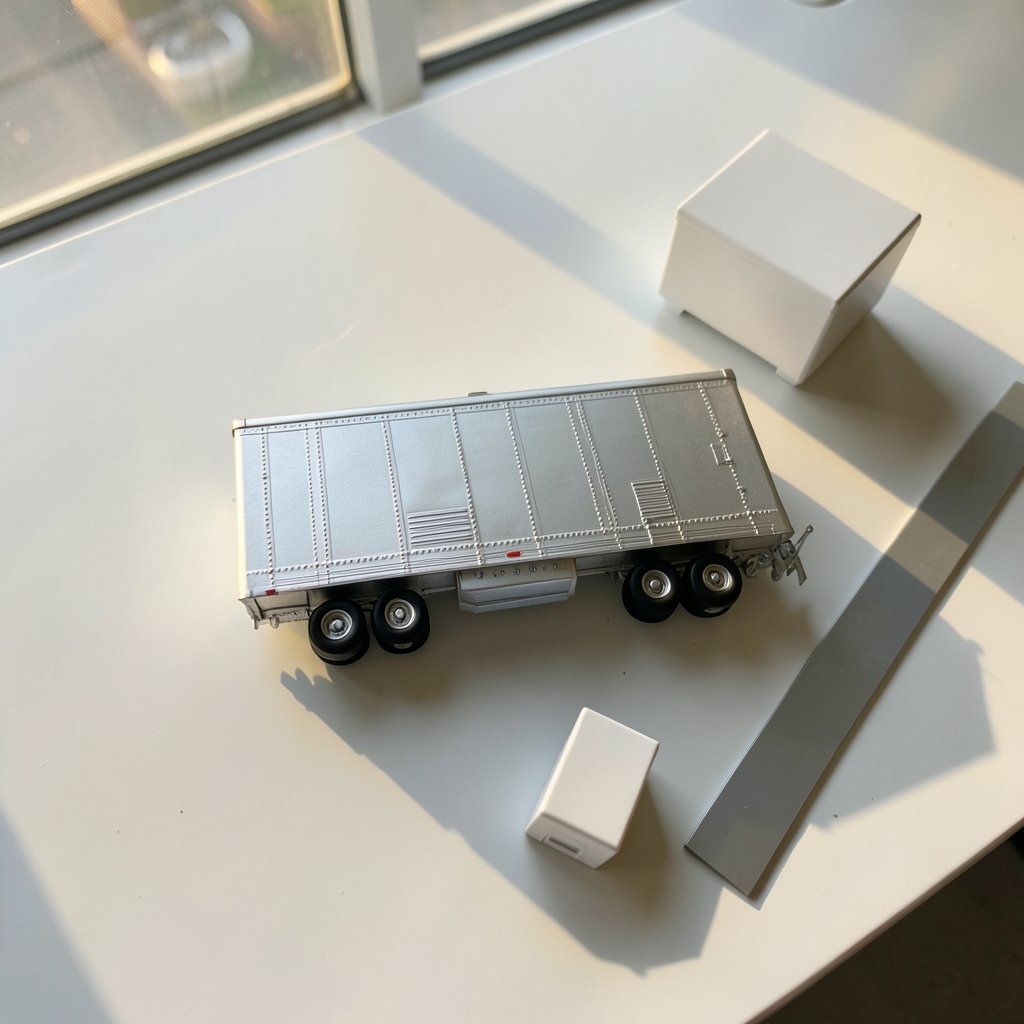
The defining features are structural, not decorative. In practice, the design is recognized by a combination of traits:
| Feature | What It Looks Like | Why It Mattered |
|---|---|---|
| Rounded or curved nose | A smooth, bulbous front rather than a flat wall | Reduced wind resistance at highway speed |
| Drop-frame or belly profile | A lower deck between the axles | Extra interior height without exceeding legal overall height |
| Curved side panels | A barrel-like cross-section | Added stiffness to thin body panels |
| Low load floor | Cargo sits closer to the road | Easier loading and a lower center of gravity |
The drop-frame idea is the clever part. By lowering the floor between the axles, builders could create more usable cubic capacity while staying inside height limits set by road regulations. For haulers moving light, bulky goods, that extra volume translated directly into fewer trips.
One caution for researchers: terminology varies. Some sources use “Conestoga” as a brand name, others as a generic style label, and still others apply it loosely to any drop-deck van. It is worth checking which sense a given source means before treating its claims as universal.
Why the Name Is So Hard to Pin Down
Here is the honest state of the record. The broad outline is clear, but the specifics are murky.
Several details that people repeat confidently are not well established. Exact introduction dates, the first manufacturer to use the name, and whether it was ever a registered trademark are all points where sources diverge or stay silent. A sales page from a trailer company is not a reliable historical citation, and many of the pages that rank for this term are exactly that.
The practical approach is to sort sources by type before trusting them:
- Manufacturer sales pages should be avoided as historical evidence. They are marketing, not documentation.
- Trade-press archives are the strongest source for dated claims about trailer designs and model years.
- Museum and historical-society pages are the best source for the wagon’s origins and the name’s roots.
- General encyclopedia entries are useful for orientation but often thin on twentieth-century trailer specifics.
A reader who checks source type first will avoid most of the misinformation on this topic. That habit pays off well beyond trucking, too. The same skepticism is useful when sorting out which state quarters are worth money or which rare quarters actually hold value, where hype routinely outruns evidence.
The Wagon Behind the Word
To understand why the name stuck, it helps to know what the original Conestoga wagon actually was.
It was a freight vehicle. Its curved bed kept cargo from shifting on rough roads, and its wide tires helped it bear heavy loads. Teams of horses or mules pulled it, often in long freight trains along established routes. It was expensive, heavy, and built for commerce rather than for families heading west.
That commercial identity is the key. “Conestoga” became associated in the public mind with serious hauling capacity. When motor carriers later wanted a name that signaled bulk and capability, the word was available and already loaded with meaning.
The wagon’s own history deserves a careful source, since popular retellings tend to blur freight wagons with the lighter prairie schooners used by settlers. They were not the same vehicle. (Shein coupon codes they really work find valid ones)
How the Trailer Fit Into Mid-Century Trucking
The mid-twentieth century was a period of rapid experimentation in trailer design. As highways improved and trucking competed harder with rail, builders looked for every advantage in capacity, weight, and fuel economy.
The Conestoga-style van fit that moment. Its rounded body was aerodynamically friendlier than a flat slab at a time when horsepower was limited and fuel costs mattered. Its drop-frame layout squeezed more volume out of the same legal envelope. And its curved panels were stiff enough to allow lighter construction.
Those advantages came with trade-offs. Curved panels are harder and more expensive to repair than flat ones. A drop-frame floor can complicate loading with forklifts. And the low belly limits ground clearance on rough surfaces. These are the kinds of practical details that rarely make it into glossy descriptions but matter enormously to anyone operating equipment.
For readers who enjoy tracing how design choices ripple outward, the same lesson shows up in consumer goods. A product’s specs on paper and its performance in daily use are often two different stories, whether the subject is a trailer, a discount code that looks too good to be true, or a piece of outdoor gear tested far from a showroom.
Common Mistakes People Make When Researching This Topic
A few errors come up again and again. Knowing them in advance saves time.
Assuming the trailer is a direct descendant of the wagon. The name is borrowed. The engineering is not.
Treating any rounded trailer as a Conestoga. Plenty of vans have curved noses. The term usually implies the drop-frame, belly-style profile as well.
Trusting the first search result. Many top-ranking pages are sales content or thin summaries that repeat each other’s errors.
Confusing brand and style. If a source treats “Conestoga” as a specific company’s product line, check whether other sources use it generically.
Skipping the date question. Undated claims about when a design appeared are close to useless. Look for a year and a source that would plausibly know it.
Where the Design Went
The Conestoga trailer’s influence outlasted its own production, whatever that production looked like in detail. The core ideas, a rounded body for airflow and a lowered floor for volume, became standard thinking in trailer design. Modern dry vans and refrigerated trailers still wrestle with the same trade-offs between cube, weight, and durability.
The name itself has faded from everyday use. Most working drivers today would not recognize it, and that is a useful reminder: industry vocabulary turns over quickly, and terms that once described a whole category can shrink into historical footnotes.
For anyone writing or researching in this space, the responsible move is to describe the design features plainly and flag the uncertain parts as uncertain. That is more useful than a confident narrative built on sand.
Practical Tips for Buyers and Enthusiasts
If the goal is evaluating an actual trailer rather than reading history, the priorities shift toward condition and suitability.
- Inspect the frame at the drop section. The transition between the upper and lower decks is a high-stress area.
- Check panel condition carefully. Curved panels hide dents and corrosion that flat panels would show plainly.
- Confirm the load floor height. Measure it rather than trusting a listing.
- Ask about repair history. Curved bodywork is a specialist job, and that affects long-term cost.
- Verify dimensions against local road rules. Height and length limits vary by jurisdiction.
These checks apply to any drop-frame trailer, regardless of what it is called. The label matters far less than the steel.
Conclusion
The Conestoga trailer is a genuinely interesting piece of North American freight design, and it carries a name with real historical weight. But the two things sharing that name are not the same, and much of what circulates online blurs them together. The rounded, drop-frame van of the trucking era borrowed a word from a Pennsylvania freight wagon and then went its own way.
The most useful takeaway is a research habit rather than a fact. Check what kind of source you are reading. Separate the wagon from the trailer. Treat undated claims about origins with suspicion. Do that, and the picture that emerges is clearer, more honest, and far more useful than the tidy version repeated across the web.
FAQ
What is a Conestoga trailer?
It is a semi-trailer style known for a rounded or curved nose and a drop-frame, belly-shaped profile that lowers the cargo floor between the axles. The design was used in North American trucking and is valued for combining aerodynamic shape with extra interior volume. It is distinct from the Conestoga wagon, though it borrows the name.
Is the Conestoga trailer related to the Conestoga wagon?
Not in an engineering sense. The wagon was a horse-drawn freight vehicle built in the Conestoga River valley region of Pennsylvania and used mainly from roughly the mid-eighteenth to mid-nineteenth century. The trailer is a twentieth-century motor vehicle design. The name was borrowed because the wagon had become a byword for heavy hauling.
Why was the drop-frame design useful?
Lowering the floor between the axles creates more usable interior height without pushing the trailer past legal overall height limits. For operators hauling light but bulky cargo, that extra cubic capacity means fewer trips. The trade-off is a lower belly, which reduces ground clearance and can complicate loading with certain equipment.
Was Conestoga a brand name or a style?
Both usages appear in sources, and that ambiguity is a major reason the topic is confusing. Some material treats it as a specific manufacturer’s product, while other material uses it generically for a class of rounded, drop-frame vans. Readers should check which sense a given source intends before accepting its claims.
When was the Conestoga trailer introduced?
Exact dates are not well established in widely available sources. The design belongs to the mid-twentieth-century era of trailer experimentation, when builders pursued aerodynamic shapes and greater cargo volume. Anyone citing a precise year should be able to point to a dated trade publication or archival document rather than a manufacturer’s marketing page.
How can I tell reliable information from hype?
Sort sources by type. Trade-press archives and museum or historical-society pages are the strongest. Manufacturer sales pages are the weakest for historical claims. Look for dated statements, flag anything that confuses the wagon with the trailer, and be skeptical of confident origin stories that cite no source at all.
That final point bears repeating: the trailer’s story is partly a story about how information travels. A design feature gets described accurately once, then repeated, simplified, and embellished until the confident version outpaces the documented one. Readers who want the real history should expect to do a little digging, and should not be discouraged when the record turns out to be thinner than the summaries suggest. Thin evidence honestly reported is worth more than a rich narrative with nothing behind it.



