
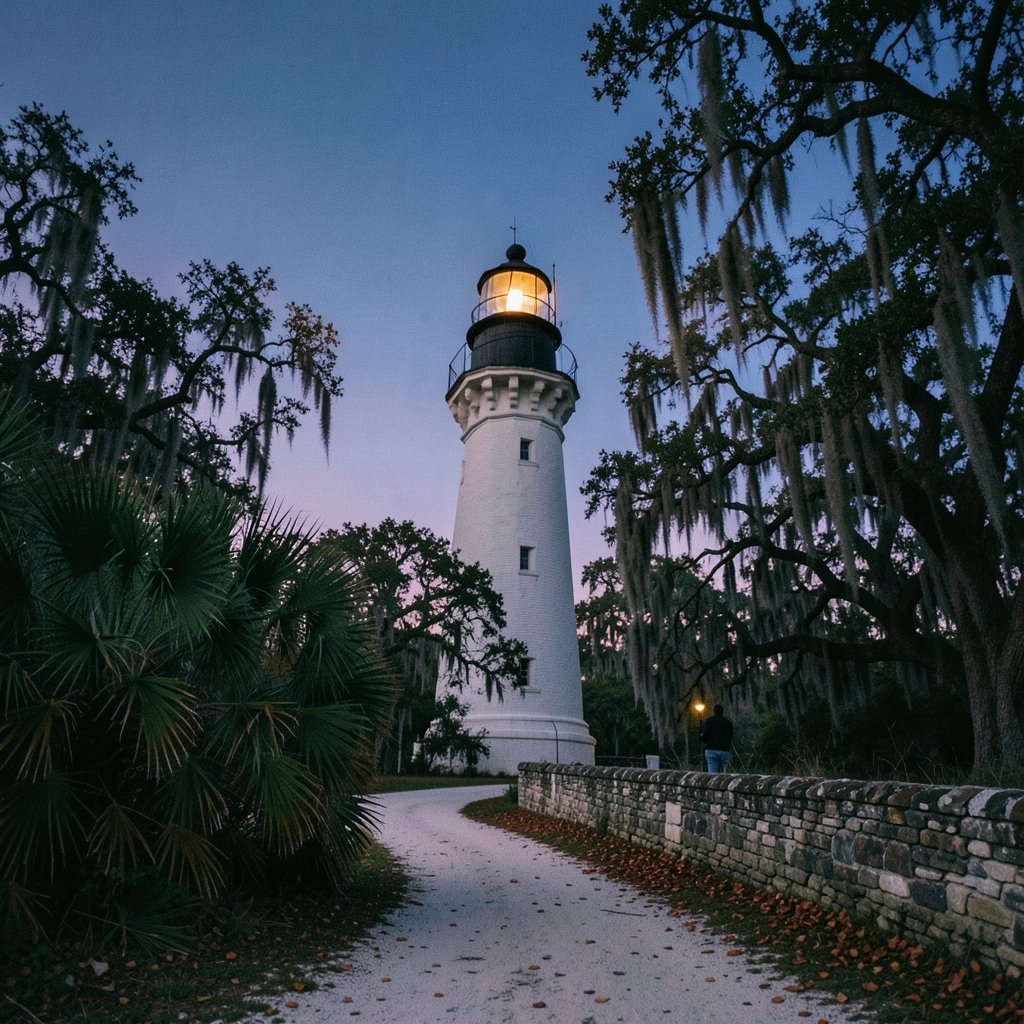
What makes a small barrier island off the Georgia coast worth a long weekend, a family reunion, or an entire retirement plan? For St. Simons Island, the answer sits somewhere between live oaks draped in Spanish moss, a working lighthouse, and a shoreline that has been settled, fought over, and rebuilt for nearly three centuries. It is not the flashiest island on the Atlantic. It does not try to be. But it rewards travelers who want history, salt marsh, bike paths, and seafood without the theme-park gloss.
This guide covers what St. Simons is, how to get there, what to see, where the practical friction points are, and how to plan a trip that fits the island’s actual rhythm rather than an Instagram version of it.
Where St. Simons Island Actually Sits
St. Simons is one of Georgia’s Golden Isles, a chain that also includes Jekyll Island, Sea Island, and Little St. Simons Island. It lies in Glynn County on the Atlantic coast, just east of Brunswick, and is reached by the F.J. Torras Causeway over the tidal marshes and rivers that separate the mainland from the barrier islands.
That causeway detail matters more than it sounds. It is the island’s only road connection, which shapes everything from rush-hour traffic to evacuation planning. On a summer Saturday, the causeway can back up; on a quiet Tuesday in February, it is a five-minute glide past marsh grass and wading birds.
The island is roughly ten to twelve miles long and a few miles wide, though exact dimensions vary by source. It is flat, bike-friendly, and compact enough that visitors routinely park once and cover ground on two wheels or on foot.
A Short History That Still Shows Up on the Land
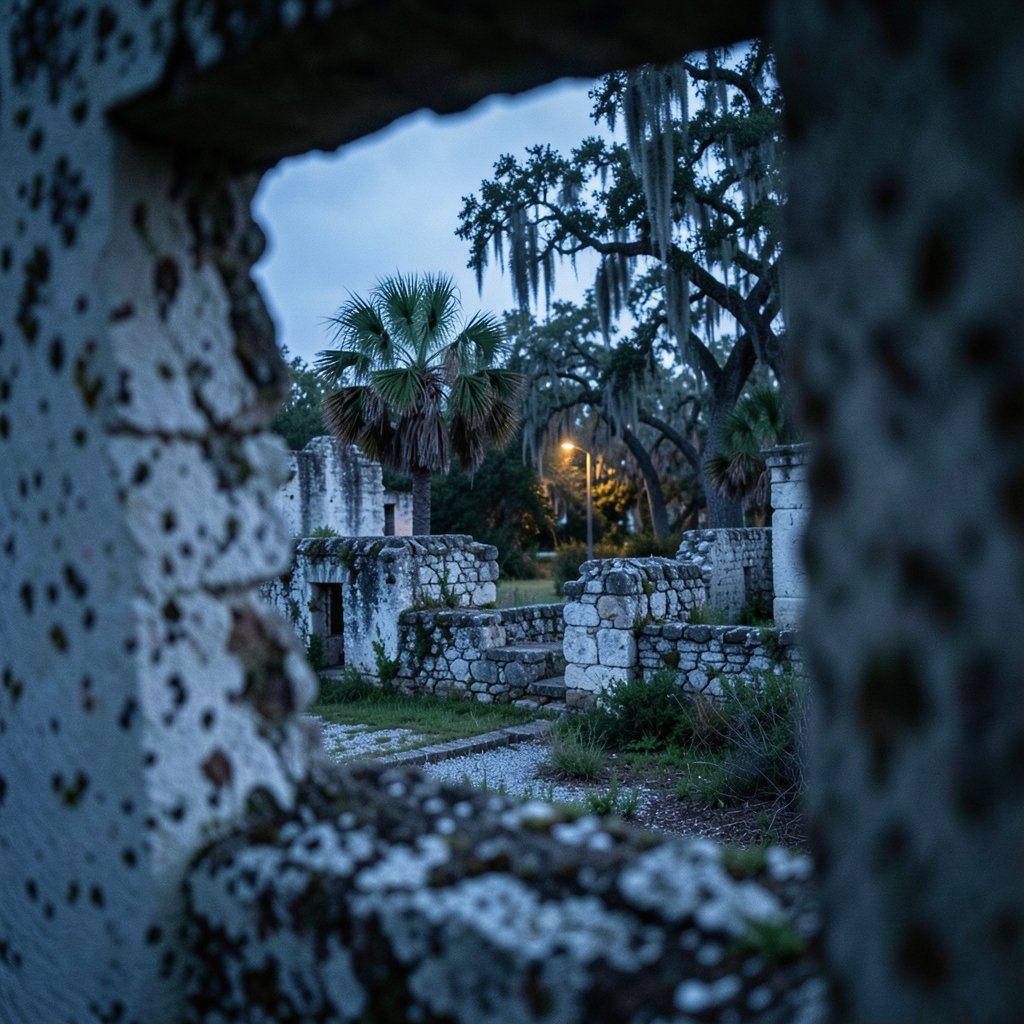
St. Simons is one of the few American resort islands where colonial history is not a plaque in a parking lot but an actual destination.
English settlement dates to 1736, when James Oglethorpe established Fort Frederica on the island’s west side. The fort guarded the colony of Georgia against Spanish incursion from Florida, and its ruins are now a National Park Service site with a visitor center and ranger programs.
In 1742, the Battle of Bloody Marsh was fought on the island as part of the War of Jenkins’ Ear, a conflict between Britain and Spain. The battle helped secure British control of the region. Today the site is a small, quiet stop with interpretive markers, and it is easy to drive past if you are not looking for it.
Later layers came from the plantation era, the timber and shipping economy of Brunswick across the marsh, and the Gullah/Geechee communities whose descendants shaped coastal Georgia culture. The National Park Service’s Gullah Geechee Cultural Heritage Corridor documents that inheritance across the region. Read it before you arrive; the coast will look different when you see it.
Two landmarks anchor the modern island. Christ Church, Frederica, has colonial-era roots and was rebuilt across the nineteenth and twentieth centuries; its cemetery holds early settlers and is one of the most photographed spots on the island. The St. Simons Lighthouse, whose current structure dates to 1872, is still a working aid to navigation. Climb it for the view, but understand that it is an active light, not a museum prop.
Getting There and Getting Around
Most visitors arrive by car. The nearest commercial airport is in Jacksonville, Florida, roughly an hour and a half south; Savannah’s airport is a similar distance north. Brunswick has a smaller regional airport. Atlanta is about a four-and-a-half to five-hour drive depending on traffic through Macon and the I-16 corridor.
Once on the island, the practical hierarchy is simple:
- Bike for anything within the village area, the pier, the lighthouse, and the beaches. The island has an extensive path network, and it is the single best way to move around in season.
- Drive for Fort Frederica, Christ Church, and the north-end beaches, where distances stretch out.
- Walk the village and pier district, which is compact and pleasant in the early morning before the heat builds.
A common mistake is treating St. Simons like a beach resort with a parking problem. It is better understood as a small town with a beach attached. The village has a grocery store, a few blocks of shops, and a pier that functions as the island’s living room at sunset.
Beaches, Marsh, and Water
The island’s shoreline is not uniform. The south-end beaches near the village are the most accessible and the most crowded. The East Beach area offers long stretches for walking and shelling, especially at low tide. The north end, near Gould’s Inlet, is quieter, with tidal creeks and sandbars that shift with the seasons.
Because the island sits behind a barrier of marsh and tidal rivers, the water is often shallow and warm, and the tidal range is significant. That means:
- Check tide tables before planning a beach day. A beach at high tide can be a narrow strip; at low tide it can be a wide flat.
- Wear shoes on the sandbars and in the marsh edges. Oyster shells and fiddler crab burrows are real hazards.
- Respect the dunes and bird nesting areas. Coastal Georgia hosts shorebirds that nest on the sand, and posted closures are enforced.
Fishing is a genuine local pursuit, from the pier to the surf to backcountry charters for redfish and trout. If you want to understand the island’s economy and its relationship with water, the pier at dawn is a better classroom than any brochure.
Where to Stay and What It Costs
Accommodation splits into three rough categories. The village and East Beach areas have vacation rentals and small inns within walking distance of the water. Mid-island has chain hotels and condos along the main corridor. The north end and the Sea Island side (a separate, gated community) skew toward higher-end resorts and private homes.
Peak season runs from late spring through Labor Day, with rates climbing accordingly. Spring and fall are the sweet spots: warm water, thinner crowds, and lower prices. Winter is quiet, occasionally chilly, and popular with snowbirds and long-stay renters.
A practical budgeting note: the island’s cost of living and real estate have risen sharply, and the broader question of how island communities manage money and growth is a live one across the Caribbean and the Southeast. If you are considering a longer stay or a purchase, it helps to read up on how places like Puerto Rico handle island finances and what that means for residents, because the money and finances of island life are rarely as simple as a vacation budget suggests.
Eating, Shopping, and the Local Rhythm
The food scene is coastal Southern with a strong seafood backbone: shrimp, oysters, crab, and grits. The village has a cluster of casual spots and a few nicer rooms, and the local shrimp boats still work the waters offshore. Do not skip a shrimp burger or a plate of fried shrimp at a counter-service place; it is the island’s most honest meal.
Shopping is concentrated in the village and along the main roads, with a mix of boutiques, galleries, and outdoor outfitters. The island also has a strong arts and volunteer culture, with seasonal festivals, a theater group, and a library that functions as a community hub.
One thing that surprises first-timers: the island is not a late-night town. Kitchens close early, and the pace slows after sunset. Plan accordingly, especially on Sundays.
Common Mistakes Visitors Make
A few patterns show up again and again among first-time visitors.
- Underestimating the heat and humidity. Coastal Georgia summers are brutal between 11 a.m. and 4 p.m. Plan outdoor history stops for the morning.
- Skipping Fort Frederica because it looks like “just ruins.” The visitor center and ranger talks turn it into one of the best history experiences on the coast.
- Assuming the lighthouse is open whenever. Hours vary by season, and the climb is not for anyone uncomfortable with tight spiral stairs.
- Ignoring the causeway on summer weekends. Build in buffer time for arrivals and departures.
- Treating the marsh as empty space. It is the island’s engine, and it is worth a kayak or a guided tour to understand it.
For travelers who like to compare island destinations before committing, it helps to look at how other islands balance tourism, land use, and local life. A broader look at the best islands in the Caribbean gives useful context for what St. Simons does differently: it is a residential island first, and that changes the experience.
When to Go and How Long to Stay
Three nights is the minimum for a first visit. That allows one day for the village, pier, and lighthouse; one for Fort Frederica, Christ Church, and the north end; and one for the beach or a water excursion. Five nights lets you slow down, which is the point.
| Season | Weather | Crowds | Best For |
|---|---|---|---|
| Spring (Mar–May) | Warm, mild | Moderate | Walking, history, festivals |
| Summer (Jun–Aug) | Hot, humid | Heavy | Beach, water sports, family trips |
| Fall (Sep–Nov) | Warm, clear | Light to moderate | Fishing, biking, quiet beaches |
| Winter (Dec–Feb) | Cool, variable | Light | Snowbird stays, budget travel |
Hurricane season runs from June through November, with the greatest risk typically in late summer and early fall. Because the island has a single causeway, evacuation planning is not hypothetical. Check the county’s emergency guidance before booking in peak season, and buy travel insurance if you are traveling in September or October.
Land, Cars, and Island Practicalities
St. Simons is a place where questions about land ownership and development are not abstract. The island’s buildable land is finite, flood insurance is a real cost, and the tension between preservation and growth shapes local politics. If you are the kind of traveler who likes to understand a place’s underlying economics, it is worth knowing who controls the land and how that control is exercised. The same questions show up wherever an iconic brand or a large landowner dominates a local economy, which is why readers curious about ownership structures often end up asking who owns Land Rover after spotting a certain kind of vehicle parked at the marina. On the island itself, the more relevant version of that question is who owns the marsh, the marina, and the remaining undeveloped tracts, and how those decisions get made.
Vehicles are part of the island’s texture. Trucks and SUVs are common, and if you are shopping for something that handles sand, marsh roads, and the occasional flooded street, a Land Rover dealer is the kind of stop that makes more sense after you have spent a week on coastal roads than before. The practical point is simpler: choose a vehicle with ground clearance and tires that can handle unpaved access points, and do not assume every beach access is paved.
Conclusion
St. Simons Island is not a secret, and it is not trying to be. It is a settled, working coastal community with a colonial fort, a working lighthouse, a churchyard full of history, and a shoreline that rewards people who check the tides and slow down. The travelers who enjoy it most are the ones who treat it as a small town with a remarkable past rather than a resort with a checklist.
Go in spring or fall if you can. Bike the village. Spend a morning at Fort Frederica and an afternoon on a sandbar. Eat the shrimp. Watch the light come on at the lighthouse. And leave a little room in the schedule for the marsh, because that is where the island actually lives.
Frequently Asked Questions
What is St. Simons Island known for?
St. Simons is best known for its colonial history at Fort Frederica, the 1742 Battle of Bloody Marsh, the 1872 St. Simons Lighthouse, and Christ Church, Frederica. It is also known for its beaches, salt marsh, live oak canopy, and seafood, and it is one of Georgia’s Golden Isles.
Do you need a car on St. Simons Island?
A car is helpful for reaching Fort Frederica, Christ Church, and the north-end beaches, but it is not necessary for the village, pier, and lighthouse area. The island has an extensive bike path network, and many visitors park once and bike or walk for most of their stay.
What is the best time of year to visit St. Simons Island?
Spring and fall offer the best balance of warm weather, lighter crowds, and lower prices. Summer is hot and busy but best for beach and water activities. Winter is quiet and mild, and it appeals to long-stay visitors. Hurricane season runs from June through November.
How many days should you spend on St. Simons Island?
Three nights covers the highlights: the village and pier, Fort Frederica and Christ Church, and a beach or water day. Five nights allows a slower pace with time for fishing, kayaking, and the north end. Day trips from Brunswick or Savannah are possible but rushed.
Is St. Simons Island expensive?
It can be, especially in peak summer season and in the village and East Beach areas. Mid-island hotels and condos are more affordable, and spring and fall rates drop noticeably. Food and activities range from casual and inexpensive to upscale resort pricing.
Can you swim at St. Simons Island?
Yes, but conditions vary. The water is shallow and warm, and the tidal range is significant, so check tide tables before planning a beach day. Watch for strong currents near inlets, wear shoes on sandbars, and respect posted wildlife closures.



