
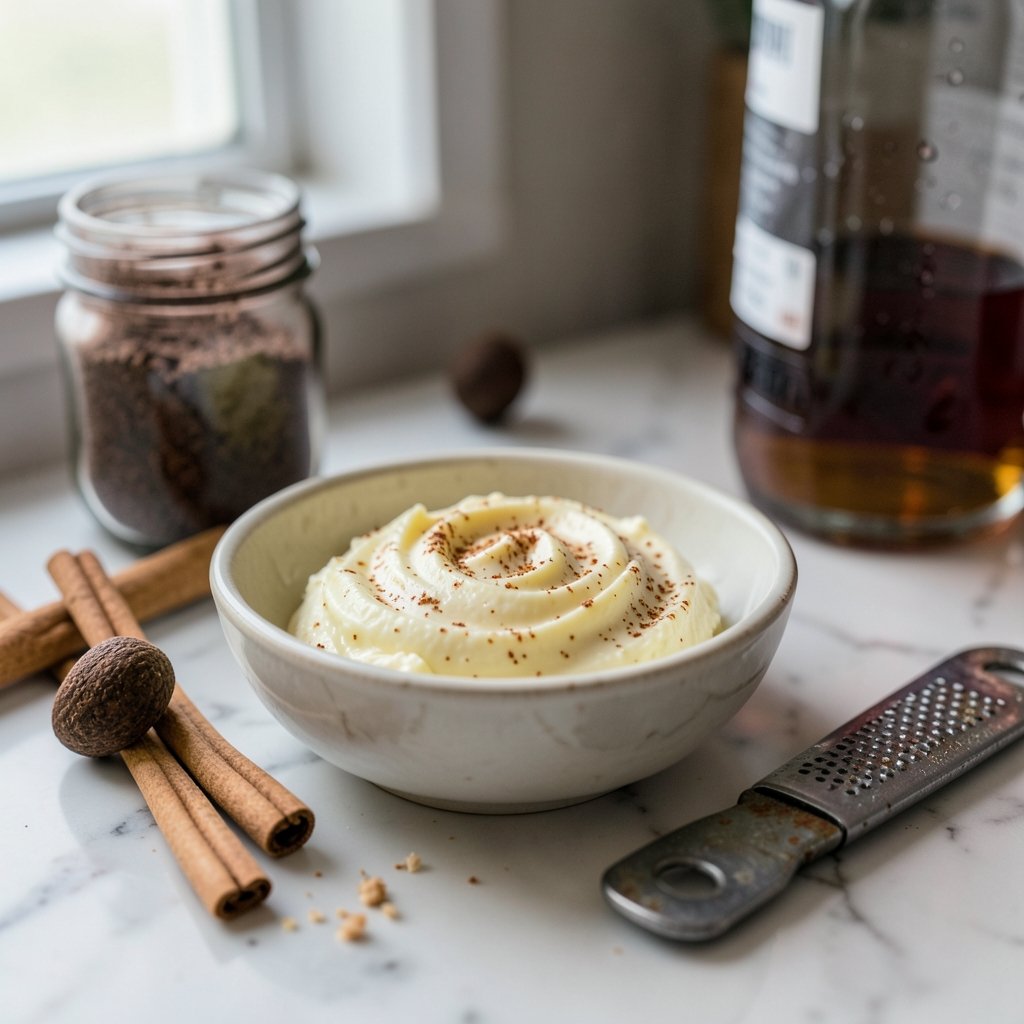
What if the hardest part of making a hot buttered rum wasn’t the rum at all, but getting the butter, sugar, and spice to blend into something smooth instead of a greasy slick floating on top of the mug? That small frustration is exactly why hot buttered rum butter exists. It is a spiced compound butter, sometimes called a batter, that gets creamed ahead of time and stored, so a winter drink comes together in about the time it takes to boil water.
The idea is simple, but the details matter more than most recipes admit. Which brown sugar you pick changes the color and depth. How you soften the butter decides whether the mixture turns silky or curdled. And the name itself is a trap, because “rum butter” means something else entirely in parts of Britain and the Caribbean. Here is what the butter actually is, how to make it well, and where home cooks tend to go wrong.
What Hot Buttered Rum Butter Actually Is
The butter is a compound butter: butter mixed with flavoring ingredients and chilled, a standard technique in both home and professional kitchens. Here the flavorings are brown sugar and warm spices, usually cinnamon, nutmeg, and clove, sometimes allspice. The creamed mixture is spooned into a mug, dissolved with hot water, and finished with rum.
It helps to separate two things that often get blurred together. The classic drink is an old American cold-weather staple, commonly described as colonial-era, built on rum, butter, sugar, and spice. The batter is the modern convenience version: make a batch, keep it cold, and use a spoonful per mug. The compound-butter form is not some ancient tradition handed down intact. Older recipes more often built the drink directly in the mug, muddling sugar with a pat of butter and hot liquid. The batter is what happens when someone decides to do that work once instead of twelve times.
There is also a naming problem worth flagging early. In Cumbria and parts of the Caribbean, rum butter refers to a different product: a sweet preserve of butter, sugar, and rum eaten as a spread, often on bread or crackers. It is related in spirit but not the same thing as a hot-drink batter. Recipes and product labels sometimes use the terms interchangeably, which confuses shoppers. If a recipe tells you to spread it on toast, you are looking at the preserve. If it tells you to stir a spoonful into hot water, you are looking at the drink batter.
Why the Colonial Connection Still Shows Up in Recipes

Most articles about hot buttered rum reach for the colonial American story, and there is real economic context behind it. Rum was a major product of colonial New England and the Caribbean sugar plantations, and molasses, a byproduct of sugar refining, sat at the center of that trade across roughly the seventeenth and eighteenth centuries. Brown sugar and molasses in a hot mug of rum is not a random pairing; it mirrors the ingredients that were actually moving through that economy.
That said, treat the “colonial era” label as a general claim rather than a dated fact. Popular accounts repeat it constantly, but pinning a specific first appearance is difficult, and no single origin story holds up cleanly. What is safe to say is that the flavor logic makes sense: dark sugar, warm spice, butter for richness, and a spirit that was cheap and abundant.
The Ingredients That Decide Whether It Works
The batter has four building blocks, and each one has a failure mode.
Butter
Use unsalted butter. Salted butter plus added salt in a recipe is a fast route to an over-seasoned drink, and you cannot take salt back out. Soften it at cool room temperature, not in a microwave. Butter that is melted at the edges and firm in the middle will cream unevenly, leaving hard flecks that never fully blend.
Brown Sugar
Brown sugar is white sugar with residual molasses left in it, and light and dark versions differ in how much molasses remains. Exact percentages vary by producer and are not standardized, so two brands of “dark brown sugar” can behave differently. Dark brown sugar gives a deeper, more molasses-forward butter with a darker color; light brown sugar is milder and lets the spice lead. Either works, but pick one deliberately rather than by whatever is in the cupboard.
A practical note: brown sugar hardens, and hard brown sugar will not cream into butter. If yours is a brick, soften it first or the batter will be gritty.
Spices
Cinnamon, nutmeg, allspice, and clove are the usual warm-spice lineup, and nutmeg is the traditional anchor for hot buttered rum specifically. Freshly grated nutmeg is noticeably better than pre-ground, which loses potency over months in the jar. Clove is the one to watch: it overwhelms quickly, so a little goes a long way.
Rum (and Where It Goes)
Most batters leave the rum out entirely and add it to the mug, which is the better approach. Rum stirred into a stored butter will taste flatter over time, and it makes the batter alcoholic in a way that limits who can eat it straight from the spoon. Keeping the batter alcohol-free means it can go into cocoa, coffee, or a non-alcoholic version without changes.
How to Make the Batter: A Method That Actually Holds
The technique is closer to making frosting than to making a sauce, and the order of operations matters.
- Let unsalted butter sit at cool room temperature until it dents easily but still feels cool, roughly 65 to 68 degrees Fahrenheit.
- Beat the butter alone first, for a minute or two, until it is smooth and pliable. Do not skip this.
- Add the brown sugar gradually, scraping the bowl, and beat until the mixture no longer feels gritty between your fingers.
- Stir in the spices and a small pinch of salt, then taste. Adjust before chilling, because cold mutes flavor.
- Pack into a jar or roll into a log in parchment, then refrigerate.
The step people skip is the third one. Creaming butter and sugar until the graininess disappears takes longer than expected, often three to five minutes with a hand mixer. Stop too early and the batter will feel sandy in the mug, and no amount of hot water fixes it.
A second common mistake is adding liquid, like vanilla extract or a splash of rum, too early. A tablespoon of liquid into a butter-sugar base can push the emulsion past its limit and leave the mixture looking separated. Add any liquid at the very end, a teaspoon at a time, and only if the mixture stays smooth.
Storage and Food Safety: The Part Most Recipes Gloss Over
Here is where a lot of home cooks get careless. A butter-and-sugar mixture left on the counter is a food-safety problem. Butter is perishable, and sugar does not preserve it; sugar pulls water toward itself but does not stop spoilage in a fat-based mixture. Keep the batter refrigerated, and freeze what you will not use within a couple of weeks.
| Storage Method | Typical Window | Notes |
|---|---|---|
| Refrigerator, sealed jar | About 2 weeks | Keep away from strong-smelling foods; butter absorbs odors |
| Freezer, wrapped log | 2 to 3 months | Slice while cold; freeze in portions you will use |
| Room temperature | Not recommended | Perishable fat plus sugar is not shelf-stable |
| Commercial batter mix | Follow the label | Proprietary blends vary widely; do not assume it matches homemade |
Two more practical details. First, use a clean spoon every time you dip into the jar; a buttery knife that touched bread will introduce crumbs and shorten the life of the batch. Second, label it with the date. Compound butters all look alike in the fridge, and an unlabeled jar of brown spiced butter is easy to forget until spring.
Assembling the Drink
The drink itself is forgiving, but a few choices separate a good mug from a mediocre one.
Use hot but not boiling water. Very hot water drives off some of the alcohol’s aroma and can make the drink taste thin; boiling also scalds the butter’s milk solids slightly. Pour the hot water over a generous spoonful of batter, stir until it dissolves completely, then add the rum. Some people prefer to muddle the batter with a little hot water first to form a paste, then top up, which prevents clumps. (Best places for hot springs)
Ratios are personal, but a common starting point is one heaping tablespoon of batter to about six ounces of hot water plus one and a half to two ounces of rum. From there, adjust for sweetness. A dark, aged rum brings molasses and vanilla notes that echo the brown sugar; a lighter rum lets the spice sit forward. Either is defensible.
The batter also earns its keep beyond the cocktail. A spoonful stirred into hot apple cider, coffee, or hot chocolate makes a fast spiced drink, and it can be melted over pancakes or used to finish a pan sauce for pork. That versatility is the real argument for keeping a jar around, and it is the same logic behind other make-ahead conveniences, much like the way a fast money explained high speed trading hot capital real piece breaks a complicated system into a repeatable process: do the fiddly work once, then benefit from it many times.
Troubleshooting the Batch
Even careful cooks hit problems. These are the ones that come up most.
The batter looks curdled or separated. The butter was too warm, or liquid went in too fast. Chill the bowl for ten minutes and beat again; if it stays broken, treat it as a spread rather than a drink batter.
The drink tastes greasy. Too much butter for the volume of water, or the water was not hot enough to emulsify. Use less batter and stir harder.
It is cloyingly sweet. Brown sugar varies, and so do palates. Cut the sugar slightly and add a pinch more salt, which rounds off sweetness without making the drink savory.
The spice disappears in the mug. Ground spices bloom in fat, but they also fade in storage. Taste the batter before you chill it, and plan to use it within a couple of weeks rather than saving it for next winter.
It is gritty. The sugar was not creamed in fully, or the brown sugar was hardened. Sift hard brown sugar or soften it before starting.
There is a broader lesson in that last point that applies well beyond the kitchen. Small mechanical failures, whether a gritty batter or a dead key, usually come down to one skipped step, which is the same principle behind keyboard hot swap socket repair fixing dead key without soldering: diagnose the actual point of failure instead of replacing everything.
A Note on Commercial Batters
Pre-made hot buttered rum batters exist, and they vary enormously. Some are essentially spiced sugar with a little butter; others lean heavily on stabilizers. There is no neutral, independent comparison of these products, so the honest advice is to read the ingredient list and check the serving size. A mix that lists sugar first will taste sweeter and thinner than a homemade batch built on real butter. If convenience is the goal, a homemade batch frozen in portions delivers most of the speed with a fraction of the guesswork.
Conclusion
Hot buttered rum butter is one of those small kitchen inventions that quietly solves a real problem. By creaming unsalted butter with brown sugar and warm spice ahead of time, it turns a fiddly winter drink into a two-minute assembly job, and it gives you a jar that works in cider, coffee, and dessert as well as in rum. The technique rewards attention in three places: soften the butter properly, cream until the grit is gone, and keep the finished batter cold. Get those right and the rest is seasoning to taste.
Just remember the name means two different things. If you want a spread for bread, you are after the British preserve. If you want a spoonful that dissolves into a hot mug, you want the batter. Both are worth making, but only one belongs in your drink.
Frequently Asked Questions
What is the difference between hot buttered rum butter and rum butter?
Hot buttered rum butter is a spiced compound butter of butter, brown sugar, and warm spices, designed to be dissolved in hot water with rum to make a drink. Rum butter, as made in Cumbria and parts of the Caribbean, is a sweet preserve of butter, sugar, and rum eaten as a spread on bread or crackers. They share ingredients but serve different purposes, and labels sometimes blur the distinction.
Can I make hot buttered rum butter without alcohol?
Yes, and most batters are made without it. The rum is usually added to the mug at the end rather than stirred into the stored butter. Keeping the batter alcohol-free means it stays usable for cocoa, coffee, and cider, and it can be served to anyone who avoids alcohol. Add the rum per mug, to taste.
How long does homemade hot buttered rum butter last?
Refrigerated in a sealed jar, it typically keeps for about two weeks. Frozen, wrapped well, it holds for two to three months, and slicing it while cold makes portioning easy. It should not be stored at room temperature, because butter is perishable and sugar does not prevent spoilage. Label the jar with the date you made it.
Why did my butter and sugar mixture turn out gritty?
The sugar was not creamed in fully, or the brown sugar had hardened before you started. Beat the butter alone until smooth, then add the sugar gradually and keep going until the mixture no longer feels sandy between your fingers, usually three to five minutes with a hand mixer. Softening hard brown sugar first prevents the problem entirely.
What kind of rum works best in a hot buttered rum?
A dark or aged rum brings molasses and vanilla notes that match the brown sugar, while a lighter rum lets the cinnamon and nutmeg lead. Either works, and the choice is mostly about whether you want the drink rich or spice-forward. Add one and a half to two ounces per mug and adjust from there.
Can I use salted butter for the batter?
Unsalted butter is the better choice because it lets you control the salt. Salted butter varies by brand, and adding more salt on top can push the drink too far, which cannot be undone. If salted butter is all you have, skip any added salt in the recipe and taste before chilling.



