
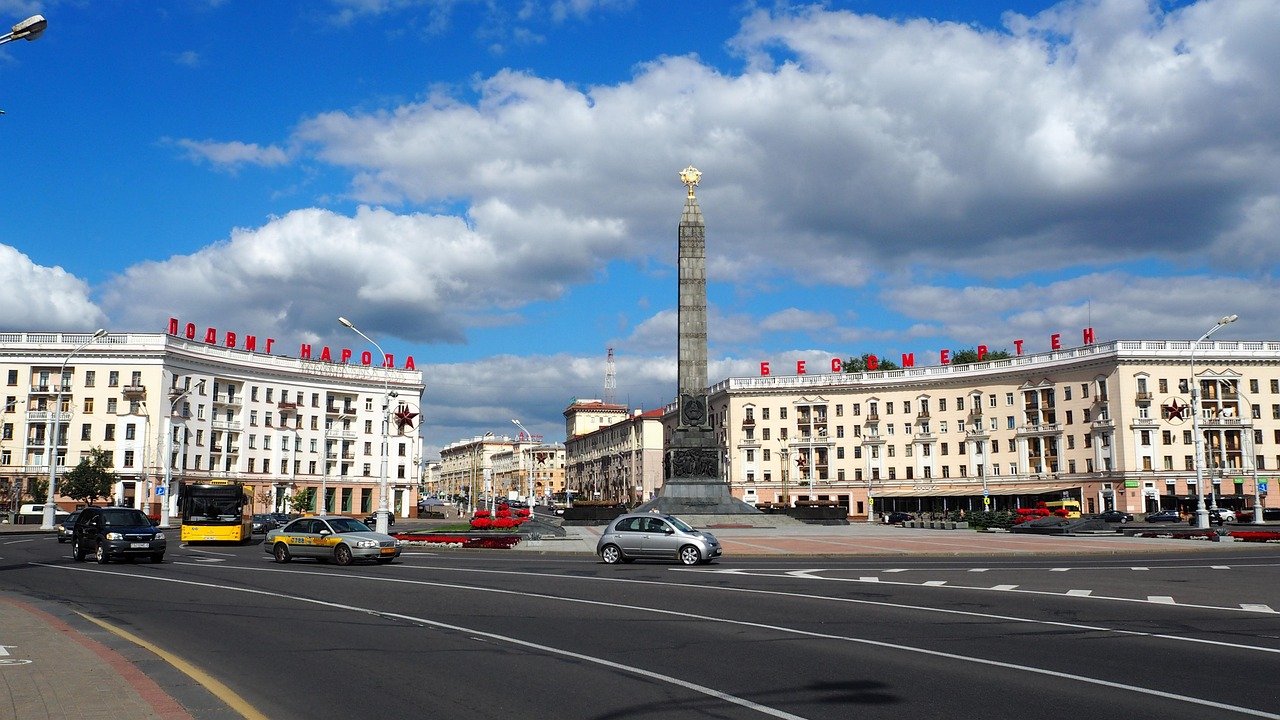
What does a European capital look like when it was almost completely rebuilt from rubble in a single decade? Minsk answers that question every time a visitor walks down Independence Avenue and sees one grand neoclassical facade after another, all of it less than eighty years old. Belarus’s capital is a city of about two million people, roughly a fifth of the country’s entire population, and it carries a history that swings from medieval trade route to wartime annihilation to post-war showpiece. Understanding Minsk means understanding how a city can be erased and reshaped without ever losing its name.
A City Older Than Its Skyline Suggests
Minsk first appears in written records in 1067, in the Primary Chronicle, under the name “Mensk.” That makes it one of the older urban settlements in the region, and the city marked its 950th anniversary in 2017. For centuries it sat at the crossroads of trade routes linking the Baltic with the Black Sea region, which explains both its early prosperity and the frequency with which armies marched through it.
The city sits on the Svislach and Nyamiha rivers, and it has served as the capital of the Belarusian SSR since that entity was formed in 1919, with interruptions during the Second World War. That political role shaped everything about its development: institutions, industry, and architecture all followed from the capital function.
Here is where expectations and reality split. Travelers who picture an old European capital with a medieval core and winding lanes will not find that in Minsk. The old town exists in fragments, but the dominant impression is of wide avenues, monumental squares, and buildings that look older than they are. That is not an accident of preservation. It is the direct result of what happened in 1944.
The War That Erased the City and the Decade That Rebuilt It
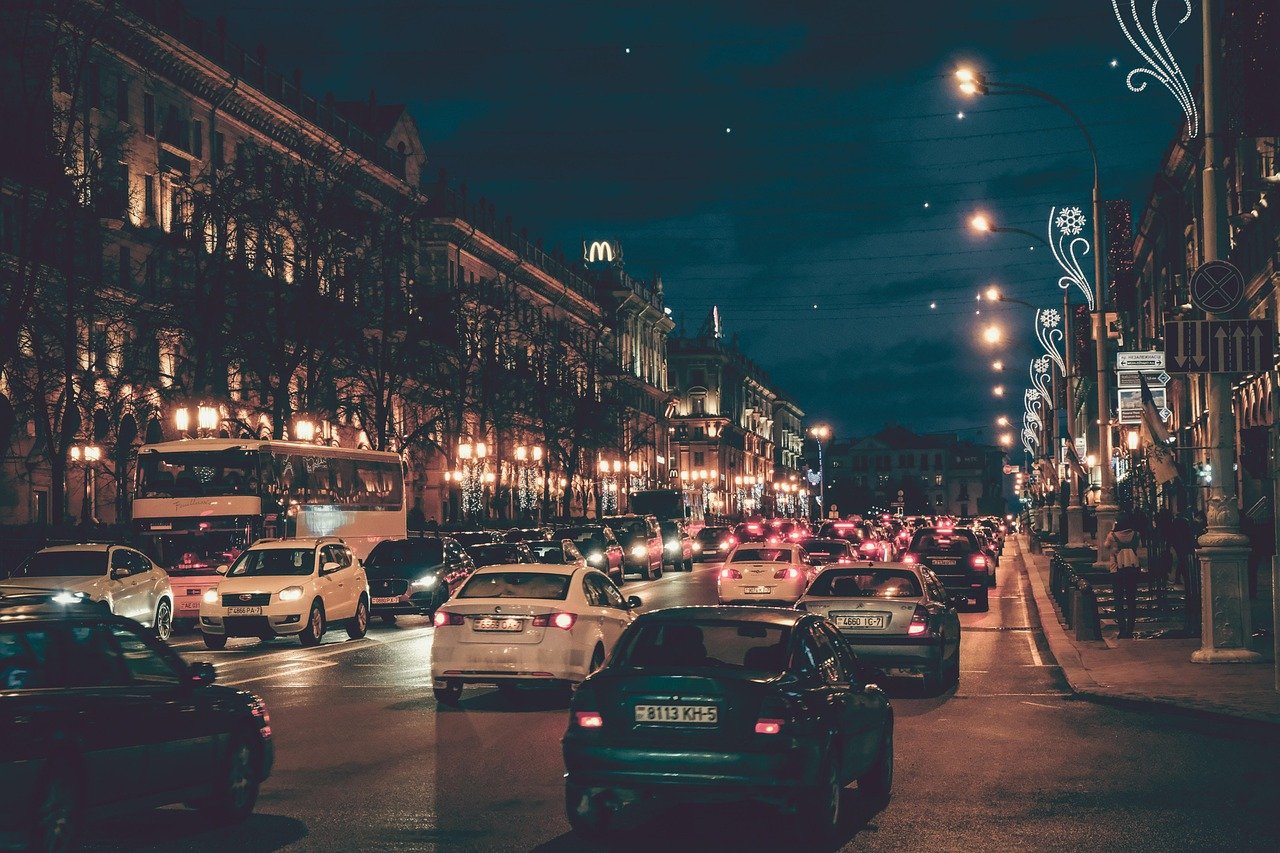
During the German retreat in 1944, Minsk was largely destroyed. The scale of the damage was enormous, and the post-war reconstruction that followed in the late 1940s and 1950s produced something unusual in European urban history: a capital rebuilt almost as a single coordinated design project rather than piecemeal over centuries.
The result is Stalinist neoclassical architecture applied at city scale. Broad avenues, symmetrical facades, generous setbacks, and decorative detailing that borrows from classical vocabulary. The centre’s look is not a survival from an earlier era. It is a deliberate post-war statement about what a Soviet capital should feel like.
The human cost behind that reconstruction is part of the story too. Minsk was home to a large ghetto during the occupation from 1941 to 1943, and the city’s wartime experience included occupation, mass violence, and near-total physical destruction. Any honest account of Minsk’s architecture has to hold both facts at once: the beauty of the rebuilt centre and the catastrophe that made the rebuilding necessary.
Independence Avenue: A UNESCO World Heritage Ensemble
The centrepiece of modern Minsk is Independence Avenue, known in Belarusian as Praspiekt Niezaliežnasci and formerly called Lenin Avenue. In 2024, the Stalinist-era ensemble of the avenue was inscribed on the UNESCO World Heritage List as “Minsk: the Ensemble of Independence Avenue.” The listing recognises the avenue as an outstanding example of post-war Soviet urban planning and Stalinist neoclassical architecture.
For visitors, this is the single most rewarding stretch of the city to walk. The avenue functions as an open-air museum of mid-century design, and because it was conceived as a whole, it reads more coherently than most European boulevards assembled over centuries. Practical advice from people who know the city: walk it in sections rather than end to end in one go, and start early in the morning when the light hits the facades and the traffic is light. The scale is deceptive on a map, and the avenue is longer than it looks.
A common mistake is treating the avenue as a quick photo stop between other sights. It rewards slow looking. The detailing on the upper floors, the rhythm of the building heights, and the way the squares punctuate the route are the point, not the individual buildings.
Independence Square and the Government District
Independence Square, or Plošča Niezaliežnasci, anchors the city’s administrative life. The Government House was built between 1930 and 1934, designed by architect Iosif Langbard, and the Belarusian parliament and government offices stand nearby. The square is vast by European standards, which is consistent with the city’s overall approach to public space: room for crowds, parades, and ceremony.
For a visitor trying to read the city, the government district is where Minsk’s political identity is most visible in built form. The architecture is not subtle about what it is for. That said, the square also functions as ordinary civic space, with the usual mix of commuters, students, and people crossing it on the way to somewhere else.
If you want to understand how a capital presents itself to its own citizens, spend twenty minutes here without taking a photo. Watch how people move through the space. That tells you more than any plaque.
Getting Around: Metro, Trolleys, and the Airport
Minsk’s metro opened in 1984 and has three lines as of the 2020s. The stations follow the Soviet tradition of elaborate underground architecture, and several are worth a look even if you have no destination in mind. Riding the metro is also the cheapest way to cover long distances quickly, since the surface street grid is generous in width but sprawling in extent.
Surface transport includes buses, trolleybuses, and trams, and the system is dense enough that most central journeys do not require a car. For a visitor, the practical rule is simple: use the metro for cross-city trips and walk for anything within the centre. Taxis exist and ride-hailing works, but traffic on the main avenues at peak hours can turn a short trip into a long one.
Minsk National Airport sits about 40 kilometres east of the city. That distance matters more than people expect. Build in real transfer time, and do not assume a late arrival leaves room for a relaxed evening in the centre. The airport connection is reliable but not instant.
Travelers who like to prepare properly for trips often obsess over the wrong details. Knowing how to check your gear matters more than packing lists. The same discipline that applies to testing a fake SD card’s real capacity before you lose your data applies to travel tech: verify before you rely on it. And if you are carrying power banks for long days of walking and photographing, it helps to know whether mAh or Wh is the number that actually matters on a power bank, because airline rules and real-world capacity are not the same thing.
The Economy: Tractors, Trucks, and a Tech Park
Minsk is the country’s economic centre, and its industrial identity is unusually literal. The Minsk Automobile Plant (MAZ) and Minsk Tractor Works (MTZ) are major manufacturers whose names are known well beyond Belarus. The Hi-Tech Park, founded in 2005, added an IT layer to an economy long defined by heavy industry, and it became a significant employer in the software sector.
That combination is unusual in a European capital: heavy manufacturing and software development sharing the same urban economy. It shapes the city’s daily rhythms, from shift changes to the commuter flows that feed the metro at rush hour.
For a sense of how industrial identity becomes civic identity in other cities, the way Detroit’s Pistons players built a basketball city out of a manufacturing town is a useful parallel. Cities are rarely just economies, but economies leave fingerprints on everything.
A Capital Under Pressure Since 2020
Since August 2020, Minsk has been the centre of mass protests following the presidential election and the crackdowns that followed. Reporting on this period is contested, and access for independent media is restricted. Figures and characterisations should be treated with caution, and readers should look for dated reporting from reputable outlets rather than relying on summaries.
This context matters for visitors because it shapes the atmosphere of the city and the information environment around it. It is also a reminder that a capital’s grand avenues are a stage for politics as much as for architecture. The same squares built for ceremony have hosted both official events and public protest.
Practical Tips and Common Mistakes
First-hand accounts from travelers to Minsk converge on a few practical points. The city is generally orderly and easy to navigate, English is less widespread than in Western European capitals, and a few words of Russian or Belarusian go a long way. Cash still matters in smaller shops and markets, even though card payments are common in the centre.
The biggest mistake visitors make is underestimating distances. The avenues are wide, the blocks are long, and a “short walk” on the map can take twenty minutes. Comfortable shoes are not optional.
A second mistake is skipping the metro stations as sights. Several are genuinely impressive, and the fare is trivial.
A third is assuming the city is only about Soviet architecture. The older fragments, the river embankments, and the parks give the centre a texture that the grand avenues alone do not convey.
If you follow sports at all, you may have noticed how often fixture information gets misread, which is why guides on reading Birmingham City vs FC Barcelona lineups for a friendly or reading player stats from a Lakers vs Oklahoma City Thunder box score stress the same lesson: check the source and the context before drawing conclusions. The same applies to any claim about a city’s population, politics, or heritage status. Verify the date and the source.
Minsk by the Numbers
| Feature | Detail |
|---|---|
| Status | Capital and largest city of Belarus |
| Rivers | Svislach and Nyamiha |
| Population | Roughly 2 million, about a fifth of the country |
| First documented mention | 1067, as “Mensk” |
| Capital since | 1919, with interruptions during WWII |
| Wartime destruction | Largely destroyed in 1944 |
| Reconstruction | Late 1940s to 1950s |
| UNESCO inscription | Independence Avenue ensemble, 2024 |
| Government House | Built 1930 to 1934, architect Iosif Langbard |
| Metro opened | 1984, three lines as of the 2020s |
| Airport distance | About 40 km east of the city |
| Major employers | MAZ, MTZ, Hi-Tech Park (founded 2005) |
Why Minsk Rewards a Second Look
Minsk is easy to misread. On the surface it looks like a monumental Soviet capital with little medieval charm, and a hurried visitor might conclude that one day is enough. The opposite is true. The city’s interest lies precisely in the tension between what it was and what it was rebuilt to be. The 1067 chronicle entry and the 1944 destruction sit in the same story, and the UNESCO-listed avenue is the visible resolution of that story.
For readers who follow how cities turn competition and identity into civic pride, the way March Madness brackets turn cities into contenders is a reminder that urban identity is often built through events and narratives rather than architecture alone. Minsk’s identity was built through catastrophe, reconstruction, and politics, and the architecture is the record of it.
It is also worth noting how often cities get defined by a single export or a single era. Guides on reading Oklahoma City Thunder vs San Antonio Spurs match player data exist because one team can come to stand for a whole city in the public imagination. Minsk has the same effect with Stalinist architecture, which is a shame only if it stops people from looking further.
Conclusion
Minsk is a capital that tells you what happened to it. The wide avenues, the neoclassical facades, the vast squares, and the ornate metro stations are all evidence of a city rebuilt deliberately after near-total destruction. Its 1067 origins, its 1919 status as a Soviet capital, its 1944 ruin, its 1950s reconstruction, its 1984 metro, its 2005 tech park, and its 2024 UNESCO inscription form a sequence that few European cities can match for sheer historical compression.
Visit for the architecture, stay for the way the city makes you think about memory and rebuilding. Walk Independence Avenue slowly. Ride the metro to a station you have no reason to visit. Cross Independence Square at rush hour. And when you read claims about the city’s population, politics, or heritage status, check the date and the source. Minsk is a city that rewards careful attention and punishes assumptions.
Frequently Asked Questions
What is Minsk known for?
Minsk is best known as the capital of Belarus and for its Stalinist neoclassical architecture, particularly the ensemble of Independence Avenue, which was inscribed on the UNESCO World Heritage List in 2024. It is also known for its wide avenues, monumental squares, ornate metro stations, and major manufacturers such as MAZ and MTZ.
How old is Minsk?
Minsk was first mentioned in written records in 1067, in the Primary Chronicle, under the name “Mensk.” The city marked its 950th anniversary in 2017.
Was Minsk destroyed in World War II?
Yes. Minsk was largely destroyed in 1944 during the German retreat. The post-war reconstruction of the late 1940s and 1950s produced the broad Stalinist avenues and squares that define the city centre today.
How many people live in Minsk?
Minsk has roughly 2 million residents, making it by far the largest city in Belarus and home to about a fifth of the country’s population. Exact current figures vary by estimate and publication date.
Does Minsk have a metro?
Yes. The Minsk Metro opened in 1984 and has three lines as of the 2020s. Several stations are known for their elaborate interior architecture, and the metro is the fastest way to cross the city.
How far is Minsk National Airport from the city?
Minsk National Airport is about 40 kilometres east of the city centre. Travelers should allow realistic transfer time rather than assuming a quick connection, especially for late arrivals or tight onward plans.



