
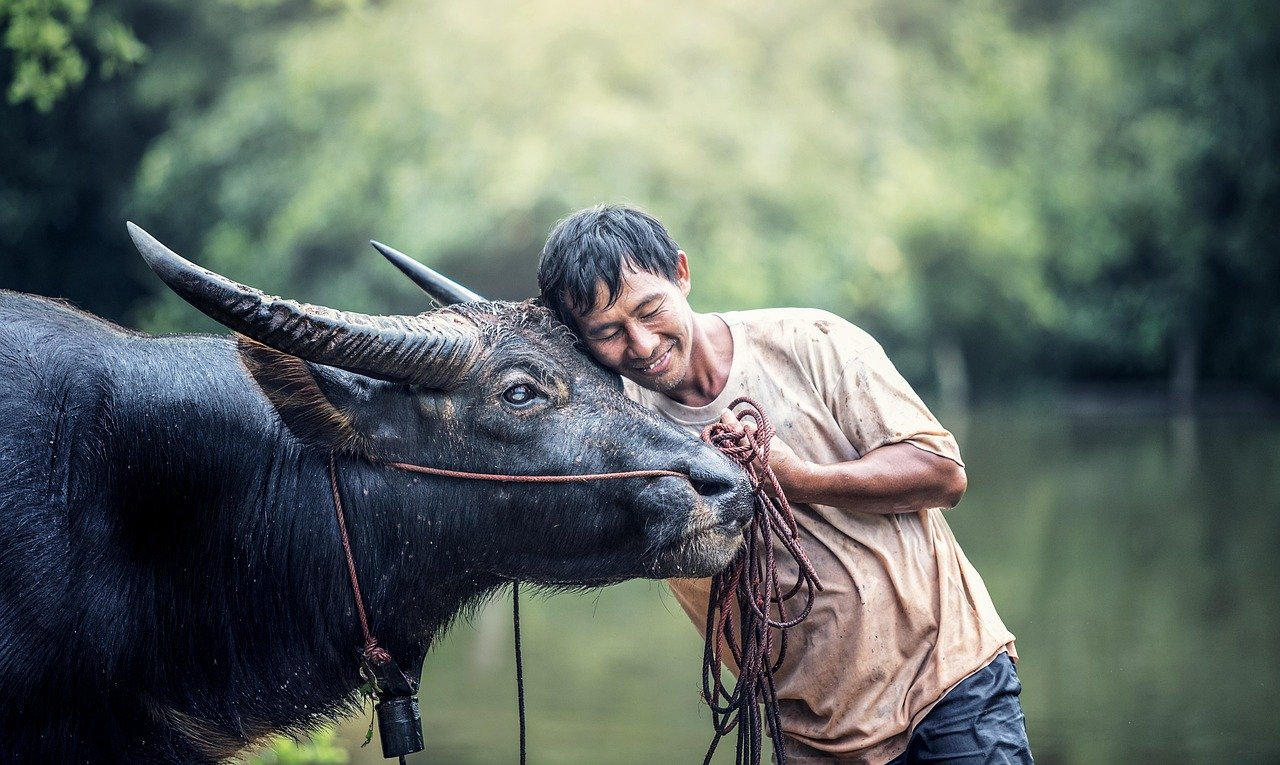
What actually happens between a farmer and an animal on a working farm? Most people picture a quick feeding round and move on. The reality is far more interesting. That daily relationship, built on observation, routine, and quiet handling, sits at the center of animal welfare, food safety, farm economics, and even the mental health of the people doing the work. Get it right and animals thrive, yields stabilize, and the farm runs smoother. Get it wrong and problems compound quietly, from fear responses in livestock to injuries and disease.
This article looks at the farmer-animal relationship from several angles: what welfare science says, what the law requires, what stockmanship research shows, and where the real-world friction points are. It is written for anyone curious about how food gets produced, from students to consumers to people considering a farming career.
What the farmer-animal relationship actually involves
The relationship is a working partnership. Farmers manage animals for a purpose, whether milk, meat, eggs, wool, or breeding stock. But the management is not mechanical. Good farmers read animals constantly: ear position, gait, breathing rate, appetite, group behavior. A cow that hangs back from the feed bunk is telling you something. A pig that will not rise is telling you something else.
That reading skill is learned, not innate. It develops through years of handling, and it is the foundation of what the industry calls stockmanship. The term covers the knowledge, attitude, and behavior a person brings to handling animals. Research in applied ethology has consistently linked stockperson attitude and handling style to measurable outcomes in animals, including fear responses, injury rates, and productivity. The effect sizes vary by study, but the direction is stable: calmer, more confident handlers tend to produce calmer animals.
There is also a quieter side. Many farmers describe genuine attachment to their animals, and that attachment complicates the job. You cannot care deeply about an animal and also make hard commercial decisions about it without some internal tension. That tension is real and worth naming rather than pretending it away.
The Five Freedoms and the framework behind modern welfare
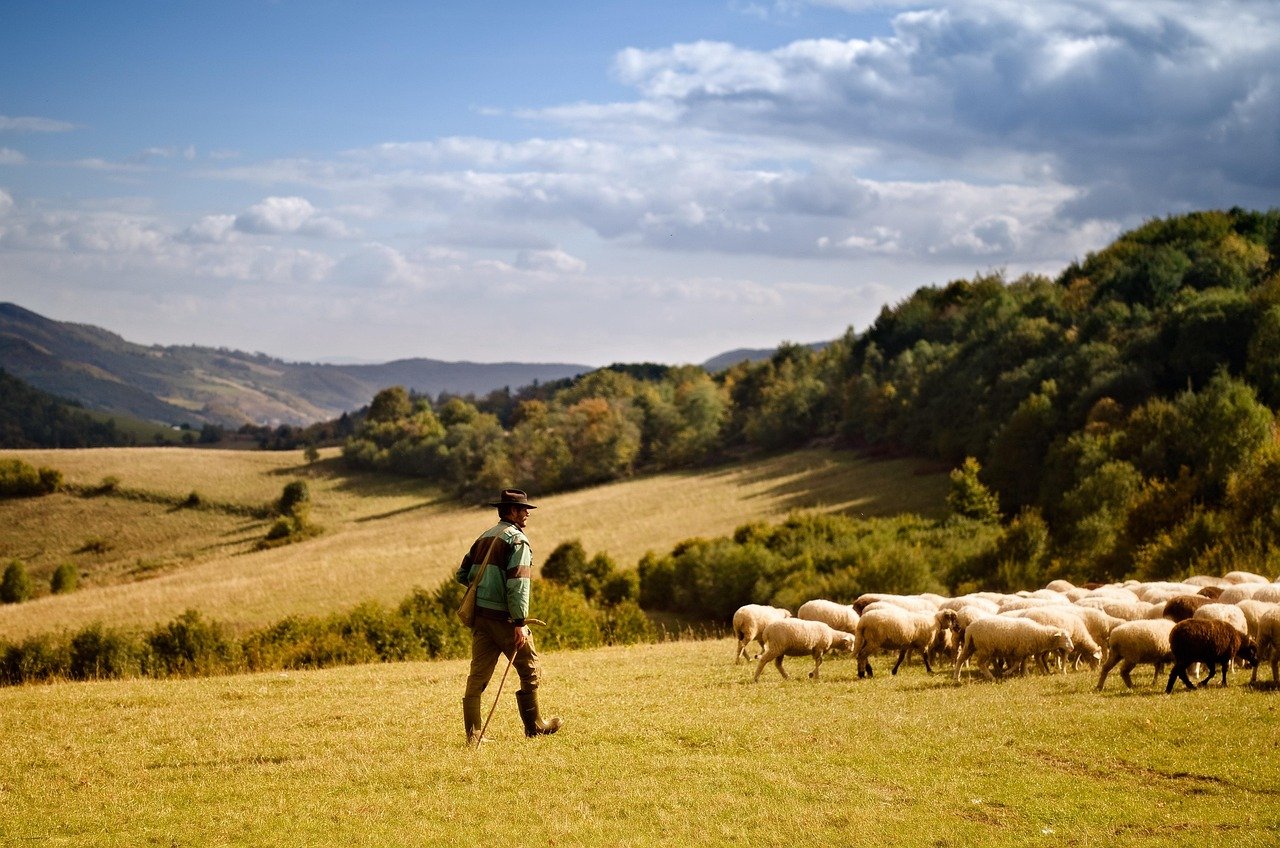
Modern farm animal welfare did not appear overnight. The Five Freedoms framework grew out of a 1965 UK report on livestock husbandry and was formally set out by the UK Farm Animal Welfare Council in 1979. The five are:
- Freedom from hunger and thirst
- Freedom from discomfort
- Freedom from pain, injury, and disease
- Freedom to express normal behavior
- Freedom from fear and distress
The framework is not law in itself, but it shaped legislation and industry standards across many countries. It also has known limits. Critics note that it describes minimum conditions rather than a positive state of well-being. Newer frameworks, sometimes called quality-of-life approaches, try to capture whether an animal is actually thriving rather than merely not suffering.
One common mistake is conflating animal welfare with animal rights. They are different positions. Welfare science asks how an animal is doing and how to improve that. The rights position questions whether humans should use animals at all. Farmers often get caught in arguments where the two are mixed together, which makes productive conversation hard.
What the law requires from farmers
Legal requirements vary widely by country, but several patterns recur.
In the UK, the Animal Welfare (Sentience) Act 2022 formally recognized vertebrates, along with some invertebrates such as cephalopods and decapods, as sentient beings. It also created an Animal Sentience Committee to scrutinize policy decisions. In the EU, Directive 98/58/EC sets general minimum standards for protecting farm animals, and Article 13 of the Treaty on the Functioning of the European Union requires policy to pay full regard to animals as sentient beings. Specific EU rules cover transport under Regulation (EC) No 1/2005 and protection at killing under Regulation (EC) No 1099/2009.
At the international level, the World Organisation for Animal Health, founded in 1924 as the OIE and rebranded as WOAH in 2022, publishes intergovernmental welfare standards in its Terrestrial Animal Health Code. These include chapters on animal welfare during transport and at slaughter. They are not binding law, but many countries use them as reference points.
| Framework | Type | Scope |
|---|---|---|
| Five Freedoms (1979) | Guidance framework | Broad welfare principles |
| UK Animal Welfare (Sentience) Act 2022 | National law | Sentience recognition and policy scrutiny |
| EU Directive 98/58/EC | Regional law | Minimum farm animal protection standards |
| WOAH Terrestrial Code | International standard | Intergovernmental welfare guidance |
The practical takeaway for farmers is that compliance is a floor, not a ceiling. Meeting the minimum rarely satisfies consumers, retailers, or the farmer’s own standards.
Stockmanship: what separates good handling from poor handling
Walk onto two farms with identical buildings and identical genetics and you can still see very different animals. Handling is usually the difference.
Good stockmanship tends to look unremarkable from the outside. Animals move without panic. Handling takes less time. There is less shouting and less prodding. People who work with livestock daily often describe a few habits that matter more than any equipment purchase:
- Move slowly and predictably around animals, especially in enclosed spaces.
- Use the animal’s natural flight zone and point of balance instead of force.
- Train new staff before they handle animals alone, not during a crisis.
- Watch animals at rest, not only during handling, because problems show up first in quiet behavior.
- Fix the environment before blaming the animal. Slippery floors and bad lighting cause more baulking than attitude does.
The most common mistake is treating handling as a task to rush through. Speed gained by pushing animals usually gets paid back in injuries, reduced milk let-down, bruising, and stress that lingers for days.
Health, disease, and the zoonotic link
The farmer-animal relationship also sits on the front line of disease. Most emerging infectious diseases in humans are zoonotic in origin, meaning they move from animals to people. Livestock-human interfaces, including intensive farming settings and live-animal markets, are recognized as risk settings. The exact proportion of emerging diseases that are zoonotic varies by study, so treat any single round number with caution.
Antimicrobial resistance is a related concern. There is broad scientific consensus that antimicrobial use in food-producing animals contributes to resistance, and that this is a One Health issue spanning human medicine, veterinary medicine, and agriculture. The scale of livestock’s contribution is genuinely debated and varies by country and method. Farmers face real pressure to reduce routine use, and many have already done so. The honest position is that the problem is shared and the solutions have to be too.
For farmers, biosecurity is not paperwork. It is boots, gates, quarantine pens, and honest record-keeping.
The human cost of animal disease
There is a side of this relationship that gets far less attention: what happens to farmers when animals suffer or when whole herds are destroyed.
Livestock disease outbreaks cause serious psychological and economic harm to farming communities. The UK foot-and-mouth outbreak of 2001 is a well-documented example, with widespread culling and lasting distress among farming families. Farmer suicide and mental health strain are documented concerns in agricultural populations internationally.
This matters for animal welfare too. Stressed, exhausted, isolated people make worse decisions and miss subtle signs. Support systems, from veterinary networks to peer groups, are welfare infrastructure as much as they are social services.
Technology is changing the relationship, not replacing it
Sensors, cameras, and automated monitoring now track rumination, lameness, and activity in real time. Precision tools can flag a sick animal before a human eye catches it. That is genuinely useful, and the numbers behind agricultural technology adoption are substantial. For a deeper look at how data is reshaping farm decisions, see this analysis of farm drones and the 16.4 million acre question.
But technology changes the shape of the relationship rather than removing it. Someone still has to walk the pens. Someone still has to decide whether an alert means action. The risk is that screens create distance, and distance erodes the observation skills that stockmanship depends on. The farms that handle this well use technology as a second pair of eyes, not a replacement for the first.
Economics: why welfare and profit are not opposites
There is a persistent assumption that good welfare costs money and poor welfare saves it. The picture is more mixed.
Poor welfare carries costs that are easy to miss: higher mortality, more veterinary bills, reduced growth or milk yield, bruising that downgrades carcasses, and staff turnover. Good welfare carries costs too, including space, enrichment, and time. The balance depends on the system, the market, and the price the farmer can actually get.
That last point matters. Farmers respond to market signals, and those signals are shaped by policy as much as by consumers. Prediction markets and policy debates around agricultural legislation show how much uncertainty farmers face when planning investments in welfare improvements. This breakdown of HR 7567, the Save Our Bacon farm bill, and what prediction markets suggest is a useful read for anyone tracking how farm policy uncertainty translates into on-farm decisions.
For farmers thinking about long-term planning, the same logic of patience and timing applies to welfare investments as to other farm ventures. The approach in this guide to growing bells reliably with a money tree in Animal Crossing is a playful reminder that outcomes depend on consistent conditions, not lucky shortcuts. Real livestock work rewards the same discipline.
Practical steps for better farmer-animal outcomes
Whether someone is new to livestock or decades in, a few practical moves tend to pay off:
- Audit handling before buying equipment. Watch how animals move through your system and fix bottlenecks first.
- Standardize onboarding. Every new handler should be trained and observed before working alone.
- Track quiet indicators. Record lameness, mortality, and cull rates monthly rather than reacting to crises.
- Build a veterinary relationship before you need one urgently.
- Protect your own capacity. Sleep, backup labor, and peer support are welfare inputs, not luxuries.
- Document everything. Records protect the animals, the farm, and the farmer when inspections or outbreaks occur.
Conclusion
The relationship between farmer and animal is one of the most consequential working partnerships in the food system, and it is routinely underestimated. Welfare science, law, economics, and human health all converge on the same point: how animals are handled and cared for matters, and so does the well-being of the people doing the caring. The Five Freedoms gave the world a shared language for welfare. Stockmanship research showed that attitude and handling translate into measurable outcomes. Disease outbreaks revealed how tightly animal health and farmer mental health are linked.
None of this is settled. Antimicrobial resistance attribution is contested, welfare standards vary enormously between countries, and technology is shifting the daily texture of the work. But the direction of travel is clear. Farms that invest in observation, training, and support for their people tend to see better animals, steadier production, and fewer crises. The farmer and the animal are not separate stories. They are the same story, told from two sides of a gate.
FAQ
What is the difference between animal welfare and animal rights?
Animal welfare is a scientific and practical framework focused on how well an animal is doing and how to improve its condition. Animal rights is a philosophical position that questions whether humans should use animals at all. The two are often confused in public debate, but they ask different questions and lead to different conclusions.
What are the Five Freedoms in farm animal welfare?
The Five Freedoms are freedom from hunger and thirst, freedom from discomfort, freedom from pain, injury, and disease, freedom to express normal behavior, and freedom from fear and distress. They grew out of a 1965 UK report and were formally set out by the UK Farm Animal Welfare Council in 1979. They remain a widely used baseline, though newer frameworks focus more on positive well-being.
Does good animal welfare reduce farm profits?
Not necessarily. Poor welfare often carries hidden costs such as higher mortality, more veterinary bills, reduced yield, and staff turnover. Good welfare also costs money through space, enrichment, and time. The balance depends on the production system and the price the farmer can secure, which is why market and policy signals matter so much.
Why does stockmanship matter so much?
Stockmanship covers the knowledge, attitude, and handling behavior a person brings to animals. Research in applied ethology has repeatedly linked handler attitude and handling style to measurable animal outcomes, including fear responses, injury rates, and productivity. Calmer, more consistent handling tends to produce calmer animals and smoother operations.
How does animal disease affect farmers’ mental health?
Livestock disease outbreaks cause serious psychological and economic harm to farming communities. The UK foot-and-mouth outbreak of 2001 is a well-documented example involving widespread culling and lasting distress. Farmer suicide and mental health strain are documented concerns in agricultural populations, which is why support networks function as welfare infrastructure too.
Can technology replace hands-on animal handling?
No. Sensors and automated monitoring can flag lameness, illness, or unusual activity earlier than a human eye might catch it, which is valuable. But someone still has to interpret alerts and walk the pens. Technology works best as a second pair of eyes that supports observation skills rather than replacing them.



