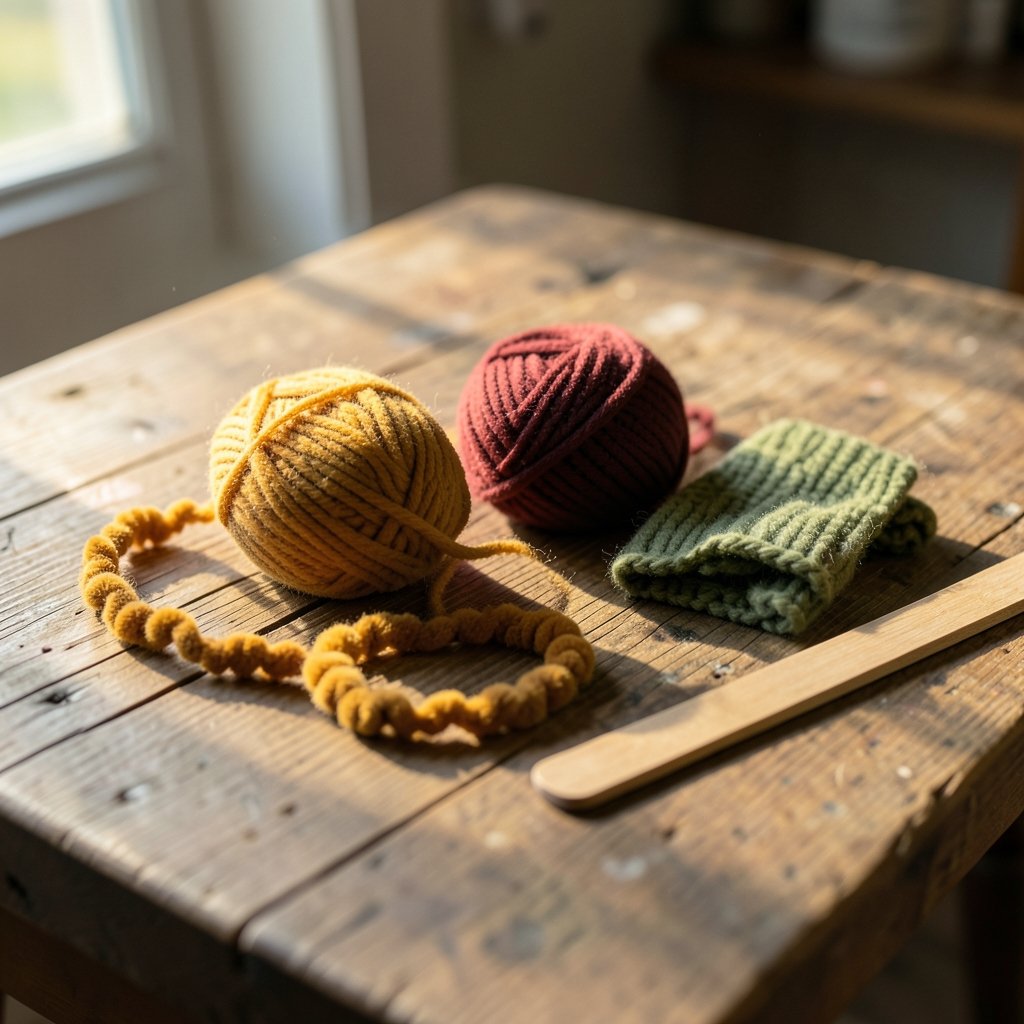
What makes a yarn look like a tiny, fuzzy caterpillar? That’s not a riddle. It’s the literal meaning of the word. “Chenille” is French for caterpillar, and once you see a strand up close, the name makes perfect sense. The yarn has a soft, segmented, velvety surface that really does resemble the little creature.
But that cute description hides a surprisingly technical construction. Chenille is one of the few yarns defined by how it’s built rather than what it’s made of. That distinction trips up a lot of crafters, decorators, and even experienced knitters. This guide breaks down the structure, the history, the practical uses, and the mistakes people make when they work with it.
What Exactly Is Chenille Yarn?
Chenille is a pile yarn. Short fibers are trapped between two tightly twisted core plies, so the pile stands out all around the core like a fuzzy halo. That construction is what gives the yarn its soft, velvety surface and its signature look.
Here’s the part that confuses people: chenille describes a yarn construction, not a fiber. A chenille yarn can be made from cotton, acrylic, polyester, rayon, or a blend of any of them. Two chenille yarns sitting side by side on a shelf can feel completely different depending on the fiber content and the quality of the pile.
In hand-knitting and crochet, “chenille yarn” usually means a bulky, fuzzy yarn with limited stitch definition. You won’t see crisp cables or sharp lace patterns in it. What you get instead is texture, softness, and a plush surface that feels wonderful against the skin.
A Short History of a Fuzzy Idea
Chenille fabric is generally credited to 18th-century France, with the yarn and fabric industry growing through the 1800s. The exact inventor and the precise year are disputed across sources, so treat any confident claim about “the person who invented chenille” with a raised eyebrow.
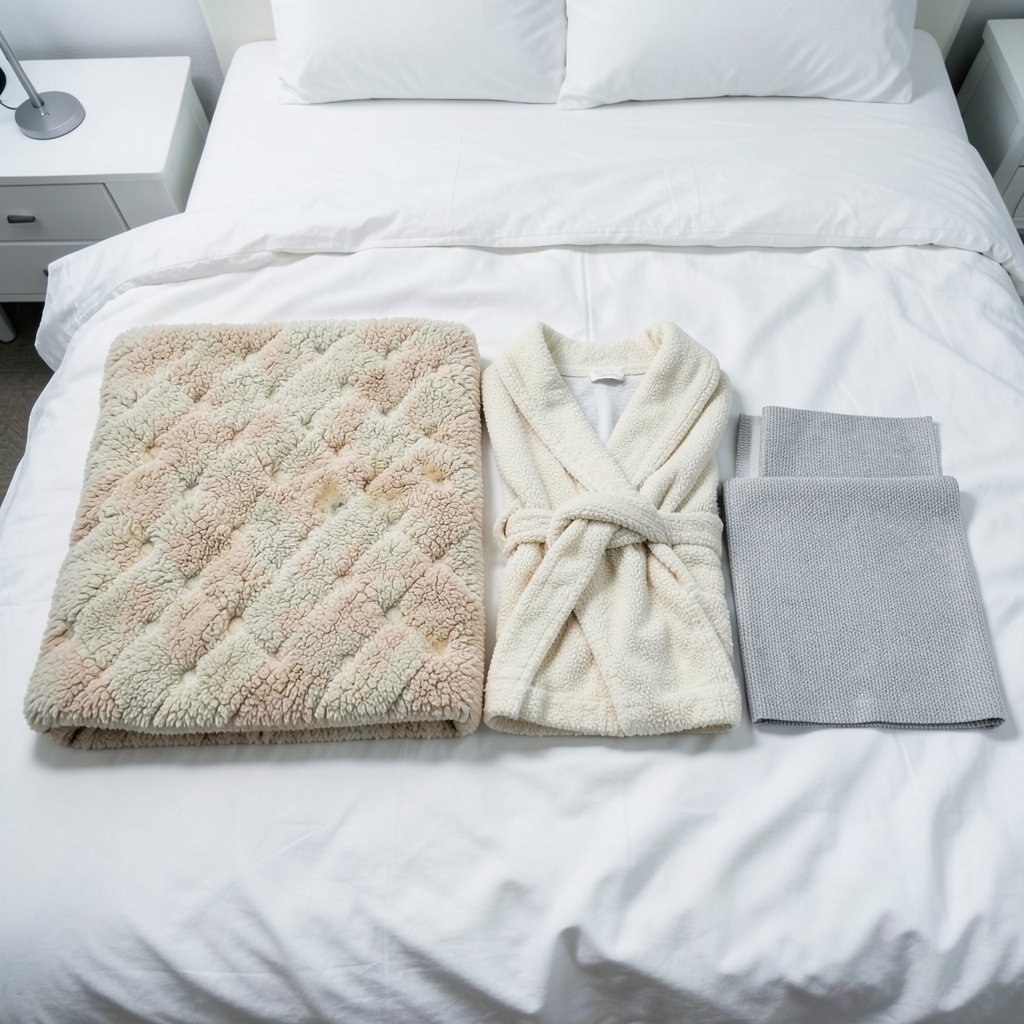
What’s clearer is the linguistic trail. The term entered English textile vocabulary in the 19th century, borrowed straight from the French word for caterpillar. The fabric became popular for bedspreads, robes, and upholstery because it looked luxurious and felt warm.
Today, textile terms are defined in standards such as ASTM D123, the Standard Terminology Relating to Textiles. That standard is a citable authority for definitions of “pile yarn” and related terms. If you ever need to settle an argument about whether something counts as chenille, that’s the reference to check.
How Chenille Yarn Is Made
The manufacturing process explains almost everything about how chenille behaves. It happens in stages.
- Pile formation. Short fibers, sometimes called the pile, are gathered and prepared. In traditional chenille, these fibers are arranged in a loose web or sheet.
- Core twisting. Two or more strong core plies are twisted tightly together. This creates the “spine” of the yarn.
- Pile insertion. The pile fibers are fed between the core plies as they twist. The twist locks the fibers in place, trapping them between the cores.
- Cutting and finishing. The pile is cut or shaped to a uniform length, then the yarn is wound and finished.
The result is a yarn with a dense core and a soft outer layer. The tighter the twist and the better the fiber quality, the less the yarn sheds. Cheap chenille tends to have loosely anchored pile, which is why budget versions can leave fuzz everywhere.
Why Stitch Definition Suffers
Because the pile stands out around the core, it fills in the gaps between stitches. That’s great for texture and terrible for detail. If you’re planning a project that relies on clean lines, sharp angles, or visible stitch patterns, chenille will fight you the whole way. This is a structural fact, not a quality issue. Even the best chenille yarn in the world will blur a cable pattern.
What Chenille Yarn Is Used For
Chenille shows up in more places than most people realize. The construction works across several categories:
| Category | Typical Use | What Matters Most |
|---|---|---|
| Apparel | Robes, sweaters, baby clothes | Softness and skin comfort |
| Upholstery | Sofas, cushions, heavy drapes | Durability and pile density |
| Rugs | Bath mats, area rugs | Pile anchoring and washability |
| Home decor | Blankets, throws, pillows | Warmth and visual texture |
| Craft yarn | Knitting and crochet projects | Bulk, softness, easy handling |
In apparel, chenille is prized for warmth without weight. In upholstery, the dense pile hides wear and feels plush. In rugs, the same pile that feels great underfoot can mat down over time, which is why rug-quality chenille is manufactured with much tighter anchoring than craft yarn.
For hand-knitters, the appeal is simple: chenille makes projects that look and feel expensive with relatively little effort. A basic garter-stitch blanket in bulky chenille looks rich and cozy. The yarn does the visual work.
The Practical Side: Working With Chenille
This is where real-world experience matters more than theory. Chenille has a reputation for being fussy, and most of that reputation is earned. Here’s what actually works and what trips people up.
Common Mistakes
Choosing the wrong hook or needle size. Chenille is bulky, and many crafters go too small. A too-tight gauge crushes the pile and makes the fabric stiff. Sizing up usually fixes the problem.
Skipping the swatch. Chenille behaves differently after washing. A swatch that looks fine dry can mat or bloom once it hits water. Always wash your swatch the way you plan to wash the finished piece.
Using it for detailed stitch patterns. Lace, cables, and complex colorwork disappear into the fuzz. Simple stitches like garter, stockinette, and single crochet show the texture best.
Pulling too hard on the working yarn. Chenille has little stretch and can snap if you yank it. Keep your tension relaxed, and don’t tug knots tight.
Ignoring the shedding. Some chenille sheds pile during working. Dark clothing plus light chenille equals a fuzzy lap. It’s normal, but it’s worth knowing before you start.
What Works in Practice
- Go up a needle or hook size from what the label suggests if your fabric feels stiff.
- Wind skeins into balls gently and avoid tight center-pull cakes that compress the pile.
- Weave in ends with a tapestry needle, splitting the yarn rather than knotting it.
- Store finished pieces folded, not hung, because chenille can stretch under its own weight.
- Wash on gentle and dry flat, following the care label every time.
If you also work with other package managers of yarn stash and project files, the workflow habits in this comparison of pnpm vs yarn workflow differences that matter 2027 may be a fun parallel for how tooling choices shape your results. The principle is the same: the tool you pick determines what you can build.
Caring for Chenille: The Rules That Actually Matter
Care labels on chenille typically call for gentle washing and flat drying, and those instructions exist for good reason. Chenille sheds pile and can mat or crush if treated roughly. A few habits keep it looking good.
Wash sparingly. Every wash cycle loosens a little more pile. Spot-clean when you can.
Use cold water and a gentle cycle. Hot water and agitation are the enemies of pile.
Skip the dryer. Tumble drying crushes the pile and can cause shrinkage. Lay the item flat on a towel and reshape it while damp.
Don’t wring or twist. Squeeze gently instead. Twisting distorts the core and flattens the pile permanently.
Store flat and away from heavy items. A chenille blanket squashed under a stack of books will show creases that never fully recover.
For upholstery and rugs, vacuum gently with a brushless attachment. A rotating brush can pull pile loose over time.
Chenille vs. Similar Yarns
Chenille gets confused with a few other fuzzy yarns. The differences matter when you’re choosing materials.
| Yarn Type | Structure | Best For | Watch Out For |
|---|---|---|---|
| Chenille | Pile trapped between twisted cores | Softness, texture, warmth | Shedding, matting, poor stitch definition |
| Velvet yarn | Similar pile, often finer | Garments, accessories | Can worm and snag |
| Bouclé | Looped, curly surface | Texture-rich fabrics | Snags easily, hard to rip back |
| Mohair | Hairy halo from long fibers | Light, airy projects | Itchiness, difficult to rip back |
| Velour | Knitted or woven fabric, not yarn | Upholstery, apparel | Not typically a hand-craft yarn |
The key distinction is that chenille is defined by its pile construction, while bouclé and mohair get their texture from loops and fiber length respectively. Velvet yarn is the closest cousin, and the two are sometimes marketed interchangeably, though the pile anchoring usually differs.
Buying Chenille Yarn: What to Check
Not all chenille is created equal. A few checks separate good yarn from disappointing yarn.
Look at the core. Bend a strand. If you can see a strong, tight core with evenly distributed pile, that’s a good sign. Loose, patchy pile means shedding ahead.
Squeeze it. Good chenille springs back. Yarn that stays compressed has poor pile memory.
Check the fiber content. Cotton chenille breathes and washes well but can be heavy. Acrylic and polyester chenille are lighter and often more affordable but may pill. Blends try to balance both.
Read reviews about shedding. This is the single most common complaint, and it varies wildly between brands. If a yarn sheds badly in the skein, it will shed worse in the wash.
Buy enough for the whole project. Dye lots matter with any yarn, and chenille is no exception. Running short mid-project and finding a mismatched lot is a classic frustration.
Conclusion
Chenille yarn earns its name honestly. It’s a pile yarn built around a twisted core, and that structure gives it the soft, segmented, caterpillar-like surface that made it popular in 18th-century France and keeps it popular today. It’s not a fiber but a construction, which means two chenille yarns can behave completely differently depending on what they’re made from.
Chenille works best with relaxed tension, simple stitches, and gentle care. Tight gauge, complex patterns, and rough washing cause problems. Choose it for texture and softness, not for detail work. Wash it gently, dry it flat, and store it folded. Do those things, and a chenille project will stay plush and beautiful for years.
FAQ
Is chenille yarn good for beginners?
Yes, with a caveat. Chenille is forgiving because the fuzzy surface hides small mistakes and uneven stitches. However, it can be slippery and hard to rip back if you need to undo rows. Beginners should start with simple garter or single crochet projects and a slightly larger hook or needle than the label suggests.
Does chenille yarn shed?
Most chenille sheds some pile, especially during the first few washes. The amount depends on how tightly the pile is anchored to the core. Higher-quality chenille with a dense core sheds less. Gentle washing and flat drying reduce shedding over time.
Can you put chenille yarn in the dryer?
It’s best to avoid it. Tumble drying crushes the pile and can cause shrinkage or matting. Lay the item flat on a towel, reshape it while damp, and let it air dry. This keeps the pile fluffy and the shape intact.
What is chenille yarn made of?
Chenille can be made from cotton, acrylic, polyester, rayon, or blends of these fibers. The term describes the yarn’s construction, not its fiber content. Cotton chenille tends to be heavier and breathable, while acrylic and polyester versions are lighter and often more affordable.
Why does my chenille project look blurry?
That’s the nature of a pile yarn. The fuzzy surface fills in the gaps between stitches, which blurs cables, lace, and colorwork. For crisp stitch definition, choose a smooth yarn. For softness and texture, chenille is the better pick.
Is chenille yarn the same as velvet yarn?
They’re close cousins but not identical. Both are pile yarns with a soft surface, and the terms are sometimes used interchangeably in marketing. The main difference is usually in pile length and how tightly the pile is anchored to the core. Always check the label and feel the yarn before committing to a large project.