
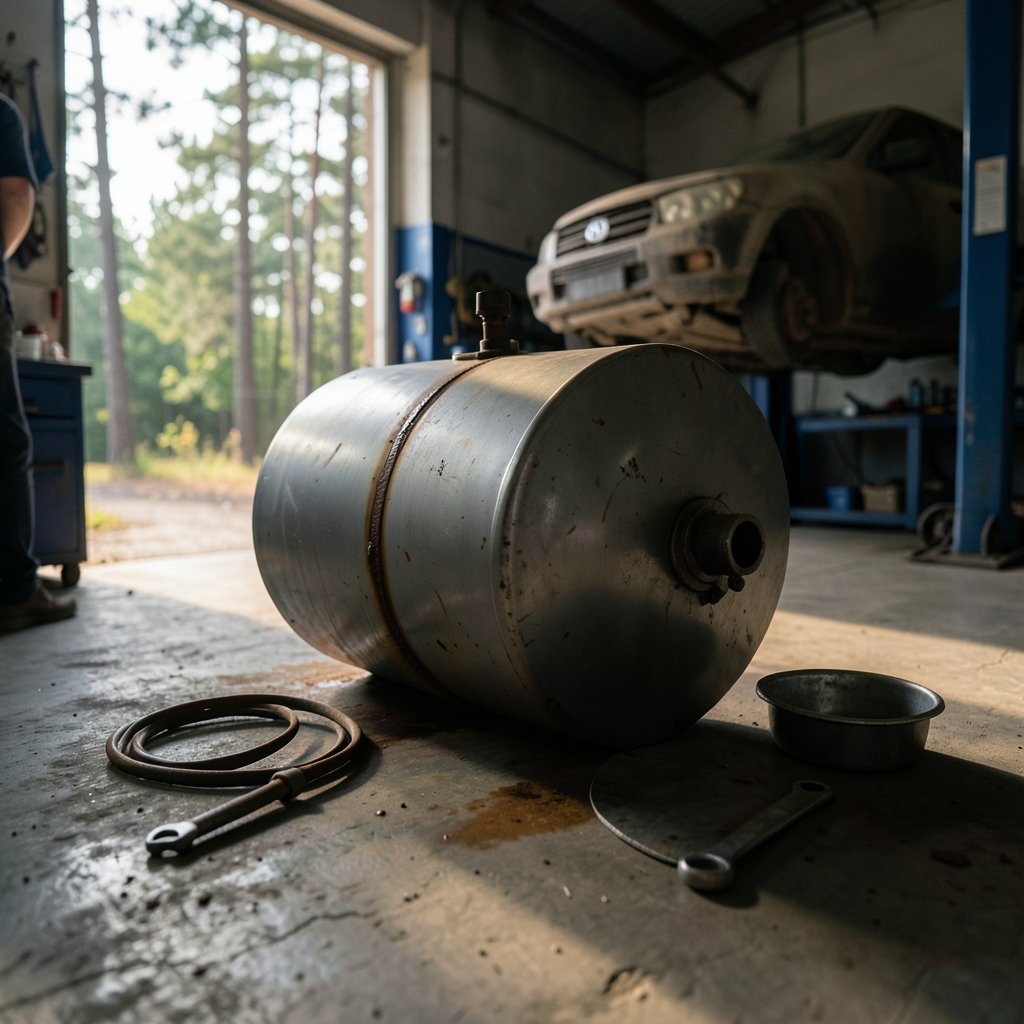
What happens when the thing designed to hold your fuel quietly starts to fail? A fuel tank is one of the least glamorous parts of any vehicle, boat, or aircraft, yet it sits at the center of safety, range, emissions, and cost. Most people never think about theirs until a fuel gauge misbehaves, a check-engine light comes on, or a mechanic mentions the word “leak.” This article walks through how fuel tanks are built, what the regulations actually require, where things go wrong in practice, and what owners can do to avoid expensive surprises.
What a Fuel Tank Actually Does
A fuel tank is a safe container for flammable liquid. That definition sounds simple, but “safe” carries a lot of engineering weight. A tank has to hold fuel without leaking, allow air in as fuel leaves so the tank doesn’t collapse, let vapor out in a controlled way, and survive crashes, temperature swings, and years of chemical exposure.
Tanks appear in vehicles, aircraft, ships, and stationary installations like generators and filling stations. Each setting brings its own rules, materials, and failure modes. A plastic car tank and an underground steel tank at a gas station share a purpose but almost nothing else.
Materials: Steel, Plastic, and Everything Between
Automotive tanks are usually made of steel or plastic. High-density polyethylene (HDPE) became common in passenger cars from the 1970s and 1980s onward. The reasons are practical: plastic resists corrosion, and it can be blow-molded into odd shapes that tuck under the rear seat or fit around the floor pan.
Steel still has a place, especially in older vehicles, trucks, and some performance applications. Steel is strong and easy to repair in some cases, but it rusts from the inside out when moisture collects. That internal rust is a slow, hidden problem. By the time a steel tank starts weeping fuel, the damage has usually been building for years.
Aircraft tanks follow a different logic. They are classified as integral (wet wing), rigid removable, or bladder types. Integral wet-wing tanks are standard on most large transport aircraft because they use the wing structure itself as the container, saving weight.
| Tank Type | Common Material | Typical Use | Main Weakness |
|---|---|---|---|
| Blow-molded plastic | HDPE | Passenger cars, light trucks | Permeation, cracking at fittings |
| Steel | Coated or stainless steel | Older cars, trucks, some equipment | Internal rust |
| Integral wet wing | Aluminum structure | Large transport aircraft | Sealing and inspection complexity |
| Bladder | Flexible synthetic fabric | Aircraft, some race cars | Wear and chafing |
| Underground storage | Steel or composite | Filling stations | Leak detection and corrosion |
Why Capacity Numbers Mislead
Manufacturers quote a nominal tank capacity, but nominal capacity is not usable fuel. A reserve volume, the filler neck, and the shape of the tank mean the amount you can actually burn is smaller than the spec sheet suggests. This trips people up constantly when they calculate range.
A practical habit: when you refuel, note how many gallons or liters go in compared with the quoted capacity. If the numbers never match, that is normal, not a defect. The gap is the reserve and the neck. If you routinely squeeze in far more than the stated capacity, stop. Overfilling can push liquid fuel into the vapor system, which is designed for vapor only.
Emissions Rules Shape the Modern Tank
Fuel tanks on vehicles are regulated for evaporative emissions. In the United States, evaporative emission standards under 40 CFR Part 86 limit hydrocarbon vapor loss from fuel systems, including tanks. The rule has been in force since the 1970s and has been tightened repeatedly, with current Tier 3 standards phasing in from 2017.
In the European Union, fuel tanks fall under the motor vehicle type-approval framework in Regulation (EU) 2018/858 and the UNECE regulations it references, such as UN R34 on fire risks. That regulation was adopted in 2018 and became applicable from 1 September 2020.
What does this mean for a driver? The charcoal canister, purge valve, and sealed cap on your car are not accessories. They are compliance hardware. When one fails, you get a check-engine light and, often, a modest fuel smell. Ignoring it usually makes the repair bigger.
Safety Systems Most Owners Never See
Fuel tanks can be a fire and explosion hazard, which is why standards require venting, rollover valves, and, in some applications, inerting. After the 1996 TWA Flight 800 accident, nitrogen inerting of aircraft center tanks became a focus, and an FAA inerting rule for transport aircraft followed in 2008.
On the road, the equivalents are simpler but just as important:
- A rollover valve stops liquid fuel from escaping if the car flips.
- A vent system lets air in and vapor out without letting fuel out.
- A sealed cap keeps vapor contained and pressure stable.
- A filler neck restrictor prevents the wrong nozzle from fitting.
These parts are cheap individually and annoying to diagnose collectively. That is why a “small” fuel smell deserves attention rather than a shrug.
Marine Tanks: A Different Rulebook
On recreational boats in the United States, marine fuel tanks are governed by Coast Guard regulations in 33 CFR Part 183 and by ABYC standard H-25, which covers materials, venting, and fill-pipe requirements. The regulations are long-standing, but ABYC H-25 is revised periodically, so the current edition matters.
In practice, marine tanks fail in ways car owners rarely see. Ethanol-blended fuel can attack older fiberglass tanks from the inside. Aluminum tanks corrode where water sits at the bottom. Vent lines clog with salt and spider nests. A boat owner who checks the vent and the fuel filter every season avoids most of the trouble.
Underground Tanks at the Pump
Underground storage tanks at filling stations are regulated separately for leak prevention and detection, in the US under 40 CFR Part 280. The rule dates to 1988 and was revised in 2015. These tanks hold thousands of gallons and sit below groundwater, so a leak is an environmental event, not merely a maintenance bill.
For drivers, the practical takeaway is small but real: buy fuel from stations that look maintained. Water in the fuel, contaminated fuel, and slow pumps can all trace back to tank problems. If your car runs rough right after a fill-up and smooths out later, note the station. It may not be your car.
Where Fuel Tanks Actually Fail
First-hand repair experience points to a handful of repeat offenders. None of them are exotic.
Rust from the inside. Steel tanks collect condensation, especially in vehicles that sit for long periods. The tank rusts from the top down where vapor meets metal. A fuel filter that clogs repeatedly is a warning sign.
Cracked plastic at fittings. Plastic tanks rarely fail in the middle. They fail at the seams and where lines attach, especially after years of heat cycling.
Failed purge valves and canisters. These cause hard starts after refueling and a fuel smell. Replacing the gas cap first is a cheap test, but it is rarely the whole fix.
Overfilling damage. Clicking the nozzle repeatedly to top off forces liquid into the vapor canister. That is one of the most common self-inflicted fuel system problems.
Contaminated fuel. Water and debris settle at the bottom of the tank. If a car sputters shortly after a fill, suspect the fuel before the fuel pump.
A common mistake is treating a fuel smell as harmless. Another is replacing a fuel pump when the real problem is a rusty tank sending debris forward. Diagnose the tank before replacing parts downstream.
Maintenance Habits That Actually Work
Keeping a tank healthy is mostly about avoiding bad habits and catching small issues early.
- Keep the tank above a quarter full in vehicles that sit for weeks. Less airspace means less condensation.
- Replace the fuel filter on schedule. A clogged filter is cheaper than a burned-out pump.
- Never top off past the first click. The vapor system is not designed for liquid.
- Fix the gas cap. A loose or worn cap triggers evaporative-system codes and wastes fuel.
- Inspect lines and fittings at every oil change. Look for damp spots and cracked rubber.
- For boats and stored equipment, use fuel stabilizer and check the vent for blockages.
If you are comparing small machines and wondering how tank size and ink costs interact, the same logic of real-world versus quoted capacity applies to printers, as this breakdown of the Epson EcoTank ET-2800 review and its real printing costs shows. The lesson is universal: quoted numbers and usable numbers are different things.
What to Do When a Tank Leaks
A fuel leak is a safety issue, not a scheduling one. Stop driving or running the equipment, ventilate the area, and keep ignition sources away. Small seeps on older steel tanks sometimes allow a patch repair, but most professionals replace rather than repair, because internal corrosion continues around any patch.
Cost varies widely by vehicle and tank type. A plastic car tank is often a straightforward replacement. A steel tank on a classic car can mean sourcing a reproduction part. An aircraft or marine tank involves inspection standards that push labor costs up sharply. The pattern holds: the tank itself is often the cheap part, and access is the expensive one.
For anyone weighing repair against replacement of the whole machine, the same trade-off math applies to printers, where a real-world look at EcoTank running costs walks through when the consumable costs more than the device is worth.
Conclusion
A fuel tank looks like a simple box, but it is a regulated safety component with a vent system, a vapor-control strategy, and a set of failure modes that reward attention. The practical rules are short. Do not overfill. Keep steel tanks from sitting with airspace and moisture. Treat a fuel smell as a warning. Replace filters on time. Understand that the capacity on the spec sheet is not the fuel you can use. Owners who follow those habits spend far less time and money on fuel systems than those who wait for a warning light.
Frequently Asked Questions
How long does a fuel tank usually last?
A plastic tank often outlasts the vehicle. A steel tank can last decades in dry climates but may rust within ten to fifteen years in wet, salty conditions, especially if the vehicle sits for long periods. Marine and aircraft tanks depend heavily on inspection and maintenance rather than a fixed lifespan.
Is it safe to drive with a small fuel leak?
No. Even a slow seep creates fire risk and exposes people to fuel vapor. Stop using the vehicle or equipment, ventilate the area, and have it inspected before driving again.
Why does my car smell like fuel after refueling?
The most common causes are a loose or worn gas cap, a failing purge valve, or a saturated charcoal canister from repeated overfilling. Start with the cap and stop topping off past the first click, then have the evaporative system checked if the smell continues.
Can I use a plastic tank repair kit on a cracked car tank?
Some kits work as short-term fixes on small cracks in accessible spots, but plastic tanks usually fail at seams and fittings where patches do not hold. Replacement is the reliable option, and a patch that fails while driving is a serious hazard.
What is the difference between nominal and usable fuel capacity?
Nominal capacity is the manufacturer’s quoted volume. Usable capacity is what you can actually burn, which is smaller because of the reserve volume, the filler neck, and the tank’s shape. The gap explains why range calculations often come up short.
Do fuel tanks need regular inspection?
Yes, especially on boats, aircraft, and older steel-tank vehicles. Inspections focus on corrosion, cracked fittings, vent blockages, and leak evidence. For cars, checking lines and fittings at every oil change catches most problems early, before they become expensive.



