

What exactly are those fine, dust-like particles that puff out when you tap a ripe mushroom cap? They are mushroom spores, and they are the reason fungi have managed to colonize nearly every corner of the planet. These microscopic cells are the fungal equivalent of seeds, though they work quite differently from the seeds in your garden packet. Understanding them opens a window into how mushrooms reproduce, how foragers identify species, and why indoor cultivators worry so much about contamination.
This guide covers the biology, the practical uses, and the health considerations that matter most to foragers, growers, and curious readers alike. It sticks to what is well established in mycology and flags where numbers vary by species, because they genuinely do.
What Are Mushroom Spores?
Mushroom spores are microscopic reproductive cells produced by fungi. Each spore is a single cell capable of germinating into a thread-like structure called a hypha, which can grow into a new fungal network under the right conditions. They are not seeds. A seed contains a dormant embryo with stored food; a spore is far simpler and carries only what it needs to start from scratch.
Spores form on specialized structures inside the gills, pores, teeth, or ridges on the underside of a mushroom cap. In basidiomycetes, the group that includes most familiar cap-and-stem mushrooms, spores develop on tiny club-shaped cells called basidia. In ascomycetes, such as morels and cup fungi, they develop inside sac-like cells called asci. Either way, the result is the same: enormous numbers of tiny cells built for travel.
How Tiny Are Mushroom Spores, Really?
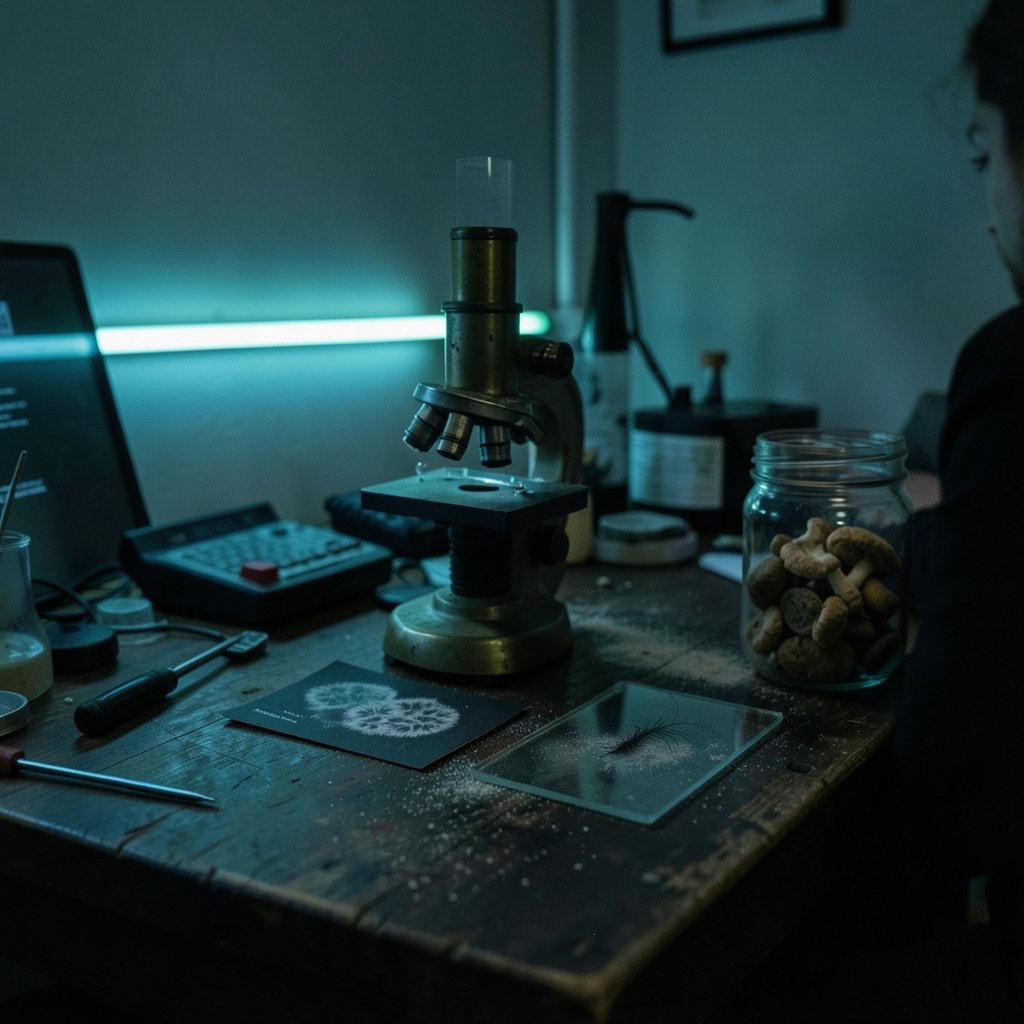
Most mushroom spores fall roughly in the 3 to 20 micrometer range, though the exact size varies considerably between species. For context, a human hair is about 70 micrometers wide, so a single spore is often invisible without a microscope. A cluster of millions of them looks like fine dust.
That small size is exactly what makes them airborne. Once released, spores are light enough to ride air currents for long distances. Some species have evolved surface textures or shapes that improve lift or help them catch the wind, and the diversity of spore shapes is one reason mycologists can identify fungi under a microscope.
How Many Spores Does One Mushroom Release?
The numbers are genuinely staggering. A single mature fruiting body can release spores in the millions to billions over its lifetime, depending on the species and its size. A large bracket fungus growing on a tree can keep releasing spores for weeks.
Why so many? Because the odds are brutal. A spore must land in a suitable spot, avoid drying out, germinate, find a compatible mate, and establish a network before something eats it or conditions change. Producing spores by the billion is a numbers game, and it works. The practical takeaway for anyone handling mushrooms is simple: a ripe cap can coat a surface in a visible layer of spores overnight.
How Do Mushroom Spores Spread?
Spore dispersal is not passive for every species. There are two broad strategies, and they behave very differently.
Forcible discharge (ballistospory). Many basidiomycetes actively launch their spores. A tiny droplet forms at the base of each spore, and when it shifts, the spore is catapulted a short distance away from the gill. That launch is only a few tenths of a millimeter, but it is enough to clear the gills and reach open air, where the wind takes over.
Passive dispersal. Other fungi rely on wind, water, insects, or animals. Truffles, for example, release spores underground and depend on animals digging them up and eating them. Some fungi attract insects that carry spores away. Others simply let the wind do everything.
Once airborne, spores can travel remarkable distances. Outdoor spore counts rise and fall with weather, and many people sensitive to airborne particles notice symptoms tracking those counts.
Why Spore Prints Matter for Foragers
If you have spent any time with mushroom identification guides, you have seen spore print color listed as a key feature. A spore print is made by cutting a cap from its stem and laying it gill-side down on paper for several hours. The released spores leave a deposit, and its color is a genuine identification character.
Colors range widely: white, cream, brown, rust, black, pink, and purple-brown. Two mushrooms that look nearly identical from above can produce completely different prints, which is why experienced foragers treat the print as a standard step rather than a shortcut. It is not a full identification on its own, but it narrows the field fast.
How to Make a Spore Print: A Practical Walkthrough
- Select a mature, fresh cap. Young specimens may not have mature spores yet.
- Cut the stem close to the cap with a clean knife.
- Place the cap gill-side down on a sheet of paper. Use half white paper and half dark paper, or two sheets, so both light and dark prints show up.
- Cover it with a bowl or cup to prevent drafts and drying.
- Wait four to twelve hours, depending on the species and humidity.
- Lift the cap carefully and note the color of the deposit.
A common mistake is using a dry, older specimen. It will often drop almost nothing. Another is forgetting the cover, which lets air currents scatter the deposit into a useless smear. Fresh caps and still air give the cleanest results.
Spores in Cultivation: The Contamination Problem
Spore syringes and spore prints are widely used by people who grow mushrooms at home, and the single biggest issue they run into is contamination. Spores collected in the open air are not sterile. They can carry mold spores, bacteria, and other unwanted organisms along with them.
In practice, this means a spore syringe is a starting point, not a clean culture. Growers who want consistent results often move to working with cultures on agar, where they can isolate clean mycelium and confirm what they are actually growing. Anyone learning the hobby should expect a few failed attempts; that is normal, and it is why sterility gets so much attention in cultivation guides. University extension services and local mycological societies are the best places to learn proper technique, because they teach the method rather than sell a shortcut.
Spores and Human Health: What to Know
Fungal spores are recognized as airborne allergens. For most people, everyday exposure is harmless. For others, especially people with asthma or mold sensitivities, spore exposure can trigger respiratory symptoms, and outdoor spore counts are monitored in some regions alongside pollen counts.
There is a more serious occupational angle. Inhaling large quantities of certain spores, particularly in indoor mold situations or commercial mushroom cultivation, has been associated with respiratory conditions including hypersensitivity pneumonitis, sometimes called mushroom worker’s lung. This is a condition tied to heavy, repeated exposure, not to walking past a mushroom in the woods.
Sensible precautions cover nearly everyone’s needs:
- Ventilate spaces where large amounts of mushrooms are handled or grown.
- Wear a mask when cleaning up mold or working with dense spore-producing material.
- Keep indoor humidity in check to discourage mold growth.
- Seek medical advice if respiratory symptoms appear after repeated exposure.
If you are setting up a growing space and also thinking about how lighting and room conditions affect your setup, practical guides on room lighting changes and viewing conditions can help you plan a workspace that is comfortable and well ventilated.
Where the Numbers Get Fuzzy
It is worth being honest about uncertainty. Figures for “spores per mushroom,” size ranges, and exposure thresholds vary by species and by study design. A number quoted for one species does not transfer to another. When you read a specific count, treat it as an estimate for that species under those conditions rather than a universal rule. Good field guides and mycology references state ranges and name the species for exactly this reason.
The same caution applies to legal questions. Rules about spores of certain species differ widely between countries and change over time. Anyone with a legal question should check their own jurisdiction’s current official guidance rather than relying on a general article.
Spores vs. Seeds: A Quick Comparison
The two are often confused, and the differences are meaningful.
| Feature | Mushroom spores | Plant seeds |
|---|---|---|
| Structure | Single cell | Multi-celled embryo with stored food |
| Size | Roughly 3 to 20 micrometers | Usually visible to the naked eye |
| Genetic situation | Often requires a compatible partner to form a fertile network | Contains a full embryo ready to grow |
| Dispersal | Wind, water, animals, forcible discharge | Wind, water, animals, gravity |
| Appearance | Dust-like, often invisible individually | Distinct, recognizable object |
The core difference is independence. A seed carries its own startup kit. A spore carries almost nothing and needs luck, moisture, and often a partner.
Common Mistakes People Make
A few errors come up again and again among people new to mushrooms and spores.
Assuming a spore print identifies a mushroom on its own. It narrows things down, but cap shape, habitat, stem features, and smell all matter. Never eat a mushroom based on a print alone.
Collecting prints from old caps. Dry specimens drop poorly. Fresh is better.
Expecting a spore syringe to be sterile. It is not. Plan for contamination and learn clean technique.
Ignoring air movement. Drafts ruin prints and spread spores onto nearby surfaces. Work in still air and cover your work.
Panicking about everyday exposure. Spores are everywhere outdoors. The health concerns that matter involve heavy, repeated, indoor exposure.
Why Spores Matter Beyond the Forest
Spores do more than make more mushrooms. They are central to how fungi recycle nutrients, partner with plant roots, and spread across landscapes. Fungal networks built from germinating spores help break down dead wood and leaves, and many plants depend on fungal partnerships to thrive. Some spores also cause crop diseases, which is why agricultural researchers study dispersal so closely. (Switch 2 vs switch oled room lighting changes viewing)
For the home enthusiast, spores are a practical tool: a way to identify what you found, a way to understand reproduction, and a reminder that the most important parts of a mushroom are usually the parts you cannot see. If you are building a dedicated space for cultivation or observation, thinking through how you light and ventilate it pays off, and resources on designing an indoor workspace with room ideas can help you set up something functional.
Conclusion
Mushroom spores are tiny, numerous, and quietly essential. They are single cells in the 3 to 20 micrometer range, produced in the millions to billions, and dispersed by wind, water, animals, or a tiny explosive launch. They give foragers one of their most reliable identification tools in the spore print, they create real contamination challenges for cultivators, and they carry genuine health considerations for people with heavy indoor exposure.
The best approach is neither fear nor carelessness. Learn to make a clean spore print, respect sterility when cultivating, ventilate your workspace, and treat identification as a process rather than a single test. Do that, and the invisible side of mushrooms becomes one of the most interesting parts of the hobby.
Frequently Asked Questions
Are mushroom spores dangerous to breathe?
For most people, everyday exposure to outdoor spores is harmless. The concern involves heavy, repeated exposure, such as cleaning significant indoor mold or working in commercial cultivation without ventilation. In those settings, inhaling large quantities of certain spores has been associated with respiratory conditions including hypersensitivity pneumonitis. A mask and good ventilation cover most routine situations.
Can you grow mushrooms from spores?
Yes, but it takes more steps than most people expect. Spores must germinate and meet a compatible partner before forming a fertile network. In practice, growers usually start spores on a sterile medium, then isolate clean mycelium before moving to a growing substrate. Contamination is the most common failure point, so clean technique matters more than any single piece of equipment.
What color should a spore print be?
There is no single correct color. Prints range from white and cream to brown, rust, black, pink, and purple-brown depending on the species. The color is useful precisely because it varies. Compare your print against a reliable field guide for the species you suspect, and use it alongside other features rather than alone.
How long does it take to get a spore print?
Usually four to twelve hours. Fresh, mature caps drop spores fastest. Humidity and species both affect timing. Cover the cap to keep drafts out and check after a few hours; if the deposit is faint, give it more time rather than switching to a different cap.
Do all mushrooms release spores the same way?
No. Many basidiomycetes forcibly launch spores a short distance using a tiny water droplet mechanism, after which the wind carries them away. Others rely entirely on passive dispersal by wind, water, or animals. Truffles, for instance, release spores underground and depend on animals to move them.
Are spores the same thing as seeds?
No. A seed is a multi-celled embryo with stored food and can grow on its own. A spore is a single cell with minimal reserves, and many fungal spores need to find a compatible partner before forming a productive network. Spores are also far smaller, typically measured in micrometers rather than millimeters.



