
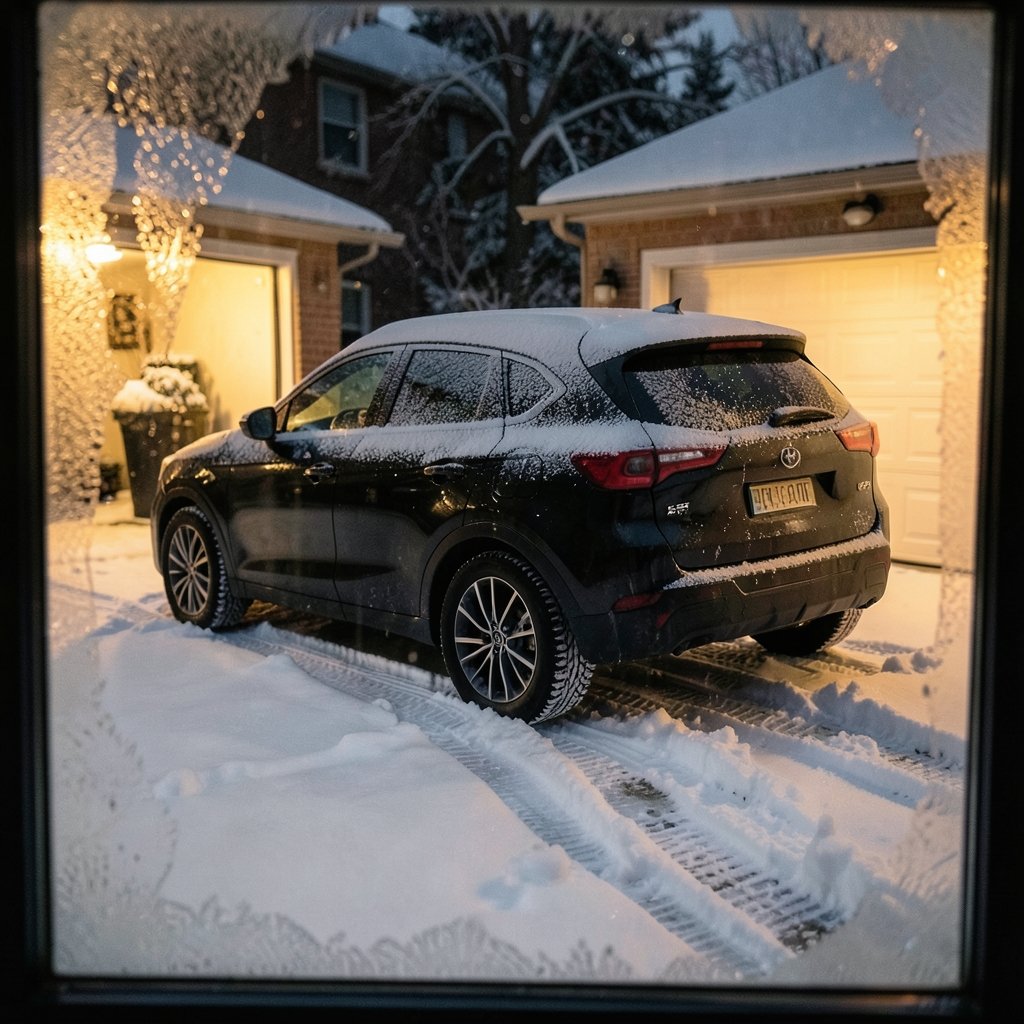
Which wheels should be doing the work? It sounds like a simple question, but it shapes how a car feels in a snowy parking lot, how much it costs at the pump, and how much you pay upfront. FWD (front-wheel drive) and AWD (all-wheel drive) are the two most common answers in modern showrooms, and plenty of buyers pick one without fully understanding the trade-offs.
This guide breaks down the real differences: how each system moves power to the road, what that means in rain and snow, where the costs hide, and which one makes sense for the way you actually drive. No jargon walls, no brand cheerleading.
What FWD and AWD Actually Mean
FWD means the engine sends power only to the front wheels. Those same wheels also steer, which is why FWD cars tend to understeer (push wide) when you ask too much of the front tyres. The layout is simple, light, and cheap to build, which is why most compact cars, hatchbacks, and family sedans use it.
AWD means the car can send power to all four wheels. In most modern systems this happens automatically and varies constantly. A computer watches wheel speed, throttle, and steering angle, then shuffles torque to whichever axle has grip. Some systems run a mechanical centre coupling, others use a clutch pack, and many electric vehicles simply fit a second motor on the other axle.
One important distinction: AWD is not the same as 4WD (four-wheel drive). Traditional 4WD usually means a selectable system with a low-range transfer case, built for serious off-road work. AWD is the everyday version, designed to be left engaged all the time. Manufacturers use the terms loosely, so check the spec sheet rather than the badge.
How Each System Delivers Power
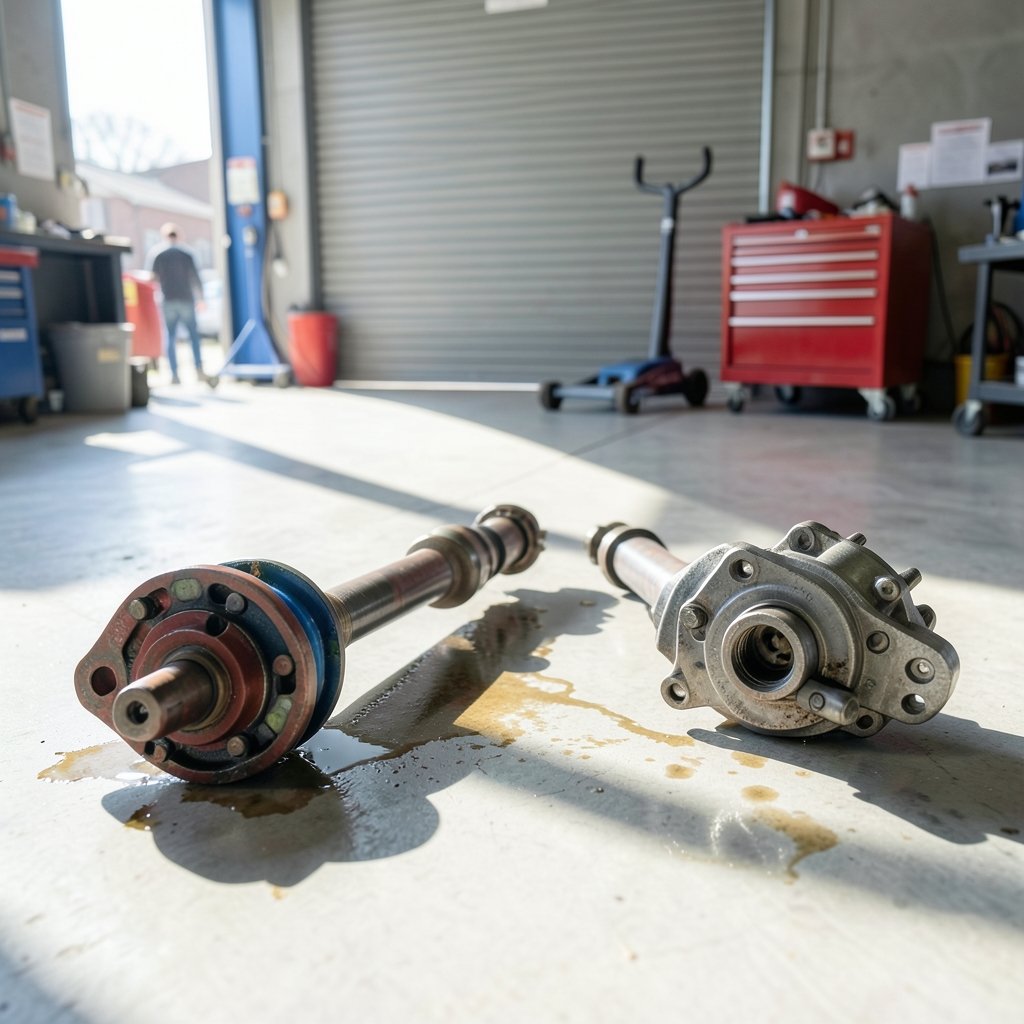
The plumbing tells the story. A FWD car routes power from the engine or motor straight to the front axle through a transaxle. No driveshaft runs to the back, and there is no rear differential to package. That saves weight and cost, and it frees up the rear floor for passengers and cargo.
An AWD car adds a driveshaft, a rear differential or rear drive unit, and a transfer unit to split torque. In combustion cars that adds perhaps 70 to 150 kilograms depending on the system. In EVs, the second motor adds weight and cost but removes the mechanical complexity of a centre coupling.
| Feature | FWD | AWD |
|---|---|---|
| Wheels driven | Front only | All four (variable) |
| Drivetrain weight | Lower | Higher |
| Upfront cost | Lower | Higher |
| Fuel or energy use | Generally lower | Generally higher |
| Traction on low-grip surfaces | Limited | Improved |
| Cabin and cargo space | Usually better | Sometimes reduced |
| Maintenance items | Fewer | More (fluid, rear diff, coupling) |
| Typical use case | Commuting, budget, efficiency | Snow, wet climates, performance |
That table is the honest summary. Everything else is nuance, and the nuance matters.
Traction: Where AWD Genuinely Earns Its Keep
Here is the part where AWD fans are right. On snow, wet grass, loose gravel, or a steep slippery hill, AWD can put down power that a FWD car simply cannot. Two extra driven wheels mean more total grip available for acceleration, and the system can shift torque away from a spinning wheel in milliseconds.
The practical result is confidence. Pulling away from a snowy junction, climbing a damp driveway, or merging onto a wet motorway all feel more controlled. For drivers in hilly areas with genuine winter weather, that is not marketing fluff. It is a real capability difference.
But here is the caveat that too many buyers miss: AWD helps you go, not stop. Braking grip and cornering grip come from the tyres and the contact patch, not from which wheels are driven. A heavy AWD SUV on summer tyres will slide further under braking than a light FWD hatchback on proper winter rubber. Road-safety bodies have cautioned for years that all-wheel drive is no substitute for winter tyres or for slowing down. If you take one thing from this article, take that.
Electronic stability control is now standard on essentially all new light vehicles in the United States, required since model year 2012, so both drivetrains benefit from the same electronic safety net. That technology has narrowed the gap between the layouts in everyday conditions.
Efficiency and Running Costs: The FWD Advantage
Mechanical AWD adds friction, weight, and rotational inertia. Every extra component that turns costs a little energy. FWD avoids the driveshaft and rear differential entirely, so it usually wins on fuel economy and, in EVs, on range.
Modern on-demand AWD systems have closed much of that gap. Many disconnect the rear axle when it is not needed, running as a pure FWD car on dry motorways and only engaging the rear when slip is detected. That is clever engineering, and it means the penalty is smaller than it was a decade ago. Smaller, not zero.
Then there is maintenance. AWD systems carry extra fluids: transfer case oil, rear differential oil, sometimes a coupling fluid. Service intervals vary, but the bills are real. Tyre wear is another quiet cost. AWD cars generally want all four tyres matched closely in tread depth, because mismatched diameters can stress the system. That means replacing tyres in sets of four more often than you might with FWD.
Practical Tips That Actually Work
Buying advice is where theory meets the driveway. A few habits separate happy owners from frustrated ones.
- Match the drivetrain to your actual climate. If you see meaningful snow or ice every winter, or you regularly drive steep, loose, or wet surfaces, AWD earns its cost. If you mostly drive dry motorways and city streets, FWD plus good tyres is the smarter spend.
- Budget for tyres before you budget for badges. A FWD car on quality winter or all-season tyres will outperform an AWD car on worn summer rubber in almost every real scenario. Tyres are the single biggest grip upgrade you can buy.
- Test drive on the same day if you can. Drive a FWD and an AWD version of the same model back to back. Feel the weight, the steering, and the turning circle. The difference is easier to judge than to read about.
- Check the AWD system type. Some are full-time, some on-demand, some torque-vectoring. Ask the dealer which one you are getting and what service it needs.
- Inspect tyre tread depth regularly on AWD cars. Keep all four within a couple of millimetres of each other to protect the drivetrain.
- Do not confuse capability with permission. AWD helps you pull away. It does not shorten your stopping distance, so leave the same gap you would in any other car.
For a deeper look at drivetrain layouts and how they are engineered, the reference material at occcy.com is a useful starting point.
Common Mistakes Buyers Make
The most frequent error is buying AWD as an insurance policy against bad weather and then never fitting appropriate tyres. That combination gives drivers a false sense of security, which is arguably worse than knowing your limits.
The second mistake is overpaying for AWD when the need is marginal. If you live somewhere flat with mild winters and mostly drive in town, the extra upfront cost, fuel use, and maintenance rarely pay back. FWD is not a compromise in that setting. It is the correct choice.
The third is ignoring the weight penalty in smaller cars. Bolting AWD onto a compact hatchback can blunt fuel economy and add cost without transforming the driving experience. In electric cars, the second motor is often the performance option rather than a pure traction one, so be clear about what you are buying.
The fourth is assuming AWD means off-road ready. It usually does not. Ground clearance, tyre type, and suspension travel matter far more than which wheels are driven.
The EV Twist
Electric vehicles have changed this debate. Many EVs offer AWD by adding a second motor on the other axle, which means instant torque to all four wheels with no driveshaft, no centre coupling, and no rear differential fluid to change. The traction benefit in snow is real, and the efficiency penalty can be smaller than in combustion cars.
The flip side is cost and range. Dual-motor versions usually cost more and travel fewer kilometres or miles per charge than their single-motor siblings. Buyers weighing FWD versus AWD in the electric era should think in terms of range and price as much as snow capability.
Which One Should You Choose?
There is no universal winner, only a fit. Use this simple test.
Choose FWD if you want lower purchase price, better efficiency, cheaper maintenance, and more cabin or cargo space, and if your winters are mild or you are willing to invest in proper tyres.
Choose AWD if you deal with real snow, ice, steep or loose surfaces, or if you want the extra confidence and performance that comes with driving all four wheels. Accept the higher cost and the extra maintenance as part of the deal.
Whichever you pick, remember that the drivetrain is one part of a system. Tyres, speed, and attention do more for your safety than any badge on the boot.
Conclusion
The FWD versus AWD question comes down to honesty about how you drive. AWD is a genuine capability upgrade on low-grip surfaces, and modern on-demand systems have made it more efficient than ever. But it costs more to buy, more to run, and more to maintain, and it does nothing for braking or cornering grip. FWD remains the smarter, lighter, cheaper choice for most everyday driving, especially when paired with quality tyres.
Pick the drivetrain that matches your roads, your weather, and your budget. Then spend the difference on the thing that actually keeps you on the road: grip where the rubber meets the tarmac. For more practical guidance on vehicle systems and smart ownership decisions, explore occcy.com.
FAQ
Is AWD better than FWD in snow?
AWD has a real advantage when accelerating on snow, because it can send power to all four wheels and shift torque away from a spinning one. That makes pulling away from junctions and climbing slippery hills noticeably easier. However, AWD does not shorten braking distances or improve cornering grip, which depend on tyres and speed. A FWD car with proper winter tyres will often stop and steer better than an AWD car on worn all-seasons.
Does AWD use more fuel than FWD?
Generally yes, though the gap has narrowed. Mechanical AWD adds weight, friction, and rotating components, all of which consume energy. Many modern on-demand systems disconnect the rear axle when it is not needed, so a steady motorway cruise can be nearly as efficient as FWD. In stop-start or slippery conditions, the penalty grows. Electric AWD versions typically offer less range than their single-motor equivalents.
Is AWD the same as 4WD?
No. AWD usually means a system that sends power to all four wheels automatically and can be left engaged all the time. Traditional 4WD typically involves a selectable system with a low-range transfer case, built for off-road use. Manufacturers use the terms inconsistently, so check the specification rather than the badge. Some cars labelled 4×4 are really on-demand AWD.
Do I need AWD for city driving?
Usually not. City driving involves low speeds, short trips, and mostly cleared roads. FWD is lighter, cheaper, more efficient, and simpler to maintain, and it handles those conditions well. The money saved is often better spent on quality tyres and regular servicing. AWD makes more sense if you regularly face snow, ice, steep gradients, or loose surfaces.
Can I put different tyres on an AWD car?
It is best avoided. AWD systems expect all four tyres to roll at similar speeds, and significant differences in tread depth or circumference can put strain on the centre coupling or rear differential. Many manufacturers recommend keeping tread depths closely matched and replacing tyres in sets of four. On FWD cars the rules are looser, though matching pairs on the driven axle is still wise.
Does AWD make a car safer?
It can improve traction when accelerating, which helps in low-grip situations. But safety comes mostly from tyres, braking distance, stability control, and driver behaviour. Electronic stability control is standard on essentially all new light vehicles in the United States since model year 2012, regardless of drivetrain. Treat AWD as a traction aid, not a safety guarantee, and never as a reason to drive faster in bad weather.



