

What makes a high chair worth several hundred dollars when a basic model costs a fraction of that? That question sits at the heart of the Lalo high chair debate. The Lalo brand, a US-based baby gear company that launched around 2019–2020, built its reputation on a single flagship product called “The Chair” — a multi-stage seat designed to follow a child from first solids through the toddler years. It looks sleek, it photographs beautifully, and it has built a loyal following among design-conscious parents.
But a high chair is not decor. It is a piece of safety equipment that holds a baby at table height, several feet off the floor, while that baby squirms, reaches, and throws food. So the real question is not whether the Lalo looks good in a kitchen. It is whether the design, the safety engineering, and the practical day-to-day experience justify the price and the hype.
This guide walks through what the Lalo high chair actually is, how it compares to alternatives, where it shines, where it frustrates, and what parents consistently get wrong when they buy one.
What the Lalo high chair actually is
Lalo markets The Chair as a convertible, multi-stage seat rather than a single-purpose high chair. The core idea is straightforward: instead of buying a high chair at six months and a separate toddler chair at two years, one frame adapts as the child grows. Depending on the model and the accessories purchased, the chair moves through stages — infant high chair, then a lower play or booster configuration, then a standalone child chair.
That conversion concept is not unique to Lalo. Many premium brands offer grow-with-me seating. What distinguishes Lalo is the aesthetic and the footprint. The chair is compact, has clean lines, and is designed to sit flush against a dining table rather than dominate the room. For families in apartments or small dining spaces, that matters more than most reviews admit.
A few practical details worth knowing before you commit:
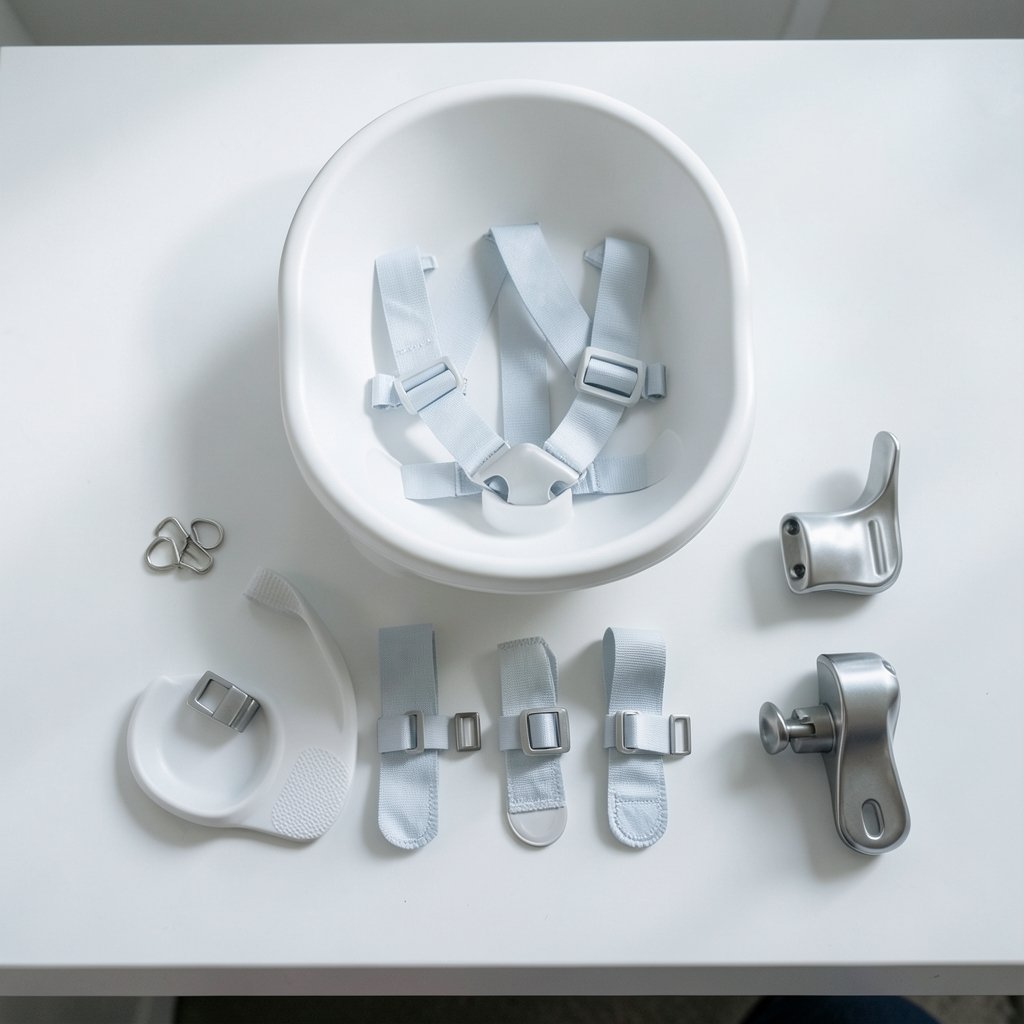
- The chair is sold with stage-specific accessories, and the full conversion path usually requires buying those accessories separately rather than receiving everything in one box.
- The seat and tray surfaces are designed for wipe-down cleaning, but the harness straps and the crevices around the seat pad are where food actually accumulates.
- Assembly is required, and like most flat-pack juvenile furniture, it takes longer than the box suggests.
Safety standards: the part most buyers skip
Here is where a lot of high chair shopping goes wrong. Parents read reviews about how a chair looks and how easy it is to clean, and they never check whether the product meets the relevant safety standard.
In the United States, high chairs are covered by a federal mandatory safety standard, 16 CFR Part 1231, which incorporates the ASTM F404 standard for high chairs. That standard addresses the failure modes that actually injure children: tip-over resistance, restraint system integrity, locking mechanisms, and structural stability. Any high chair legally sold in the US should meet it. The standard has been mandatory since 2019, with the underlying ASTM specification updated periodically.
For readers in Europe, the relevant benchmark is EN 14988, the European standard for children’s high chairs, which sets its own requirements and test methods.
Two things follow from this. First, a chair meeting the standard is a baseline, not a bonus — it is the floor, not the ceiling. Second, marketing language about “ergonomic” or “Montessori-aligned” design is a brand claim, not a safety certification. Those phrases describe a philosophy of positioning a child at the family table, not a tested engineering outcome. Parents should treat them accordingly.
US law also requires manufacturers of durable infant and toddler products — a category that includes high chairs — to provide product registration cards and maintain a consumer registration database under the CPSIA of 2008. Filling out that card is genuinely worth thirty seconds of your time: it is how you get contacted if a recall is ever issued. Before buying any high chair, new or used, check the CPSC recalls database directly rather than assuming a product is recall-free.
How the Lalo compares to other high chair styles
The high chair market splits into a few broad camps, and understanding them makes the Lalo decision much clearer.
| Chair type | Typical strengths | Typical weaknesses | Best for |
|---|---|---|---|
| Convertible premium (Lalo-style) | Grows with the child, compact footprint, strong design | Higher upfront cost, accessories sold separately, more parts to clean | Families wanting one seat for years |
| Full-size plastic high chair | Cheap, easy to wipe down, large tray | Bulky, short lifespan, often visually loud | Budget-focused families, grandparents’ houses |
| Clip-on table chair | Tiny footprint, travels well, puts child at the table | Depends on table strength, no recline, limited recline for infants | Small apartments, travel |
| Hook-on or booster | Cheap, portable, good for toddlers | Not suitable for young infants | Toddlers already eating confidently |
The Lalo sits firmly in the first category. It competes on longevity and looks rather than price. If you plan to have more children and pass the chair down, the cost-per-year math improves considerably. If you have one child and plan to resell, the resale value of premium juvenile gear tends to hold reasonably well, though condition matters enormously — stained straps and scratched trays cut value fast.
What actually works in practice
First-hand accounts from the parent community tend to converge on a few consistent points, and they are worth weighing against the marketing.
The compact footprint is real. The chair tucks in close to a standard dining table, which means a child can actually eat at the family table rather than on a tray pushed off to the side. That positioning is the entire developmental argument for this style of chair, and it delivers.
Cleaning is a mixed bag. The smooth surfaces wipe down quickly. The harness, the seam between the seat pad and the shell, and the underside of the tray are where crumbs go to live. Parents who wipe the straps after every meal report far less frustration than those who do a deep clean once a week. A spare set of straps is a genuinely useful purchase.
The conversion path requires planning. Buying the base chair and assuming the toddler configuration comes included is the single most common purchasing mistake. Check exactly which accessories ship in the box for the specific model and stage you are buying, and budget for the rest.
Assembly and adjustment take patience. The chair is not difficult to put together, but the adjustment points — harness height, footrest position, tray depth — reward a careful read of the instructions. A footrest set at the wrong height undermines the whole point of an ergonomic seat, because a child without proper foot support tends to slump and fidget.
The tray fit matters more than expected. Some parents find the tray removal mechanism stiff at first and loosens with use. Others find the tray sits close to the child, which is good for self-feeding but can feel tight for larger toddlers.
If you are the type of person who troubleshoots your own tech rather than calling support, you will recognize the pattern here: most high chair complaints trace back to setup and maintenance habits rather than defective design. The same instinct applies when you fix high CPU usage on Windows 11 with practical troubleshooting — the fix is usually in the details, not the headline.
Common mistakes parents make
A few avoidable errors come up again and again.
- Skipping the registration card. It takes a minute and it is your only reliable recall notification channel.
- Buying used without checking for recalls and missing parts. A secondhand chair with a frayed harness or a missing crotch post is not a bargain.
- Ignoring the footrest. A dangling foot is an uncomfortable foot, and uncomfortable children do not sit still to eat.
- Over-cleaning the wrong parts. Scrubbing the frame while ignoring the harness is backwards.
- Assuming the chair solves mealtime behavior. Positioning helps; it does not replace routine and consistency.
Where the Lalo falls short
Balance matters. The Lalo high chair is not the right choice for everyone.
The price is the obvious barrier. Comparable functionality exists at lower price points, and a family on a tight budget can meet the safety standard for far less. The accessory model also means the advertised conversion capability is partly a future purchase rather than a feature in the box. And the cleaning routine is more involved than a simple plastic chair with a pop-off tray — a real consideration for anyone who has watched a toddler redistribute a bowl of yogurt.
For families who value design, small footprints, and long-term use, those trade-offs are often acceptable. For families who want maximum convenience and minimum fuss, a simpler chair may serve better. The same principle of matching the tool to the real use case applies when people compare financial products — the money market vs high yield savings comparison comes down to which account fits actual habits, not which one sounds better on paper.
Buying checklist before you commit
Before adding the Lalo to a cart, work through these questions:
- Does the specific model meet the current US high chair standard, and can the seller confirm it?
- Which accessories are included at the stage you need right now?
- How much counter or table space will the chair occupy when in use and when stored?
- Is the harness removable and washable, and can you buy a replacement?
- What is the return window, and does it cover assembled furniture?
- Have you checked the recall database for the model number?
That checklist takes ten minutes and prevents most of the regret that shows up in negative reviews. If you are researching other household purchases at the same time, the discipline is the same one behind checking which high interest money market accounts actually pay in 2026 — verify the specifics, not the marketing.
Conclusion
The Lalo high chair earns its reputation on design and longevity, not on price. It is a compact, well-considered convertible seat that puts a child at the family table and adapts as they grow, which is exactly what the grow-with-me category promises. It meets the safety baseline that any legally sold US high chair must meet, and it is subject to the same registration and recall framework as its competitors.
But the buying decision should rest on specifics rather than aesthetics. Confirm which accessories are included, budget for the conversion stages you will actually use, plan a realistic cleaning routine, and check the recall database before you buy. Parents who go in with clear expectations tend to love the chair. Parents who expect a self-cleaning, all-in-one purchase tend to be disappointed.
For families in small spaces who want one seat to last from first purée to school age, the Lalo is a strong contender. For everyone else, it is a considered choice — and a considered choice is always the better one.
Frequently asked questions
What age is the Lalo high chair suitable for?
It is designed as a multi-stage chair, starting from around six months when a baby can sit upright with support and continuing through the toddler and early childhood years as it converts. The exact age range depends on the model and which stage accessories are installed, so check the current manufacturer specifications for the configuration you plan to use.
Does the Lalo high chair meet US safety standards?
High chairs sold in the US must comply with the federal mandatory standard at 16 CFR Part 1231, which incorporates ASTM F404. That standard covers tip-over resistance, restraint integrity, and locking mechanisms. Buyers should confirm compliance for the specific model and check the CPSC recalls database before purchasing, especially for secondhand chairs.
Is the Lalo high chair hard to clean?
The smooth seat and tray surfaces wipe down easily. The harness straps, the seam around the seat pad, and the underside of the tray require more attention. Wiping the straps after each meal and keeping a spare harness set makes the routine far more manageable than periodic deep cleaning.
Do all the conversion stages come in the box?
Not necessarily. The conversion accessories are often sold separately depending on the model and bundle. This is the most common purchasing mistake — buyers assume the toddler configuration is included. Check the exact contents list for the specific product you are buying and budget for the additional stages you intend to use.
How does the Lalo compare to cheaper high chairs?
Cheaper chairs generally meet the same safety standard and can be easier to wipe down, but they are usually bulkier and have a shorter useful life. The Lalo competes on compact footprint, table-height positioning, and multi-year conversion. Whether that is worth the premium depends on your space, your budget, and how long you plan to use the chair.
Is a used Lalo high chair a good idea?
It can be, provided you verify the model, confirm it has not been recalled, and check that all harness components, the crotch post, and the locking mechanisms are intact and undamaged. Worn straps or missing restraint parts are disqualifying. Always register a secondhand chair with the manufacturer if the registration process allows it.



