
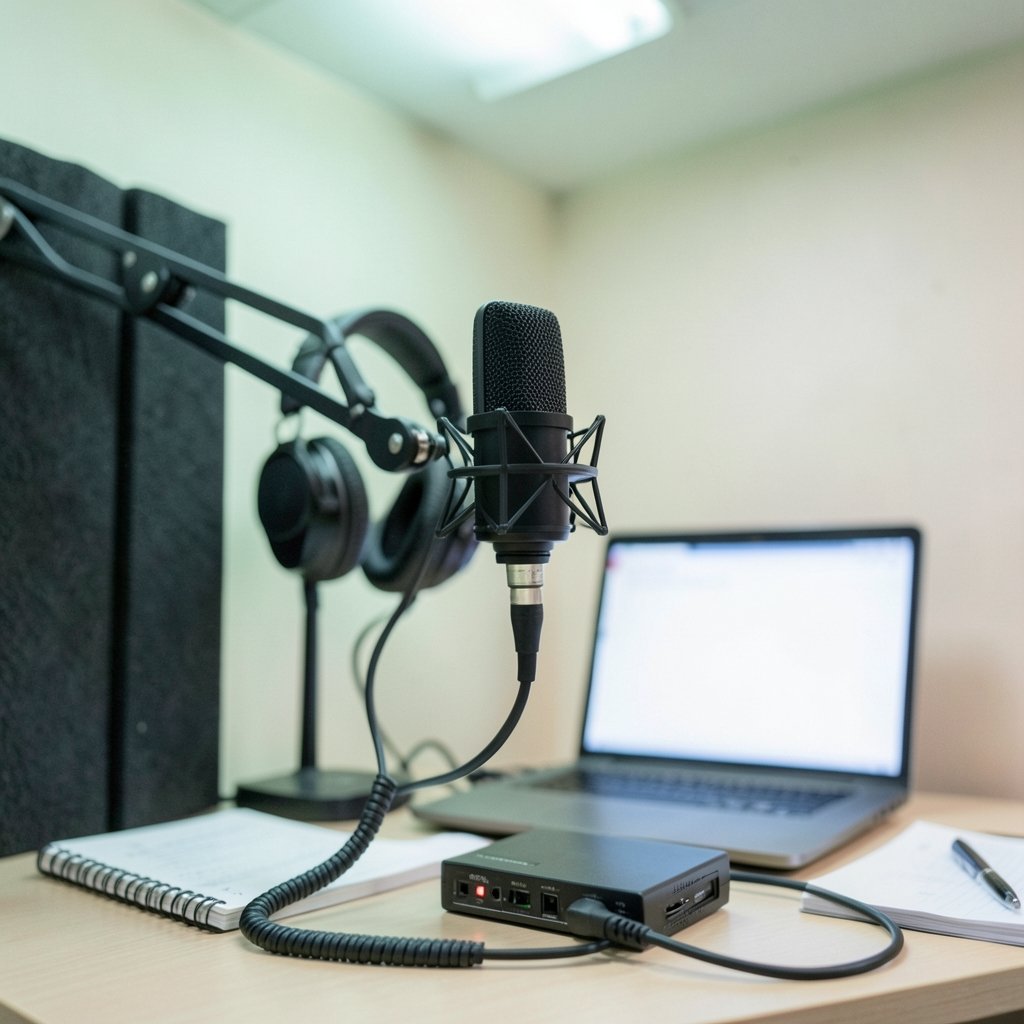
Can a synthetic voice really pass as human in 2027? That’s the question buyers ask before every demo, and the honest answer is more interesting than a yes or no. The phrase indistinguishable from humans gets thrown around freely, but it describes a listener test result, not a property baked into an audio file. Results shift with sample length, listener pool, and whether listeners are told to hunt for fakes.
That matters because the market is crowded with tools that all promise “lifelike” output. This guide cuts through the claims. It explains what naturalness actually means, how it gets measured, and which categories of voice generators earn a place in a real workflow. It also covers the mistakes that make even good tools sound robotic.
What “Indistinguishable From Humans” Actually Means
Mean opinion score (MOS) is the long-standing yardstick for speech quality. It dates to ITU-T Recommendation P.800, published in 1996, which set out how listeners rate transmission quality on a 1–5 scale. Nearly every “human-like” claim traces back to some version of that test.
Naturalness scores climbed sharply after neural text-to-speech arrived. WaveNet in 2016 and Tacotron in 2017 marked the turning point, when output stopped sounding like a concatenation of recorded fragments and started sounding like speech.
Two details get lost in marketing copy. First, speaker similarity and naturalness are measured separately. A voice can sound beautifully human and still fail to match the person it was cloned from. Second, “indistinguishable” is a claim about listeners, not files. Short clips with clean audio fool more people than long passages with background noise. If a vendor won’t say how the test was run, treat the claim as advertising.
How to Judge a Voice Generator Before You Pay

Practical buyers should ignore demo reels and run their own checks. Here is what works.
- Paste in your own awkward text: product codes, names, numbers, and a sentence with three clauses. Scripted demos use easy copy for a reason.
- Generate a full paragraph, not a slogan. Naturalness often degrades past the twenty-second mark.
- Listen on cheap earbuds and a laptop speaker. Most audiences hear output on bad hardware, not studio monitors.
- Test the same line with different punctuation. Prosody control separates flexible tools from rigid ones.
- Check the license for commercial use and the consent rules for cloning. These are the expensive surprises.
A common mistake is judging a tool by its flagship voice. The best-sounding voice in the library is often the most expensive tier or a custom build. Test the voices you can actually afford at your plan level.
The 12 Best AI Voice Generators in 2027
No single tool wins every category. The list below groups strong options by what they do best, so readers can match a tool to a job rather than chase a ranking. Anyone who wants a broader sweep of natural-sounding options can compare picks in this roundup of the best AI voice generators that actually sound human.
| Tool | Best for | Strength | Watch out for |
|---|---|---|---|
| ElevenLabs | Overall realism | Emotional range and cloning | Credit costs add up |
| OpenAI voice models | Conversational apps | Smooth, neutral delivery | Limited fine control |
| Google Cloud TTS | Enterprise scale | Reliable, broad language coverage | Less expressive by default |
| Amazon Polly | AWS-native builds | Cheap at volume | Voices feel corporate |
| Microsoft Azure Speech | Accessibility projects | Strong SSML controls | Setup takes learning |
| PlayHT | Podcast production | Fast generation, many voices | Quality varies by voice |
| Resemble AI | Brand voice cloning | Deep customization | Needs clean source audio |
| Descript | Editing-first creators | Voice fixes inside an editor | Not a pure TTS engine |
| Murf | Business narration | Clean corporate tone | Less emotional range |
| Speechify | Listening and reading | Natural reading voices | Consumer-focused |
| WellSaid Labs | Training and e-learning | Consistent, clear delivery | Pricier for hobbyists |
| iSpeech | Budget projects | Simple and affordable | Fewer premium voices |
ElevenLabs
ElevenLabs remains the reference point for expressive output. Its strength is emotional range: it handles excitement, hesitation, and quiet delivery without collapsing into monotone. The tradeoff is cost. Heavy generation burns credits fast, so plan usage before committing to a plan.
OpenAI Voice Models
The voice layer behind many chat products is smooth and neutral, which suits conversational apps and assistants. It is less useful when a project needs theatrical delivery or fine-grained prosody control. For a closer look at how the major assistants stack up in spoken output, see this comparison of ChatGPT voice vs Grok voice vs Gemini Live.
Google Cloud TTS
Google’s speech stack wins on scale and language coverage. It is the safe choice for enterprises that need thousands of hours in dozens of languages with predictable infrastructure. Expressive range is narrower, so creative projects may need a second tool.
Amazon Polly
Polly is the pragmatic option for teams already on AWS. Pricing at volume is hard to beat, and integration is straightforward. The catch is character: default voices can sound institutional, so budget time for tuning.
Microsoft Azure Speech
Azure’s strength is control. Fine-grained markup lets developers adjust pitch, rate, and pauses, which matters for accessibility tools and screen readers. The learning curve is real, but the payoff is precision.
PlayHT
PlayHT targets podcasters and content teams that need speed. Generation is quick and the voice library is broad. Quality varies across that library, so audition before building a workflow around one voice.
Resemble AI
Resemble leans into cloning and brand voice work. Teams that want a consistent narrator across hundreds of assets will find the customization deep. Clean source audio is non-negotiable; a noisy sample produces a noisy clone.
Descript
Descript is an editor first and a voice tool second. Its value is fixing narration inside the timeline: correct a flubbed line without re-recording the session. It is not the right pick for pure API-driven generation.
Murf
Murf produces dependable corporate narration. Explainer videos, product tours, and internal training all fit well. Emotional range is modest, so dramatic scripts may feel flat.
Speechify
Speechify built its reputation on listening experiences, and its reading voices are genuinely pleasant. For turning documents into audio, it works well. For cinematic voice work, look elsewhere.
WellSaid Labs
WellSaid focuses on consistency, which is exactly what e-learning needs. A course with forty modules sounds like one narrator across all of them. Pricing leans professional, so hobbyists should look at budget options.
iSpeech
iSpeech keeps things simple and affordable. It won’t win a naturalness contest, but for prototypes and low-stakes projects it gets the job done. Knowing when “good enough” is genuinely good enough saves money.
The Voice Generator Mistakes That Ruin Output
Most complaints about robotic voices trace back to user error, not model quality. A few habits fix the majority of problems.
Writing for the eye instead of the ear. Long subordinate clauses read fine and sound terrible. Short sentences with clear subjects give any engine a better chance.
Skipping pronunciation dictionaries. Names, brands, and acronyms need explicit entries. Every serious platform supports custom pronunciation; almost nobody uses it until a client complains.
Ignoring pacing. A single global speed setting flattens delivery. Varying pace by section, slower for instructions, brisker for transitions, adds more realism than switching voices.
Cloning from bad audio. Voice cloning is only as good as the sample. Thirty seconds of clean, quiet speech beats ten minutes recorded in a reverberant room.
Forgetting the disclosure rules. Transparency obligations for synthetic media are being phased in through 2025–2027 under the EU AI Act, and exact scope should be checked against the official text. Platforms also began requiring consent or verification for cloning real people’s voices around 2023–2024. Policies change often, so verify per vendor before publishing.
Matching the Tool to the Job
The fastest way to choose is to start from the deliverable, not the feature list.
| Job | Priority | Sensible pick |
|---|---|---|
| Audiobook or narrative | Emotional range | ElevenLabs, Resemble AI |
| E-learning course | Consistency | WellSaid Labs, Murf |
| App or assistant | Latency and integration | OpenAI models, Google Cloud TTS |
| Podcast production | Speed and editing | PlayHT, Descript |
| High-volume enterprise | Cost and coverage | Amazon Polly, Google Cloud TTS |
| Prototype or hobby | Price | iSpeech, Speechify |
If the goal is picking a single general-purpose winner, this guide to what the best AI voice generator offers walks through the tradeoffs in more depth. For teams comparing broader tool categories beyond voice, there’s a wider survey of top AI generators worth reading.
What Changes Between 2026 and 2027
Any “best of 2027” list written before the year plays out is a projection, not a test result. That caveat belongs in the open. Three trends are safe to expect.
First, detection is getting harder and better at the same time. Deepfake voice detection is an active research field, and accuracy drops on compressed or short audio. That means phone-quality clips remain the hardest to verify, which raises the stakes for consent and disclosure.
Second, cloning consent becomes product infrastructure. Verification flows, watermarking, and audit logs are moving from nice-to-have to requirement, especially for enterprise buyers with legal review.
Third, the gap between tiers narrows. Mid-priced tools now produce output that would have been flagship quality a couple of years ago. Buyers should re-test annually rather than assume a 2025 verdict still holds.
Voice changer tools follow a different logic than generators, since they transform live input rather than synthesize from text. Anyone comparing real-time options will find this breakdown of Voicemod vs Clownfish vs Morphvox workflow differences useful, and the same evaluation discipline applies: test your own material, not the demo.
Conclusion
The best AI voice generator in 2027 is the one that fits a specific job and survives an honest test. Expressive tools like ElevenLabs and Resemble AI lead on realism. Cloud platforms like Google, Amazon, and Microsoft lead on scale and control. Editing-first options like Descript and PlayHT win on workflow. None of them are truly “indistinguishable” in every context, because that standard depends on listeners, sample length, and audio quality, not on a spec sheet.
The practical path is simple. Run the five-minute test with your own awkward copy. Check licensing and consent rules before cloning anyone. Re-evaluate once a year. Do that, and the marketing claims stop mattering, because you’ll have your own evidence.
Frequently Asked Questions
Are AI voice generators really indistinguishable from humans in 2027?
In short bursts with clean audio, often yes. Over long passages, with background noise, or on compressed phone audio, listeners still catch artifacts. “Indistinguishable” is a listener-test result that depends on the sample and the test design, not a fixed property of the tool.
What is MOS, and why does it matter for voice quality?
MOS stands for mean opinion score, a 1–5 listener rating defined in ITU-T Recommendation P.800 back in 1996. It is the standard behind most naturalness claims. Higher is better, but scores are only comparable when the test method matches, which vendors rarely disclose.
Can I clone my own voice legally?
Usually yes, with your own consent and a platform that verifies it. Major providers began requiring consent or verification for cloning real people’s voices around 2023–2024. Cloning someone else without permission is where legal and ethical problems start, and disclosure rules for synthetic media are tightening.
Do cheap voice generators sound robotic?
Budget tools can sound perfectly acceptable for prototypes, internal drafts, and simple narration. The gap shows up in emotional range and prosody control rather than raw clarity. If a project needs warmth or dramatic delivery, expect to pay more or spend time tuning.
How much audio do I need to clone a voice well?
Quality beats quantity. Around thirty seconds of clean, quiet, consistent speech often outperforms ten minutes recorded in a noisy room. Avoid background music, overlapping speakers, and heavy compression in the source sample.
Will AI voices replace human voice actors?
For some tasks, yes: routine narration, draft audio, and high-volume localization are already shifting. For performance-driven work like animation, audiobooks with character, and brand campaigns, human actors still hold the edge on interpretation. The realistic outcome is a mixed workflow, not a clean replacement.



