
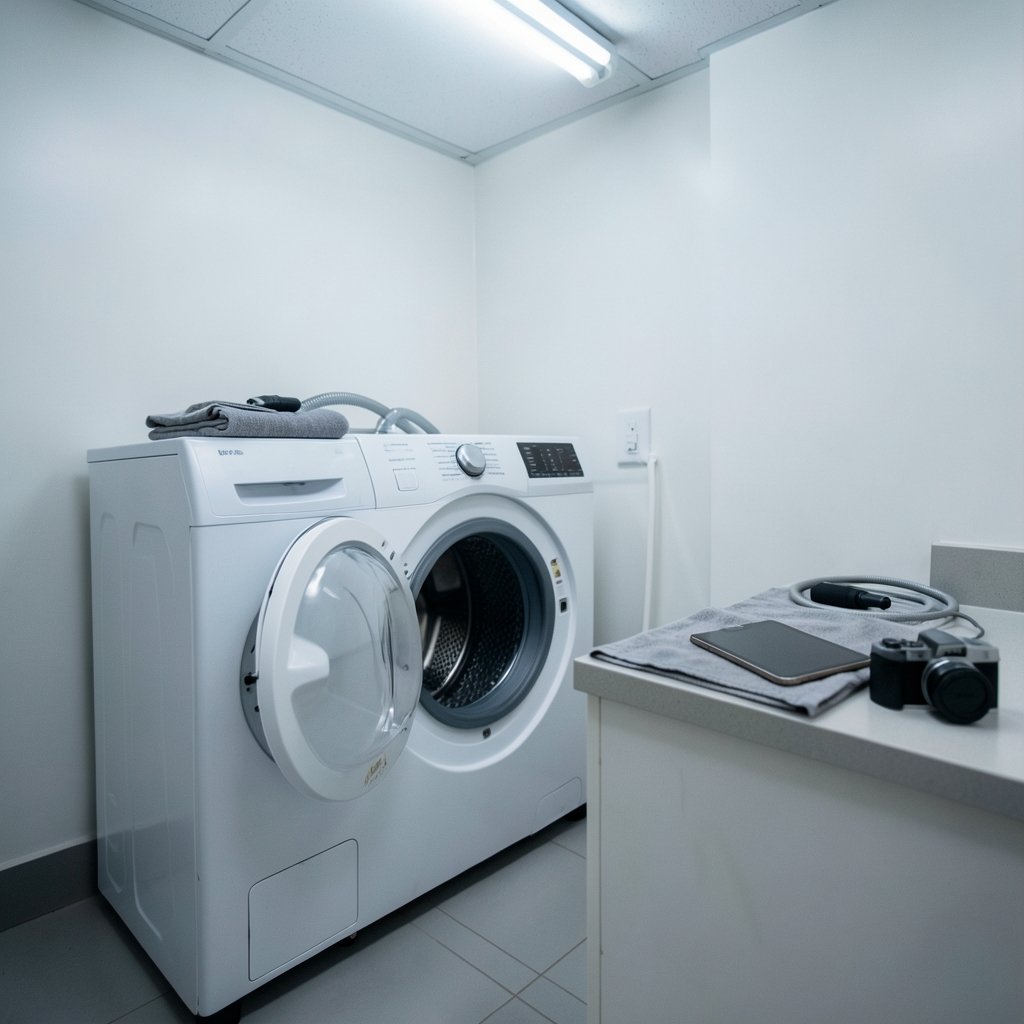
What if you could point your phone at a broken washing machine, describe the noise it makes out loud, and get a fix back in under three seconds? That is not a sci-fi pitch anymore. It is the everyday promise of multimodal chatbots, and by 2027 it has moved from demo reels into the tools people actually use.
The shift matters because it changes what a chatbot is. For years, “AI chat” meant typing into a box. Voice was bolted on through separate speech-to-text and text-to-speech systems, images went through a different pipeline, and video was mostly a novelty. In 2027, the leading assistants handle all four inputs in one model. That single change reshapes how you write prompts, how you judge quality, and where these tools still fall short.
What “Multimodal” Actually Means in Practice
The term is older than the hype. A multimodal model processes more than one type of data, such as text, images, audio, and video, rather than just one. The classic academic reference is the survey “Multimodal Machine Learning: A Survey and Taxonomy” by Baltrušaitis, Ahuja, and Morency, which laid out how different data types get combined, aligned, and translated into each other.
The practical difference between then and now is native multimodality. In May 2024, OpenAI announced GPT-4o as its first model built to accept text, audio, and images and produce text, audio, and images in one system, instead of chaining separate models together. Google took a parallel route with Gemini 1.5 in February 2024, pushing context windows up to a million tokens, which made long audio and video inputs feasible. By December 2024, Gemini 2.0 Flash added native image generation and native speech output.
By 2027, that architecture is the baseline rather than the headline. The interesting question is no longer “can it see and hear?” It is “does it combine what it sees and hears well enough to trust?”
The Four Inputs, Ranked by Real-World Reliability

Not every modality is equally mature. Here is a realistic picture of where each one stands.
| Input type | Strength in 2027 | Common failure | Best use case |
|---|---|---|---|
| Text | Highest accuracy, easiest to verify | Long documents lose detail mid-context | Research, drafting, code, analysis |
| Image | Strong object and text recognition | Misreads blurry or rotated text | Screenshots, documents, product photos |
| Voice | Near-instant conversation, natural interruption | Struggles with heavy accents and background noise | Hands-free help, tutoring, driving |
| Video | Good at describing scenes and actions | Weak on precise timing and fast motion | Tutorials, inspections, sports review |
The pattern is consistent: the more structured the input, the more reliable the output. Text and clean images behave predictably. Voice is fast but fragile in noisy rooms. Video remains the weakest link when precision matters, even though it is the most impressive in a demo.
If you work heavily with images, it helps to understand how machines actually read words inside a picture, because that skill determines whether a screenshot-based workflow succeeds or quietly fails.
Why Voice Got Dramatically Better
Voice is where the biggest visible jump happened. The old approach stitched three systems together: speech recognition, a text model, then speech synthesis. That chain added seconds of delay and lost tone along the way.
The Realtime API, released in public beta in October 2024, let developers build low-latency speech-to-speech apps over WebRTC and WebSocket connections, cutting out the chained pipeline. OpenAI claimed GPT-4o could respond to audio in roughly a few hundred milliseconds on average, against multi-second waits for older stacked systems.
By 2027, that speed is normal, and the comparison landscape has widened considerably. Anyone weighing assistants now looks at how natural the conversation feels, how well the model handles interruptions, and whether it keeps context across a long call. A detailed breakdown of that contest is worth reading if you are choosing a daily driver: evaluate chatgpt voice vs grok voice vs gemini live 2027.
The practical tip here: speak in complete thoughts rather than fragments. Realtime models handle natural pauses well, but they still reward clear structure. And always test in the environment you will actually use, not a quiet room.
Image and Video: Where the Hype Outruns the Accuracy
Image input has quietly become the most useful modality for everyday work. Screenshots of error messages, photos of receipts, whiteboard snapshots, product labels, and handwritten notes all convert into usable text or structured data with decent reliability.
Video is a different story. Models can summarize a clip, describe what happens, and answer questions about the general content. They are much shakier on exact timing, fast motion, and small details in a busy frame. If you need frame-accurate analysis, expect to combine the model with manual review.
Generation is a separate conversation. Turning a written description into a still image is now routine, and the free options have gotten genuinely good, as covered in this guide to the best ai text to image generator free. Moving from a still image to motion is also far more accessible than it was, and a beginner-friendly walkthrough of an ai video generator from images a beginners guide explains the workflow without the marketing gloss.
The mistake people make most often is assuming that because a model can describe a video, it can measure it. Description and measurement are different tasks. Ask for a description and you will usually be satisfied. Ask for a precise timestamp and you may get a confident wrong answer.
How to Write Prompts That Use All Four Inputs Well
The skill of prompting changed when inputs multiplied. A single typed sentence no longer carries all the context. Here is a workflow that consistently produces better results.
- State the goal first. Say what you want produced before you attach anything. “Write a repair estimate” beats “look at this.”
- Attach the richest relevant input. A photo of the damage plus a spoken description beats either one alone.
- Name what matters in the input. Point to the specific region, timestamp, or phrase you care about instead of assuming the model will find it.
- Ask for uncertainty. Request that the model flag anything it cannot read or confirm. This single instruction reduces confident errors noticeably.
- Verify before acting. Treat the first answer as a draft, especially for anything financial, medical, or legal.
The most common mistake is dumping too many inputs without direction. Five photos, a two-minute voice note, and a vague question produce a vague answer. Precision in the request matters more than volume of material.
The Trust Problem: Provenance and Disclosure
Speed and convenience come with a catch. When a chatbot can generate a realistic voice, image, or video, how does anyone know what is real?
Two forces are pushing back. The first is regulation. The EU AI Act, Regulation (EU) 2024/1689, entered into force on 1 August 2024. It sets transparency obligations for AI systems that interact with people, including making clear that a user is talking to an AI. General-purpose AI obligations began applying from 2 August 2025, with most other provisions applying from 2 August 2026. Its transparency rules also require that AI-generated synthetic content, including deepfakes, be marked in machine-readable form.
The second is technical. Content Credentials, maintained by the Coalition for Content Provenance and Authenticity (C2PA), attaches provenance metadata to images, video, and audio so a file can carry a verifiable record of how it was made and edited. Adoption is uneven, but the direction is clear: provenance metadata is becoming part of the expected pipeline rather than an optional extra.
For anyone building or buying multimodal tools, the sensible posture is to assume disclosure requirements will tighten. Designing in labeling and provenance from the start is cheaper than retrofitting it later.
Where Multimodal Chatbots Still Fail
Honesty matters more than enthusiasm here. Several weaknesses persist in 2027.
Vendor claims are not benchmarks. The phrase “native multimodal” is partly a marketing position. Independent, reproducible comparisons remain scarce, so treat performance claims as claims until you test them on your own tasks.
Long context is not perfect recall. A million-token window sounds limitless, but models still lose details buried in the middle of very long inputs. Retrieval quality matters as much as window size.
Confidence and accuracy drift apart. A model that misreads a blurry label may still sound certain. Building in a verification step is not optional for serious work.
Cost scales with input richness. Video and long audio cost more to process than text. Teams often discover this after building a workflow around heavy media.
Privacy gets complicated. Sending a photo of a document or a recording of a meeting to a hosted model raises real questions about where that data goes. Check retention policies before feeding in anything sensitive.
If your workflow leans on visual generation, the same caution applies. Guides on the best ai video generators from text and images and on how to create anime images from text are useful starting points, but always test output quality against your own standards rather than a showcase reel.
What to Expect Through 2027 and Beyond
The trajectory points toward assistants that feel less like search boxes and more like collaborators who can see your screen, hear your room, and watch a clip alongside you. The risk-management side is maturing too. The NIST AI Risk Management Framework, released in January 2023, is widely cited as a voluntary structure for handling AI risks, including multimodal systems, and it gives teams a shared vocabulary for the governance conversation.
The realistic expectation for the near term is consolidation rather than revolution. Fewer separate tools, more combined ones. Better handling of messy real-world input. Stronger provenance and disclosure defaults. And a continued gap between what a demo shows and what a daily workflow can depend on.
The teams that benefit most will be the ones that treat multimodal input as a skill to be practiced, not a feature to be switched on.
Conclusion
Multimodal chatbots in 2027 are genuinely useful, and that is a meaningful change. Text remains the most reliable input, images are the quiet workhorse, voice has become fast and natural, and video is impressive but imprecise. The winning approach is unglamorous: state your goal clearly, attach the right input, ask the model to flag uncertainty, and verify anything that matters. Regulation and provenance standards are catching up to the technology, which is good news for anyone who needs to trust what comes out. Use these tools where they are strong, stay skeptical where they are weak, and the combination of text, voice, image, and video becomes a real advantage rather than a party trick.
Frequently Asked Questions
What is a multimodal chatbot?
A multimodal chatbot is an AI assistant that can take in and respond to more than one type of data, such as text, voice, images, and video, usually within a single model rather than through separate chained systems.
Is voice input more accurate than typing?
Not necessarily. Voice is faster and more natural for conversation, but transcription can stumble on heavy accents, background noise, and unusual names. Typing remains more precise when exact wording matters.
Can these chatbots really understand video?
They can describe scenes, summarize content, and answer general questions about a clip reasonably well. They are much weaker at precise timing, fast motion, and fine detail, so frame-accurate work still needs human review.
Do I need to disclose that I am using AI?
It depends on where you operate and what you produce. Under the EU AI Act, systems interacting with people must make clear that users are talking to an AI, and AI-generated synthetic content including deepfakes must be marked in machine-readable form. When in doubt, disclose.
What is the biggest mistake people make with multimodal prompts?
Overloading the model with inputs but giving no direction. A clear goal plus one or two well-chosen attachments consistently beats a pile of files and a vague question.
Will multimodal chatbots replace separate text, image, and video tools?
Mostly they will absorb the simple tasks. Specialized tools will still win on precision, control, and cost for professional work, while combined assistants handle everyday requests in one place.



