
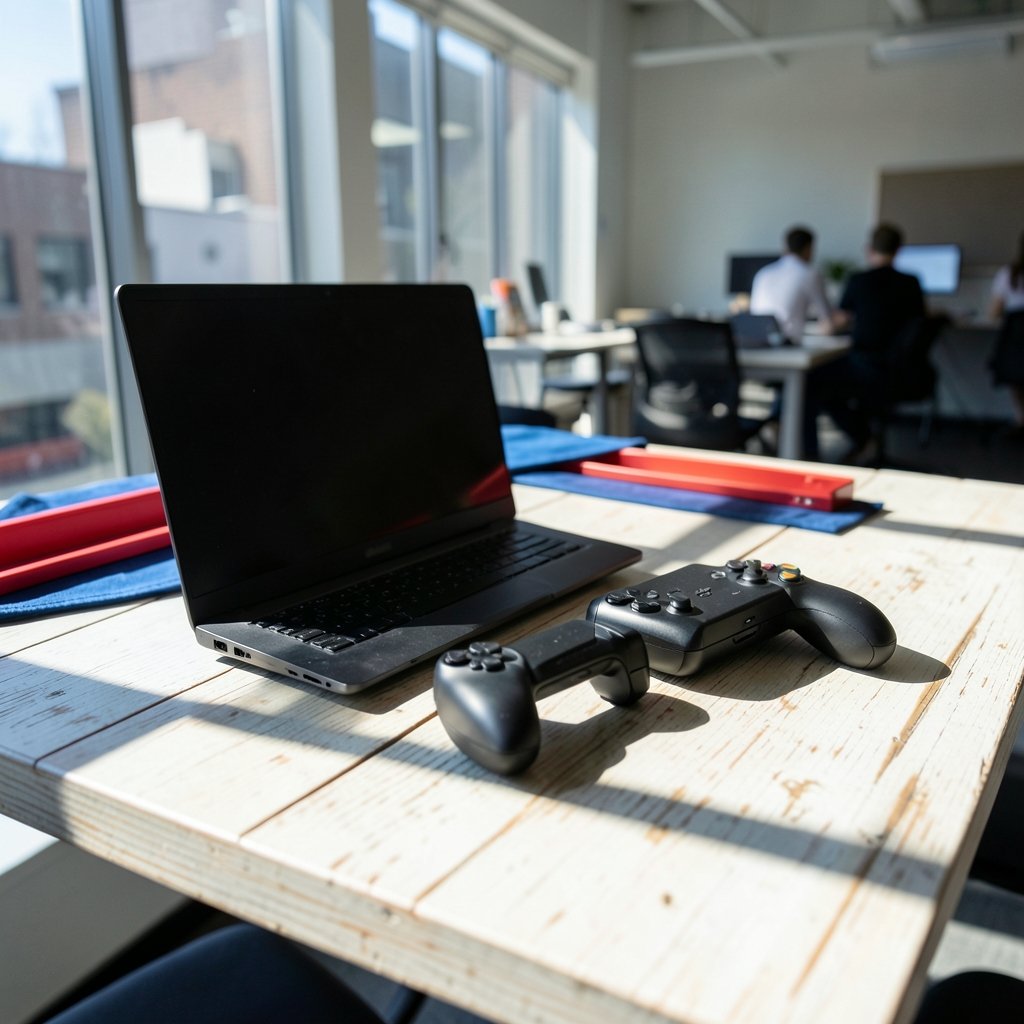
What actually decides whether a gaming handheld feels great on a random Tuesday night in 2027? It is almost never the number on the spec sheet. It is how long the battery lasts during a commute, how loud the fan gets in a quiet room, and whether a game launches without a fight. The Legion Go 2 and the Onexplayer X2 Mini Pro sit at opposite ends of the handheld PC spectrum, and comparing them is a lesson in separating marketing from daily reality.
This comparison walks through the factors that genuinely shape the everyday experience, from sustained wattage to software friction, and flags where the public information is still thin. Anyone weighing a purchase should read it as a framework for judging both devices rather than a final verdict.
Why the 2027 framing matters more than the launch specs
Handheld PCs age in a peculiar way. The chip inside does not get slower, but the games it has to run get heavier. By 2027, the everyday experience of any handheld will be defined less by raw raster performance and more by how well it leans on upscaling and compatibility layers. Technologies like FSR and XeSS let these devices render at 720p to 1080p and reconstruct a clean image, which is why a machine that struggles at native resolution can still feel smooth.
That shift rewards devices with mature software and penalizes ones that rely on brute force. It also means a buyer in 2027 should care about firmware updates, driver support, and upscaler quality as much as teraflops. The same logic applies across the category, which is why comparisons like ps5 pro vs ps5 specs judging everyday gaming experience 2027 keep circling back to real-world smoothness rather than peak numbers.
What is actually confirmed about each device
Honesty first: the Legion Go 2 was announced at CES 2025 with an AMD Ryzen Z2 Extreme APU, an 8.8-inch OLED display, and detachable controllers, but pricing and a firm release date were not confirmed at announcement. Final specs, especially battery capacity and variable refresh rate support, need checking against Lenovo’s official product page before anyone treats them as settled.
The Onexplayer X2 Mini Pro is murkier. The OneXPlayer family has used Intel Core Ultra processors in compact designs, but the exact “X2 Mini Pro” name and its specifications are not something to take on faith. A careful buyer should confirm the model exists, note its announcement date, and pull the spec sheet from the manufacturer directly. Treating an unverified name as a fixed reference point is the most common mistake in this comparison.
| Factor | Legion Go 2 | Onexplayer X2 Mini Pro |
|---|---|---|
| Announced platform | AMD Ryzen Z2 Extreme | Unconfirmed for this exact model |
| Display | 8.8-inch OLED, high refresh | Unconfirmed |
| Controllers | Detachable | Integrated, compact design |
| Battery figures | Not confirmed at announcement | Not confirmed |
| Software layer | Lenovo Legion Space | OEM layer, version dependent |
| Best suited to | Flexible living-room and desk use | Portability-first players |
Sustained wattage beats peak benchmark scores
Here is the principle that separates experienced handheld owners from first-time buyers: these devices run power-limited, typically somewhere in the 15 to 30 watt range in handheld mode. A chip that wins a benchmark at 30 watts may feel identical to its rival at 15 watts, except it drains the battery twice as fast and spins the fan louder.
What actually works in practice is picking a fixed TDP profile per game and sticking to it. Most owners eventually settle on a quiet profile for indie titles and a higher one only for demanding games, accepting shorter sessions. The mistake is leaving everything on maximum and then wondering why the device is hot and loud an hour in.
This is also why the everyday experience of a big-screen device like the Legion Go 2 needs scrutiny. An 8.8-inch OLED draws more power than a 7-inch panel, so a larger battery does not automatically mean longer play. The math is capacity in watt-hours divided by average system draw, and screen size is part of that draw.
Screen size, VRR, and perceived smoothness
Small screens amplify every flaw. On a handheld, judder is more visible, tearing is more annoying, and a stable frame rate matters more than a high one. Variable refresh rate support helps here because it lets the panel match the frame rate instead of fighting it, and OLED response times make motion look cleaner at the same frame rate.
The Legion Go 2’s OLED panel was announced with high refresh rate support, which is promising, but the exact VRR behavior should be confirmed from the final spec sheet. A compact device like the Onexplayer X2 Mini Pro trades screen real estate for pocketability, and that trade-off is real: a smaller panel is easier to carry and harder to read small UI text on. Anyone who plays strategy games or reads a lot of on-screen text should weigh this heavily.
Software friction is the hidden daily cost
Windows 11 handheld gaming leans on manufacturer software for TDP profiles, controller mapping, and game launchers. Lenovo’s Legion Space is the relevant layer for the Legion Go 2, and its maturity will shape day-to-day use as much as the hardware does. The Onexplayer equivalent varies by device and firmware version.
The practical test is simple. How many taps does it take to change TDP? Does the controller mapping survive a sleep and wake cycle? Does the launcher remember which storefront a game came from? These small frictions compound. A device that saves thirty seconds per session feels better after a month than one with a faster chip and a clumsier overlay.
Storefront sprawl makes this worse. Juggling libraries is its own skill, and the trade-offs are covered well in steam vs epic vs gog judge everyday gaming experience 2027. A handheld that boots straight into one launcher with cloud saves intact will win more evenings than a technically superior rival that makes the user think.
Ergonomics and weight decide who actually finishes games
Detachable controllers, as on the Legion Go family, trade portability for flexibility: the device can become a tabletop console or a desktop-ish setup with a mouse. Compact clamshell and handheld designs, as in the OneXPlayer family, prioritize pocketability and one-piece simplicity.
Neither is better in the abstract. The question is where the device lives. A handheld that stays in a bag and gets played in short bursts rewards low weight and instant resume. A handheld that sits on a desk or a couch arm rewards a bigger screen and detachable input. Owners who buy for the fantasy version of their habits rather than the real ones end up leaving the device in a drawer, and that is the most expensive outcome of all.
Storage, RAM, and the 100 GB problem
Modern games routinely exceed 100 GB, and handheld storage fills up fast once a few large titles and their updates land. Both devices are expected to offer NVMe SSD storage, but exact capacities and expandability, whether microSD or a second M.2 slot, must be confirmed per SKU.
What works in practice is buying more internal storage than feels necessary and treating microSD as a library for smaller indie games rather than a home for blockbusters. Loading a 100 GB game from a slow card is a daily annoyance that no chip upgrade can fix. The same discipline applies to RAM: 16 GB is the comfortable floor for shared-memory handheld gaming, and anything less invites stutter in the exact moments that matter.
How to run a fair comparison before buying
A structured approach beats reading spec tables. The steps below turn a vague “which is better” question into a decision.
- Confirm both products exist as named, with official spec sheets, before comparing anything. If one model name is uncertain, verify it first.
- Identify the games actually played most weeks, then check sustained performance at handheld wattage rather than plugged-in benchmarks.
- Check the battery in watt-hours and divide by realistic system draw for the chosen TDP profile.
- Read the software layer’s reputation for TDP switching, controller mapping, and sleep behavior.
- Weigh the device in hand, or find its weight and dimensions, and imagine carrying it daily.
- Confirm storage capacity, expandability, and RAM before committing.
That framework travels well. It is the same reasoning used in steam machine vs ps5 pro judge everyday gaming experience, where the winner depends on the room and the routine rather than the chip.
Where each device likely wins
The Legion Go 2 looks strongest for players who want a big OLED screen, detachable controllers, and a flexible setup that moves between couch and desk. Its weaknesses are likely to be size, weight, and the power draw of that larger panel.
The Onexplayer X2 Mini Pro, assuming the model is confirmed, looks strongest for players who value portability and a single-piece design. Its weaknesses are likely to be a smaller screen, tighter thermals in a compact chassis, and the software maturity questions that come with smaller manufacturers.
Neither profile is a flaw. They are different answers to the same question: what does everyday use actually look like? Someone who plays twenty-minute sessions on a train has a very different answer from someone who plays two-hour sessions at a desk. The same split shows up in legion go vs steam deck judge everyday gaming experience, where the pocketable option often wins on frequency of use rather than raw capability.
The mistakes that ruin the experience
The most common error is buying for peak benchmarks. A device that scores well plugged in can feel sluggish on battery, and the gap widens in 2027 as games lean harder on upscaling.
The second mistake is ignoring the software layer until after purchase. Firmware updates can transform a handheld or leave it stranded, and smaller manufacturers have less predictable track records.
The third is underestimating storage and heat. A compact chassis with a fast chip and a small SSD is a recipe for constant management chores and a warm right hand. Buyers who plan for 100 GB games and a quiet fan profile end up far happier than those who chase the highest wattage.
Finally, there is the trap of comparing across form factors without adjusting expectations. A big-screen handheld and a compact one are not rivals so much as different tools, and judging them on a single benchmark misses the point entirely.
Conclusion
The Legion Go 2 and the Onexplayer X2 Mini Pro are best judged by how they behave on an ordinary evening, not by how they perform on a test bench. Sustained wattage, screen comfort, software friction, storage headroom, and weight decide whether a handheld becomes a habit or a drawer ornament.
For 2027, the smart move is to verify the Onexplayer X2 Mini Pro’s existence and specs, confirm the Legion Go 2’s final battery and VRR details, and then match each device to a real routine. Anyone who does that will pick the handheld they actually use, which is the only comparison that counts.
FAQ
Is the Onexplayer X2 Mini Pro a confirmed product?
It should not be treated as confirmed without checking the manufacturer’s official product page. The OneXPlayer family has used Intel Core Ultra processors in compact designs, but the exact “X2 Mini Pro” name and specifications need verification before any comparison is meaningful.
Does the Legion Go 2 have a confirmed release date and price?
No. It was announced at CES 2025 with an AMD Ryzen Z2 Extreme APU, an 8.8-inch OLED display, and detachable controllers, but pricing and a firm release date were not confirmed at announcement. Final specs should be checked against Lenovo’s official product page.
Why does sustained wattage matter more than peak performance?
Handheld PCs run power-limited, typically around 15 to 30 watts in handheld mode. A chip that wins at maximum wattage may feel identical at a lower setting while draining the battery faster and running louder, so sustained behavior at realistic settings is the better guide.
Does a bigger OLED screen mean better battery life?
Not automatically. Battery life is capacity in watt-hours divided by average system draw, and a larger screen raises that draw. A device with a bigger battery can still deliver shorter sessions if its panel and chip consume more power.
How much storage should a gaming handheld have in 2027?
More than feels necessary. Modern games routinely exceed 100 GB, so internal NVMe capacity should cover the largest titles, with microSD reserved for smaller games. Loading a blockbuster from a slow card is a daily annoyance no chip upgrade can fix.
What is the biggest mistake when choosing between these two?
Buying for peak benchmarks instead of daily routine. Screen size, weight, software maturity, and storage headroom shape the everyday experience far more than a benchmark score, and matching the device to real habits is what keeps it in use.



