
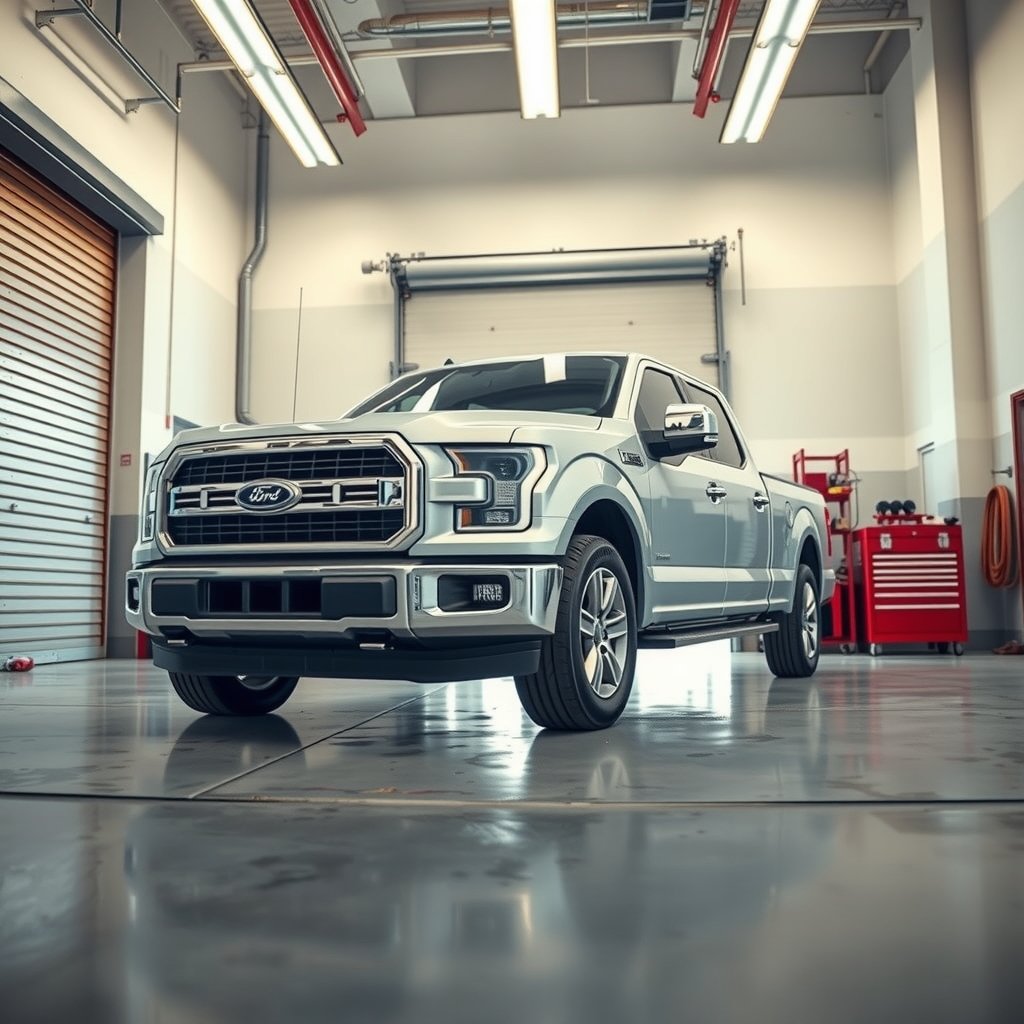
What would you do if you walked into a dealership tomorrow and the salesperson promised you a brand-new 2027 F-150 with specs nobody else has seen? You would probably ask for proof. That instinct is exactly right. As of now, Ford has not announced a 2027 F-150, and any “leaked specs” floating around online deserve a healthy dose of skepticism. The 2026 model was widely expected to be a carryover, which makes the 2027 truck a genuine open question.
This guide walks through what is actually known, what is reasonable to expect, and how to plan a purchase without getting burned by rumor. It is written for people who want a straight answer rather than hype.
The Honest Starting Point: No Official 2027 Announcement
Here is the uncomfortable truth that most articles bury at the bottom: there is no confirmed 2027 F-150. Ford’s current generation, internally coded P702, launched for the 2021 model year. A mid-cycle refresh arrived for 2024, bringing revised styling, new tailgate options, and updated powertrains. Reporting since then has pointed to the 2026 model being largely unchanged from 2025.
That timeline matters. When a truck is on a carryover year, the following model year often brings either a light reshuffle of trims and packages or the early signals of a bigger change. Nobody outside Ford knows which path 2027 will take. Anyone who tells you otherwise with total confidence is guessing.
Why the 2027 Model Year Is a Real Pivot Point

Automakers rarely redesign on a whim. They follow product cycles, and the F-150’s cycle is well documented. The 2021 redesign was a big one: an aluminum body carried forward, a new interior, the PowerBoost hybrid, and the Pro Power Onboard generator system. The 2024 refresh sharpened the design and added practical features.
By 2027, the current generation will have been on sale for six model years. That is a long run in modern truck terms. It does not guarantee a full redesign, but it makes one more plausible than it was in 2024 or 2025. Buyers weighing a purchase should treat 2027 as a year where change is possible, not certain.
What Usually Changes on a Carryover Year
- Trim and package shuffling. Features get bundled differently, and entry-level or mid-grade trims sometimes gain standard equipment.
- Color and wheel updates. New paint options and wheel designs are cheap ways to keep a truck looking fresh.
- Software and tech tweaks. Infotainment updates, driver-assist refinements, and revised digital displays are common.
- Price adjustments. Destination fees and option pricing drift upward most years.
What rarely changes on a carryover: the platform, the engine lineup, and the cab and bed dimensions.
The Powertrain Lineup: What Exists Today
The current F-150 engine family is well established. Buyers have had access to a 2.7L EcoBoost V6, a 3.5L EcoBoost V6, a 5.0L V8, and the 3.5L PowerBoost hybrid. A 3.0L Power Stroke diesel was offered early in this generation but was discontinued after 2021.
| Engine | Character | Best For |
|---|---|---|
| 2.7L EcoBoost V6 | Strong mid-range, lighter duty | Daily driving, light towing |
| 3.5L EcoBoost V6 | Torque-rich, popular for towing | Trailers, payload-heavy work |
| 5.0L V8 | Simple, familiar, sounds right | Traditionalists, long-term owners |
| 3.5L PowerBoost hybrid | Onboard power, strong torque | Job sites, tailgating, mixed use |
A reasonable expectation for 2027 is that this lineup carries forward largely intact, possibly with efficiency refinements. A wholesale engine change is the kind of move Ford would announce loudly, and it has not.
Towing, Payload, and the Numbers That Matter
Advertised maximums for the current generation have hovered around 13,500 pounds of towing and payload north of 2,000 pounds, depending heavily on configuration. Those headline figures are the ones marketing departments love. The number that actually matters is the one printed on the door jamb sticker of the specific truck you buy.
Practical tip: never shop by the brochure max. A crew cab with four-wheel drive, a heavy option package, and a sunroof can lose hundreds of pounds of payload versus a base truck. If you plan to tow a travel trailer, do the math on the actual vehicle, not the model line.
The Lightning Question
The F-150 Lightning is a separate model, not a trim of the gas truck. It launched for the 2022 model year and is sold alongside the conventional F-150. That distinction matters when reading 2027 rumors, because a lot of speculation blends the two trucks together.
If you are cross-shopping electric and gas, the practical questions are different. Charging access, winter range, and home electrical work matter far more than horsepower figures. For buyers comparing tools and services that help with online shopping and research before a purchase, resources like these ai tools for e commerce stores are worth a look, though they are a side note to the truck itself.
Off-Road Trims: Tremor and Raptor
The off-road hierarchy is well established. The Tremor sits in the middle of the range with a useful blend of capability and daily comfort. The Raptor goes further, and the Raptor R uses a 5.2L V8 with a blower for buyers who want the loudest option available.
Expect these trims to continue in some form for 2027. Special-edition off-road trucks have become a profitable niche, and Ford has no reason to walk away from it.
Safety: What the Ratings Actually Say
The F-150 has been evaluated by NHTSA and IIHS, and ratings vary by cab style and model year. That variability is the key point. A crew cab and a regular cab do not score identically, and a rating from one year does not automatically transfer to the next.
If safety is a priority, check the specific configuration you plan to buy rather than the model name overall. Standard driver-assist features have expanded across the range in recent years, and that trend is likely to continue.
How to Shop Smart Before 2027 Arrives
The smartest buyers do not wait for a rumor to become fact. They set a budget, decide on cab and bed configuration, and then watch pricing. Here is a practical sequence that works whether the 2027 truck is a carryover or a redesign.
- Decide your real use case. Towing, hauling, commuting, or a mix. This determines engine and axle choices more than anything else.
- Lock your configuration. Cab size, bed length, drivetrain, and trim. Changing these late is where budgets blow up.
- Get pre-approved for financing. Knowing your rate gives you leverage and keeps the conversation focused on the out-the-door price.
- Compare lease versus buy. If you trade trucks every few years, leasing can make sense. Deals shift constantly, and checking current Ford f150 lease deals gives you a baseline before you negotiate.
- Verify incentives at the dealer. Manufacturer programs change monthly and are not always advertised clearly.
- Inspect the door jamb sticker. Confirm payload and towing for the exact truck on the lot.
Common Mistakes Buyers Make
- Believing leaked spec sheets. Unverified numbers spread fast and are rarely corrected.
- Shopping by monthly payment only. A longer loan lowers the payment and raises the total cost.
- Skipping the payload check. This is the single most common towing mistake.
- Assuming next year will be cheaper. It usually is not, especially with new features.
- Ignoring the trade-in timing. Ordering a truck and selling a car privately rarely line up neatly.
Research Habits That Pay Off
Buyers who make good decisions tend to do one thing consistently: they separate confirmed information from speculation. That means checking official announcements first and treating everything else as a rumor until proven. The same discipline applies to any major purchase, whether it is a truck or a subscription service. If you are evaluating digital tools alongside your vehicle research, a comparison like this deepseek vs chatgpt vs gemini output quality breakdown shows how to weigh claims critically, and this guide on when not to use an AI chatbot is a useful reminder that not every tool fits every job. The same logic applies to trucks: the right choice depends on the job, not the hype.
What Would Actually Justify Waiting for 2027
Waiting only makes sense if the expected change matters to you. A new paint color is not worth a year of your life. A redesigned interior, a new hybrid option, or a real gain in efficiency might be.
Ask yourself three questions. Will the current truck do the job today? Is the rumored change something you would actually pay for? And can you afford to wait without disrupting work or family logistics? If the answer to the first is yes and the second is no, buying now is usually the better move.
Conclusion
The 2027 Ford F-150 is, for now, a truck without a confirmed spec sheet. Ford has not announced it, the 2026 model was expected to be a carryover, and the current generation has been on sale since 2021 with a refresh in 2024. That makes 2027 a plausible year for change but not a guaranteed one.
The balanced approach is simple. Know the current truck’s strengths, understand the engine and towing lineup, verify payload on the specific vehicle, and treat every unconfirmed rumor as exactly that. If a redesign arrives, you will hear about it from Ford first. Until then, the smartest buyers are the ones who plan around facts and stay flexible on timing.
FAQ
Is there an official 2027 Ford F-150 yet?
No. Ford has not announced a 2027 F-150 with confirmed specs, pricing, or a redesign. The current generation launched for 2021 and received a refresh for 2024. Any 2027 details circulating before an official announcement should be treated as unconfirmed.
Will the 2027 F-150 be a full redesign?
Nobody outside Ford knows. The current generation will be six model years old by 2027, which makes a redesign more plausible than in recent years, but it does not guarantee one. A carryover with trim and tech updates is equally possible.
What engines will the 2027 F-150 offer?
The current lineup includes a 2.7L EcoBoost V6, a 3.5L EcoBoost V6, a 5.0L V8, and the 3.5L PowerBoost hybrid. A diesel was discontinued after 2021. A reasonable expectation is that this lineup carries forward, possibly with efficiency refinements.
Is the F-150 Lightning the same truck as the 2027 F-150?
No. The Lightning is a separate electric model that launched for 2022 and is sold alongside the gas F-150. Confusing the two is one of the most common sources of bad 2027 rumors.
How much can the current F-150 tow?
Advertised maximums have been around 13,500 pounds, with payload above 2,000 pounds depending on configuration. The figure that matters is on the door jamb sticker of the specific truck, since options and drivetrain reduce both numbers.
Should I wait for the 2027 model or buy now?
Wait only if the expected change is something you would genuinely pay for, like a redesigned interior or a new powertrain. If the current truck meets your towing and payload needs, buying now usually beats a year of uncertainty.
For buyers who do decide to wait, the practical move is to set a reminder to check Ford’s official announcements rather than refreshing rumor sites. Order banks, once they open, tend to fill quickly for popular trims, and allocation varies by dealer. Placing a refundable deposit early with a dealer that discloses its allocation honestly is far safer than chasing a leaked order guide.
One final point deserves emphasis: the F-150’s reputation was built on doing work, not on winning spec-sheet arguments. Whatever Ford announces for 2027, that standard will not change. Buy the truck that fits the job, verify the numbers on the sticker, and let the rumors sort themselves out.



