
Will the 2027 Super Bowl halftime show be the one everyone talks about for a decade, or the one nobody can quite pin down yet? If you have searched for answers lately, you have probably run into a wall of confident-sounding headlines that contradict each other. One site says the headliner is locked in. Another says talks fell apart. A third lists a “leaked” setlist that reads like fan fiction.
Here is the honest situation: the show is real, the stage is being planned, and the biggest question, who performs, is still officially unanswered. This guide separates what is solid from what is speculation, explains how the halftime show gets made, and gives you a practical way to spot fake announcements before you share them.
What we actually know about Super Bowl LXI
The 2027 game carries the Roman numeral LXI, which is 61. That number is not a guess; it follows the NFL’s long-running sequence. The bigger details, the date and the venue, are where caution pays off.
The game has been widely expected to take place in February 2027 at SoFi Stadium in Inglewood, California, the same building that hosted Super Bowl LVI in 2022. SoFi is one of the league’s showcase venues, and a return there for a milestone game fits the pattern of the NFL rotating through its newest and most marketable stadiums. Still, treat the exact date as unconfirmed until the league publishes its official schedule. Dates shift, and a date that appears in a dozen blog posts often traces back to a single early report that was never updated.
What you should not do is plan travel around a date you saw on social media. If you are the type who likes to map out kickoff logistics early, the same discipline applies here as it does to any big event: confirm the date at the source, then book. A practical primer on how kickoff windows work across time zones is worth reading before you commit to anything, and the breakdown of when the Super Bowl starts and how kickoff times vary by time zone covers exactly that ground.
The halftime performer: still unannounced, and that matters

As of the most recent verified information, no halftime performer has been officially announced for the 2027 show. That single fact should govern how you read everything else.
Every year, the same cycle plays out. Months before the game, anonymous “insiders” float names. Fan accounts build elaborate wish lists. Aggregator sites repackage rumor as news, and the rumor hardens into something that looks like a fact. Then the actual announcement lands and half the “confirmed” reports turn out to have been wrong.
The announcement pattern is your best tool here. Recent headliners have typically been revealed roughly two to four months before the game. Rihanna’s booking was announced in September 2022 ahead of a February 2023 show. Usher’s was announced in September 2023 for February 2024. If that rhythm holds, a 2027 announcement would be expected in late 2026, which means it may well have happened by the time you read this. Check for an official statement rather than assuming the silence means nothing is happening.
How to tell a real announcement from a fake one
This is where most readers get burned, so here is a simple filter:
- Look for the source of the claim. An official announcement comes from the league or the presenting sponsor, not from a fan page quoting “sources.”
- Check the date on the article. Old rumors get recycled with new headlines. A post with no visible date is a red flag.
- Be suspicious of setlists. Setlists leak after rehearsals, not months in advance. A detailed song list published early is almost always invented.
- Watch for hedging language dressed up as certainty. Phrases like “reportedly set to” and “believed to be” are doing a lot of quiet work in a headline that reads as confirmed.
- Cross-check at least two independent outlets. If only one site has it, wait.
Who produces the show, and why that shapes the music
The halftime show is not a standalone concert. It is a television production built for a 12-to-15-minute window, with staging that has to be assembled and struck in minutes on the field. The NFL produces the show in partnership with Roc Nation, which came on board as producer and strategic advisor in August 2019. That relationship has shaped the booking philosophy ever since, leaning toward artists with broad crossover appeal and deep catalogs.
Sponsorship matters too. Apple Music became the presenting sponsor starting with the February 2023 game, taking over from Pepsi, which had held the role from 2013 through 2022. The sponsor change came with a shift in how the show is promoted, with more emphasis on the music itself and less on branded spectacle.
For readers curious about the commercial machinery behind these mega-events, the same forces, sponsorship, platform economics, and brand strategy, show up across the tech world. A good parallel is how consumer apps chase “super app” status by bundling services under one brand, a strategy dissected in this review of Revolut’s super app ambitions and the risks involved. The lesson is the same in both arenas: a big platform bet only pays off if the audience actually shows up.
The viewership stakes: why the slot is so valuable
Recent halftime shows have drawn roughly 100 to 120 million U.S. viewers, depending on the source and the measurement method. That range puts the performance among the most-watched musical events in the country every single year.
That audience size explains the economics. An artist gets a global stage and a streaming bump. The league gets a cultural moment. The sponsor gets a brand association that money alone cannot easily buy. And the broadcaster gets a ratings spike in the middle of the game.
It also explains the pressure. A halftime show that lands well becomes a career highlight. One that misfires becomes a meme within minutes. The margin for error is tiny, which is why the production team rehearses exhaustively and why the artist selection process is so deliberate.
The recent headliner timeline
| Game | Roman numeral | Performer | Approximate date |
|---|---|---|---|
| LVII | 57 | Rihanna | February 12, 2023 |
| LVIII | 58 | Usher | February 11, 2024 |
| LIX | 59 | Kendrick Lamar | February 9, 2025 |
| LX | 60 | Not confirmed in available records | February 2026 |
| LXI | 61 | Not yet announced | February 2027 |
That table is a useful reality check. Notice how the pattern breaks down at the most recent entries. If a source confidently names a 2027 performer without an official announcement behind it, it is guessing.
The rumor economy around the halftime show
Why does halftime speculation get so out of control? Because the incentives line up perfectly for it. Rumor content gets clicks. Clicks get shared. Shared content gets treated as consensus. By the time the real announcement arrives, the internet has already “decided” three different answers.
There is a second layer now: AI-generated content. Automated sites can churn out plausible-sounding articles about a “confirmed” performer in seconds, complete with fake quotes and invented details. If you want to understand how these tools work and where they go wrong, a rundown of the best AI chatbots and what is actually under the hood is a useful primer on the technology producing much of this noise.
The practical defense is simple. When a headline about the halftime show appears, ask three questions: Who announced it? When? And can I find the same claim somewhere that does not simply repeat the first article? If the answer to the first question is “a website,” it is not an announcement.
What to expect from the 2027 show itself
Even without a performer, the shape of the production is fairly predictable, and knowing it helps you plan your evening.
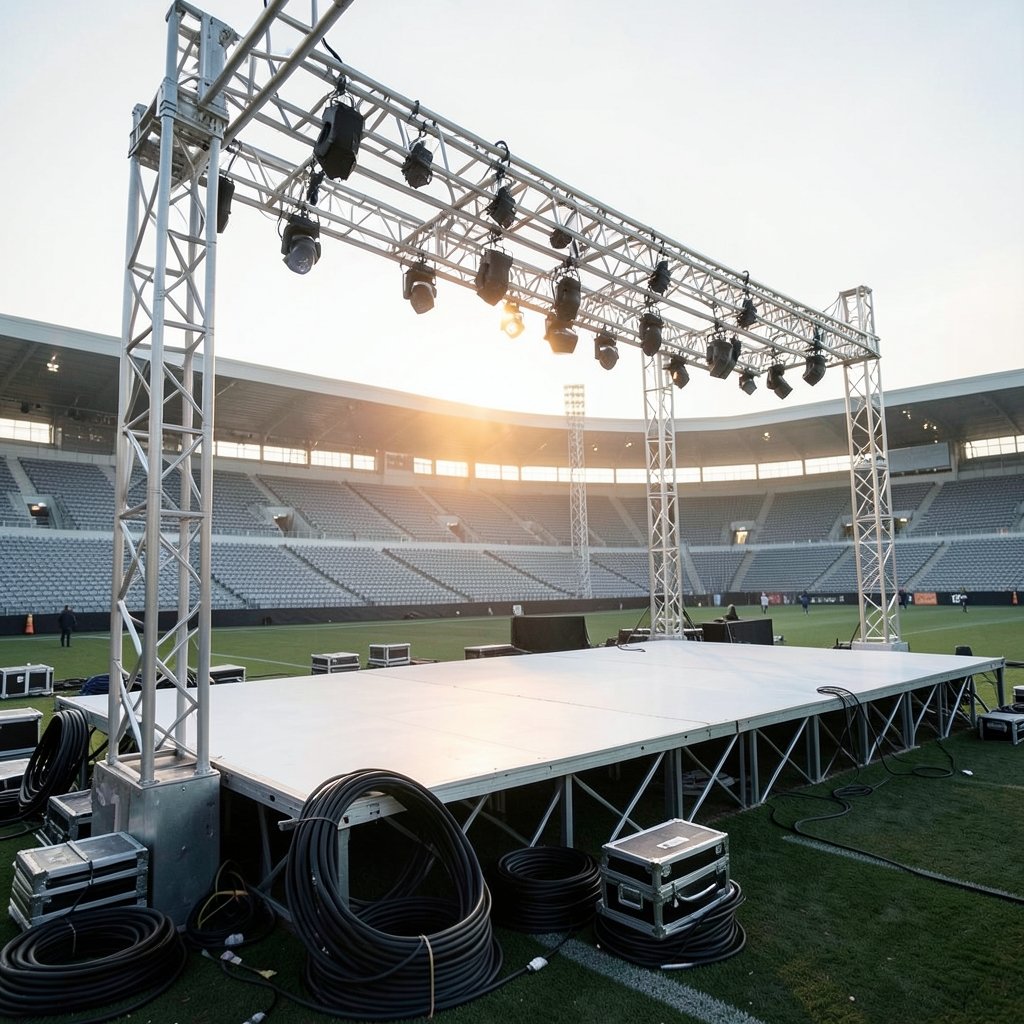
Expect a short set, typically a medley of hits rather than a full concert. Expect heavy visual staging, with lighting rigs and set pieces designed for camera angles rather than the in-stadium crowd. Expect a guest appearance or two, which has become standard practice. And expect the whole thing to be over in under fifteen minutes of airtime.
For viewers watching from home, the practical advice is to plan your food and bathroom breaks around the game flow rather than the clock. Halftime arrives roughly in the middle of the broadcast, but the exact timing depends on how the game is going. If you are hosting, start prepping earlier than you think you need to.
There is also a growing trend of viewers treating the halftime show as a standalone event. Some people tune in only for the performance and skip the rest. That is a legitimate way to watch, and it makes the announcement date more important than the game itself for a slice of the audience.
Common mistakes people make with halftime news
A few traps catch almost everyone at some point.
Mistake one: trusting a screenshot. Screenshots get edited. A convincing-looking graphic with a league logo is trivially easy to fake.
Mistake two: assuming a “leak” is a confirmation. Leaks are unverified by definition. Sometimes they are right. Often they are not.
Mistake three: confusing a wish list with a report. Fan polls asking “who should perform” get reshared as if they were news. They are not.
Mistake four: planning travel before the date is official. Venue and date details can shift. Confirm before you book.
Mistake five: forgetting that the show is a TV product. Setlists, staging, and even guest appearances are built for the broadcast, not the live crowd. Judging it as a concert misses the point.
How to follow the story without getting fooled
The most reliable approach is to check a small number of sources and ignore the rest until they agree. Watch for an official statement from the league or the presenting sponsor. Set a reminder to check back in late 2026, when the announcement window opens based on recent patterns. And when the news does break, read past the headline to see whether the article actually cites a source or just asserts a name.
If you are the kind of person who likes to stay ahead of consumer tech stories the same way, the same skepticism applies. A hands-on account of what 90 days with an AI customer service tool actually revealed shows how much difference real testing makes versus marketing claims. The principle transfers: verify, then trust.
Conclusion
The Super Bowl halftime show in 2027 is a real event with a real production machine behind it, and it is also, right now, a blank space where a performer’s name will eventually go. The league has not announced who will take the stage. The venue and date are widely expected but should be confirmed before anyone books a flight. Everything else, the setlists, the “confirmed” lineups, the insider scoops, is noise until an official announcement cuts through it.
The smart play is patience with a plan. Know the announcement window, know which sources count, and treat every unverified claim as entertainment rather than information. When the real name drops, probably in late 2026, you will be ready to enjoy the show instead of arguing about whether it was ever true.
FAQ
When is the Super Bowl LXI halftime show?
The game is expected in February 2027, with the most commonly cited date being February 14, 2027, at SoFi Stadium in Inglewood, California. That date and venue should be treated as unconfirmed until the league publishes its official schedule. The halftime show takes place roughly midway through the broadcast, not at a fixed clock time.
Who is performing at the 2027 Super Bowl halftime show?
No performer has been officially announced. Any name you see circulating before an official league or sponsor announcement is rumor. Recent headliners have been revealed roughly two to four months before the game, which points to a late 2026 announcement window.
Why do halftime show rumors spread so easily?
Because they generate clicks and shares, and automated content sites can produce plausible-sounding “confirmed” articles in seconds. The absence of an official announcement does not stop aggregators from republishing speculation as news, which then gets treated as consensus.
How long does the halftime show last?
The performance typically runs around 12 to 15 minutes of airtime. It is built as a medley of hits rather than a full concert, with staging designed for television cameras. Guest appearances are common.
Who produces the Super Bowl halftime show?
The NFL produces the show in partnership with Roc Nation, which joined as producer and strategic advisor in August 2019. Apple Music has been the presenting sponsor since the February 2023 game, taking over from Pepsi.
How many people watch the halftime show?
Recent shows have drawn roughly 100 to 120 million U.S. viewers, depending on the source and measurement method. That makes it one of the most-watched musical performances in the country each year, which is why the booking decision carries so much weight.



