
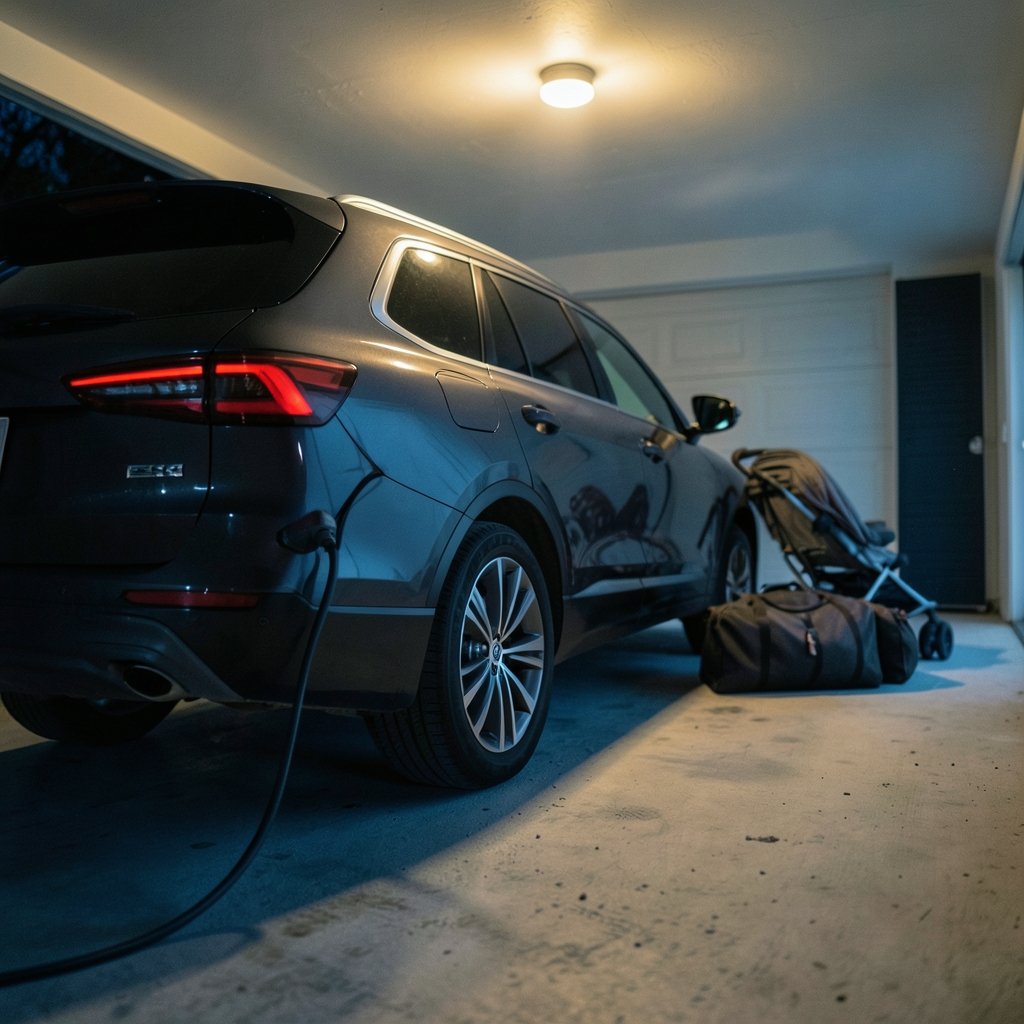
What happens when the most familiar name in Toyota family hauling loses its gas tank? That is the question hanging over the 2027 Toyota Highlander EV, the battery-electric three-row SUV that Toyota plans to build in Kentucky. The nameplate is a known quantity. The powertrain is not. And the gap between those two facts is where most of the confusion, speculation, and genuine excitement about this vehicle lives.
This article sticks to what is actually known, flags what is not, and explains what the open questions mean for anyone shopping a three-row electric SUV in the next couple of years.
The Short Version: A Familiar Name, a Very Different Vehicle
Toyota has confirmed that a new electric three-row SUV will be assembled at Toyota Motor Manufacturing Kentucky. The vehicle is expected to reach dealers as a 2027 model, following production that begins in 2026. That is the core of the story. Everything else, from range to price to what the badge actually says, is either unconfirmed or reported inconsistently.
The strategic logic is easy to follow. The gasoline-only Highlander was dropped in the U.S. for 2023, leaving the Highlander Hybrid as the sole version of a vehicle that had been a staple of American driveways for two decades. Reviving the name on an electric SUV keeps decades of brand recognition working instead of starting from zero with an unfamiliar badge.
Why the Highlander Name Matters So Much

Car names are assets. Automakers spend enormous sums building recognition, and Toyota has one of the strongest family-vehicle names in the business. Buyers who owned a Highlander in 2012, then another in 2019, do not need to be taught what the vehicle is for. They know it fits three rows of people, a pile of luggage, and the school run.
That familiarity cuts both ways, though. It raises expectations. A Highlander EV has to be as practical as the hybrid it replaces, or the name becomes a liability rather than a shortcut. Toyota’s challenge is not marketing. It is delivering a three-row electric family vehicle that does not ask buyers to compromise on the things that made the original work.
Where It Will Be Built, and Why That Matters
The Kentucky plant is the anchor fact here. Reports have placed the related investment at roughly $1.4 billion, though that figure should be checked against Toyota’s own announcement before anyone quotes it as gospel. Toyota has also said the vehicle will draw batteries from its North Carolina battery plant, a facility built specifically to supply electrified vehicles assembled in North America.
For buyers, this matters beyond trivia. Local assembly and a regional battery supply chain affect:
- Availability. Domestic production shortens the path from factory to dealer lot.
- Incentive eligibility. Battery and assembly location can affect which vehicles qualify for purchase incentives, depending on the rules in force at the time.
- Parts and service. A vehicle built and supported on the same continent tends to be easier to service.
Practical tip: when shopping any new EV, ask the dealer for the vehicle’s assembly location and battery source in writing. Sales staff sometimes guess. The paperwork does not.
The Naming Question Nobody Has Settled
Here is the honest part that most enthusiastic coverage skips. Early reports used names like bZ5X or bZ Large SUV for Toyota’s three-row electric concept shown around 2023. Whether the production model will wear the Highlander badge or a bZ badge has been reported inconsistently.
That matters more than it sounds. The bZ naming scheme (as in the bZ4X) signals a distinct electric sub-brand. The Highlander name signals continuity with a familiar family vehicle. Toyota has used both framings in different contexts, and until the company states the final badge clearly, treat any confident claim online with suspicion.
For readers comparing electric options more broadly, the same naming fog shows up across the industry, which is one reason roundups like this look at 10 best AI chatbots GPT-5 Claude under the hood 2027 when they need to separate genuine product detail from marketing noise. The principle is identical: verify the label against the source.
What Is Still Unknown: Range, Power, Price, and Trims
This is the section that will disappoint anyone hoping for numbers. Range, horsepower, pricing, trim structure, charging speed, and battery chemistry are all unconfirmed. Reports have speculated about a modified version of Toyota’s e-TNGA architecture and lithium-ion cells, and some outlets have floated next-generation or solid-state battery talk. None of that is verified for this specific model.
| Specification | Status |
|---|---|
| Model year | 2027, per reporting; verify with Toyota |
| Production start | 2026, per reporting |
| Assembly location | Kentucky (Toyota confirmed the plant plan) |
| Battery source | North Carolina plant, per Toyota statements |
| Range | Unconfirmed |
| Power output | Unconfirmed |
| Price | Unconfirmed |
| Battery chemistry | Unconfirmed, widely speculated |
| Final name/badge | Unresolved in public reporting |
A sensible rule for anyone following this vehicle: if a number appears without a Toyota source behind it, treat it as a rumor. Range figures in particular tend to get invented early and repeated until they feel like facts.
How It Stacks Up Against the Competition
The three-row electric SUV segment is no longer empty. The Kia EV9 arrived in 2023 and established what a boxy, family-first electric SUV can be. The Hyundai Ioniq 9 was announced in 2024 and adds another credible option. Toyota will be arriving into a segment where rivals already have real vehicles on lots and real owner feedback circulating.
That is a meaningful disadvantage for a first-time entrant, even one with a beloved name. It also means Toyota has had time to watch what worked and what did not. Common complaints about early three-row EVs include:
- Third-row space that is technically present but practically unusable for adults.
- Range that shrinks sharply with a full load of passengers and cargo.
- Charging curves that look fine on paper but slow dramatically in cold weather.
If Toyota addresses those three pain points specifically, the Highlander EV has a genuine opening. If it merely matches the field, the name alone will not carry it.
Practical Advice If You Are Considering One
Nobody can configure a 2027 Highlander EV yet, but the shopping process for a three-row electric family vehicle can start now. A few things that actually work in practice:
Measure your real charging situation first. Not the ideal week, the actual one. If you cannot charge at home overnight, a three-row EV becomes a logistics project rather than a convenience. Rent or borrow an EV for a week before committing.
Test the third row with the people who will sit in it. Dealership test drives rarely include loading six people and their bags. Bring the family, bring the car seats, and fold the seats yourself.
Check insurance and tire costs before you fall in love. Electric SUVs are heavy, and heavy vehicles eat tires. Insurance quotes vary more than most buyers expect.
Do not put a deposit down on a vehicle whose price has not been announced. Deposit schemes for unreleased models are common and sometimes refundable, sometimes not. Read the terms.
A common mistake is assuming a familiar name means a familiar ownership experience. An electric Highlander will need different maintenance, different charging habits, and a different budget for electricity versus gasoline. The name is continuity; the ownership is not.
The Software Side of a Modern Family SUV
One underrated aspect of any new EV is the digital layer: navigation that plans charging stops, apps that precondition the battery, and increasingly, in-car assistants. Toyota has been cautious about overpromising here, which is generally the right instinct. Buyers who want to understand how these systems are evolving, and where they still fall short, will find useful context in this look at when not to use an AI chatbot in 2027: 7 honest cases. The takeaway applies directly to vehicle software: convenience features are great until you rely on them in a situation they were never designed for.
Families cross-shopping tech-forward vehicles may also want to skim comparisons of DeepSeek vs ChatGPT vs Gemini judge output quality 2027 to see how quickly in-car assistant quality is shifting. The point is not to pick a chatbot. It is to recognize that the software in a 2027 vehicle will likely matter as much as the hardware by the time you trade it in.
What Would Change This Picture
A few developments would sharpen the outlook considerably. An official Toyota announcement confirming the final name, model year, and specifications would end most of the speculation. Published range and pricing would let buyers make real comparisons against the EV9 and Ioniq 9. And clarity on battery chemistry would settle whether this is a conventional lithium-ion vehicle or something more ambitious.
Until then, the responsible position is measured interest. The plan is real. The plant is real. The name is a strong one. The numbers are not yet on the table.
Conclusion
The 2027 Toyota Highlander EV is best understood as a bet on continuity. Toyota is taking one of its most trusted family names and putting it on a vehicle built in Kentucky, powered by batteries from North Carolina, and aimed squarely at the three-row electric segment. The strategy makes sense. The execution is unproven, and the details that matter most to buyers, range, price, and space, remain unconfirmed.
For shoppers, the practical move is patience with a purpose. Track Toyota’s official announcements, test the competition now so you have a baseline, and measure your own charging reality before any deposit changes hands. The Highlander name has earned a lot of trust over the years. Whether the electric version deserves it is a question only the finished vehicle can answer.
FAQ
When will the 2027 Toyota Highlander EV go on sale?
Reporting points to production starting in 2026, with the vehicle reaching dealers as a 2027 model year. Toyota has not published a precise on-sale date, so treat specific month claims with caution until the company confirms them.
Is the Highlander EV actually called a Highlander?
That is unresolved. Early reports used names like bZ5X or bZ Large SUV for Toyota’s three-row electric concept. Whether the production model carries the Highlander badge or a bZ badge has been reported inconsistently, and Toyota has not settled it publicly.
Where will the 2027 Highlander EV be built?
Toyota plans to assemble it at Toyota Motor Manufacturing Kentucky. Batteries are expected to come from Toyota’s North Carolina battery plant. The Kentucky investment has been reported at roughly $1.4 billion, a figure worth verifying against Toyota’s own release.
How much range will it have?
Unconfirmed. No official range figure has been published. Speculation about battery chemistry, including talk of next-generation or solid-state cells, is not verified for this model. Any specific range number circulating online should be treated as a rumor.
How does it compare to the Kia EV9 and Hyundai Ioniq 9?
Both rivals are already established in the three-row electric segment, with the EV9 launching in 2023 and the Ioniq 9 announced in 2024. Toyota will arrive later, which gives it the advantage of observing competitor weaknesses but the disadvantage of catching up on real-world feedback.
What happened to the gasoline Highlander?
The gasoline-only version was dropped in the U.S. for 2023, leaving the Highlander Hybrid as the sole variant in later years. The electric Highlander is a separate, new generation rather than a conversion of the existing hybrid.



