
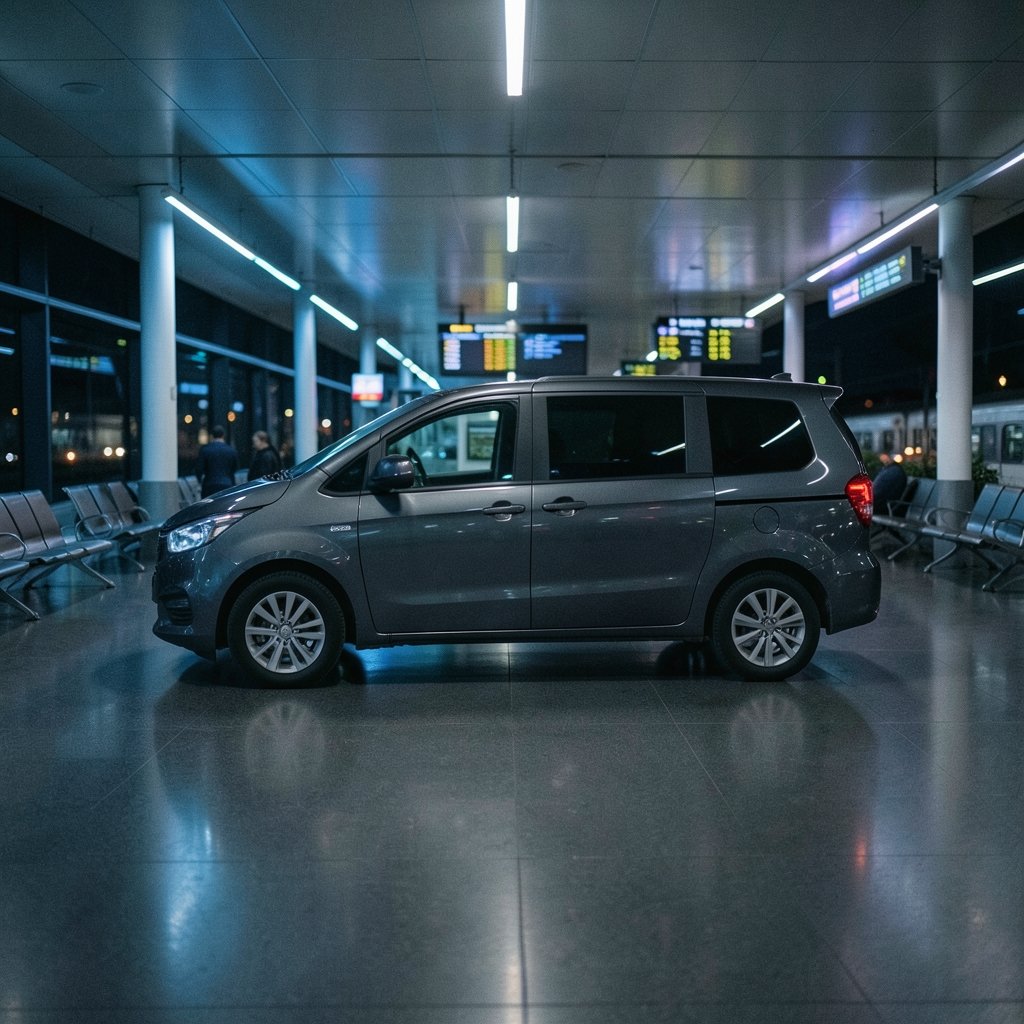
Will the 2027 Toyota Sienna finally break cover as an all-new minivan, or will it be a familiar hybrid with a few tweaks? That question is on the minds of family buyers, fleet managers, and anyone who has watched the minivan market shrink while prices climb. The honest answer, based on what Toyota has actually confirmed, is less dramatic than the rumor mill suggests. Here is a clear-eyed look at where the Sienna stands, what a 2027 model would likely involve, and how to separate fact from speculation. (10 best ai chatbots gpt 5 claude under hood 2027)
The Current Sienna in Plain Terms
The Sienna most people see on dealer lots today belongs to the fourth generation, known internally as the XL40. Toyota unveiled it in May 2020, and it reached U.S. buyers as a 2021 model. The big story at launch was simple: Toyota dropped the V6 and made the Sienna hybrid-only. Every trim, from the base LE to the plush Platinum, runs a 2.5-liter four-cylinder paired with Toyota’s hybrid system.
That powertrain produces a combined 245 horsepower. It is not a thrill machine, but it moves a fully loaded van with reasonable confidence. Front-wheel drive is standard, and electronic on-demand all-wheel drive is available on most trims. The AWD system adds a rear electric motor rather than a driveshaft, which keeps the floor flat and the weight penalty modest.
Fuel economy is the payoff. Front-wheel-drive models are rated around 35 to 36 mpg combined, and AWD versions land near 35 mpg, depending on trim and model year. For a vehicle that can carry eight people, that figure is genuinely impressive and remains one of the Sienna’s strongest selling points against rivals.
Packaging is equally practical. The Sienna seats up to eight passengers, offers second-row captain’s chairs or a bench, and includes a split-folding third row. The current van is built at Toyota’s Princeton, Indiana plant, which has assembled the Sienna for years.
Has Toyota Announced a 2027 Sienna?
This is the crux of the matter, and it deserves a straight answer. As of the most recent reliable information, Toyota has not announced a fifth-generation Sienna or a dedicated 2027 model-year Sienna. That means any “2027 Sienna” spec sheet circulating online right now should be treated as speculation until Toyota’s own newsroom confirms it. (Best ai translation tools 2027 deepl vs chatgpt vs google)
There is a rhythm to how Toyota operates. Model-year changes are typically announced in the calendar year before they go on sale. A 2027 Sienna announcement would therefore be expected sometime in 2026. Until that happens, the most defensible expectation is a carryover or a light refresh of the existing XL40 platform rather than a clean-sheet redesign.
The Sienna did receive a mid-cycle refresh for the 2025 model year, with styling and interior updates announced in late 2024. That timing matters. Automakers usually space refreshes several years apart, so a second major update arriving just two model years later would be unusual. Buyers planning around a 2027 purchase should plan for evolution, not revolution.
What Would Actually Change on a 2027 Model
If the 2027 Sienna follows the carryover path, changes would likely be incremental. Here is a realistic breakdown of what tends to shift in a model-year update versus what does not.
| Area | Likely for 2027 | Unlikely Without a Redesign |
|---|---|---|
| Trim structure and pricing | Small adjustments, possible new package | Entirely new trim ladder |
| Infotainment and safety tech | Updated software, standard driver aids | Brand-new electrical architecture |
| Styling | Color and wheel options | Full exterior redesign |
| Powertrain | Carryover 2.5L hybrid | New engine or plug-in hybrid |
| Seating and cargo | Minor material updates | Repackaged interior |
The powertrain is the least likely thing to change. Toyota has invested heavily in its hybrid systems and the Sienna’s fuel economy is a competitive asset. A plug-in hybrid Sienna is a popular wish among shoppers, but there is no confirmed plan for one. The Chrysler Pacifica remains the only minivan in the segment with a plug-in variant, and that alone draws buyers who want electric-only commuting.
How the Sienna Stacks Up Against Rivals
The minivan segment is small but fiercely competitive. The main rivals are the Honda Odyssey, Kia Carnival, and Chrysler Pacifica. Each takes a different approach, and understanding those differences helps buyers decide whether waiting for a 2027 Sienna makes sense.
The Odyssey is the traditionalist’s choice, sticking with a proven V6 and a reputation for sharp handling. The Carnival leans into SUV styling and offers flexible seating configurations. The Pacifica counters with the plug-in hybrid option and available all-wheel drive on gas models.
Where the Sienna wins is efficiency and standard all-wheel-drive availability across the hybrid lineup. Where it lags is outright power and, for some buyers, the drone of a four-cylinder under hard acceleration. If fuel costs matter more than 0-to-60 times, the Sienna is hard to beat. If towing or effortless highway passing tops the list, the Odyssey’s V6 still has appeal.
This same trade-off shows up across the broader vehicle market, where efficiency-focused models increasingly compete on total cost of ownership rather than raw performance. Buyers comparing powertrains across segments often find the same lesson applies: the smartest choice depends on how the vehicle is actually used day to day.
Practical Buying Advice for Shoppers Eyeing a 2027
Waiting for a specific model year can be smart or costly, depending on timing. Here is what actually works in practice.
First, confirm the announcement before committing. Toyota announces model-year changes through its official channels, and dealer information often lags. If a salesperson promises a “2027 redesign,” ask for documentation. Verbal assurances are not confirmation.
Second, check the current model’s incentives. When a new model year approaches, dealers clear older inventory. A well-equipped 2025 or 2026 Sienna with a discount can represent better value than paying full price for a 2027 with minor updates.
Third, verify safety ratings by model year. Crash-test results and recall history can vary between years. Buyers should look up the specific model year rather than assuming a rating carries over unchanged.
Fourth, test the hybrid system in real conditions. The Sienna is quiet around town but louder under full throttle. A test drive that includes highway merging tells you more than a parking-lot loop ever will.
Fifth, watch for the plug-in question. If electric-only driving matters, the Pacifica is currently the only minivan that delivers it. Waiting for a plug-in Sienna is a gamble with no confirmed payoff.
A common mistake buyers make is assuming a new model year automatically means new hardware. In reality, many model-year updates are cosmetic or software-focused. The same pattern appears across consumer tech, where annual releases often refine rather than reinvent, as anyone tracking how top AI chatbots evolve year over year will recognize.
What the Uncertainty Means for Families
For families who need a van now, the uncertainty around 2027 is mostly noise. The current Sienna is a proven, efficient, eight-passenger hybrid with a strong reliability record and available all-wheel drive. It does the job it was designed to do, and a carryover 2027 model would do it just as well. (10 best ai chatbots e commerce 2027 that rescue abandoned)
For families who can wait, the calculus is different. If Toyota announces a redesign in 2026, waiting could pay off with newer tech and styling. If it does not, waiting gains little beyond a model-year label. The key is to set a decision deadline and stick to it rather than chasing rumors indefinitely.
Fleet buyers face a similar trade-off. The Sienna’s fuel economy translates into real operating-cost savings over a vehicle’s service life, and that math rarely changes dramatically between model years. Predictability often matters more than novelty in fleet planning.
Where the Minivan Market Is Heading
The minivan segment has contracted for years as three-row SUVs absorbed family buyers. Yet minivans still win on sliding doors, cargo flexibility, and third-row access. The Sienna’s hybrid-only strategy positions it well for a market that increasingly values efficiency.
Toyota’s broader direction suggests hybrids will remain central for years rather than serving as a brief bridge. That makes a hybrid Sienna a safe long-term bet. It also means buyers should not expect a return to V6 power or a dramatic shift in the van’s character.
The competitive pressure is real, though. The Carnival has pushed styling boundaries, and the Pacifica has carved out the plug-in niche. Toyota will need to respond eventually. Whether that response arrives in 2027 or later remains the open question.
For readers tracking how manufacturers position products across price tiers and segments, the pattern is familiar: established nameplates evolve incrementally while newcomers try bolder moves. The same dynamic plays out in markets as varied as handheld gaming hardware, where pricing rumors and confirmed figures often diverge sharply before launch.
Conclusion
The Toyota Sienna 2027 is best understood as an open question rather than a confirmed product. Toyota has not announced a fifth-generation Sienna or a dedicated 2027 model, and the most realistic expectation is a carryover or light refresh of the current hybrid van. That is not a disappointment. The existing Sienna delivers roughly 35 mpg, seats up to eight, offers available all-wheel drive, and carries a strong practical reputation. Buyers who need a van now should focus on the current model and its incentives. Buyers who can wait should watch for an official announcement and set a firm decision date. Either way, the smart move is to rely on confirmed information rather than speculative spec sheets, and to test drive the hybrid system in the conditions you actually drive.
FAQ
Is there a 2027 Toyota Sienna?
Toyota has not announced a dedicated 2027 model-year Sienna or a fifth-generation version. Any 2027 Sienna would most likely be a carryover or a light refresh of the current fourth-generation hybrid van. Buyers should confirm details through Toyota’s official announcements before relying on any spec sheets circulating online.
Will the 2027 Sienna be all-wheel drive?
The current Sienna offers electronic on-demand all-wheel drive on most trims, and a carryover 2027 model would likely keep that option. The AWD system uses a rear electric motor rather than a mechanical driveshaft, which preserves a flat floor and adds modest weight. Front-wheel drive remains standard.
What kind of fuel economy does the Sienna get?
The current Sienna is rated around 35 to 36 mpg combined for front-wheel drive and about 35 mpg for all-wheel drive, depending on trim and model year. Exact figures vary, so buyers should check the rating for the specific model year they are considering rather than assuming a single number applies across the lineup.
Is a plug-in hybrid Sienna coming?
There is no confirmed plan for a plug-in hybrid Sienna. The Chrysler Pacifica is currently the only minivan in the segment offering a plug-in variant. Buyers who want electric-only commuting should weigh the Pacifica against waiting for an unconfirmed Toyota announcement, which carries real risk of never materializing.
How many passengers can the Sienna carry?
The Sienna seats up to eight passengers when equipped with a second-row bench. Buyers can also choose second-row captain’s chairs, which reduces capacity to seven but improves access to the third row. The third row splits and folds, giving flexibility between passenger space and cargo room.
Should I wait for the 2027 Sienna or buy now?
It depends on urgency and patience. If you need a van now, the current Sienna is proven and efficient, and end-of-model-year incentives can make it a better value than paying full price for minor updates. If you can wait, set a firm decision deadline and watch for an official Toyota announcement rather than chasing rumors indefinitely.



