
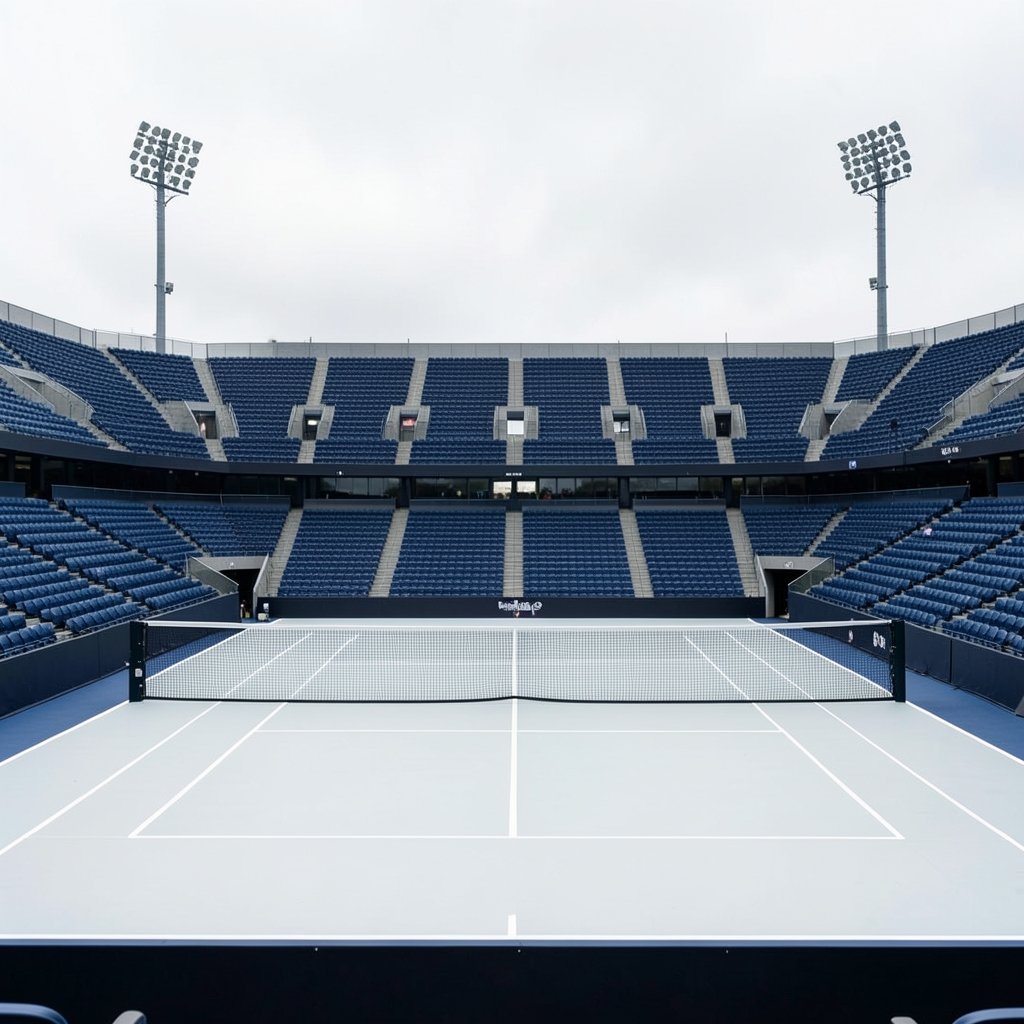
What makes the US Open the strangest, loudest and most unpredictable of tennis’s four biggest events? Part of it is the New York crowd. Part of it is the night sessions that stretch past midnight. And part of it is the simple fact that the tournament keeps changing. As the tennis world looks ahead to the 2027 US Open, the event sits at a crossroads: a long-running building project on its grounds, a prize purse that keeps climbing, and a playing format that has been tinkered with more than any other Grand Slam. (Open Banking + AI in 2027: Consumer Gains & Risks)
This guide breaks down what is settled, what is still open, and what fans should actually watch for. It separates confirmed facts from educated projections, because a lot of what circulates online about future tournaments is guesswork dressed up as news.
The basics: when and where the 2027 US Open happens
The 2027 US Open is scheduled for late August into early September 2027, the traditional window for the season’s final Grand Slam. It will be played at the USTA Billie Jean King National Tennis Center in Flushing Meadows, Queens, New York, the tournament’s home since 1978.
By the calendar count that starts with the first edition in 1881, the 2027 event is the 147th US Open. That number is arithmetic rather than an official label, so treat it as a useful reference point rather than a headline the organizers will necessarily use. What is certain is the tournament’s place in the season: it is the fourth and final Grand Slam of 2027, following the Australian Open in January, the French Open in late May and June, and Wimbledon in June and July. (Best open source ai tools 2027 15 free alternatives paid)
The US Open is owned and operated by the USTA, the national governing body for tennis in the United States. Unlike the other majors, which are run by independent clubs or associations, this one is a non-profit’s biggest revenue engine. That matters for how the tournament behaves: it invests heavily in the site, in player compensation, and in the broadcast product, because the surplus funds grassroots tennis across the country.
Exact 2027 session dates and the daily order of play are typically confirmed closer to the event, usually in the months before the tournament. Anyone planning travel should wait for the official schedule rather than booking against projected dates.
Why the US Open plays differently from the other three majors

Every Grand Slam has a personality. The US Open’s comes from three things: the surface, the schedule and the tiebreak rule.
The tournament is played on hard courts, the cushioned acrylic surface that has defined the event for decades. Hard courts reward big servers and first-strike tennis, which is one reason the men’s and women’s draws here so often produce explosive, short-point matches. Players who grew up on clay sometimes need a week to adjust; players with flat, aggressive games feel at home immediately.
Then there is the night session, a feature no other Grand Slam offers in the same form. Day matches give way to a prime-time slot that has produced some of the sport’s most memorable moments, and the atmosphere inside the main stadium after dark is closer to a boxing crowd than a tennis crowd.
Finally, the deciding-set tiebreak. The US Open was the first major to adopt a tiebreak in the final set, and the current format uses a 10-point tiebreak at 6–6 in the deciding set, a rule the sport’s governing bodies standardized across the majors from 2022. In practice this means no fifth set runs forever. A match can swing on two or three points after four hours of tennis, which is thrilling for fans and brutal for players.
| Feature | US Open | Typical contrast at other majors |
|---|---|---|
| Surface | Hard court (acrylic) | Clay at the French Open, grass at Wimbledon |
| Night sessions | Yes, a signature of the event | Limited or none |
| Deciding-set tiebreak | 10-point tiebreak at 6–6 | Varies by major, historically longer formats |
| Roofed main stadium | Yes | Not universal across the tour |
The draw: 128 players, 32 seeds, and a lot of chaos
The singles draw at the 2027 US Open will follow the established structure: 128 players in the main draw, with 32 seeds. The doubles draw is 32 teams. Entry is a mix of direct acceptance by ranking, qualifiers who survive a pre-tournament event, and wild cards handed out by the USTA.
That structure is part of why the tournament produces so many upsets. A 128-player field means a seeded player can meet a dangerous floater in round two, and the fast surface shortens the gap between the top ten and the rest. First-round exits for big names are a staple of the first week in New York, not a shock.
For anyone tracking the event closely, the practical advice is simple: watch the draw ceremony as well as the seed list. A player’s path through the bracket matters more on hard courts than on almost any other surface, because a cluster of big servers in one quarter can blow that section open.
Arthur Ashe Stadium, the roof, and the transformation project
Arthur Ashe Stadium is the largest tennis venue in the world by capacity, and its retractable roof, completed in 2016, ended the era of rain-wrecked finals. Louis Armstrong Stadium got its own retractable roof in 2018. Together they give the tournament something the other majors have had to engineer separately: a schedule that can survive a wet New York fortnight.
The bigger story heading toward 2027 is the site itself. The USTA has been carrying out a major expansion of the National Tennis Center, often described as a transformation of the grounds, including a new stadium with roughly 14,000 seats and expanded facilities. The project has been reported with completion targets around 2027 to 2028.
Here is where honesty matters: whether that work is fully finished in time for the 2027 tournament is not confirmed. Construction timelines slip. Fans planning to attend should check the official site for the current status of courts and access routes rather than assuming the finished layout. If the project is complete, the 2027 edition could feel like a coming-out party for a rebuilt venue. If it is not, expect partial closures and shifted walking routes, which is normal for a tournament that has been under construction in some form for years.
Prize money: what the 2027 purse will look like
Prize money is the question every player’s agent asks first, and it is also the one with the least confirmed information for 2027. As of now, the 2027 purse has not been announced. The relevant baseline is the most recent figure: the 2025 US Open total purse reached a record $90 million.
If the pattern of recent years holds, the 2027 number will be higher than 2026’s, which will itself be higher than 2025’s. The US Open has consistently pushed player compensation upward, partly because the tournament’s revenue supports it and partly because the sport’s economics have shifted toward giving players a larger share. But projections are not announcements. Anyone quoting a specific 2027 figure is guessing.
What is safe to say is that the purse will be among the largest in the sport, that early-round losers will still take home a meaningful check, and that the gap between the champion’s payout and a first-round exit will remain wide. For lower-ranked players, the difference between direct entry and qualifying is often measured in tens of thousands of dollars, which is why the qualifying event is worth watching in its own right.
What to watch for on court in 2027
Predicting a champion two years out is a fool’s game, but predicting the conditions is not. A few things are worth tracking as the 2027 tournament approaches.
The defending champions will be the 2026 US Open winners. Those names are not yet known, and any article claiming otherwise is inventing them. The same applies to the 2027 seedings, which depend on the ranking race through the summer hard-court swing.
The surface supplier is worth confirming. The tournament has used the same cushioned acrylic surface for decades, but supply contracts can change, and a surface change alters bounce, speed and injury risk. It is the kind of detail that rarely makes headlines but shapes results.
The night session schedule will draw scrutiny again. Late finishes have become a talking point across the sport, and the US Open, as the event most associated with after-midnight tennis, is where the debate is loudest. Any change to session start times or scheduling policy would land before or during the 2027 edition.
The technology layer keeps growing. Electronic line calling, data-driven scouting and broadcast analytics have all expanded at the majors. Fans who follow the tech side of the sport will find plenty to compare, much as readers comparing AI coding assistants judge output quality in a head-to-head setup like opencode vs claude code judge output quality 2027. The parallel is not as odd as it sounds: both are about how much you trust an automated system when the stakes are high.
Practical advice for fans planning to attend
If the goal is to be in New York for the 2027 US Open, a few habits separate a smooth trip from a stressful one.
- Wait for the official schedule before booking flights. Session times and the daily order of play are confirmed late, and a cheap flight that lands on the wrong day is not cheap.
- Decide early whether you want day or night sessions. They are ticketed separately and feel like different tournaments. Night sessions are louder and later; day sessions let you roam the outer courts and see more tennis.
- Plan for heat. Late August in Queens is hot and humid. Matches are played in it, and so are spectators. Hydration and shade are not optional.
- Use the outer courts. The biggest names play on the show courts, but the best value for a tennis fan is often on the smaller courts, where you can stand a few feet from a top-20 player.
- Build in a rain buffer. The roofs cover the two main stadiums, not every court. A washed-out day on the outside courts is a real possibility.
The most common mistake is treating the tournament like a single event rather than a two-week festival with shifting schedules. The second most common is buying resale tickets without checking which session they belong to. Both are avoidable with a little planning.
How the 2027 edition fits into the wider tennis calendar
The US Open closes the Grand Slam season, and that position gives it a distinct role. By the time the tournament begins, the year’s storylines are mostly written: who won in Melbourne, who conquered Paris, who held serve at Wimbledon. The US Open is where players either salvage a season or complete one.
It is also where the next season’s narratives start. Young players who break through in New York often carry that momentum into the following year, and veterans who fade on the hard courts start making decisions about their schedules. For fans who follow the sport year-round, the final major is less an ending than a pivot point.
The tournament’s commercial weight reinforces that role. As the USTA’s principal revenue source, it funds the organization’s broader work, from junior development to community programs. That structure is unusual among the majors and shapes everything from ticket pricing to how aggressively the site is redeveloped.
Conclusion
The 2027 US Open is not a mystery, but it is not fully written either. The venue, the draw size, the surface and the deciding-set tiebreak format are all established. The exact dates, the prize purse, the seedings and the completion status of the grounds expansion are not. That split between the settled and the open is what makes following a future tournament interesting: you know the stage, and you are waiting to see who walks onto it.
For fans, the practical takeaway is simple. Watch the official schedule for dates, treat any specific prize-money figure for 2027 as a projection until it is announced, and plan travel around sessions rather than assumptions. For players, the tournament remains what it has always been: the loudest, fastest, most unforgiving fortnight on the calendar, and the last chance of the year to make a Grand Slam statement.
FAQ
When is the 2027 US Open?
It is scheduled for late August into early September 2027 at the USTA Billie Jean King National Tennis Center in Flushing Meadows, New York. Exact session dates are confirmed closer to the event.
Is the 2027 US Open the 147th edition?
By counting from the first edition in 1881, yes, it works out to the 147th. That figure is arithmetic rather than an official tournament label, so treat it as a reference point.
How many players are in the US Open singles draw?
The main draw has 128 players in singles, with 32 seeds. The doubles draw is 32 teams. Entry comes from direct ranking acceptance, qualifiers and wild cards.
How much prize money will the 2027 US Open pay?
The 2027 purse has not been announced. The most recent confirmed baseline is the 2025 total of $90 million, and the 2026 figure will be the relevant comparison for 2027 projections.
Does the US Open use a tiebreak in the final set?
Yes. The tournament uses a 10-point tiebreak at 6–6 in the deciding set, a format standardized across the Grand Slams from 2022. It means no final set runs indefinitely.
Will the National Tennis Center expansion be finished for 2027?
That is not confirmed. The USTA has been carrying out a major expansion of the grounds with completion targets reported around 2027 to 2028, so attendees should check the official site for the current status before planning around a finished layout.



