
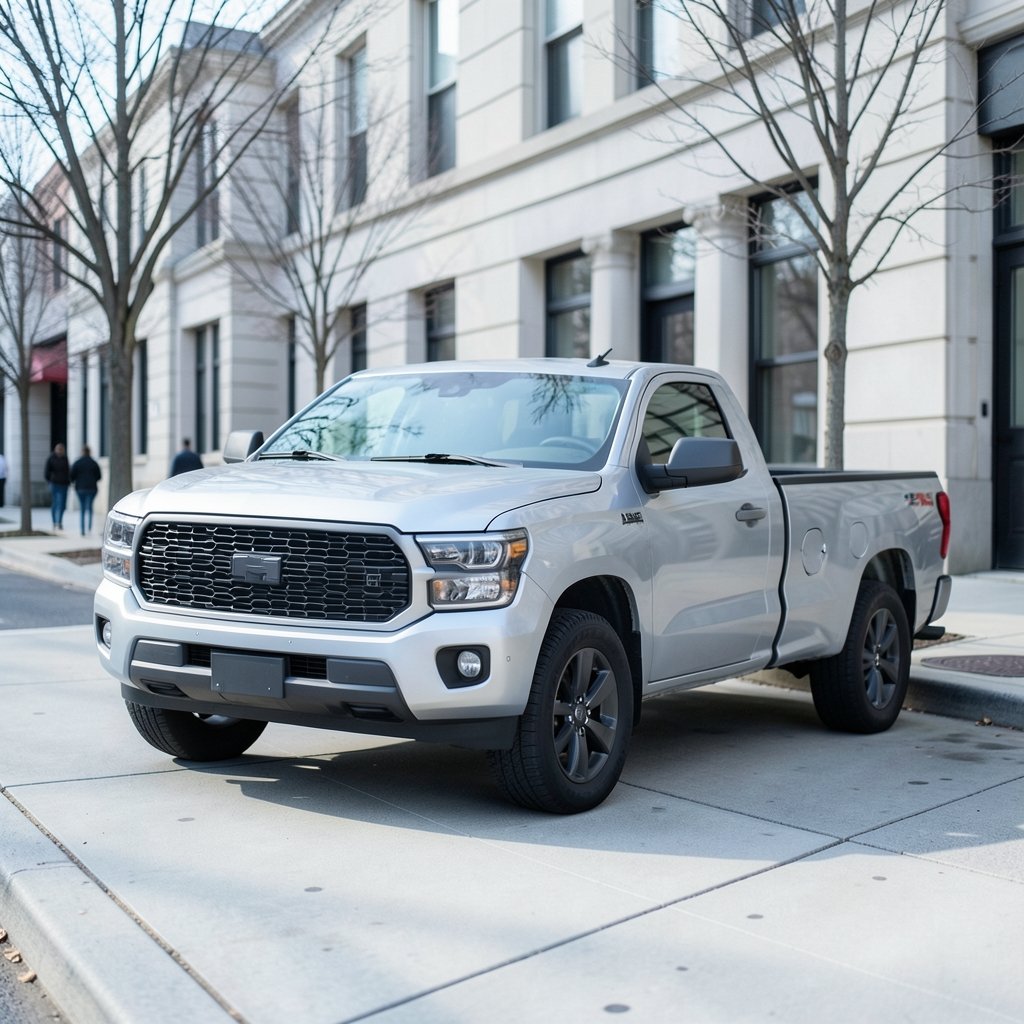
What will the 2027 GMC Canyon actually look like when it reaches showrooms? That question sounds simple, but the honest answer is more interesting than a spec sheet. The Canyon is GMC’s mid-size pickup, sold in the United States since the 2015 model year, and the current third generation arrived for 2023 on the same global mid-size truck platform that underpins the Chevrolet Colorado. That much is settled. What the 2027 model year brings, however, sits in the foggy zone between what has been announced and what people assume has been announced.
This article walks through what is known, what is likely, and what nobody outside GM can confirm yet. It also explains how to read the inevitable rumor cycle without getting burned, and how to shop the truck intelligently whether the 2027 turns out to be a light refresh or something bigger.
The Third-Generation Foundation
Start with the hardware that already exists, because any 2027 Canyon will be built on it. The 2023 redesign was a genuine ground-up change. It moved the Canyon away from the previous generation’s V6 and diesel options and into the 2.7L turbocharged four-cylinder TurboMax engine family, offered in multiple output tunes. That engine strategy was a bet: fewer cylinders, more boost, and torque delivered low in the rev range where trucks actually work.
The trim ladder in the third generation has run through Elevation, AT4, AT4X, and Denali, with AT4X serving as the off-road flagship. That structure matters for 2027 planning because it tells you where GMC sees demand. The AT4X exists to fight for the buyers who want lockers, big tires, and multi-mode dampers straight from the factory. The Denali exists for the buyer who wants a mid-size truck with a luxury badge and a quiet cabin. Elevation sits in the volume slot.
One practical note from experience: the output tune matters more than the badge. Two trucks with the same engine family can feel meaningfully different depending on calibration, axle ratio, and tire package. When shopping any model year, drive the specific configuration rather than assuming the engine defines the experience.
What Is Actually Confirmed for 2027

Here is the uncomfortable part. No verified 2027-specific data exists in the public record yet. GM typically announces model-year changes in the preceding year, which means 2027 Canyon details would most plausibly surface during 2026. Until a GM press release or official spec sheet dated 2026 or later exists, any claim about 2027 trims, engines, pricing, or features is inference dressed up as fact.
That includes the electric question. GM has publicly discussed an all-electric truck in the Canyon and Colorado class, but a production 2027 electric Canyon cannot be confirmed. Treat electrification chatter as speculation until it appears in an official announcement.
This is not a reason to stop reading. It is a reason to read carefully. Plenty of outlets publish “2027 GMC Canyon revealed” headlines built on nothing but a leaked rendering and a hopeful forum thread. The practical rule: if a claim about 2027 does not trace back to a manufacturer document, file it under rumor.
The Speculation Cycle and How to Read It
Every spring, the same pattern repeats. A camouflaged prototype gets photographed. A parts catalog leaks a trim code. A dealer bulletin mentions a color. Within a week, the internet has decided the 2027 Canyon gets a hybrid powertrain, a redesigned interior, and a price cut.
What actually works when evaluating these claims:
- Check the date. A “2027” article published in early 2025 is almost certainly predictive, not reporting.
- Look for the primary document. Press releases, order guides, and official spec sheets are primary. Everything else is secondary at best.
- Separate platform from content. A new model year rarely changes the underlying platform. Cosmetic and content changes are far more common than structural ones.
- Watch the regulatory calendar. U.S. light-duty trucks answer to federal safety standards and fuel-economy labeling rules, and those rules have been in flux. A 2027 change may reflect compliance rather than product ambition.
That fourth point deserves emphasis. When federal requirements shift, manufacturers sometimes adjust equipment, calibration, or labeling in ways that have nothing to do with marketing. Buyers who assume every change is a feature upgrade get confused fast.
Powertrain and Efficiency: What to Watch
The TurboMax four-cylinder family is the incumbent, and a model-year change rarely swaps an engine family wholesale. The likelier variables are calibration, availability by trim, and efficiency labeling.
Fuel economy is the number to track. Every new light-duty truck sold in the U.S. carries an official fuel-economy label, and those figures are published by model year. When 2027 data appears, compare it against the 2026 figures for the same configuration rather than against the marketing brochure. Real-world mileage depends heavily on gearing, tire choice, and how much weight is in the bed. An AT4X on aggressive tires will not match an Elevation on highway rubber, and no label captures that gap.
If efficiency matters to your purchase, the smart move is to buy the configuration, not the year. A well-specified 2026 at a discount often beats waiting for a 2027 whose changes turn out to be a new paint color.
Trims, Pricing, and the Value Question
Pricing for 2027 is unknown and should not be stated without a primary GM source. What can be said is structural: mid-size trucks have drifted upward in price across the segment, and the Denali and AT4X trims sit at the top of the Canyon ladder. Buyers cross-shopping should expect the spread between an Elevation and an AT4X to remain wide.
| Trim | Character | Who it suits |
|---|---|---|
| Elevation | Volume model, blacked-out styling | Daily drivers who want value |
| AT4 | Mild off-road kit, all-terrain tires | Occasional trail use, winter driving |
| AT4X | Lockers, dampers, serious hardware | Buyers who actually leave pavement |
| Denali | Luxury cabin, chrome, comfort | Highway miles and towing comfort |
The common mistake here is buying AT4X capability for a truck that never leaves asphalt. The hardware is genuinely good, but it costs money and adds weight. Conversely, buying an Elevation and then spending thousands on suspension and tires to chase AT4X performance usually lands you near the same total with less warranty coverage. Decide honestly how the truck will be used.
Shopping Smart Before 2027 Arrives
If you need a truck now, waiting a full model year has a real cost: depreciation on whatever you drive today, plus the possibility that 2027 changes are minor. A few practical habits help regardless of timing.
First, get the out-the-door price in writing before discussing monthly payments. Dealer add-ons multiply fast on trucks. Second, verify the specific build sheet rather than the trim name, because packages vary by production date. Third, check recall and safety data for the exact model year you are considering, since mid-cycle fixes happen quietly.
For readers comparing digital shopping tools alongside vehicle research, the same discipline applies: verify claims against primary sources. Guides like this roundup of ai tools for e-commerce stores in 2027 show how quickly tool lists go stale, and the same staleness problem affects truck spec pages. If you are researching how AI assistants handle product questions, this breakdown of the best AI chatbots in 2027 is a useful reference for understanding what these systems can and cannot verify.
One more habit worth building: know when automation is the wrong tool. This piece on when not to use an AI chatbot makes the case that human judgment still wins for high-stakes decisions, and buying a $50,000 truck qualifies. Use chatbots for research breadth, then confirm with a dealer and a primary document.
The Ownership Reality Nobody Mentions
Speculation aside, the ownership experience of a third-generation Canyon is well documented by now, and it should shape any 2027 purchase. Mid-size trucks are compromised by design: the bed is shorter than a full-size, the rear seat is tighter, and the ride is stiffer when empty. Buyers who come from a half-ton often expect the Canyon to feel like a smaller version of the same thing. It does not. It feels like a truck built to a different brief.
The flip side is maneuverability and parking. In tight urban lots, the size advantage is real and daily. Towing capacity is respectable for the class but not a substitute for a full-size when trailers get heavy. Be honest about payload, too: passengers, gear, and tongue weight all count against the same number, and the sticker on the door jamb is the authority, not the brochure.
Maintenance on the TurboMax engine is straightforward, but turbocharged engines reward disciplined oil changes. Skipping intervals to save money is a false economy. Likewise, the off-road trims benefit from regular inspection of suspension components if they actually see dirt.
Conclusion
The 2027 GMC Canyon is a truck whose foundation is well understood and whose specifics remain unannounced. The third-generation platform, the TurboMax engine family, and the Elevation-to-Denali trim ladder are established facts. The 2027 changes, pricing, and any electrified variant are not, and no amount of confident internet commentary changes that.
The balanced approach is straightforward. If you need a truck soon, shop the current model year on configuration and out-the-door price rather than waiting on rumor. If you can wait, watch for an official GM announcement in 2026 and compare primary documents rather than headlines. Either way, drive the exact build you intend to buy, verify payload on the door jamb, and treat every unconfirmed claim about 2027 with the skepticism it deserves. The Canyon is a capable mid-size pickup. The 2027 version will almost certainly be one too, whatever the details turn out to be.
FAQ
When will the 2027 GMC Canyon be announced?
GM typically announces model-year changes in the preceding year, so 2027 Canyon details would most plausibly appear during 2026. No official 2027 announcement or spec sheet has been verified, so any specific date circulating online should be treated as speculation until a manufacturer document confirms it.
Will the 2027 Canyon be electric?
That cannot be confirmed. GM has publicly discussed an all-electric truck in the Canyon and Colorado class, but no production 2027 electric Canyon has been verified. Electrification rumors should be separated from announced product until an official statement appears.
What engine will the 2027 Canyon use?
The current third-generation Canyon uses the 2.7L turbocharged four-cylinder TurboMax engine family in multiple output tunes, introduced with the 2023 redesign. Whether 2027 brings calibration or availability changes is unverified. A wholesale engine-family swap in a single model year would be unusual.
What trims are available on the Canyon?
The third-generation ladder has included Elevation, AT4, AT4X, and Denali, with AT4X as the off-road flagship and Denali as the luxury trim. The 2027 lineup has not been verified and could differ.
Is it worth waiting for the 2027 model?
It depends on need and price. Waiting costs depreciation on your current vehicle and assumes 2027 changes will be meaningful, which is unverified. If you need a truck now, a well-specified current model year at a fair out-the-door price is often the better financial decision.
How can I verify 2027 Canyon information?
Check for a manufacturer press release or official spec sheet dated 2026 or later, and confirm safety and fuel-economy data by model year through official government sources. Treat headlines without a primary document as rumor, and confirm payload and configuration details on the actual vehicle rather than in marketing material.



