
What makes a pair of jeans easy to put on at 75 but frustrating at 55? The answer has almost nothing to do with style and everything to do with how the garment is engineered. “Senior jeans” is not an official product category. No trade standard defines it, and no regulator polices the label. It is a loose, shopper-made term for jeans designed with older wearers in mind: roomier through the hips and thighs, higher in the rise, softer in the fabric, and easier to work with stiff hands. As the idea gains traction, the useful question is not whether the term is real, but which design choices genuinely help and which are marketing dressed up as comfort.
Why the Term “Senior Jeans” Needs a Clear Definition
Search the phrase and you will find a mix of adaptive apparel, relaxed-fit basics, and mainstream brands nudging their size charts toward older bodies. None of these share a formal definition. That matters for shoppers, because “senior” on a product page can mean anything from a true adaptive design with magnetic closures to a standard relaxed fit with a friendlier photo.
A practical definition helps. For this article, senior jeans means denim cut and finished for bodies that have changed with age: less flexibility, more sensitivity to pressure and seams, weaker grip, and a preference for waistbands that do not dig in when sitting. That is a design brief, not a medical claim. Once you frame it that way, you can judge any pair against concrete features instead of vague comfort language.
It also helps to separate the term from adaptive clothing, which is a broader category covering garments modified for people with disabilities or limited mobility. Adaptive jeans may include senior-friendly features, but the two labels are not interchangeable. A pair can be adaptive without targeting older wearers, and a pair can suit older wearers without any adaptive hardware at all.
The Design Features That Actually Matter
Most of what makes jeans hard to wear is invisible until you try them on. The features below are the ones worth checking, in roughly the order they affect daily life.
Fabric weight and stretch
Heavy, rigid denim holds its shape but fights every movement. For older wearers, a mid-weight denim with a small amount of stretch usually wins. Look for a blend that includes a little elastane or a mechanical stretch weave. Too much stretch and the jeans sag and lose shape by mid-afternoon; too little and they feel like armor. The sweet spot is fabric that recovers after bending and sitting.
Rise and waistband construction
A higher rise covers the lower back when sitting and bending, which many older wearers prefer. The waistband matters just as much. Partial elastic panels at the back or a hidden comfort insert give when you sit without looking like sweatpants. Flat seams and a soft-lined waistband reduce pressure points. A waistband that sits slightly higher in the back than the front stays put when bending.
Closures and openings
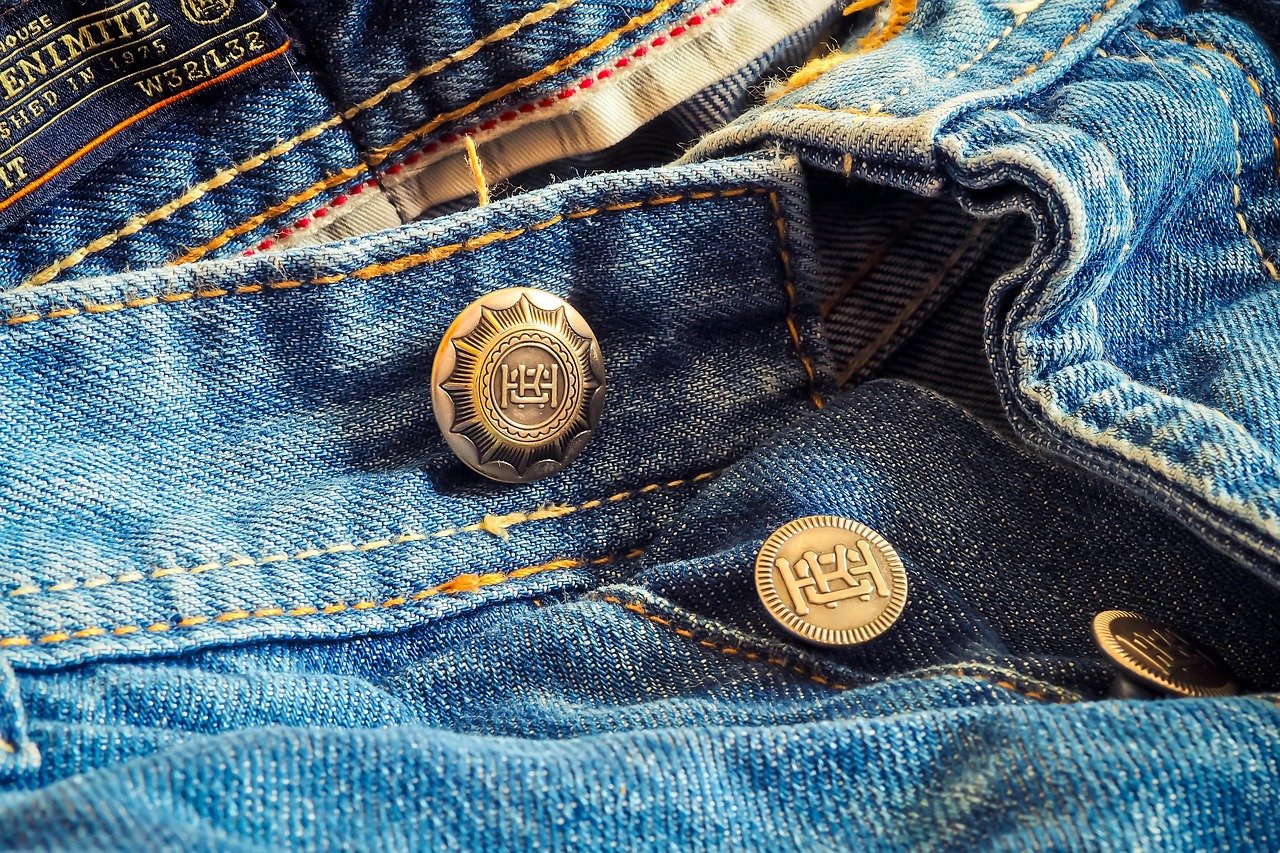
Buttons demand grip strength and fine motor control. Larger buttons, longer zipper pulls, and magnetic or hook-and-loop closures make a real difference for anyone with arthritis or reduced hand strength. Wide leg openings help feet pass through without bending far forward. These are small details that decide whether a pair gets worn or stays in the drawer.
Pockets and seams
Deep front pockets are useful; bulky seams across the hip are not. Look for pocket bags that sit flat and seams that are pressed or bound rather than thick and raised. For anyone who sits for long stretches, a smooth seat seam reduces irritation.
| Feature | Why it helps older wearers | What to watch for |
|---|---|---|
| Mid-weight stretch denim | Moves with the body, recovers shape | Too much stretch sags |
| Higher rise | Covers lower back when bending | Rise that is too high can bunch |
| Partial elastic waistband | Gives when sitting | Full elastic looks casual |
| Magnetic or large-button closure | Easier for stiff hands | Check hardware durability |
| Wide leg opening | Feet pass through easily | Excess fabric can trip |
| Flat, bound seams | Less rubbing and pressure | Thin fabric wears faster |
Fit Beats Size: Reading the Label Correctly
A common mistake is sizing up to get comfort. Buying two sizes larger often produces a waistband that slides down, a seat that bags, and legs that drag. The better move is to match the cut to the body, not to inflate the number. Relaxed and straight cuts with a higher rise usually deliver more comfort than a bigger version of a slim cut.
Another trap is trusting the tag over the tape measure. Vanity sizing varies wildly between brands, and a “32” can differ by two inches from one label to the next. Measure the waist, hip, and inseam of a pair that already fits well, write those numbers down, and compare them to size charts rather than to the number on the label. For anyone shopping online, that single habit prevents most returns.
Waistbands also deserve a second look. A waistband that fits while standing can feel tight while sitting, because the body’s circumference changes with posture. If a pair feels snug standing in the fitting room, it will feel worse after a meal or a long car ride. Sit down in them before deciding, and if you cannot try them on, favor a cut with some give in the waistband.
Comfort Is Not the Same as Adaptive
There is a real difference between jeans that feel nice and jeans that solve a problem. A soft, stretchy pair is comfortable. An adaptive pair might also include a seated fly, side-entry closures, or a pull-on design that removes the need to bend and fasten altogether. Those features cost more and are worth it only if the specific difficulty applies.
The same logic applies to technology claims. Some newer lines mention sensor-friendly fabric, temperature-regulating finishes, or app-connected fit guidance. Treat these as optional extras until they are proven in daily wear. A pair of jeans succeeds or fails on fit, fabric, and closures long before any smart feature matters. If you are comparing AI-assisted shopping tools that promise to match fit or answer sizing questions, it helps to know where they fall short; a balanced look at when not to use an AI chatbot in 2027 is a useful reality check before trusting an algorithm with your waist measurement.
Common Mistakes Shoppers Make
A few patterns show up again and again among people buying jeans for themselves or for an older parent.
- Buying for the label, not the body. Chasing a smaller size defeats the purpose. Fit is the goal.
- Choosing fashion over function. A stiff, low-rise pair may look sharp but rarely gets worn.
- Ignoring the closing mechanism. A beautiful pair with tiny buttons and a stiff zipper is a daily struggle.
- Skipping the sit test. Standing in front of a mirror tells you little about how a waistband behaves when seated.
- Overbuying at once. Buy one pair, wear it for a week, then decide whether the cut works before ordering more.
- Assuming adaptive means frumpy. Plenty of adaptive and comfort-focused lines now look like ordinary denim, which matters for anyone who wants to feel like themselves.
A related mistake is buying only for the body as it is today. Mobility and weight shift over time. A pair with a little adjustment built in, such as a partially elastic waistband or a slightly generous cut, tends to stay in rotation longer than a precisely tailored pair.
What to Look For When Shopping in 2027
The market is moving toward age-inclusive sizing and softer construction, and shoppers benefit from being specific about what they want. A practical checklist helps cut through the noise.
- Confirm the fabric blend and stretch percentage; the word “stretch” is insufficient.
- Check the rise measurement; “high rise” alone is insufficient.
- Look at photos of the closure and waistband from the inside.
- Read reviews that mention sitting, bending, and hand strength.
- Verify the return policy before ordering a new cut.
- Start with one pair and test it for a week.
For readers who want a broader view of how consumer tools are adapting to older users, a roundup of AI tools for seniors in 2027 that solve real daily problems offers useful context on what is genuinely helpful versus what is hype. The same skepticism applies to denim: a clear feature list beats a clever slogan every time.
Try Before You Trust the Marketing
The most reliable test remains unglamorous. Put the jeans on, sit in a chair, stand up, bend to pick something off the floor, and reach into the pockets. If any of those movements feels like a negotiation, the pair is not the right one, no matter how good it looks on the hanger. Shoppers who do this in the fitting room, or who order from a retailer with free returns and test at home, avoid most of the disappointment that comes with buying comfort clothing online.
How to Care for Comfort Denim So It Lasts
Stretch denim and elastic panels wear differently from rigid cotton. Heat is the enemy. Wash in cold water, turn the jeans inside out, and skip the dryer or use the lowest setting. Elastic loses recovery when exposed to high heat, and that is exactly the feature doing the most work. Air drying preserves both the stretch and the fit.
Also watch the closures. Magnetic snaps and hook-and-loop tape collect lint and lose grip over time. A quick clean with a soft brush keeps them working. For anyone relying on a specific closure because of hand strength, it is worth checking it periodically rather than discovering the problem while dressing in a hurry. (10 best ai chatbots gpt 5 claude under hood 2027)
Conclusion
“Senior jeans” may be an informal term, but the needs behind it are concrete: fabric that moves, a waistband that gives, closures that cooperate, and a cut that fits the body rather than an idealized one. The best pairs in 2027 will not be the ones with the loudest comfort claims. They will be the ones where the design details line up with how the wearer actually moves through a day. Shop by measurement, test by sitting and bending, and treat every extra feature as something to justify rather than something to pay for automatically. Do that, and the right pair becomes the one you reach for without thinking.
Frequently Asked Questions
What does “senior jeans” actually mean?
It is an informal shopping term, not an official product category. It generally refers to jeans designed with older wearers in mind: higher rises, softer stretch fabric, roomier cuts through the hips and thighs, and closures that are easier on stiff hands. Because no standard defines it, shoppers should judge each pair on its specific features rather than the label.
Are senior jeans the same as adaptive jeans?
No. Adaptive clothing is a broader category for garments modified for people with disabilities or limited mobility, and it may include seated flies or side-entry closures. Senior-friendly jeans may borrow those features, but many simply offer a relaxed fit and a forgiving waistband. The two labels overlap but are not interchangeable.
Is it better to size up for comfort?
Usually not. Sizing up often produces a waistband that slides, a baggy seat, and legs that drag. A better approach is choosing a cut with a higher rise and some stretch in the right size. Measure a pair that already fits well and compare those numbers to the brand’s size chart instead of relying on the tag.
Which features make jeans easiest to put on?
Larger buttons, longer zipper pulls, magnetic or hook-and-loop closures, and wide leg openings make the biggest difference. A partially elastic waistband also helps because it gives when you sit and bend. For anyone with limited grip strength, the closure is often the deciding feature.
Do comfort jeans cost more?
Not necessarily. Mainstream relaxed-fit and stretch denim is often priced like standard jeans. Adaptive designs with specialized closures tend to cost more because of the extra construction. The key is paying for features you will actually use rather than for a comfort claim printed on the tag.
How should stretch denim be washed to keep its shape?
Wash in cold water with the jeans inside out, and avoid the dryer or use the lowest heat setting. High heat breaks down elastic fibers, which is what gives comfort denim its recovery. Air drying preserves fit and stretch. Clean magnetic and hook-and-loop closures with a soft brush so they keep gripping.



