
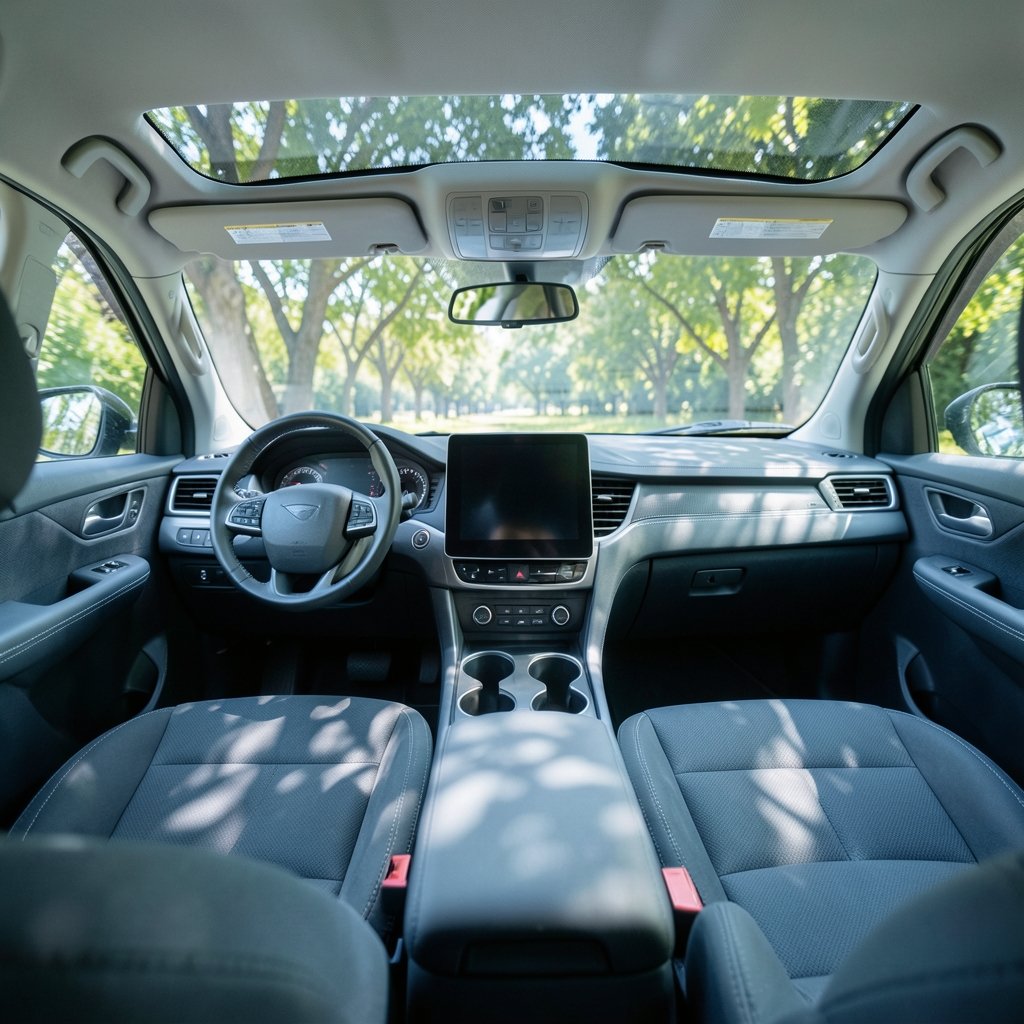
What if the most family-friendly SUV on the market got a cabin that finally felt as modern as the tech in your pocket? That’s the question hanging over the 2027 Kia Telluride, which marks the first full redesign of a vehicle that launched for model year 2020. The current Telluride earned its reputation on space, value, and smart packaging rather than cutting-edge design. The next generation is expected to flip that script, and the interior is where the biggest changes will land.
Here’s what buyers can reasonably expect, what remains unconfirmed, and how to separate real signals from wishful speculation.
Why the 2027 Telluride Interior Matters So Much
The Telluride became a phenomenon for a simple reason: it delivered three usable rows, generous cargo space, and a long feature list at a price that undercut established rivals. Owners forgave its aging cabin because everything else worked.
That patience has limits. The current interior debuted in 2019, and the touchscreen interface, switchgear, and material choices now look dated next to newer competitors. Kia has publicly confirmed a second-generation Telluride for model year 2027, with a debut expected in 2026. That timing makes the redesign the most significant Telluride story in years, and the cabin is the centerpiece.
For families cross-shopping three-row SUVs, the interior is not a cosmetic detail. It’s where kids climb in and out, where car seats get installed, where road trips succeed or fall apart. A redesigned cabin can fix real pain points or introduce new ones. That’s why it deserves scrutiny beyond glossy press photos.
What Kia Has Confirmed and What Remains Unverified

Be careful with confident-sounding claims about screen sizes, seat configurations, and materials. As of the latest available information, specific 2027 Telluride interior details have not been publicly confirmed. Kia has acknowledged the redesign, but exact specifications are still under wraps.
That leaves two categories of information:
| Category | Status | What It Means for Buyers |
|---|---|---|
| Second-generation model confirmed for MY2027 | Confirmed | Expect a substantially new vehicle, not a facelift |
| Debut timing expected in 2026 | Reported, not finalized | Details will emerge through 2026 |
| Screen sizes, materials, seating layouts | Unconfirmed | Treat leaks and renders with skepticism |
| Powertrain and platform specifics | Unconfirmed | Interior packaging depends on these |
The practical takeaway: anyone stating exact dimensions or feature lists as fact is guessing. The honest approach is to reason from Kia’s design direction and flag the uncertainty.
The EV9 Is the Clearest Preview of Kia’s Interior Thinking
The strongest signal comes from within Kia’s own lineup. The EV9, Kia’s three-row electric SUV launched in Korea in 2023 and in the US in 2024, introduced a dual 12.3-inch curved display setup and a more minimalist cabin built around sustainable materials. It’s the most recent example of how Kia designs a three-row family interior.
That matters because automakers rarely develop interior design languages in isolation. What appears in a flagship model tends to migrate across the lineup. The EV9’s curved panoramic display, simplified center console, and cleaner dashboard are plausible reference points for the next Telluride.
This is inference, not confirmation. But it’s informed inference, and it aligns with how Kia has rolled out design themes across generations. Anyone tracking how AI-driven design tools are reshaping vehicle interfaces might notice a parallel trend: dashboards are becoming software platforms, and the hardware is following. The same shift toward screen-first layouts shows up in best AI interior design tools 2027 before after results, where rendering tools now let designers iterate cabin concepts in days rather than months.
Likely Interior Changes, Ranked by Confidence
Not all predictions carry equal weight. Here’s a tiered look at what to expect.
High confidence: a modernized display and interface
The current Telluride’s screen setup will almost certainly be replaced. A larger, higher-resolution display, likely integrated into a curved panel, is the safest bet. Wireless smartphone mirroring, over-the-air update capability, and a faster processor are reasonable expectations given industry norms.
Moderate confidence: upgraded materials and simplified controls
Kia has moved toward cleaner dashboards with fewer physical buttons in recent models, though it has also retained climate knobs in some vehicles for usability. The Telluride’s family focus argues for keeping easy-to-reach physical controls for core functions. Watch for soft-touch surfaces on upper trims and more durable, easy-clean materials in lower ones.
Lower confidence: seating configuration changes
Second-row captain’s chairs are a hallmark of the current Telluride and should carry over. Whether Kia adds a bench option across more trims, changes the third-row access mechanism, or introduces new massage and ventilation features is unknown.
Practical Tips for Evaluating the Cabin When It Arrives
When the 2027 Telluride finally reaches showrooms, a checklist approach beats a quick sit-in. Here’s what actually matters in daily use.
- Bring your car seats. Install them in the second row and check whether the third row remains accessible. Anchor placement and seat cushion depth vary more than spec sheets suggest.
- Test the third row with real adults. Sit back there for five minutes. Check knee room, headroom, and whether the second row can slide forward without crushing front passengers.
- Check the screen in bright sun. Glare and fingerprint smudges are the two most common complaints about large displays. Test at midday if possible.
- Open and close everything. Cupholders, USB ports, seat releases, cargo covers. Flimsy mechanisms reveal themselves quickly.
- Verify cargo space with all rows up. This is where three-row SUVs separate. Bring a stroller or a large suitcase.
- Ask about material durability. Light-colored upholstery looks great in photos and shows every spill. Ask specifically about cleaning recommendations.
A common mistake buyers make is judging the cabin from the driver’s seat only. The Telluride’s job is moving people, and the second and third rows deserve equal attention.
How the Redesign Could Affect Ownership Costs
Interior changes ripple into the ownership experience in ways that don’t show up on a window sticker. Larger displays and more electronic features can raise repair costs down the line. Specialized materials may require specific cleaning products. More complex seat mechanisms mean more parts that can fail.
That’s worth weighing against the value proposition. The current Telluride’s appeal rests partly on strong resale and reasonable running costs. Lease shoppers already know how much monthly payments can swing based on trim and timing, and the same logic applies here: kia telluride lease deals tend to shift as new models arrive and outgoing inventory gets discounted. First-year redesign models often carry thinner incentives, so patience can pay off.
The Software Question Nobody Asks About
Interior design is increasingly a software story. A beautiful dashboard is only as good as the interface running on it. Kia’s next-generation infotainment will determine whether the 2027 Telluride’s cabin feels premium in year one and year seven.
Buyers should pay attention to a few things: how quickly the system responds, whether navigation and voice controls work without a phone, and whether updates arrive over the air. The gap between the best and worst in-car software is enormous, and it’s the kind of thing that shows up in reviews of 10 best AI chatbots GPT-5 Claude under hood 2027 style comparisons, where responsiveness and reliability separate good tools from frustrating ones. Cars are heading the same direction.
Voice assistants deserve special scrutiny. A well-implemented assistant can handle climate, navigation, and media without taking eyes off the road. A poorly implemented one adds distraction. For context on where conversational interfaces are heading, the same evaluation criteria used for 10 best AI chatbots e commerce 2027 that rescue abandoned carts apply to in-car assistants: does it understand natural speech, does it recover from errors gracefully, and does it know when to stop talking.
Where the Telluride Interior Fits in the Segment
The three-row SUV segment has grown crowded and sophisticated. Rivals have added premium materials, larger screens, and clever storage solutions. The Telluride’s advantage has always been packaging efficiency and value, not outright luxury.
The redesign needs to close the technology gap without abandoning what made the vehicle successful. That means keeping the generous cargo space, the accessible third row, and the family-friendly layout while modernizing the interface and materials. It’s a balancing act, and the EV9 shows Kia can execute it.
There’s also a cautionary tale in the industry: redesigns that chase trends at the expense of usability. Touch-only controls for climate and volume have drawn criticism across many brands. Kia has generally been more pragmatic, and that pragmatism should be preserved.
What to Watch Between Now and Launch
The information timeline matters as much as the information itself. Here’s how the picture will fill in.
- Teaser phase: Kia typically releases design sketches and partial images weeks before a full debut. Interior teasers often reveal screen layout and dashboard shape.
- Full debut: Complete specifications, trim details, and material descriptions arrive here. This is when real answers replace speculation.
- Pricing announcement: Usually closer to the on-sale date. Trim structure often shifts with a redesign.
- First drives: Independent reviews will surface usability issues that spec sheets hide, especially around the interface and third-row access.
- Owner reports: The most honest feedback arrives months after launch, once families have lived with the vehicle.
Anyone making a purchase decision should wait for the full debut before committing. Deposits placed on speculation are a gamble.
Common Mistakes Buyers Make With Redesigns
First-year redesign models carry risk. Manufacturing bugs get sorted over time, and early adopters sometimes become unpaid testers. That doesn’t mean avoiding the 2027 Telluride is wise, but it does mean going in with clear eyes.
Another frequent mistake is overvaluing technology. A bigger screen is nice. A screen that lags, glares, or buries basic functions in menus is worse than a smaller, simpler one. Test the interface with the same skepticism you’d apply to any new gadget.
Finally, don’t assume the redesign will preserve every feature you love. Seat configurations, storage nooks, and even cupholder counts change between generations. Bring a list of your current vehicle’s must-haves and verify each one.
Conclusion
The 2027 Kia Telluride interior is shaping up to be the most consequential part of the vehicle’s first full redesign. Kia has confirmed the second-generation model for model year 2027, with a debut expected in 2026, and the EV9 offers a credible preview of the design direction: curved displays, cleaner dashboards, and more thoughtful materials. Specific details remain unconfirmed, and buyers should treat exact specifications circulating online with healthy skepticism until Kia publishes official information.
What’s certain is that the cabin will determine whether the Telluride extends its run as a family favorite. The foundation is strong. The question is whether the execution keeps the practicality that made it beloved while delivering the modernization buyers now expect. Watch for the debut, bring your car seats to the test drive, and judge the interface as critically as the upholstery. That is how you end up with a vehicle that still works for your family in its seventh year as well as its first.
FAQ
When will the 2027 Kia Telluride go on sale?
Kia has confirmed a second-generation Telluride for model year 2027, with a debut expected in 2026. On-sale timing typically follows the debut by several months, but exact dates have not been publicly confirmed.
Has Kia revealed the 2027 Telluride interior?
Not in full detail. Specific interior specifications, including screen sizes, materials, and seating configurations, have not been publicly confirmed. Design direction can be inferred from recent Kia models like the EV9, but those are educated guesses rather than verified facts.
Will the 2027 Telluride keep second-row captain’s chairs?
Second-row captain’s chairs are a signature feature of the current Telluride and are widely expected to carry over. However, Kia has not confirmed the seating configurations for the next generation, so buyers should verify at launch.
Will the new Telluride have a larger touchscreen?
A larger, more modern display setup is among the most likely changes, consistent with Kia’s recent design language and the dual 12.3-inch curved displays in the EV9. Exact sizes remain unconfirmed until Kia releases official specifications.
Should I wait for the 2027 Telluride or buy the current model?
It depends on priorities. The current model offers proven reliability and likely stronger incentives as inventory clears. The redesigned model promises a modernized cabin but carries first-year risk. Buyers who value a fresh interior and updated tech may prefer to wait for the debut and first reviews.
What should I check first in the new interior at a test drive?
Start with second- and third-row access, then install a car seat if you use one. Test the screen in bright sunlight, verify cargo space with all rows up, and check that climate and volume controls are easy to reach without looking away from the road.



