
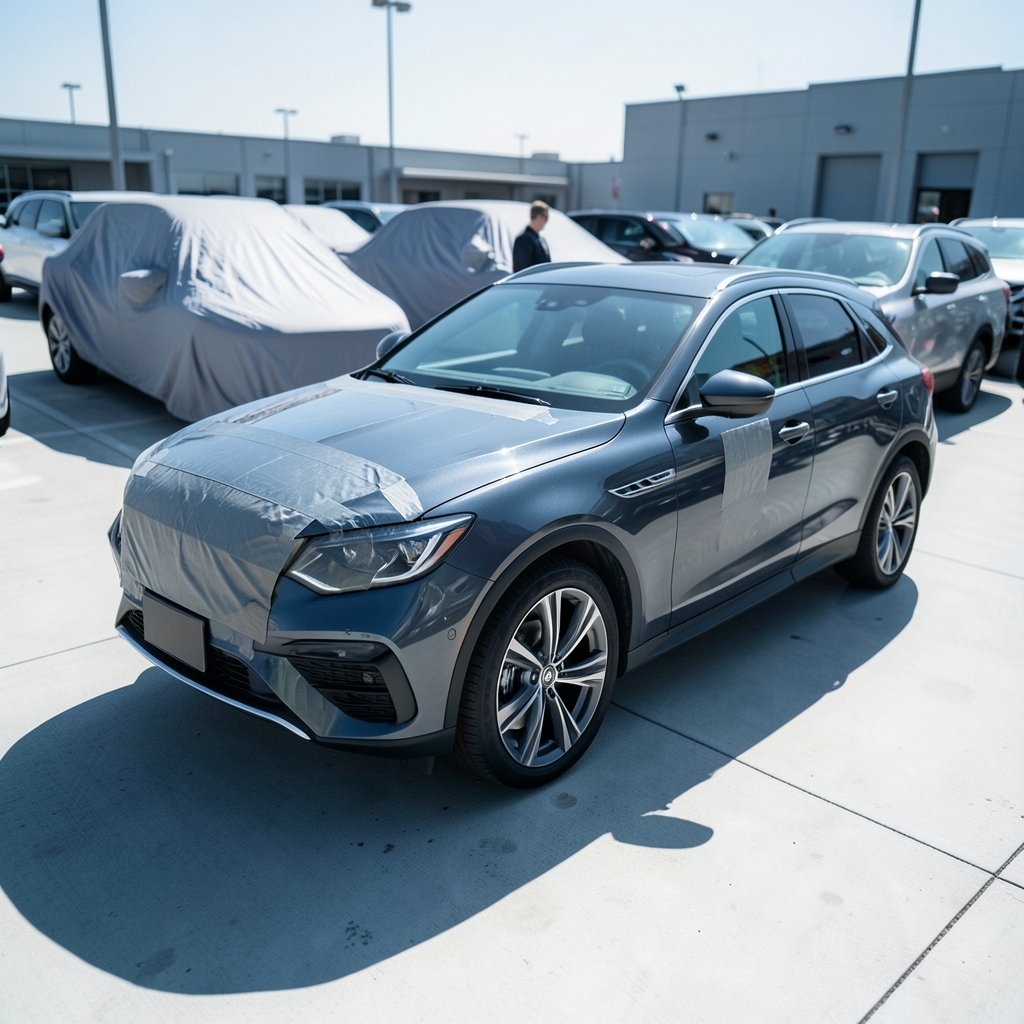
What does “Lexus 2027” actually mean? A new sedan? A wave of electric cars? Or simply the next model year on a dealer lot? Search that phrase and you’ll find a mess of speculation, half-confirmed leaks, and press-release language that sounds like a promise but isn’t one. The honest answer is that “Lexus 2027” isn’t one product. It’s a label that covers at least three different stories, and mixing them up is the fastest way to misunderstand what the brand is doing.
This piece separates what’s confirmed from what’s still guesswork, explains how model years work, and gives buyers a practical way to read the noise.
Why “Lexus 2027” Is Three Stories in One
When people search for Lexus and 2027, they usually mean one of three things without realizing it:
- Model-year 2027 vehicles. Ordinary cars and SUVs that carry a 2027 designation and typically start reaching US showrooms from roughly mid-2026 onward.
- The next-generation Lexus IS. The current IS dates back to 2013, with major refreshes in 2020 and 2023. Japanese trade media have speculated about a replacement arriving around 2026 or 2027, but that remains speculation, not an official Lexus announcement.
- Lexus’s next-generation electric lineup. The LF-ZC and LF-ZL concepts shown at the Japan Mobility Show in October 2023 previewed production EVs targeted for around 2026. Any “2027 Lexus EV” claim almost certainly traces back to that program.
Getting clear on which story you care about changes everything. A shopper waiting for a 2027 crossover is asking a very different question from an enthusiast waiting for a new IS.
Model Year vs. Calendar Year: The Confusion That Trips Everyone Up

Here’s a detail that catches a lot of buyers off guard. In the US, a vehicle labeled as a 2027 model year often goes on sale in calendar 2026. Model years are a regulatory and marketing construct, not a calendar fact.
That means by the time you read this, a “2027 Lexus” may already be announced, already on sale, or still a year away, depending on the nameplate. It also means forum posts arguing about “the 2027 Lexus” may be talking past each other entirely.
The practical takeaway: never assume a model year equals a launch date. Check the specific vehicle, not the number.
The Electric Story: LF-ZC, LF-ZL, and a Moving Target
The most ambitious part of the Lexus 2027 narrative is electrification. Lexus has committed to a full lineup of battery-electric vehicles by 2030 and aims for 100% BEV sales in Europe, North America, and China by 2035. A 2027 model would sit squarely in the middle of that transition, an interim step rather than an endpoint.
The LF-ZC and LF-ZL concepts, unveiled in October 2023, signaled where design and packaging are headed. Toyota’s next-generation EV platform and its Arene software stack were announced with a target of 2026 for first models. A 2027 Lexus EV would likely ride on that architecture.
But here’s the honest caveat: production timing in this industry slips. Targets announced years in advance are aspirational. Anyone stating with certainty that a specific Lexus EV arrives in 2027 is either working from an official announcement or guessing. Verify against the manufacturer’s own newsroom before you plan a purchase around it.
The Next-Gen IS: Speculation, Not Confirmation
The IS is the emotional heart of the Lexus lineup for a lot of fans, and its age makes it a natural subject for rumor. A sedan launched in 2013 and refreshed twice is due for replacement by any reasonable measure.
Trade reports have floated a next-generation IS around 2026 to 2027. Treat that as informed speculation. It has not been confirmed by Lexus, and the gap between “credible Japanese magazine report” and “official product announcement” is enormous.
If a new IS matters to you, the practical move is to watch for official filings and pressroom posts rather than reading tea leaves. Enthusiast coverage is useful for spotting trends, but it is not a purchase contract.
What a 2027 Lexus Has to Meet: The Regulatory Backdrop
Regulation shapes what gets built as much as customer demand does. A 2027 model year vehicle sold in the US must satisfy emissions and fuel economy rules finalized in 2024, covering standards for model years 2027 through 2031.
In plain terms, a 2027 Lexus has to be cleaner and more efficient than what came before. That pushes powertrains toward hybridization, plug-in hybrids, and full electrics, even in segments where buyers still love a naturally aspirated V6.
This is why so much of the 2027 conversation is about powertrains rather than styling. The sheet metal gets the headlines; the compliance strategy decides what’s actually underneath it.
How to Read Lexus 2027 News Without Getting Fooled
After watching this space for a while, certain patterns show up again and again. Here’s what actually works when you’re trying to separate signal from noise.
Check the source tier first. An official pressroom post, a government regulatory filing, and a forum screenshot are three very different things. Rank them before you react.
Look for a date and a model name. Vague claims like “Lexus’s 2027 EV” are almost always recycled. A real announcement names the vehicle and gives a timeframe.
Watch for the word “reportedly.” It’s a useful tell. It means the outlet is repeating someone else’s claim, not confirming it.
Distinguish concept from production. Concepts preview design language. They are not order guides. The LF-ZC and LF-ZL are direction, not destiny.
Expect slippage. Timelines announced years out move. That’s normal, not scandalous.
The most common mistake people make is treating a single enthusiastic article as a confirmed launch plan. The second most common is assuming that because a model year is announced, the car is available. Neither holds up.
Where AI Tools Fit Into Car Research
Buyers researching a future Lexus increasingly use AI assistants to condense specs and compare trims. That can work, but only if you know the limits. Chatbots organize published material well and fail at knowing what was announced last week. If you’re comparing how different models answer factual queries, a head-to-head breakdown of deepseek vs chatgpt vs gemini output quality is a useful primer on where each one stumbles.
The same caution applies to shopping tools. Dealership chatbots are increasingly common, and some are genuinely helpful for scheduling test drives and answering inventory questions. But there are real limits, and it’s worth knowing when not to use an AI chatbot so you don’t waste time on a bot that can’t answer a pricing question. For a broader view of what’s working in retail automation, this roundup of AI chatbots in e-commerce that rescue abandoned carts shows how far the technology has come, and how much of it is still marketing.
None of this replaces a test drive. It just makes the research phase less painful.
Model Year 2027 in Context: What Actually Changes
It helps to zoom out. A model year change is often modest: revised trim availability, a new paint color, a tech update, maybe a powertrain tweak. Dramatic reinventions get their own launch events and don’t hide behind a model-year label.
| What you’ll see | What it usually means | How much to trust it |
|---|---|---|
| New model-year designation | Minor updates, trim shuffling | High, once officially posted |
| Concept vehicle debut | Design direction, not production spec | High as a signal, low as a promise |
| Trade-press report of a new model | Informed speculation | Medium, verify independently |
| Forum leak with no source | Rumor | Low |
| “Confirmed” launch date from a fan site | Often recycled | Very low |
The pattern is consistent: the closer a claim sits to an official announcement, the more it’s worth. Everything else is entertainment until proven otherwise.
The Hybrid Question Buyers Keep Asking
One theme runs through nearly every 2027 Lexus conversation: will there still be a gas option? The regulatory pressure points toward electrification, and Lexus has been steadily expanding hybrid availability across its range.
For most buyers, the realistic 2027 outcome is a lineup heavy on hybrids and plug-in hybrids, with full EVs arriving alongside rather than replacing everything at once. That’s a gradual transition, not a cliff.
If you’re shopping now and waiting for 2027, ask yourself what you’re actually waiting for. If it’s a specific confirmed model, wait. If it’s a vague hope that everything gets better, you may be waiting a long time for a car that was always going to be a modest update.
Practical Buying Advice for the 2027 Window
A few things genuinely help if you’re planning around this timeframe.
Set a decision date, not a hope date. Pick a month when you’ll buy regardless. Otherwise you’ll keep deferring for the next rumor.
Track one source. Follow the manufacturer’s own announcements for the specific model you want. Broader coverage is fine for context but noisy for decisions.
Test the current model now. Understanding what today’s car does well and badly tells you whether the next one is worth waiting for.
Ask dealers specific questions. “When will the 2027 arrive?” gets a shrug. “Has this model been announced for 2027, and is there a press release?” gets a real answer or reveals that there isn’t one.
Don’t finance a rumor. Deposits on unconfirmed vehicles are a bad idea unless the dealer can show you official documentation.
The broader lesson from watching tech and retail cycles applies here too. Hype moves faster than production, whether it’s a car or a piece of software. If you want a sense of how quickly the tooling around shopping has changed, this look at AI tools for e-commerce stores is a decent reality check on what’s genuinely useful versus what’s a demo.
Conclusion
“Lexus 2027” isn’t a single car, and anyone telling you otherwise is flattening three separate stories into one. There’s the mundane model-year designation, the speculative next-generation IS, and the genuinely ambitious electric program previewed by the LF-ZC and LF-ZL concepts. Each one moves on its own schedule, and only one of them comes with official confirmation attached.
The smart approach is unglamorous: check official sources, treat trade reports as leads rather than facts, and set a real decision date so you don’t spend two years waiting for a press release. Lexus is clearly heading toward an electrified future. Whether that future arrives in 2027, 2028, or later depends on production realities no one outside the company can promise you today.
FAQ
Is there a confirmed 2027 Lexus model?
Not in the sense most people mean. Model-year 2027 vehicles will exist, but no single official “Lexus 2027” product name has been confirmed as a standalone launch. Check the manufacturer’s own announcements for the specific nameplate you care about.
Will there be a new Lexus IS in 2027?
That’s speculation, not confirmation. The current IS dates to 2013 with refreshes in 2020 and 2023, and trade reports have floated a replacement around 2026 to 2027. Lexus has not officially confirmed it.
When do 2027 model year cars go on sale?
In the US, 2027 model year vehicles typically begin reaching showrooms from roughly mid-2026 onward. Model year and calendar year are different things, so don’t assume a 2027 badge means a 2027 launch.
Are the LF-ZC and LF-ZL the 2027 Lexus EVs?
They’re concepts shown in October 2023 that preview production EVs targeted for around 2026. A 2027 Lexus EV would likely use Toyota’s next-generation platform, but production timing has historically slipped, so treat dates as targets rather than guarantees.
What rules does a 2027 Lexus have to meet?
US emissions and fuel economy standards finalized in 2024 cover model years 2027 through 2031. That pushes the lineup toward hybrids, plug-in hybrids, and full electrics, even in segments where traditional engines remain popular.
Should I wait for a 2027 Lexus or buy now?
It depends on whether a specific confirmed model is coming. If it is, waiting makes sense. If you’re waiting on a rumor, set a firm decision date and buy then. Test the current model first so you know what you’d actually be gaining.



