
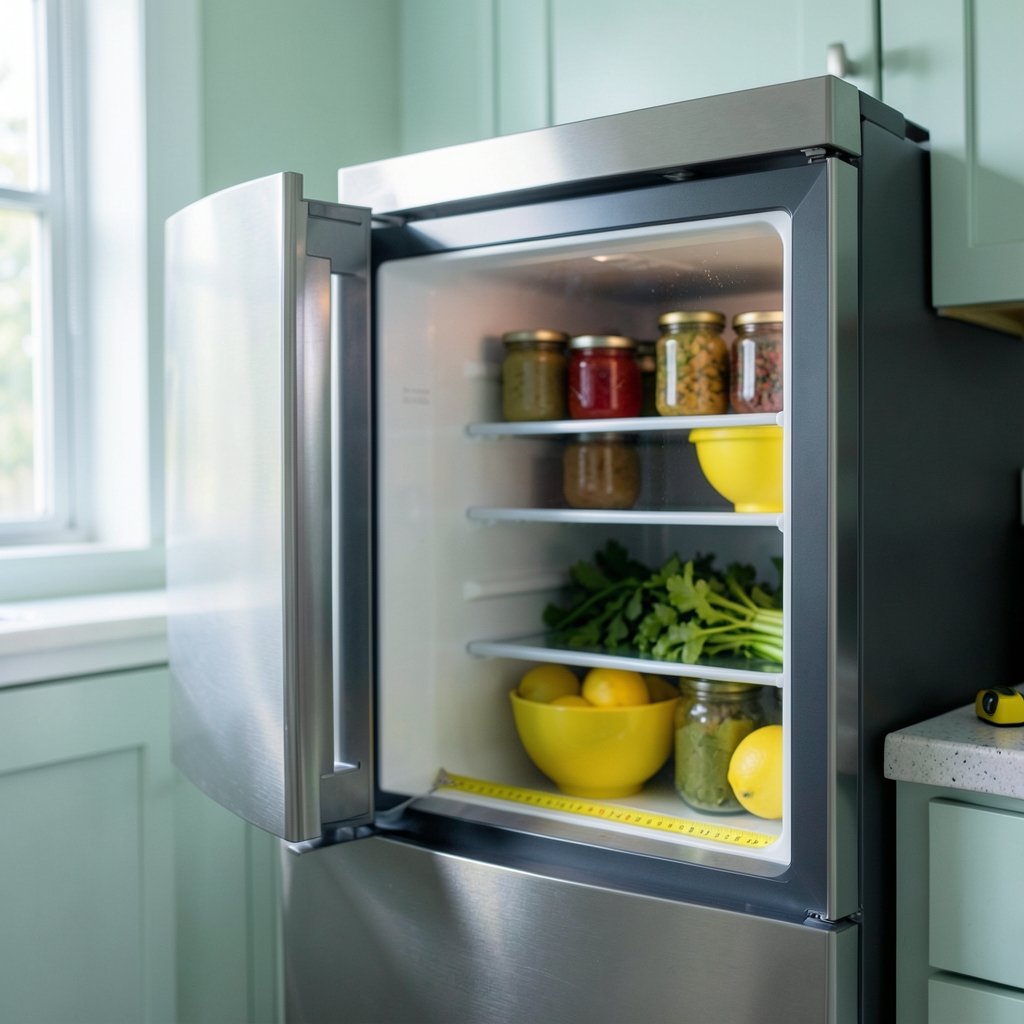
Quick Answer: What is a good refrigerator to buy?
A good refrigerator to buy is one that fits your kitchen’s measurements, matches how your household actually shops and cooks, and runs efficiently for the next decade or more. In practice, that usually means a top-freezer or well-insulated French-door model with a strong efficiency rating, a sensible capacity for your household size, and a brand with a solid repair record.
Bigger and fancier is not automatically better. Side-by-side and French-door models with through-door ice and water cost more to buy and typically use more energy, while a plain top-freezer often delivers the best value per cubic foot.
Before you commit, compare the measured opening and door swing, the energy label’s estimated yearly cost, usable capacity versus listed capacity, warranty terms on the sealed system, noise rating, and local repair support.
Why Picking a Fridge Feels Harder Than It Should

Standing in an appliance showroom, staring at forty refrigerators, and feeling your brain leave the building is a lot to ask. A refrigerator is one of the few purchases where you must predict a decade of your life: how much food you will store, how often you will host, whether the kids will keep drinking milk, and whether the fancy water dispenser will still work in year eight.
The stakes are real. A fridge runs 24 hours a day, every day, for its entire life. That means the sticker price is only half the story. The other half is electricity, repairs, and the quiet misery of a freezer that frosts over or an ice maker that jams every third week. This guide walks through what actually separates a good refrigerator from a mediocre one, with the practical details that showroom lighting tends to hide.
Match the Configuration to How You Actually Live
There is no universally best configuration. There is only the one that fits your kitchen and your habits.
| Configuration | Typical Strengths | Typical Weaknesses | Best For |
|---|---|---|---|
| Top-freezer | Lowest purchase price, lowest energy use, fewer things to break | Less premium look, freezer at chest height | Budget buyers, small kitchens, rental units |
| Bottom-freezer | Fridge at eye level, efficient, easy access | Slightly pricier than top-freezer | Most families who cook daily |
| Side-by-side | Narrow doors, built-in water and ice | Narrow shelves, higher energy use | Tight door-swing spaces |
| French-door | Wide fresh-food shelves, flexible drawers | Highest price, more complex, more energy | Larger households, frequent hosts |
The pattern is consistent: simpler designs cost less to buy and less to run. Through-door ice and water features add convenience but also add energy use and extra failure points. If you rarely use cubed ice, skipping the dispenser is one of the easiest ways to save money twice, once at purchase and again on every bill.
Measure First, Shop Second
The single most common mistake buyers make is falling in love with a model before checking whether it will physically fit. Here is the sequence that prevents that heartbreak.
- Measure the width, height, and depth of the opening, and do not rely only on the old fridge’s dimensions.
- Check the door swing and whether the doors can be reversed if a wall blocks one side.
- Measure the path from the front door to the kitchen, including stairwells and tight corners.
- Confirm clearance requirements for ventilation from the manufacturer’s installation manual.
- Leave a little breathing room; a fridge jammed against cabinetry runs hotter and works harder.
Depth deserves special attention. Standard-depth models can protrude several inches past countertops, while counter-depth models sit nearly flush but sacrifice interior space. Neither is wrong. You just need to decide which compromise you can live with. Ignoring clearance specs can also affect your warranty, which is an unpleasant surprise nobody needs.
Capacity: Buy for Your Real Week, Not Your Imaginary One
Manufacturers list total volume, but usable space is what matters. Door bins, ice makers, and bulky drawer housings eat into the number on the spec sheet. A 26-cubic-foot fridge with a giant ice maker can hold less real food than a 24-cubic-foot model without one.
As a rough starting point, many buyers find roughly 4 to 6 cubic feet per household member works, adjusted upward if you buy in bulk, cook from scratch, or freeze a lot. If you shop weekly and cook most nights, lean toward the higher end. If you live alone and eat out often, a smaller, more efficient unit is the smarter buy. There is no prize for buying empty space you pay to cool. (Perfume mystery box blind buy fragrance bundles really work)
Energy Use Is the Hidden Price Tag
Every refrigerator sold in the United States carries an EnergyGuide label showing estimated yearly electricity use and cost compared with similar models. That label exists because of the Federal Trade Commission’s Appliance Labeling Rule, and it is the fastest way to compare two fridges side by side without doing math in the aisle.
The gap between the most and least efficient models in a given size class can be substantial over a ten-year life. A slightly pricier efficient model often pays back the difference in a few years, though the exact payback depends on your local electricity rates. Buyers in high-rate areas should weight efficiency more heavily.
ENERGY STAR certification is a useful shortcut. Certified refrigerators meet efficiency criteria set by the EPA and DOE program, which began in 1992 and gets revised periodically. One caution: the criteria change over time, so a “best efficient fridge” claim from an old article may no longer hold. Always check the current label on the specific model you are considering.
If you are shopping in Europe, note that the EU rescaled its energy labels for refrigerators from the old A+++ to G scale to a simpler A to G scale, effective 1 March 2021. A fridge that was “A+++” under the old system might now be a “D.” That is not a downgrade in performance, just a relabeling, but it confuses plenty of shoppers.
Reliability and Repairs: The Part Reviews Skip
Reliability is where cheap fridges and expensive fridges sometimes swap places. Independent testing organizations and consumer surveys are among the better sources for brand-level repair rates and owner satisfaction, because they collect data across thousands of households rather than one reviewer’s kitchen. These surveys are published annually, so cite the most recent year when comparing brands.
Practical steps that actually reduce repair pain:
- Check whether a local technician services the brand before you buy, especially in rural areas.
- Read the warranty carefully. Many US refrigerators cover about one year for parts and labor, with longer coverage, often five years, on the sealed refrigeration system.
- Register the product and keep the receipt; warranty claims without proof of purchase are an uphill battle.
- Note that right-to-repair laws vary by state and may affect access to parts and service documentation.
If something does go wrong, some problems are worth troubleshooting before calling anyone. A fridge that stops cooling is often a airflow, thermostat, or condenser coil issue rather than a dead compressor, and a practical guide to fixing a refrigerator that stopped cooling can save you a service call. The same logic applies to other household gear: knowing when to repair versus replace is a skill that pays for itself.
Smart Features: Convenience or Future Landfill?
Connected fridges with screens, cameras, and grocery apps are fun to demo. They are also the most likely features to feel dated in five years while the compressor hums along just fine. Ask yourself a blunt question: will you still use this feature in year three?
Features that tend to earn their keep include adjustable shelving, humidity-controlled crispers, a well-designed freezer layout, and door alarms. Features that often disappoint include oversized touchscreens, subscription-adjacent apps, and dispensers that require expensive filters. None of this makes smart fridges bad. It just means you should pay for the ones whose features match your actual routine.
The same “buy for real use” principle shows up in plenty of other buying decisions. Gamers weighing hardware, for instance, get more from a controller that fits their hands than from one with extra buttons they never touch, as this guide to the best gaming controllers for beginners explains. And readers comparing e-readers quickly learn that screen quality and battery life matter more than a long feature list, which is exactly the point made in this breakdown of the best e-readers in 2026 and why the details matter before you buy. Appliances follow the same rule: substance over spec-sheet theater.
Set a Realistic Budget for the Whole Cost
Budget for more than the sticker. A sensible framework looks like this:
| Cost Category | What to Expect |
|---|---|
| Purchase price | Varies widely by size and configuration |
| Delivery and installation | Often extra, especially for haul-away |
| Water line hookup | Needed for dispensers; sometimes extra |
| Yearly electricity | Shown on the EnergyGuide label |
| Filters and consumables | Recurring cost if you use a dispenser |
| Potential repairs | Higher for complex models with more features |
A mid-priced, efficient, simple fridge with a good warranty frequently beats a discounted flagship model whose repairs cost a fortune. If you are juggling a bigger financial picture, the same discipline that helps you decide how much money you really need to buy a house applies here: total cost of ownership beats sticker shock every time.
Noise, Placement, and the Small Details That Annoy You Later
Noise ratings in decibels appear in manufacturer manuals, and they matter more than most buyers expect, especially in open-plan homes where the kitchen sits beside the living room. A fridge that cycles loudly at night is a purchase you regret at 2 a.m.
Also check which way the door opens relative to your counter space, whether the shelves are spill-proof, and whether the drawers slide smoothly with a full load. These are the daily touches that determine whether you love the appliance or merely tolerate it. If you are also sorting out dinner plans while shopping, a quick way to find good takeout food fast is a nice reminder that convenience should serve you, not the other way around.
Conclusion
A good refrigerator to buy is not the biggest, the smartest, or the most expensive one on the floor. It is the one that fits your space, matches your household’s real habits, runs efficiently, and comes from a brand with a repair record you can live with. Measure before you shop, read the energy label like it is a contract, weigh capacity against usable space, and treat fancy features with healthy skepticism. Do that, and the fridge you choose will quietly do its job for a decade or more, which is exactly what a good appliance should do.
Frequently Asked Questions
Is a French-door refrigerator worth the extra cost?
It can be, especially for households that cook often. French-door models offer wide fresh-food shelves that fit platters and pizza boxes, plus flexible drawer configurations. The trade-offs are a higher purchase price, more complex components, and typically higher energy use, particularly with through-door ice and water. If your kitchen has the width and your budget has the room, it is a comfortable choice. If not, a well-built bottom-freezer delivers most of the daily convenience for less.
How many cubic feet do I need?
A common starting point is roughly 4 to 6 cubic feet per household member, adjusted for how you shop and cook. Bulk shoppers, home cooks, and freezer-heavy households should lean higher. Remember that listed capacity includes space consumed by ice makers and bulky drawer hardware, so compare usable interior space when you can see the model in person.
Do I really need an ice and water dispenser?
Only if you will genuinely use it every day. Dispensers add purchase cost, consume interior space, increase energy use, and introduce extra parts that can fail. They also require a water line and periodic filter replacements. Many buyers find a simple ice maker in the freezer plus a pitcher in the door covers their needs with less complexity.
How long should a refrigerator last?
Most refrigerators are expected to serve roughly a decade or more, though lifespan varies with brand, usage, and maintenance. Keeping condenser coils clean, maintaining proper ventilation clearance, and not overpacking the interior all help. When repairs start stacking up or parts become hard to source, replacement usually makes more financial sense than another fix.
Is ENERGY STAR worth paying more for?
Often yes, particularly in areas with high electricity rates, because the savings accumulate every hour of every day. Just verify the current certification on the specific model rather than trusting an older article, since efficiency criteria are revised periodically. Compare the EnergyGuide estimates for the models on your shortlist and let the numbers, not the badge alone, guide you.
What is the biggest mistake refrigerator buyers make?
Skipping the measuring tape. Buyers routinely choose a model that does not fit the opening, blocks a doorway, or cannot make the turn into the kitchen. The second most common mistake is paying for features they never use. Measure carefully, list the features you will actually touch weekly, and let everything else go.



