What happens when you run a spinning brushroll across a polished wood floor at full speed? Usually a spray of crumbs, a few scratches, and a lesson learned. That small moment of chaos explains why “multi-surface” is one of the most misunderstood labels in floor care. The best multi-surface vacuum is not the one with the longest feature list. It is the one that can switch its behavior fast enough to match the floor under it.
This guide breaks down what actually separates a good multi-surface machine from a marketing brochure, where the trade-offs hide, and which mistakes buyers keep making.
What “Multi-Surface” Really Means
There is no formal industry or regulatory definition of multi-surface vacuum. It is marketing language. In practice, it usually signals two things: a height adjustment for different floor types, and a brushroll that can be switched off.
That vagueness matters. Two vacuums can both carry the label while behaving completely differently on the same rug. One may lift embedded grit from a low-pile carpet; the other may simply skate across the surface. Because the term is not standardized, comparisons across brands are apples-to-oranges unless you look at independent test data.
A useful mental model: a multi-surface vacuum is a compromise machine. It does many jobs competently rather than one job brilliantly. The question is whether its compromises land in places you care about.
Why Carpet and Hard Floors Need Different Tools
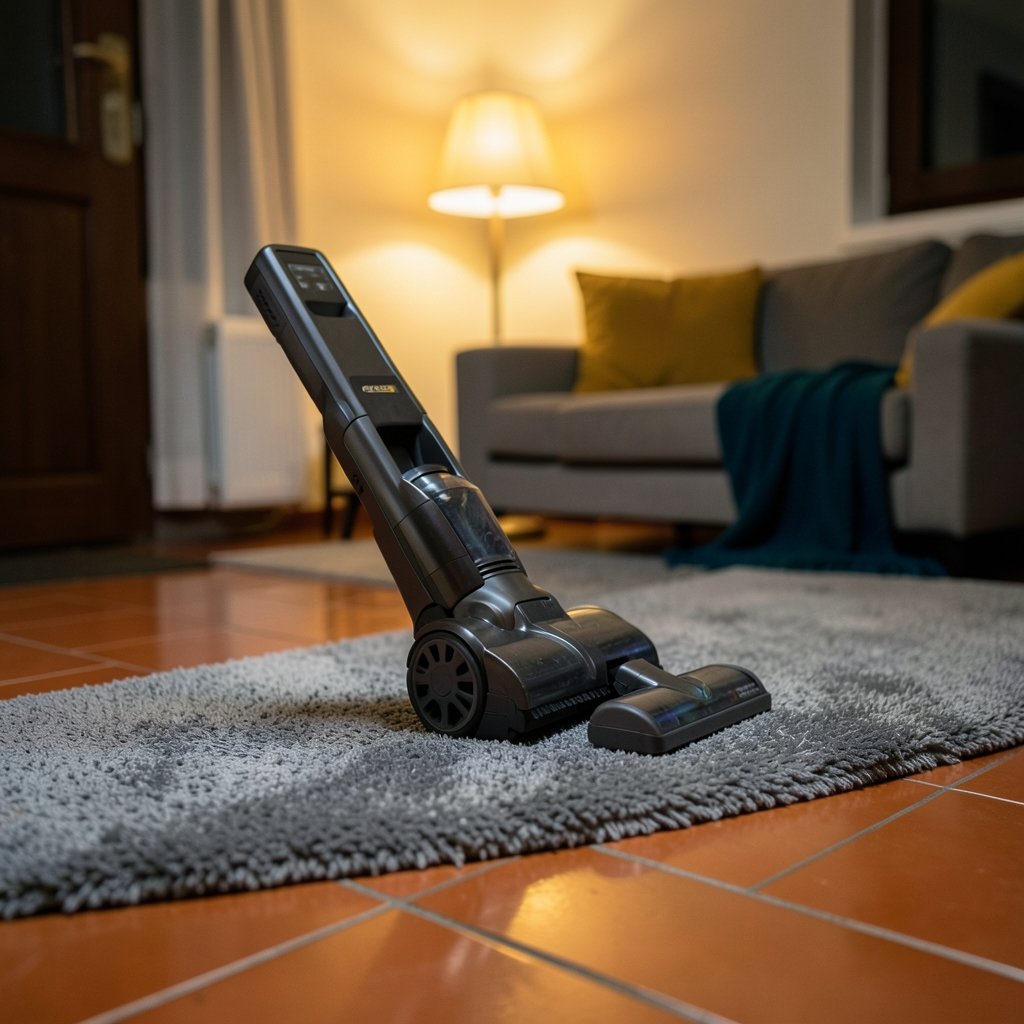
Deep carpet cleaning depends on two forces working together: airflow and brush agitation. The brush loosens soil bound to fibers, and the airflow carries it away. Turn off the brush on a carpet and you lose a large part of the cleaning action.
Hard floors want the opposite balance. They mainly need suction plus a soft or non-marring tool. A spinning brushroll on hard flooring can scatter debris ahead of the machine, fling it sideways, or dull certain finishes over time.
| Floor type | What does the work | What to avoid |
|---|---|---|
| Low-pile carpet | Brush agitation plus strong airflow | Brushroll switched off |
| High-pile or frieze carpet | Height adjustment, slower passes | Too-low head that drags |
| Hardwood and laminate | Suction with soft brush or bare floor tool | Fast-spinning stiff bristles |
| Tile and grout | Suction plus crevice tool | Scattering loose grit |
| Area rugs with fringe | Gentle suction, brush off | Brushroll grabbing fringe |
This is why the switch-off feature is not a gimmick. It is the single most important control on a multi-surface machine. If a vacuum cannot stop its brushroll, it is a carpet vacuum with a hard floor setting painted on.
Wattage Is Not Cleaning Power
Shoppers still scan spec sheets for the biggest watt number. That instinct is outdated.
The EU energy label for vacuum cleaners, under Regulation (EU) No 666/2013, capped input power at 1600 W from September 2014 and 900 W from September 2017. The European Court of Justice annulled the relevant labelling regulation in November 2018, and the Commission withdrew the labelling rules, but the ecodesign power limits stayed in force.
The takeaway is simple: input power is not cleaning performance. Suction depends on airflow, sealed pressure, and overall design. A well-engineered 700 W machine can outperform a sloppy 1400 W one. Manufacturer watt figures do not reliably predict how much dirt leaves your carpet.
Two standards describe how performance is actually measured:
- ASTM F2607 is a test method for measuring cleaning effectiveness on carpet, using a defined soil and test carpet. It is a lab method, not a consumer rating.
- IEC 62885-2 is the international standard for measuring household vacuum performance. It defines test methods rather than pass/fail limits.
Neither standard tells you which vacuum to buy. They tell you that honest comparisons require controlled testing, which is exactly why independent labs matter more than box copy.
Filtration Claims Deserve Skepticism
HEPA filtration is defined by standards such as EN 1822, which sets efficiency classes including H13 and H14, and by IEST-RP-CC001. Here is the catch: a vacuum marketed as “HEPA” may only mean the exhaust filter medium meets a class.
Real-world particle capture depends on the whole system: seals, housing, gaskets, and how well the filter sits in its seat. A perfect filter in a leaky body lets fine dust escape around the edges. If allergies drive your purchase, look for whole-machine filtration language and independent particle testing, not a single filter badge.
Bagged versus bagless also affects dust exposure. Bagless bins must be emptied and their filters cleaned, and both actions can release dust back into the room. Bagged models trap debris in a sealed container, though you pay for bags and lose some convenience.
Corded or Cordless: The Real Trade-Off
Cordless vacuums are convenient and increasingly capable, but they are typically limited by battery runtime and lower sustained airflow. Corded models generally sustain power indefinitely but are less portable and need an outlet nearby.
For a whole-home multi-surface job, a corded canister or upright usually wins on sustained suction. For quick daily passes in a kitchen or hallway, a cordless stick is hard to beat. Many households end up with both, and that is not a failure of planning. It is an honest response to two different jobs.
If your home spans more than one floor, portability gets complicated fast. A machine that handles stairs and landings well is worth more than a spec-sheet champion that lives in a closet. The same logic that applies to a robot vacuum in multi level homes that actually works upstairs applies to manual machines: weight, carry handles, and hose reach decide whether you actually use it.
Features That Earn Their Keep
Some features sound impressive and rarely matter. Others change daily life. Here is the practical shortlist.
Must-haves
- Brushroll on/off switch. Non-negotiable for hard floors and delicate rugs.
- Height adjustment. Either automatic or manual, so the head seals against carpet without dragging on tile.
- A soft or bare-floor tool. For edges, under cabinets, and finished wood.
- Washable or replaceable filters. With a realistic cleaning schedule.
- Reasonable weight. Under about 16 pounds for an upright if you carry it upstairs.
Nice-to-haves
- A crevice tool and dusting brush stored on board
- A long hose for stairs and car interiors
- Sealed HEPA exhaust with whole-machine claims
- A bin or bag design that empties cleanly
Often oversold
- Digital displays and app connectivity
- “Smart” dirt sensors that mostly adjust a light
- Enormous wattage numbers
- Aggressive bristle brushrolls marketed as “deep clean” that scatter debris on tile
Common Mistakes Buyers Make
Buying on wattage alone. Covered above, but it remains the most common error. Wattage measures electricity going in, not dirt coming out.
Skipping the brushroll test. In a store, tilt the machine and watch the brush. Can you stop it? Is there a pedal or a dial? If the answer is unclear, the feature may not exist.
Ignoring the emptying experience. A bin that requires two hands, a twist, and a prayer will make you vacuum less. Look for a bottom-release door and a wide opening.
Assuming “HEPA” means allergy-proof. Check whether the claim covers the whole machine or just the filter.
Forgetting maintenance costs. Bags, filters, belts, and batteries all add up over five years. A cheap vacuum with expensive consumables is not cheap.
Overlooking floor damage risk. A stiff brushroll on a freshly refinished floor can leave marks. Test in a closet first.
Trusting retailer “best of” lists. These are frequently affiliate-driven. Independent labs are the better signal.
Where Independent Testing Fits In
Consumer organizations such as Which? in the UK, Stiftung Warentest in Germany, and Consumer Reports in the US publish lab-based results on both carpet and hard floors. Their methods differ, but all of them test in controlled conditions rather than relying on manufacturer claims.
When reading their results, check three things: the test date, the floor types covered, and whether the score separates carpet from hard-floor performance. A machine that scores brilliantly on carpet and poorly on hard floors is not a great multi-surface pick, no matter what the badge says.
Manufacturer claims and retailer lists are not independent. That does not make them lies. It makes them advertising.
Matching the Machine to Your Home
The right answer depends on your floor mix. A quick way to decide:
| Your home | Priority | Sensible pick |
|---|---|---|
| Mostly carpet, some tile | Brush agitation and airflow | Corded upright with brushroll off |
| Mostly hard floor, a few rugs | Suction and soft tools | Canister with bare-floor tool |
| Apartment, mixed, small storage | Portability | Cordless stick plus a hand vac |
| Pets and heavy shedding | Brushroll access and bin size | Upright with easy brushroll removal |
| Allergies | Whole-machine filtration | Bagged model with sealed HEPA |
If mopping is also on your list, the calculus shifts. A combo machine can replace two devices, but only if it cleans both jobs properly. The same scrutiny applies to robot options, which is why a close look at robot vacuum mop combos that actually clean the floor is worth the time before spending.
Practical Setup Tips That Make a Difference
Small habits separate a vacuum that works from one that disappoints.
- Set height correctly. On carpet, the head should seal without dragging. Lower it one notch at a time until the machine pulls slightly.
- Slow down. Two slow passes beat four fast ones. Agitation needs contact time.
- Switch the brush off before tile. Every time. Not just when you remember.
- Empty before the bin is full. Airflow drops sharply as the bin fills.
- Clean filters monthly. Rinse and dry fully. A damp filter breeds odor.
- Check the brushroll for hair. Scissors and a seam ripper handle most tangles.
- Test new cleaners on a hidden patch. Some solutions leave residue that attracts dirt, and the wrong mix can dull a finish. If you are weighing options, these robot vacuum cleaning solution alternatives that actually work are a useful reference for what to avoid.
Conclusion
The best multi-surface vacuum is not the most powerful or the most feature-packed. It is the one whose brushroll you can switch off in two seconds, whose height adjusts to your rugs, and whose bin you are willing to empty without dread. Wattage tells you almost nothing. Standards like ASTM F2607 and IEC 62885-2 describe how performance should be measured, not which machine wins. Independent lab results, a realistic look at your floor mix, and a short list of must-have features will get you further than any spec sheet. Buy for the floors you have, not the ones in the advertisement.
Frequently Asked Questions
What does multi-surface mean on a vacuum?
It is marketing language, not a regulated term. It usually means the vacuum has a height adjustment and a brushroll that can be switched off, so it can handle carpet and hard floors. Because there is no formal definition, two machines with the same label can perform very differently.
Is a brushroll bad for hardwood floors?
A spinning brushroll can scatter debris and dull some finishes over time. Most manufacturers recommend switching the brushroll off and using a soft or bare-floor tool on finished wood. If a vacuum has no brushroll switch, treat it as a carpet machine.
Does higher wattage mean better cleaning?
No. Input power is not the same as cleaning performance. Suction depends on airflow, sealed pressure, and design. The EU capped vacuum input power at 900 W from September 2017, and well-designed lower-power machines can still clean well.
Is a HEPA vacuum worth it for allergies?
It can help, but only if the whole machine is sealed, not just the exhaust filter. A HEPA-rated filter in a leaky housing still lets fine dust escape. Look for whole-machine filtration claims and independent particle testing rather than a single filter badge.
Corded or cordless for multi-surface cleaning?
Corded models generally sustain stronger airflow and run indefinitely, which suits whole-home cleaning. Cordless sticks are lighter and faster for quick passes but are limited by battery runtime and lower sustained suction. Many households reasonably own both.
How often should I clean vacuum filters?
Roughly once a month for most homes, and more often with pets or heavy use. Rinse washable filters and let them dry completely before refitting. A clogged or damp filter cuts airflow and can cause odors.