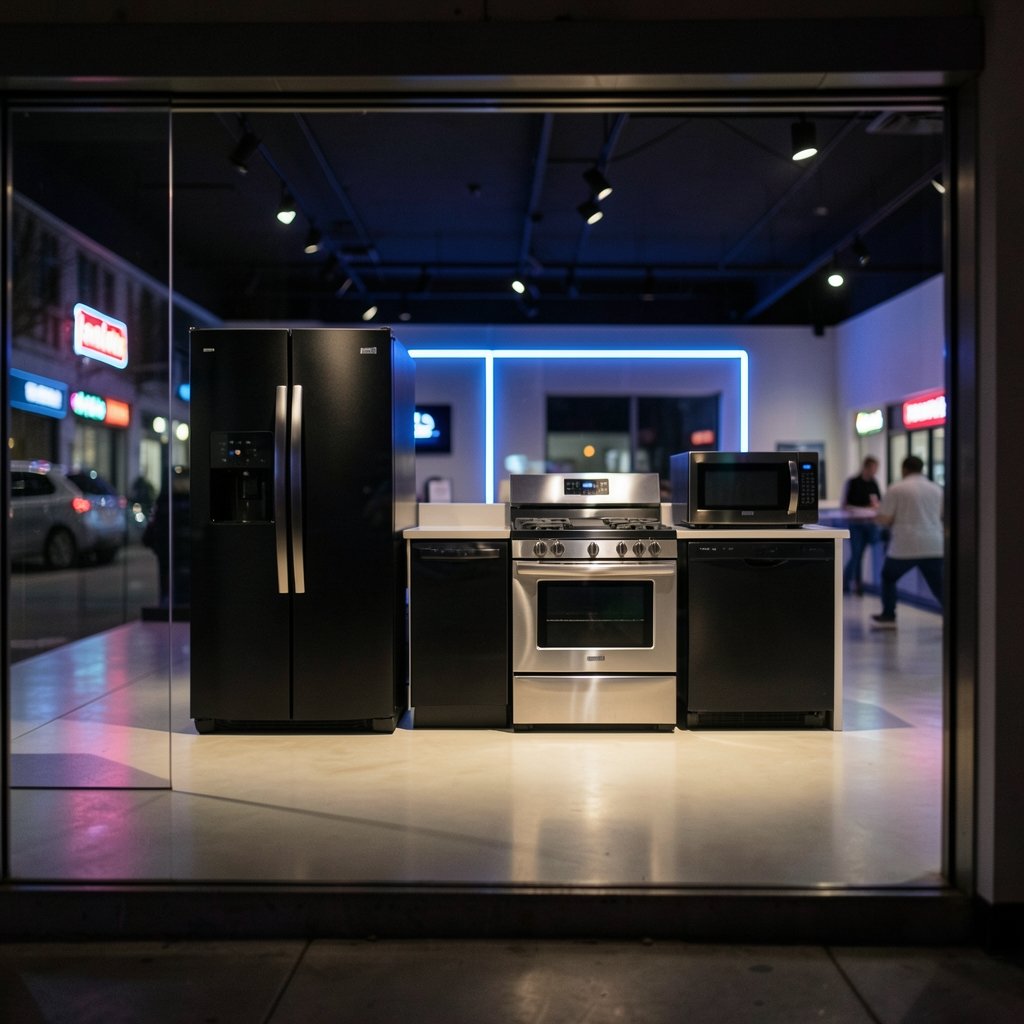
Quick Answer: When is the best time to purchase appliances?
The best time to purchase appliances is during major holiday sale windows, especially Black Friday in late November, plus Labor Day, Memorial Day, and the Fourth of July. Those retail events are when discounting is most widely reported, and they give shoppers the clearest chance to compare prices across stores.
Timing is not the only lever, though. Late winter and spring clearance of prior-year models can beat holiday pricing on specific categories, and state or utility rebate cycles sometimes matter more than the sale calendar. Shoppers should compare total cost, delivery windows, price-adjustment policies, efficiency ratings, installation fees, and rebate eligibility before buying.
Why Appliance Timing Feels So Complicated
Have you ever watched a refrigerator’s price bounce around for three weeks straight and wondered whether you were being played? You are not imagining it. Appliance pricing moves with inventory cycles, model-year changes, holiday promotions, and regional rebate calendars all at once. There is no single “cheapest day” that applies to every product in every store.
What exists instead is a set of patterns. Retailers lean on a handful of holiday weekends to drive traffic. Manufacturers refresh product lines on their own schedules. Utilities and states run incentive programs on fiscal-year clocks. Understanding how those three forces overlap is the real skill, and it is learnable in an afternoon.
One honest caveat up front: the idea that certain months are “best” is a widely repeated retail pattern, not a measured dataset. Nobody publishes verified discount depth by appliance category. So treat timing advice as a way to improve your odds, not a guarantee.
The Holiday Windows That Actually Move Prices
Most major appliance discounting in the United States clusters around a few well-known retail events. These are the moments when stores compete hardest for attention, and competition is what produces deals.
| Sale Window | Typical Timing | What It Tends to Favor |
|---|---|---|
| Black Friday | Late November | Broad discounts across categories, bundle offers |
| Labor Day | First Monday in September | Kitchen suites, entry-level models |
| Memorial Day | Last Monday in May | Refrigerators, ranges, laundry pairs |
| Fourth of July | Early July | Mid-range models, outdoor and cooling gear |
Black Friday gets the loudest headlines, and for good reason: it is the single event most consistently associated with appliance markdowns. But the summer holidays deserve attention too. Memorial Day and Labor Day often land when retailers are trying to clear floor models and mid-year inventory before the next product cycle.
A practical tip from people who shop these events regularly: start tracking prices two to three weeks before the holiday, not on the day itself. Sale prices sometimes appear early and quietly disappear before the weekend ends. Screenshot the price and the model number so you can compare later without guessing.
The Overlooked Season: Late Winter and Spring Clearance
Here is where a lot of shoppers leave money on the table. Appliance makers have historically introduced new lines in late winter and spring, and retailers clear prior-year stock around then. That means February through April can be quietly excellent for big-ticket items, especially if you are flexible on color, finish, or a minor feature difference.
The catch is that introduction timing varies by brand and category. There is no universal month when every manufacturer refreshes every product. A range might roll over in March while a dishwasher line lingers into summer. So the tactic is not “shop in March.” The tactic is “ask when the floor model is being replaced.”
That single question, asked of a salesperson, often surfaces a discount that never appears in an ad. Floor models, discontinued finishes, and open-box returns cluster around these transitions. If you can live with a scratch on the side panel or last year’s handle design, spring clearance can beat holiday pricing outright.
Rebates, Efficiency, and the Cost You Don’t See on the Tag
Purchase price is only one number. The other is what the appliance costs you for the next decade, and that is where efficiency standards enter the picture.
Federal minimum efficiency standards for appliances are set by the Department of Energy and have been updated repeatedly since the Energy Policy and Conservation Act of 1975 established the framework. Above those minimums sits ENERGY STAR, a joint labeling program run by the EPA and DOE that flags models meeting efficiency criteria beyond the federal floor. For a refrigerator or washer you will run daily for years, a qualifying model can save more over its life than a holiday discount saves on day one.
State and utility rebate programs often run on annual or fiscal-year cycles. That timing can make a late-year or early-year purchase more valuable than a November sale, particularly for heating, cooling, and water-heating equipment. Programs are local and change yearly, so the move is to check your own state and utility listings before you shop, not after. Knowing your rebate amount in advance also gives you negotiating clarity: you can compare a discounted price against a full price minus rebate and see which actually wins.
If you like the discipline of tracking numbers over time, the same mindset that makes strip chart statistics useful for reading time series data applies to price tracking. Watch the line, not the noise.
Price Matching and Adjustment Policies Reduce Your Timing Risk
Worrying about buying a week before a sale is exhausting. Fortunately, many large US retailers offer post-purchase price adjustments within a stated window, commonly 14 to 30 days depending on the retailer and membership tier. Policies change often, so verify the current terms on the store’s own policy page before you buy.
This matters because it converts a timing gamble into a manageable process. Buy when you need the appliance, then watch the price for the adjustment window. If it drops, claim the difference. If it does not, you still have a working refrigerator instead of a hole in your kitchen.
A few habits that make this work in practice:
- Confirm the adjustment window in writing before checkout.
- Save your receipt and the product page screenshot with the date visible.
- Note whether the policy excludes holiday-doorbuster prices, which many do.
- Set a calendar reminder for the last day of the window.
The most common mistake here is assuming a price match applies to membership-club or clearance pricing. Read the exclusions. They are usually short and usually decisive.
What Actually Goes Wrong When People Time a Purchase
Plenty of shoppers nail the discount and then lose the advantage elsewhere. These are the recurring stumbles worth avoiding.
Buying during the delivery crunch. Delivery and installation slots tighten around the November and December holidays. A great price with a five-week delivery window can leave you without a working appliance far longer than expected. Ask about the delivery date before you commit, not after.
Ignoring installation and haul-away fees. Those charges can erase a $100 discount quickly. Get the full out-the-door number, including delivery, hookup, and removal of the old unit.
Skipping the efficiency math. A cheaper model with a higher operating cost can lose over its lifespan. Compare estimated annual energy use rather than sticker price alone.
Forgetting the warranty details. Extended warranties are often pitched hardest during big sales. Decide in advance whether you want one, and read what the manufacturer’s standard coverage already includes.
Assuming the sale price is the best price. Sometimes it is not. A discontinued finish or a floor model in spring can undercut a Black Friday tag. Ask.
If you are the type who likes systems for this kind of thing, the approach behind setting up security orchestration that cuts response time is oddly transferable: define the trigger, automate the check, remove the manual scramble. A price-tracking spreadsheet and a calendar reminder do the same job for your kitchen.
A Practical Buying Calendar
Here is how the year breaks down for someone planning a purchase rather than reacting to one.
| Season | What to Do |
|---|---|
| January–February | Research models, check rebate programs, note list prices |
| March–April | Watch for model-year clearance and floor-model markdowns |
| May | Compare Memorial Day pricing against your notes |
| July | Check Fourth of July offers, especially mid-range models |
| September | Labor Day window; good for kitchen suites |
| October | Confirm delivery timelines before the holiday rush |
| November | Black Friday; the broadest discount window of the year |
| December | Buy only if delivery timing works; expect tight slots |
The point of a calendar is not to force you to wait eight months for a refrigerator that died in June. It is to tell you when waiting is likely to pay and when it probably will not. If your appliance fails in October, buying then and using a price adjustment in November is often smarter than living out of a cooler.
When Waiting Costs More Than It Saves
Timing advice has a failure mode: paralysis. Some people spend three months chasing a $60 discount while their current appliance leaks onto the floor.
Set a decision rule before you start shopping. For example: “If the total price lands within 10 percent of my target, I buy this week.” That rule protects you from the endless-comparison trap and keeps the timing strategy in service of your life rather than the reverse.
It also helps to think about what you are actually optimizing. If the appliance is a want, patience pays. If it is a need, availability and delivery speed matter more than the last few percentage points of discount. The same logic shows up in everyday planning: knowing when McDonald’s actually stops serving breakfast is useful, but missing the cutoff by ten minutes costs you a sandwich, not a week of spoiled groceries.
Conclusion
The best time to purchase appliances is a combination, not a date. Holiday windows, especially Black Friday and the summer three-day weekends, offer the most reliable discounting. Late winter and spring clearance of prior-year models can quietly beat them on specific items. Rebate cycles and efficiency ratings can outweigh both.
What separates a good appliance purchase from a regretted one is rarely the sale itself. It is the preparation: knowing your target model, tracking the price for a few weeks, confirming delivery dates, reading the price-adjustment policy, and doing the efficiency math before the salesperson starts talking. Do those things and almost any month becomes a reasonable month to buy.
FAQ
Is Black Friday really the best day for appliance deals?
It is the most consistently reported discount window, and it offers the widest selection of promotions across categories. That said, it is a retail pattern rather than measured data, and delivery slots tighten around the holidays. If you need an appliance installed before Thanksgiving, buying earlier with a price-adjustment safety net can work better.
Should I buy a discontinued model to save money?
Often yes, if you are flexible on finish or minor features. Prior-year inventory gets cleared when new lines arrive, and floor models or discontinued colors can undercut holiday pricing. Check the warranty terms still apply, inspect for damage, and confirm the model qualifies for any rebate you are counting on.
Do federal efficiency standards affect what I can buy?
Yes. Minimum efficiency standards are set by the Department of Energy and updated by product class on rolling schedules, so the models available in stores shift over time. Buying a model that exceeds the minimum, such as an ENERGY STAR certified unit, usually lowers lifetime operating cost even if the sticker price is higher.
How long do I have to claim a price adjustment?
It varies by retailer and membership tier, commonly 14 to 30 days. Policies change frequently and often exclude clearance or doorbuster pricing. Confirm the window and the exclusions in writing before checkout, then set a reminder for the final day so you do not miss it.
Can state rebates make a non-sale month cheaper?
Sometimes. State and utility rebate programs often run on annual or fiscal-year cycles, which can make a late-year or early-year purchase more valuable than a holiday discount. Programs are local and change yearly, so check your own state and utility listings before you shop and factor the rebate into your comparison.
What is the biggest mistake people make when timing an appliance purchase?
Ignoring the total cost. Delivery fees, installation, haul-away charges, and extended warranties can wipe out a discount fast. The second biggest is forgetting delivery timing, since slots fill up around the holidays. Get the full out-the-door price and a firm delivery date before you commit.