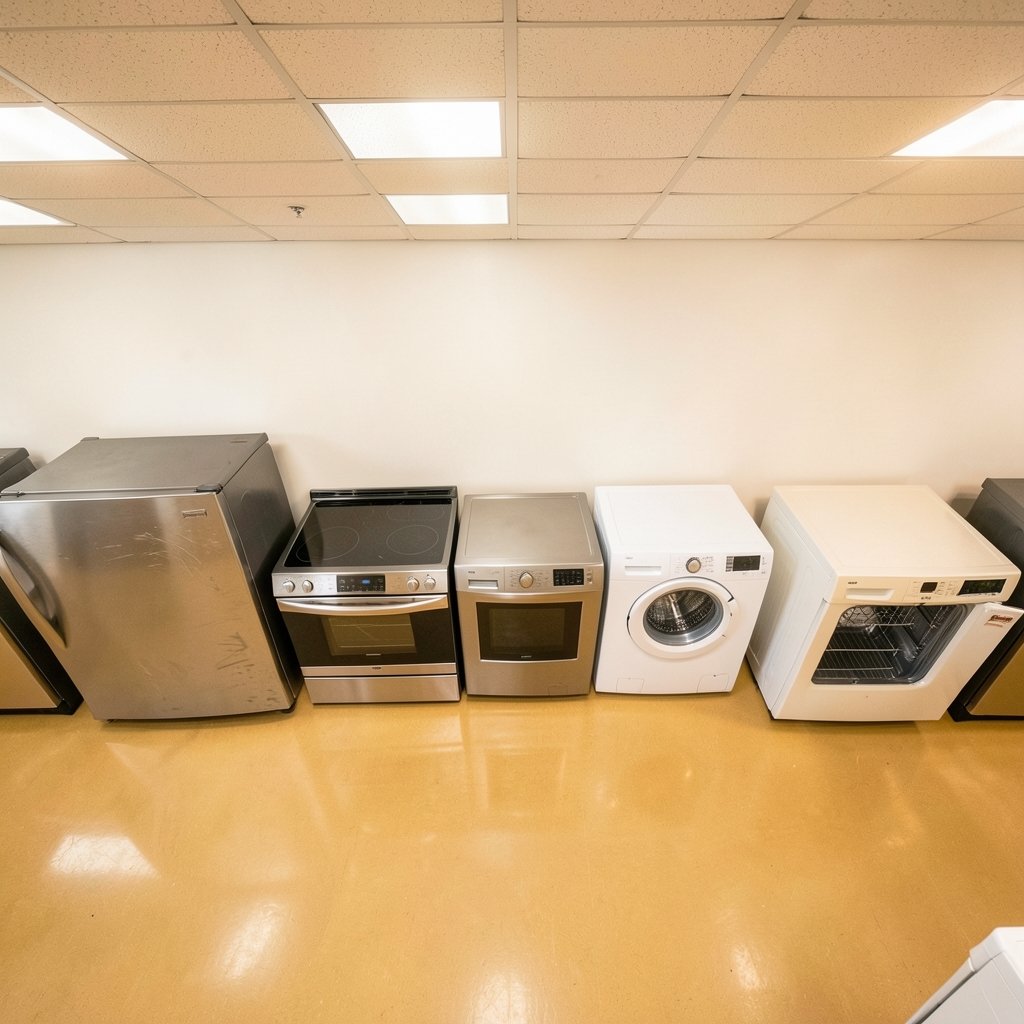
When is the next big sale on appliances? It is one of the most practical shopping questions a household can ask, and it has a surprisingly specific answer. Appliance discounts do not rain down evenly through the year. They cluster around a handful of retail holidays, and knowing that rhythm can save hundreds of dollars on a refrigerator, range, or washer. The catch is that the calendar gives you the window, not the guarantee. Retailers decide each year how deep the cuts go, and the only reliable way to catch the real deals is to understand the pattern, then verify the details yourself. (Big tech earnings oct 2829 copilot kiro gemini code assist)
The Short Answer: Holidays Beat Random Tuesdays
Appliance promotions follow the same retail calendar as televisions and mattresses. The biggest discounts in the United States traditionally land during Black Friday and the surrounding weeks, stretching from early-to-mid November through Cyber Monday. That window is the single most reliable period for large markdowns on major appliances, because retailers compete hard for holiday shoppers and manufacturers push volume.
After Black Friday, the calendar offers several recurring sale weekends. Presidents’ Day, the third Monday of February, is a well-established appliance-promotion period. In 2027 it falls on February 15. Memorial Day (May 31, 2027) and Labor Day (September 6, 2027) are also traditional promotion weekends when stores discount kitchen and laundry equipment. These dates are typical patterns rather than confirmed events, so treat them as planning anchors, not promises.
| Sale window | Typical timing | What to expect |
|---|---|---|
| Black Friday and Cyber Monday | Early-to-mid November through late November | Deepest markdowns, bundle offers, limited stock |
| Presidents’ Day | Third Monday of February | Strong mid-winter discounts, especially on ranges and refrigerators |
| Memorial Day | Last Monday of May | Outdoor and kitchen appliance promotions |
| Labor Day | First Monday of September | End-of-summer clearance and new-model transitions |
| New-model clearance | Late summer through fall | Older models discounted as new lines arrive |
Why Appliances Go on Sale When They Do
Appliance pricing is driven by two forces: retail competition and product cycles. Retailers want traffic on holiday weekends, and appliances are big-ticket items that pull people into stores and onto websites. Manufacturers, meanwhile, release new model lines on a schedule, which means last year’s models need to move. That overlap between holiday traffic and model turnover is what produces genuine discounts rather than cosmetic ones.
The practical lesson is that the best deal is not always on the holiday itself. New-model clearance in late summer and early fall can beat a holiday promotion on a specific unit, especially if the model is being discontinued. A shopper who only watches Black Friday may miss a better price on the exact refrigerator they want. Watching both the holiday calendar and the model cycle gives a fuller picture.
How to Tell a Real Deal From a Fake One
The appliance aisle is full of “was” prices that never really existed. A sale is only a sale if the price is lower than the normal street price for that model, not lower than an inflated list price. The most reliable check is to track a specific model number for a few weeks before buying. Model numbers matter because retailers often sell slightly different versions of the same appliance, which makes direct price comparison tricky.
A second check is running cost. A cheap appliance that guzzles electricity can cost more over its life than a slightly pricier efficient model. Most new appliances in the U.S. carry an EnergyGuide label, which federal law requires on most models and which shows estimated annual energy use and cost. That label turns a sale price into a total-cost comparison, and it is the single most underused tool in appliance shopping. Buyers comparing two refrigerators at similar sale prices should read the yellow label before deciding.
Efficiency programs add another layer. ENERGY STAR is a joint EPA and DOE program that identifies more efficient models, and utility rebates are sometimes tied to it. Federal minimum efficiency standards also shape which models are sold at all, so a very cheap unit may simply be an older, less efficient design being cleared out. None of this makes a discount bad, but it does mean the sticker price is only part of the story.
The Practical Playbook: What Actually Works
Shoppers who consistently get good appliance prices tend to follow a few habits. None of them are secret, but each one prevents a common mistake.
- Pick the model before the sale. Decide on a specific model number and size, then wait for a promotion. Shopping by category during a sale leads to impulse buys and compromised choices.
- Measure the space first. The most common appliance mistake is buying a unit that does not fit the alcove, doorway, or hookup. Measure width, depth, height, and the path to the kitchen before the sale starts.
- Check delivery and installation costs. A $200 discount can vanish if delivery, haul-away, and installation add $250. Ask for the full out-the-door price, not the shelf price.
- Confirm the return window. Appliance returns are often stricter than other retail returns. Know the policy before the truck arrives.
- Check for recalls. Before buying any model, especially a discounted or open-box unit, check the official recall database. A recall is rare, but it is worth two minutes.
- Ask about open-box and refurbished units. These can be excellent value, but they come with disclosure rules. Secondhand and refurbished goods have specific consumer-information requirements, so ask what was replaced and what warranty applies.
The biggest mistake is buying in a panic. Appliance failures feel urgent, and urgency is expensive. If the old refrigerator is still limping along, a shopper can usually wait for the next holiday window. If it has died, the calculus changes, and paying a bit more for immediate delivery is often the right call.
Timing the Purchase Around a Failing Appliance
Not everyone gets to choose the timing. When a water heater leaks or an oven stops heating, the next big sale is irrelevant. In that situation, the smart move is to buy a reliable mid-range model quickly rather than chase a discount, then use the sale calendar for the next planned replacement. Households that replace appliances on a schedule, rather than in emergencies, consistently pay less.
A simple approach is to note the age of each major appliance and its expected lifespan, then plan replacements a year ahead. That turns a future emergency into a planned purchase that can wait for Presidents’ Day or Black Friday. It also spreads the cost, since replacing a kitchen’s worth of appliances at once is a budget shock.
Where Technology Fits Into the Buying Decision
Appliance shopping now overlaps with broader technology decisions. Smart refrigerators, connected ovens, and app-controlled washers raise questions about software support and long-term updates. Buyers weighing a connected appliance against a simpler one should ask how long the manufacturer will support the app and whether core functions work without it. A sale on a smart appliance is only a good deal if the smart features will still work in five years.
The same forward-looking logic applies to how people plan purchases generally. If a household is already mapping out major expenses for the year ahead, the same discipline that goes into planning a car or a home upgrade applies to appliances. Readers thinking through a longer buying timeline may find it useful to look at how others are approaching the near future in what founders expect from AI tools by 2028, because the same question of “buy now or wait” runs through both. For a broader look at planning a specific year, this guide to what 2027 will actually look like for planners offers a useful frame for budgeting decisions.
The Retail Calendar Beyond the Big Four
Black Friday, Presidents’ Day, Memorial Day, and Labor Day are the anchors, but they are not the only windows. Several smaller patterns are worth knowing.
Back-to-school season in late summer often brings promotions on laundry pairs and small kitchen appliances, since families are outfitting dorm rooms and apartments. Columbus Day and Indigenous Peoples’ Day weekends sometimes carry appliance promotions, though less consistently than the major holidays. End-of-quarter pushes in March, June, September, and December can produce quiet discounts as sales teams chase targets. None of these are as reliable as Black Friday, but they widen the net.
There is also the matter of inventory. A sale is only useful if the model is in stock, and popular appliances sell out during holiday events. Shoppers who wait until the final day of a promotion often find the best models gone. Shopping early in the window, or pre-ordering, is usually smarter than waiting for the deepest cut.
How to Verify the Next Sale Before You Commit
Because sale dates and discounts change every year, the final step is always verification. Retailer announcements, manufacturer promotions, and store flyers are the authoritative sources, and they typically appear a few weeks before each holiday. A shopper who checks those sources in early November, early February, mid-May, and late August will rarely miss a major appliance event.
It also helps to know the consumer-protection backstop. If a price turns out to be deceptive, state consumer-protection offices handle complaints about misleading pricing. Knowing that recourse exists makes it easier to shop confidently, and it discourages the worst retail practices.
Conclusion
The next big sale on appliances is most likely to arrive with a holiday, not a random weekday. Black Friday and Cyber Monday remain the deepest discount window, with Presidents’ Day, Memorial Day, and Labor Day as dependable secondary opportunities. But the calendar is only half the answer. The other half is preparation: choosing a model in advance, measuring the space, reading the EnergyGuide label, checking delivery costs and recalls, and confirming the return policy. Shoppers who do that work before the sale starts get the discount and the right appliance. Shoppers who wait for the sale to start often get neither. Watch the calendar, verify the announcements, and buy the model you already chose.
Frequently Asked Questions
When is the next big appliance sale likely to happen?
The most reliable window is Black Friday and the surrounding weeks, running from early-to-mid November through Cyber Monday. After that, Presidents’ Day in February is the next major appliance-promotion period, followed by Memorial Day in May and Labor Day in September. Exact dates and discounts vary by retailer each year, so confirm with store announcements before you shop.
Are Presidents’ Day appliance sales actually good?
They can be. Presidents’ Day is a long-standing promotion weekend for appliances, and mid-winter discounts on ranges, refrigerators, and laundry pairs are common. The depth varies by year and retailer, and some stores use the holiday to clear older inventory. Compare a specific model’s price across a few weeks rather than trusting the “was” price on the tag.
Is it better to buy appliances on Black Friday or during new-model clearance?
It depends on the model. Black Friday usually delivers the deepest across-the-board discounts and bundle offers. New-model clearance in late summer and early fall can beat Black Friday on a specific discontinued unit. If you have already chosen an exact model number, watch both windows and buy when that model drops.
How can I tell if an appliance sale price is real?
Track the specific model number for a few weeks before buying, and compare the sale price to the normal street price rather than the inflated list price. Also factor in delivery, installation, and haul-away fees, which can erase a discount. Reading the EnergyGuide label helps you compare running costs, so a slightly higher price on an efficient model can still be the better deal.
Should I buy an open-box or refurbished appliance on sale?
Sometimes, yes. Open-box and refurbished units can offer strong value, but they come with disclosure rules and often shorter warranties. Ask what was repaired or replaced, confirm the warranty terms in writing, and check the official recall database for the model before buying. A steep discount on a unit with no warranty is rarely worth the risk.
What is the biggest mistake people make when shopping appliance sales?
Buying in a panic. Urgency leads to compromised choices on size, features, and price. The most common practical errors are failing to measure the space and forgetting to add delivery and installation costs to the total. Shoppers who pick a model in advance, measure carefully, and wait for a holiday window consistently pay less and end up happier with the appliance.