
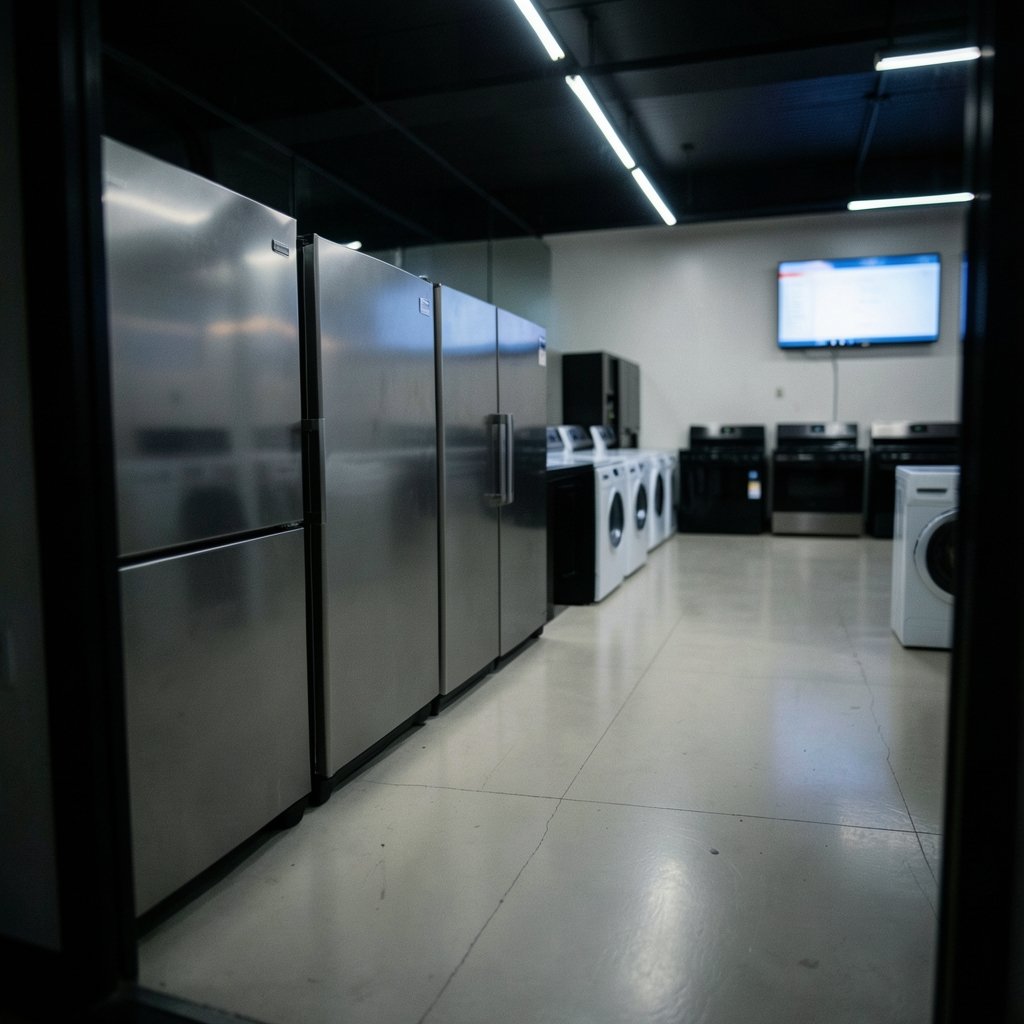
Is there really a magic month when refrigerators, ranges, and washing machines suddenly get cheaper? Shoppers ask this constantly, and the honest answer is more interesting than a single date on a calendar. Timing matters, but not in the way most store marketing suggests. The right month depends on what you’re buying, where you live, and how patient you are. (Audit your ai tool stack cut 500 month waste)
This guide breaks down the retail calendar month by month, explains which windows actually deliver savings on which appliances, and covers the mistakes that quietly erase discounts at checkout. (Best ai tools under 20 month 2027 whats actually worth)
Why Appliance Prices Follow a Predictable Calendar
Appliance pricing is driven by three forces: holiday retail events, model-year turnover, and seasonal demand swings. When those three line up, discounts get deep. When they don’t, a “sale” sign means very little.
The biggest recurring event is Black Friday and Thanksgiving week in late November. It’s the most widely reported discount window for large kitchen appliances year after year. Retailers plan inventory and promotions around it, and manufacturers often fund the markdowns directly.
Holiday weekends matter too. Labor Day (the first Monday in September) and Memorial Day (the last Monday in May) are commonly cited as major appliance-sale holidays in US retail. These long weekends give stores a reason to run multi-day promotions on big-ticket items.
The third force is less visible: model-year changes. Appliance makers have historically refreshed product lines around late summer and fall, though the timing varies by brand and category. When a new model arrives, the previous version has to move, and that’s when genuine clearance pricing appears.
The Month-by-Month Reality Check

There is no authoritative dataset that crowns a single best month. Claims conflict depending on appliance type and region. What follows is a practical map based on recurring retail patterns, not a guarantee.
| Month | What’s Typically Happening | Best For |
|---|---|---|
| January | New-year clearance, leftover holiday stock | Last year’s models, floor units |
| February | Presidents’ Day sales | Mid-range kitchen packages |
| March–April | Quiet period, spring promos begin | Negotiating room on older inventory |
| May | Memorial Day sales | Washers, dryers, grills |
| June–July | Summer demand peaks for cooling | Avoid if buying AC units |
| August | Model-year transition begins | Ranges, dishwashers, refrigerators |
| September | Labor Day sales plus new-model arrivals | Large kitchen appliances |
| October | Pre-holiday lull | Overstock and open-box deals |
| November | Black Friday and Thanksgiving week | Nearly everything, especially big-ticket |
| December | Holiday promos, year-end quotas | Bundle deals, delivery slots |
Read that table as a starting map, not gospel. The single strongest window for most people is late November, with September as a strong runner-up for kitchen appliances specifically.
Why November Earns Its Reputation
Black Friday has become the anchor of the appliance retail year. Stores compete publicly on pricing, manufacturers push volume targets, and financing promotions stack on top of markdowns. The competition itself is part of the value: when three chains are undercutting each other on the same refrigerator, the buyer wins.
One caution. Not every “Black Friday price” is a real discount. Some retailers raise list prices in October and then “cut” them in November. Track the specific model you want for four to six weeks before the event so you know what a genuine drop looks like.
September: The Underrated Window
Labor Day weekend gets less attention than Black Friday, but September has a structural advantage: it overlaps with model-year turnover. New appliances arrive, old ones get clearance tags, and holiday demand hasn’t started yet.
This is especially true for large kitchen appliances like ranges, dishwashers, and refrigerators. If you can live with last year’s model number, September often beats November on price per feature. The trade-off is selection. By November, the clearance units may be gone.
Seasonal Demand: Buy Against the Weather
One of the most reliable patterns in appliance retail is that demand peaks opposite the discount window. Air conditioners sell hardest in summer heat, which means late summer and early fall are when cooling units get marked down. Heaters follow the same logic in reverse: buy after winter, not during it.
The practical rule is simple. Buy the appliance when you least need it. If your AC dies in July, you’ll pay full price because everyone else is buying too. If you plan ahead and buy in September or October, you have room to negotiate.
The Factor Most Shoppers Ignore: Rebates and Incentives
For energy-hungry appliances like refrigerators, water heaters, and HVAC systems, efficiency rebates and tax incentives can outweigh sale timing entirely. A $150 Black Friday discount is small next to a utility rebate on a qualifying unit.
Federal incentive rules have changed repeatedly in recent years, so check current program status rather than assuming last year’s credit still exists. Local utility rebates vary enormously by region and often stack with retailer promotions. Before you shop, spend twenty minutes on your utility’s website. It’s the highest-return twenty minutes in the entire process.
Where Discounts Quietly Disappear
Here’s a pattern that trips up a lot of buyers. Major appliances are excluded from many general retailer coupon and price-match policies. That 20% off coupon in your inbox? Read the fine print. Large appliances are frequently carved out.
This matters because shoppers assume a sale month automatically means a lower out-the-door price. It doesn’t, if:
- The coupon excludes major appliances
- Delivery and haul-away fees add $100 or more
- Installation kits are sold separately
- The price-match window excludes appliance categories
- Financing “deals” carry deferred interest that retroactively applies
The fix is to calculate the full delivered price before comparing anything. Ask for the out-the-door number in writing, including tax, delivery, installation, and removal of the old unit. That single number is the only fair basis for comparison.
What Actually Works in Practice
A few habits separate shoppers who save real money from those who just feel like they did.
Track one model, not a category. Pick the exact model number you want and watch it for six weeks. Category-level “deals” are noise; model-level price history is signal.
Shop the last days of a sale, not the first. Retailers often deepen discounts as a promotion winds down and quotas loom. The final weekend frequently beats the launch weekend.
Ask directly about model-year clearance. Sales staff know which units are being discontinued. A direct question like “which of these is last year’s model?” often gets you a price that isn’t on the tag.
Check floor models and open-box units. These carry full warranties in most cases and can run 20–40% below new-in-box pricing. Inspect for dents, confirm the warranty in writing, and verify all accessories are included.
Don’t ignore the delivery calendar. December and late November are the busiest delivery weeks of the year. A great price with a three-week delivery window may not be worth it if your old fridge is dying.
Common Mistakes That Cost Money
The most expensive mistake is buying in an emergency. When an appliance fails, urgency destroys negotiating power. If your refrigerator is fifteen years old and making strange noises, start shopping now, not when it stops.
The second mistake is assuming holiday sales are automatically best. Memorial Day and Labor Day promotions are real, but they’re often shallower than Black Friday on large appliances and deeper on smaller categories.
The third is overlooking warranty rights. US consumer-protection law gives buyers implied warranties, and the Magnuson–Moss Warranty Act of 1975 sets disclosure requirements for written warranties. Sale timing doesn’t change any of that. A discounted appliance carries the same legal protections as a full-price one, so don’t let a salesperson suggest otherwise.
The fourth is ignoring the total cost of ownership. A cheaper unit with poor efficiency can cost more over a decade than a pricier efficient model. Run the energy numbers before you decide the sale price is the real price.
Timing Your Purchase Around Your Budget Cycle
If you’re managing a tight monthly budget, the appliance calendar interacts with your cash flow. A November purchase lands right before holiday spending, which is awkward for many households. A September purchase spreads the cost better.
It helps to map big purchases against your other recurring costs. If you’re already tracking subscription spending, the same discipline applies: know what’s leaving your account each month before adding a new obligation. A quick look at where your money actually goes, whether that’s streaming services or software subscriptions, makes it easier to see whether a $1,200 appliance fits this month or next. The same logic that helps you audit a stack of monthly tools applies to a major purchase, and it’s worth doing the math before a salesperson does it for you.
Financing deserves the same scrutiny. Zero-percent promotions are common on appliances, but deferred-interest structures can retroactively charge the full rate if you miss a payment. Read the terms or skip the financing.
Putting It All Together
If you want one answer, here it is: late November is the best single month for most appliance purchases, with September as the strongest alternative for large kitchen appliances and anything affected by model-year turnover. For cooling equipment, buy in early fall. For heating equipment, buy in spring. For everything else, let the model-year calendar and your own timeline guide you.
The deeper point is that timing is a multiplier, not a strategy. A well-timed purchase of the wrong appliance is still a bad purchase. Get the model right, check rebates, calculate the delivered price, and then use the calendar to shave off the last few hundred dollars.
Frequently Asked Questions
Is Black Friday really the best time to buy appliances?
For most large appliances, yes. Late November is the most widely reported discount window of the year, and manufacturers often fund those markdowns directly. That said, verify the price against a four-to-six-week history, because some retailers inflate list prices before the event.
Are Labor Day and Memorial Day sales worth waiting for?
They’re legitimate promotions, especially on washers, dryers, and outdoor appliances. They tend to be shallower than Black Friday on large kitchen appliances, but they’re a solid option if you can’t wait until November.
Should I buy an appliance when a new model comes out?
Often, yes. Model-year turnover pushes discounts onto prior-year inventory, and the timing usually clusters around late summer and fall. You sacrifice the newest features but typically gain the best price per feature.
Does buying during a sale affect my warranty?
No. Warranty rights don’t change based on when or at what price you bought the appliance. Implied warranties apply regardless, and written warranty disclosure requirements are set by federal law, not by the retail calendar.
Is it cheaper to buy appliances online or in a store?
It depends on delivery and installation costs, not the sticker price. Online prices are often identical, but in-store purchases sometimes include free delivery or haul-away. Compare the full out-the-door number, including tax, delivery, installation, and removal.
What if my appliance breaks and I can’t wait for a sale?
Buy the replacement, but negotiate. Ask about floor models, open-box units, and last year’s model. Even outside a sale window, stores have margin to move discontinued inventory, and a direct question about clearance stock often produces a better price than waiting would have.
Conclusion
The best month to purchase appliances isn’t a secret, and it isn’t a single date. It’s a window: late November for most things, September for large kitchen appliances, and the shoulder seasons for anything tied to heating or cooling demand. Layer rebates and efficiency incentives on top, calculate the full delivered price, and shop with a specific model in mind rather than a vague category.
Do that, and the calendar stops being a gamble. It becomes a tool you actually control. The shoppers who save the most aren’t the ones who waited longest. They’re the ones who knew exactly what they wanted, knew what a fair price looked like, and bought when the retail calendar gave them an advantage.



