

Is January actually the best time to buy a refrigerator, or does the “New Year, New Home” banner just move old inventory at prices that look better than they are? That question matters more than most shoppers think, because a big-ticket appliance purchase is one of the few household decisions where timing can swing the price by hundreds of dollars, or swing it by almost nothing at all. The honest answer sits somewhere between the marketing and the skepticism, and it depends on which appliance you want, what the model-year calendar looks like, and whether you are shopping a genuine clearance cycle or a decorated one.
Why January Became Appliance Season
Appliance promotions cluster around a few predictable windows each year. Late November through early January is the longest of them, and it blends two different forces. The first is holiday retail competition, where stores use appliances as traffic drivers alongside electronics and toys. The second is the model-year rollover. Manufacturers introduce new lines and retailers clear space, which is why January often carries a “new year, new home” theme that is less about your resolutions and more about their warehouse.
There is a second wave around Presidents’ Day in February and a third around Labor Day in September. That pattern is worth internalizing, because it means January is not a unique magical window. It is one of several. Shoppers who miss a January promotion are usually not locked out for a full year; they are waiting weeks, not months, for the next credible discount cycle.
The resolution angle is real but softer than the advertising suggests. Kitchen upgrades, laundry replacements, and air quality purchases do spike as households reset after the holidays. What is less clear is whether the discounts themselves are deeper in January than in late November. Most claims that January beats Black Friday come from retailers or deal sites with an interest in saying so. Public measured-price data does not cleanly support a strong version of that claim.
The Uncomfortable Truth About “Up To 40% Off”
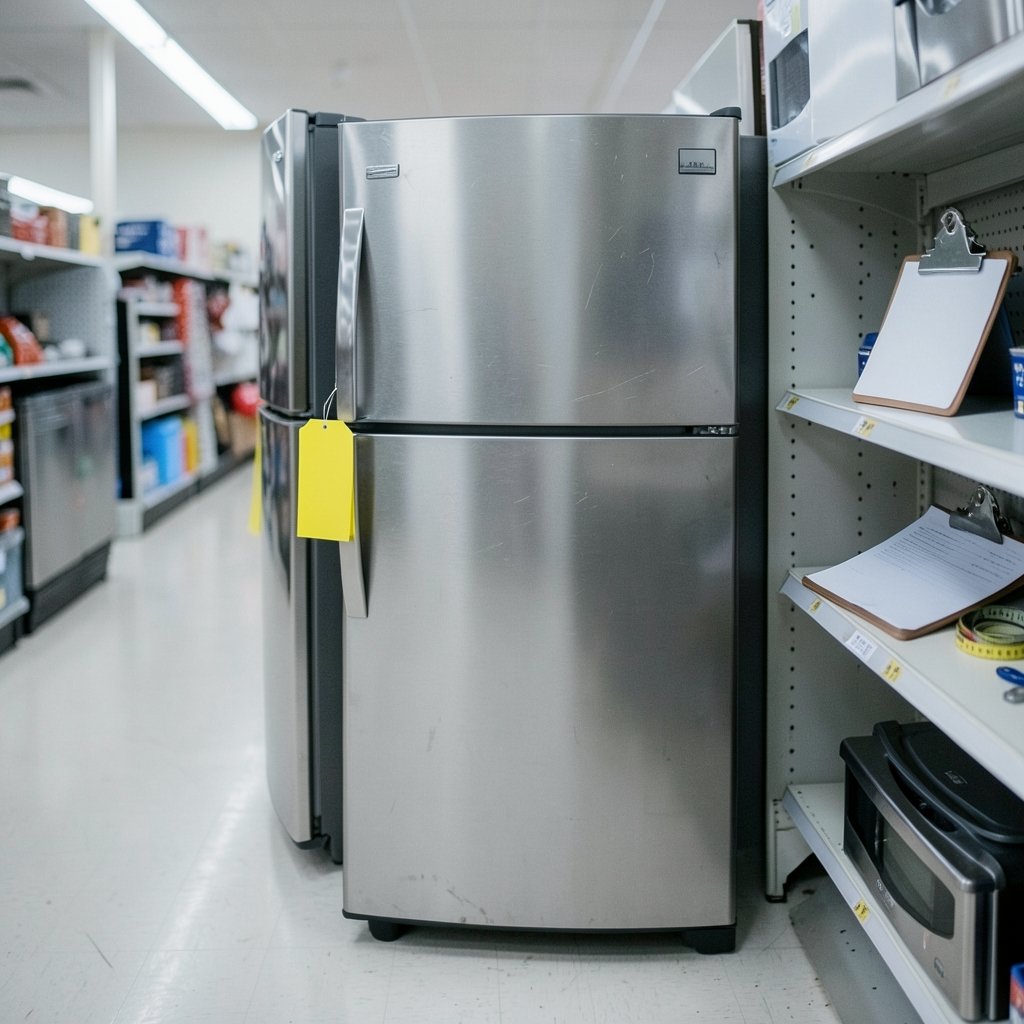
Retailer discount claims are marketing, not measurement. “Up to” language describes a single clearance item, often a floor model or a discontinued finish, and the headline percentage rarely applies to the model most people actually want. Measured price change comes from different places entirely: the Consumer Price Index category for major appliances and the Census Bureau’s monthly retail sales figures for appliance stores.
That distinction changes how you shop. If you want to know whether appliances are genuinely cheaper this January than last January, the CPI series answers that. If you want to know whether this specific French-door refrigerator is a good deal today, the CPI cannot help you, and neither can a banner. You need the model number, a price history, and a willingness to walk away.
A practical habit that separates experienced buyers from first-timers: pull the exact model number, search it across three retailers, and check whether the “sale” price matches the price that model carried two months ago. Very often it does. The discount is real relative to the inflated list price and imaginary relative to the street price.
What Actually Drives Appliance Prices
The calendar is the smallest lever. Three bigger forces move appliance pricing, and none of them care what month it is.
Housing turnover. Appliance demand tracks home sales closely. When existing-home sales are soft, as they were through much of 2023 to 2025 under high mortgage rates, big-ticket appliance demand softens with them. A slow housing market puts more negotiating room in the room, regardless of season. Anyone tracking a comparable dynamic in another category, such as the gap between announced manufacturing capacity and actual delivered units described in this analysis of Cybertruck’s 125,000 capacity vs 11,586 sales, will recognize the pattern: supply plans and demand reality drift apart, and buyers benefit when they do.
Tariffs and input costs. U.S. tariffs on imported appliances and components, including steel and aluminum measures and China-origin goods, have affected appliance pricing at various points since 2018. How much of that cost reaches the consumer is genuinely contested among economists. Some passes through quickly; some gets absorbed by manufacturers protecting market share. The practical takeaway is not to predict it but to check whether a specific price change coincides with a tariff action, because that tells you whether the increase is likely to stick.
Efficiency standards. Federal efficiency standards for refrigerators, washers, dryers, and dishwashers update on rolling schedules. When a standard tightens, non-compliant models get cleared, and that clearance is one of the few genuine discount events in the category. The catch is that you are buying the older, less efficient design, which may cost more to run over a decade than the discount saves. Run the math on energy use before assuming clearance is a win.
| Price driver | Does it follow the calendar? | What it means for shoppers |
|---|---|---|
| Holiday and January promotions | Yes, strongly | Real but often modest; verify against street price |
| Model-year rollover | Yes, loosely | Genuine clearance on discontinued finishes and floor models |
| Housing turnover | No | Soft home sales create year-round negotiating room |
| Tariffs and input costs | No | Price increases may or may not stick; check timing |
| Efficiency standard transitions | No | Real clearance, but weigh lifetime energy cost |
Rebates, Tax Credits, and the Fine Print
Efficiency rebates and tax credits complicate the sticker price in ways that January advertising rarely explains. High-efficiency electric appliance rebate programs and the federal tax credit for efficient appliances can meaningfully lower the effective cost of a qualifying purchase. The complication is availability. Program status varies by state and has changed over time, and a credit that applied last year may not apply this year or may have different caps.
The practical approach is to treat any rebate as a separate transaction from the sale price. Confirm the program is currently open, confirm the specific model qualifies, keep the receipt and documentation, and do not let a salesperson fold an uncertain rebate into the quoted price to make the deal look better than it is. If the rebate falls through, the price you agreed to is the price you paid.
Where January Shopping Genuinely Helps
Despite the caveats, there are real advantages to buying in the first weeks of the year, and they are mostly about selection and leverage rather than headline discounts.
Old stock is honestly old
Discontinued finishes, prior-year models, and floor units are genuinely cheaper in January because the store wants them gone. If you can live with last year’s handle design or a scratched side panel that faces the wall, this is where the value sits.
Delivery and installation slots open up
The holiday rush is over. Scheduling a delivery, hauling away an old unit, and getting an installer out is materially easier in mid-January than in the second week of December. That convenience has real value, especially for anything requiring plumbing or electrical work.
Sales staff have time
A salesperson in a quiet January showroom will often negotiate on price, bundle a warranty, or throw in haul-away. The same person on Black Friday has a line of customers and no reason to move.
You can walk away
Inventory is being cleared, but it is not scarce the way a doorbuster is. The absence of a countdown clock is itself a negotiating asset.
Common Mistakes That Cost Real Money
First-hand observation of how appliance purchases go wrong tends to surface the same handful of errors. Avoiding them is worth more than any January discount.
Buying the bundle without pricing the parts. A kitchen package looks like a deal until you price the refrigerator, range, and dishwasher separately. Bundle discounts are sometimes real and sometimes a way to move a weak model alongside a strong one.
Skipping the measurement. The single most common expensive mistake is ordering a refrigerator that does not fit the cutout, or a washer that will not pass through the doorway. Measure the opening, the doorway, and the path, then measure again.
Ignoring the total cost of ownership. A cheaper unit with higher energy use or a shorter warranty can cost more over its life. Efficiency standards exist precisely because that gap is large enough to matter.
Trusting the first quote on installation. Installation and haul-away fees vary widely and are frequently where the margin hides. Ask for the all-in number before comparing.
Assuming the sale ends Sunday. It often does not. Urgency language is a sales tool, and a polite request to honor the price the following week frequently works.
The same discipline applies to any high-consideration purchase where a provider’s incentives and the buyer’s interests diverge. Anyone who has watched a company promise more than its delivery pipeline could support, as documented in this breakdown of Xbox Series X sales and what Circana data can and cannot tell you, knows the value of checking the underlying numbers rather than the announcement.
How to Shop a New Year Appliance Sale Without Getting Played
A repeatable process beats willpower. Here is one that works.
- Decide the exact model and the acceptable substitutes before you look at any price.
- Record the current street price at three retailers, including one warehouse club.
- Check the model’s price history and note whether the “sale” price is new or recycled.
- Confirm the unit fits: opening, doorway, and delivery path.
- Ask for the all-in price including delivery, installation, haul-away, and any required parts.
- Separate any rebate or tax credit from the negotiated price and verify it independently.
- Compare the total against waiting until February, and be willing to wait.
That last step is the one most shoppers skip, and it is the one that keeps a sales event in perspective. If the February price is likely to be within a few percent, the January urgency is manufactured. If the model is being discontinued and stock is genuinely thinning, the urgency is real.
What the Data Can and Cannot Tell You
Public data answers the macro question and not the micro one. Retail sales figures for appliance stores show the category’s overall direction and its modest seasonality. Appliance spending is less seasonal than toys or electronics, which is worth remembering when a January banner implies a once-a-year event. The holiday lift is real, but it is smaller than the advertising suggests.
The CPI appliance series shows measured price change over time, which is the correct antidote to “up to” claims. What neither dataset can do is tell you whether the specific refrigerator in front of you is priced well today. That requires the model number and a little patience.
The broader lesson echoes what shows up in careful looks at how evidence gets oversold, such as this examination of what the 7 million years of evidence for becoming human actually shows. Headline claims compress nuance, and the nuance is usually where the decision lives.
Conclusion
New Year appliance sales are real, but they are smaller, narrower, and more situational than the banners suggest. January earns its reputation through model-year clearance, open delivery schedules, and negotiable sales floors, not through uniquely deep discounts on the models most people want. The shoppers who do best treat the calendar as one input among several, verify prices against measured data rather than marketing, confirm rebates independently, and stay willing to wait for February. Buy the appliance you measured and researched, at a price you can verify, from a seller who will put the all-in number in writing. Do that, and the January sale becomes a useful convenience rather than a trap.
FAQ
Are New Year appliance sales actually cheaper than Black Friday?
Usually not by much, and the public data does not clearly support January beating late November. Most claims that January is deeper come from retailers and deal sites. The genuine January advantage is clearance on discontinued models and easier delivery scheduling, not a blanket price cut across the category.
What is the best month to buy a refrigerator?
There is no single best month. Late November through early January, Presidents’ Day in February, and Labor Day in September are the recurring promotional windows. The bigger factor is model-year timing: a refrigerator being discontinued gets its steepest discount when the replacement arrives, whenever that happens to be.
Do appliance prices drop in January because of new models?
Partly. Manufacturers roll out new lines and retailers clear space, which drives genuine discounts on prior-year models, discontinued finishes, and floor units. Those deals are real, but they apply to specific stock rather than to everything on the floor.
Should I wait for a rebate or tax credit before buying?
Treat rebates as a separate transaction. Confirm the program is open in your state, confirm the exact model qualifies, and keep your documentation. Program availability varies by state and changes over time, so never let a salesperson fold an uncertain rebate into the quoted price.
How can I tell if an appliance sale price is real?
Pull the exact model number and compare it across at least three retailers, including a warehouse club. Check whether the sale price matches what the model carried a month or two earlier. If it does, the discount is relative to an inflated list price rather than the street price.
Is it worth buying a clearance model that no longer meets current efficiency standards?
Sometimes, but run the numbers. A clearance discount on a less efficient unit can be erased by higher energy costs over a decade. Compare the annual energy use of both models, multiply by your local rate, and see whether the upfront savings survive the calculation.



