

What if the most reliable refrigerator in the store is also the cheapest one? That question defines the top-freezer category. These are the plain, upright boxes with the freezer on top that have been in kitchens for decades. They rarely get featured in glossy ads. Yet they keep winning the value argument.
The problem is that “best rated” is a slippery phrase. A lab score, a retailer star average, and an editor’s list can point at three different machines. This guide breaks down what high ratings really measure, where they disagree, and how to read them without getting fooled.
What “top-freezer” means and why the layout still wins
A top-freezer refrigerator puts the freezer compartment above the fresh-food section, usually behind two separate exterior doors. It is the most common and generally the least expensive refrigerator setup in the U.S. market.
Why does that matter for ratings? Simplicity. Fewer features mean fewer parts that can break. No in-door ice and water dispenser. No dual evaporator system on most basic models. No fancy drawer zones. That stripped-down design is exactly why these units tend to score well on reliability surveys and poorly on “wow” factor.
Capacity is the other reason they sell. Top-freezer models commonly run from roughly 10 to 22 cubic feet. Standard-width units around 30 inches wide usually land in the 14 to 18 cubic foot range. That fits a lot of kitchens, apartments, and rental units without a remodel.
Where “best rated” claims actually come from
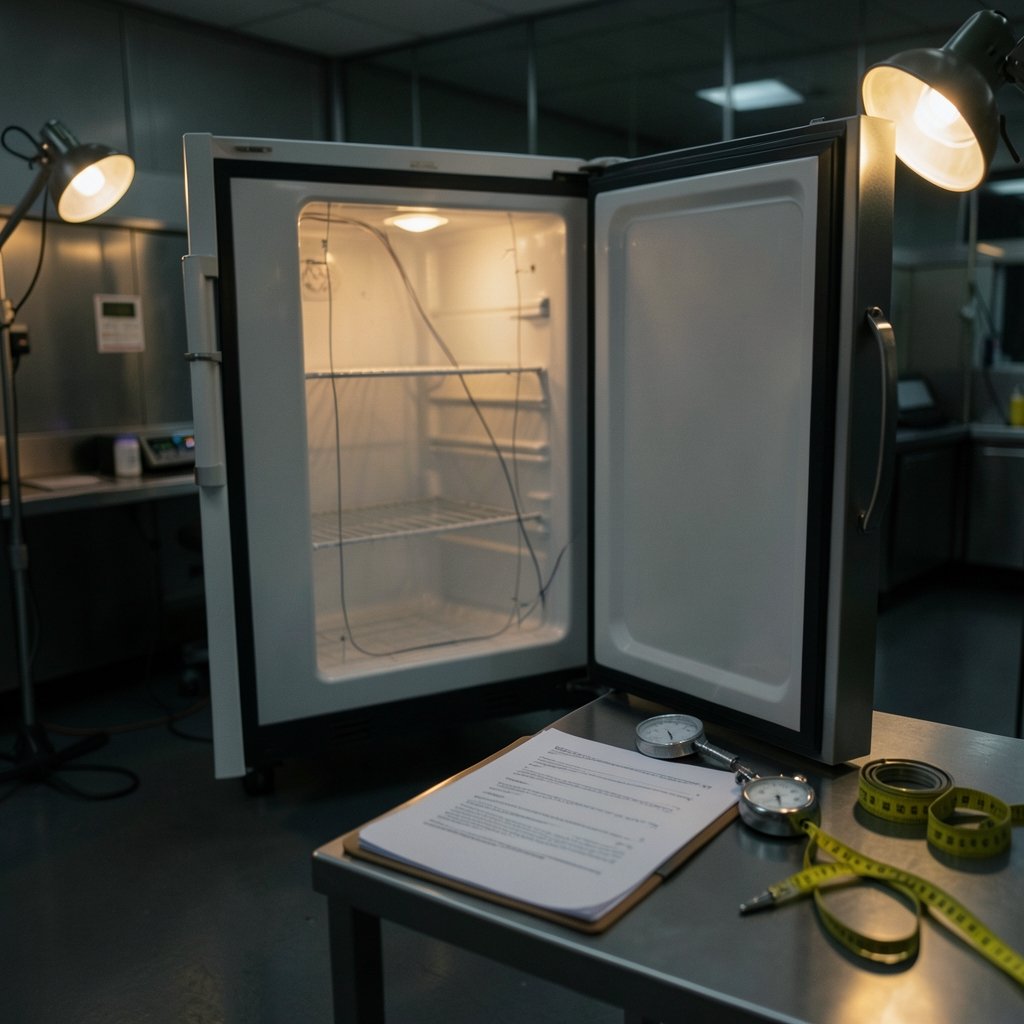
This is the part most shoppers skip, and it is the part that matters most.
Ratings come from two very different worlds:
| Rating source | What it measures | Strength | Weakness |
|---|---|---|---|
| Lab testing (e.g., Consumer Reports) | Temperature consistency, energy use, noise, ease of use | Controlled, repeatable, comparative | Paywalled, updated on a schedule |
| Retailer star ratings | Owner satisfaction after real use | Large sample, real-world context | Skewed by delivery gripes and early impressions |
| Editorial listicles | A writer’s picks, often with affiliate links | Readable, curated | Methodology often unstated |
A fridge can be a lab champion and a three-star seller at the same time. Why? Because a buyer who loves the fridge but hates the delivery window may still leave two stars. Conversely, a mediocre performer can coast on a four-star average if it arrived fast and looked nice.
So when an article says “best rated,” the honest answer is: rated by whom, and when? Consumer Reports has tested refrigerators in its labs for decades, and its rankings carry weight because the testing is controlled. Retailer averages tell you how people felt in week one. Neither is wrong. They just answer different questions.
The reliability angle that basic models quietly win
Here is a pattern worth knowing. In annual reliability surveys, top-freezer models with fewer features tend to have fewer failure points. That is not a marketing claim. It is a mechanical logic: every added feature is another component that can fail.
Think about what a French-door fridge with a door dispenser adds. A water line. A filter housing. An ice maker in the door. A control board for all of it. Each one is a potential service call. A basic top-freezer with a factory ice maker in the freezer bin has far less to go wrong.
This is why repair-minded shoppers often gravitate toward simple layouts. If something does fail, the fix is usually cheaper too. A compressor or sealed-system issue on a basic unit is a known quantity. On a feature-heavy model, diagnostics alone can eat the budget. If you are weighing whether a repair is even worth it, this breakdown of RV refrigerator repair fails and when replacement makes more sense walks through the same cost logic that applies to home units.
Energy: the number on the yellow label
Every new refrigerator sold in the U.S. carries an EnergyGuide label showing estimated annual energy use and cost. That label exists because residential refrigerators must meet federal minimum energy-conservation standards set by the Department of Energy under the Energy Policy and Conservation Act. Those standards were tightened in 2014, effective September 15 of that year, and have been revised since.
ENERGY STAR certified models go beyond the federal minimum. The program’s refrigerator specification has been revised multiple times, so the current version and effective date are worth checking before you treat a certification as current.
Practical takeaway: two fridges of the same size can differ meaningfully in annual energy cost. Over ten years, that gap can approach the price of a cheap unit. The label is the single most useful sticker in the store, and most shoppers ignore it.
How to measure before you buy
The most common mistake in this category is buying by capacity and hoping it fits. It usually does not.
Standard top-freezer units are often about 28 to 30 inches wide and 60 to 66 inches tall, but dimensions vary widely by model. Measure three things before you shop:
- The width of the opening, plus door swing clearance.
- The height, including any cabinet above.
- The depth, and whether the doors need to come off to get it inside.
Then measure the path in. Doorways, hallway turns, and stairwells have ended more refrigerator purchases than bad reviews ever will. A 30-inch fridge will not fit through a 29-inch doorway no matter how well it scored.
Features worth paying for and features to skip
Basic top-freezer models typically lack in-door ice and water dispensers. That lowers cost and removes repair points. Some include a factory ice maker, which is usually worth it if you want ice without trays.
Worth the money:
- Factory ice maker in the freezer bin, if you use ice regularly.
- Adjustable glass shelves, which make odd-shaped items fit.
- Bright LED interior lighting, which is cheap to run and lasts.
- Reversible door swing, useful in tight kitchens.
Skip unless you truly need it:
- In-door dispensers, which add failure points.
- Internet-connected features on a box that just needs to stay cold.
- Elaborate drawer zones that eat capacity.
Warranty norms and what they cover
Most major brands offer a one-year full warranty plus longer sealed-system coverage, often 5 to 10 years on the compressor. Read the fine print, because “sealed system” usually covers the compressor, condenser, and evaporator, not the labor to install them.
A common mistake: assuming a long compressor warranty means cheap repairs. Labor is often billed separately after year one. Ask what the labor rate is before you buy, and keep the receipt.
When the fridge stops cooling: a quick triage
Even the best-rated unit can quit. Before you panic-buy, run through the basics. This practical guide to fixing a refrigerator that stopped cooling covers the full checklist, but here is the short version:
- Confirm power at the outlet, and do not rely only on the display.
- Listen for the compressor. Silence plus a warm back wall points to a sealed-system issue.
- Check the condenser coils. Pet hair and dust cause failures.
- Look for frost patterns. Uneven frost suggests a defrost or airflow problem.
- Check the door gasket with a dollar bill. If it slides out easily, cold air is escaping.
If you want early warning before food spoils, a temperature monitor helps. A smart plug freezer temperature alert setup can work, but it has real limits, and wireless sensors sometimes lose signal. Knowing how to fix a wireless freezer temperature sensor whose signal keeps failing saves a lot of guessing.
Matching the fridge to the household
Ratings are averages. Your household is not average.
A two-person apartment may be perfectly served by a 14 cubic foot unit. A family of five that cooks at home needs closer to 18 to 22. A garage or basement unit needs to handle temperature swings, which many standard fridges are not rated for. A rental property benefits from the simplest, most repairable model available.
Write down three numbers before shopping: how many people, how often you cook, and how much freezer space you actually use. That trio narrows the field faster than any star rating.
Common mistakes that lead to regret
- Trusting a single rating source. Cross-check lab scores against owner reviews.
- Ignoring the EnergyGuide label. Annual cost adds up quietly.
- Skipping the doorway measurement. Measure twice, buy once.
- Overbuying features. Every extra feature is a future repair.
- Forgetting the old unit. Hauling and disposal fees are real costs.
- Not checking the return window. A fridge that does not fit is a problem you want to solve in days, not weeks.
How to read a star rating without being fooled
A few habits separate smart shoppers from frustrated ones.
First, sort reviews by newest. Early reviews often reflect delivery, not durability. Second, look for reviews written after six months or a year. Those mention compressor noise, frost buildup, and temperature drift. Third, discount the one-star reviews that only complain about a dented door. Fourth, check whether the rating count is large enough to mean anything. Twelve reviews is noise. Twelve hundred is a signal.
This same skepticism applies to any product category where ratings drive sales. The principles behind choosing the best conversion rate optimization approach for startups apply here too: define what you are measuring, then measure it consistently. If you have ever wondered how ratings get gamed, the same detection instincts used to spot AI-generated images and to spot AI-generated videos with practical checks are useful for spotting fake or incentivized reviews.
And if you are comparing specs online, remember that response time matters in reviews too. The same way gamers debate the best polling rate for a mouse because small differences compound, refrigerator owners notice small temperature swings over months, not minutes.
Conclusion
The best-rated top-freezer refrigerator is rarely the flashiest one on the floor. It is the one that fits your opening, matches your household size, sips electricity according to its yellow label, and has the fewest parts that can break. Lab scores and star averages are useful starting points, but they answer different questions. Use both, read the EnergyGuide label, measure your doorway, and buy the simplest machine that meets your actual needs. That approach beats chasing a single number every time.
FAQ
What does “best rated” actually mean for a top-freezer refrigerator?
It depends entirely on the source. A lab score measures tested performance like temperature consistency and energy use. A retailer star average measures owner satisfaction, which is often shaped by delivery and first impressions. Editorial lists reflect a writer’s picks, sometimes with affiliate incentives. Always ask which source a claim relies on and how recent it is.
Are top-freezer refrigerators more reliable than French-door models?
Generally, simpler models have fewer failure points. Top-freezer units usually lack in-door dispensers and complex dual systems, so there is less to break. That said, reliability varies by brand and model, and annual survey rankings change. Fewer features is a reasonable proxy for fewer repairs, not a guarantee.
How much space do I need for a standard top-freezer fridge?
Most standard-width units are roughly 28 to 30 inches wide and 60 to 66 inches tall, but dimensions vary widely. Measure the opening, the door swing, and the path into the kitchen. A model that fits the alcove but not the doorway is a return waiting to happen.
Is ENERGY STAR worth paying extra for on a top-freezer?
Often yes, if the price premium is modest. Certified models exceed the federal minimum efficiency standard, which can lower annual energy cost over the unit’s life. Check the EnergyGuide label for estimated annual use and compare it against the price difference to see if the math works for you.
How long should a top-freezer refrigerator last?
Most major brands offer a one-year full warranty plus longer sealed-system coverage, often 5 to 10 years on the compressor. Actual service life varies with use and maintenance. Cleaning condenser coils regularly and checking door gaskets are the two habits that most extend life.
Why do some highly rated fridges get poor owner reviews?
Because lab tests and daily life measure different things. A fridge can score well on temperature consistency yet frustrate owners with noise, shelf layout, or a slow ice maker. Sorting reviews by newest and reading ones written after six months gives a far more accurate picture than the headline average.



