
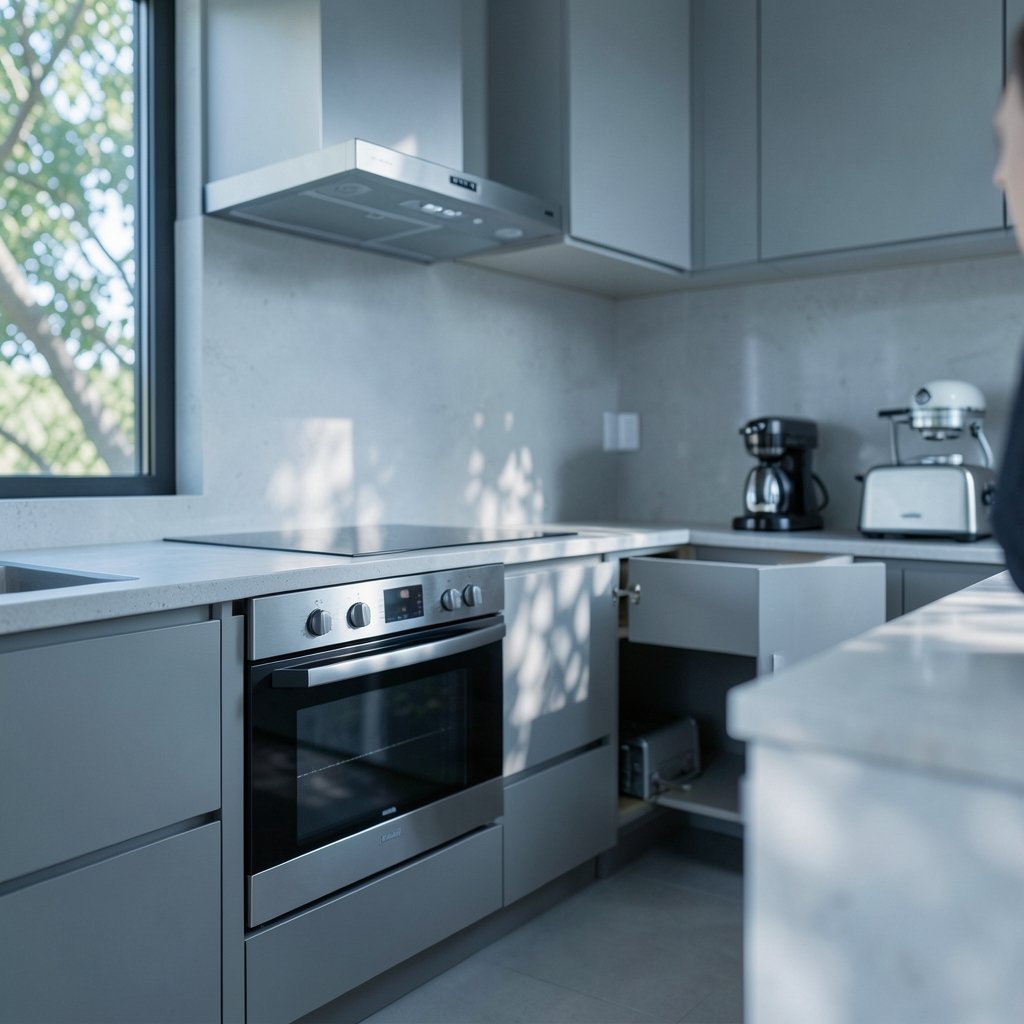
What do you get when you put a small appliance inside a big one? It sounds like a riddle, but it is one of the most practical design shifts in modern kitchens and laundry rooms. A microwave tucked under a range hood. A coffee maker hidden in a cabinet that lifts away. A washer and dryer sharing a single steel box. Appliances inside appliances are everywhere once you start looking, and they change how people buy, install, and repair the machines they depend on every day.
This guide looks at what the phrase actually means, where the pattern came from, which combinations work well, and which ones quietly cause trouble. It also covers the safety, energy, and maintenance questions that most buyers only think about after delivery day. For a wider look at how these products are organized and sold, see occcy.
What Does “Appliances in Appliances” Actually Mean?
There is no official technical definition of an appliance inside an appliance. The term gets used loosely in design writing and marketing, so it helps to set some boundaries. Broadly, it covers three situations:
- A powered device inside a larger powered device. A microwave built into a range. A screen and camera module inside a refrigerator door.
- A small appliance stored inside furniture that behaves like an appliance. The classic example is the appliance garage, a small compartment built into a kitchen counter or upper cabinet that hides a toaster, blender, or mixer behind a roll-down or lift-up door.
- Two appliances sharing one housing. A combo washer dryer is the clearest case: washing and drying happen in the same drum and the same cabinet.
That third category is the most established. Combination units have been sold for decades, and they remain a mainstream choice in apartments and small homes where floor space is tight. The first and second categories are more about design and workflow than about a formal product class.
The key point for shoppers is this: when a manufacturer says a product is “integrated” or “built in,” ask what is inside what. The answer determines how you install it, how you vent it, and who fixes it when something fails.
How the Appliance Garage Became a Kitchen Staple
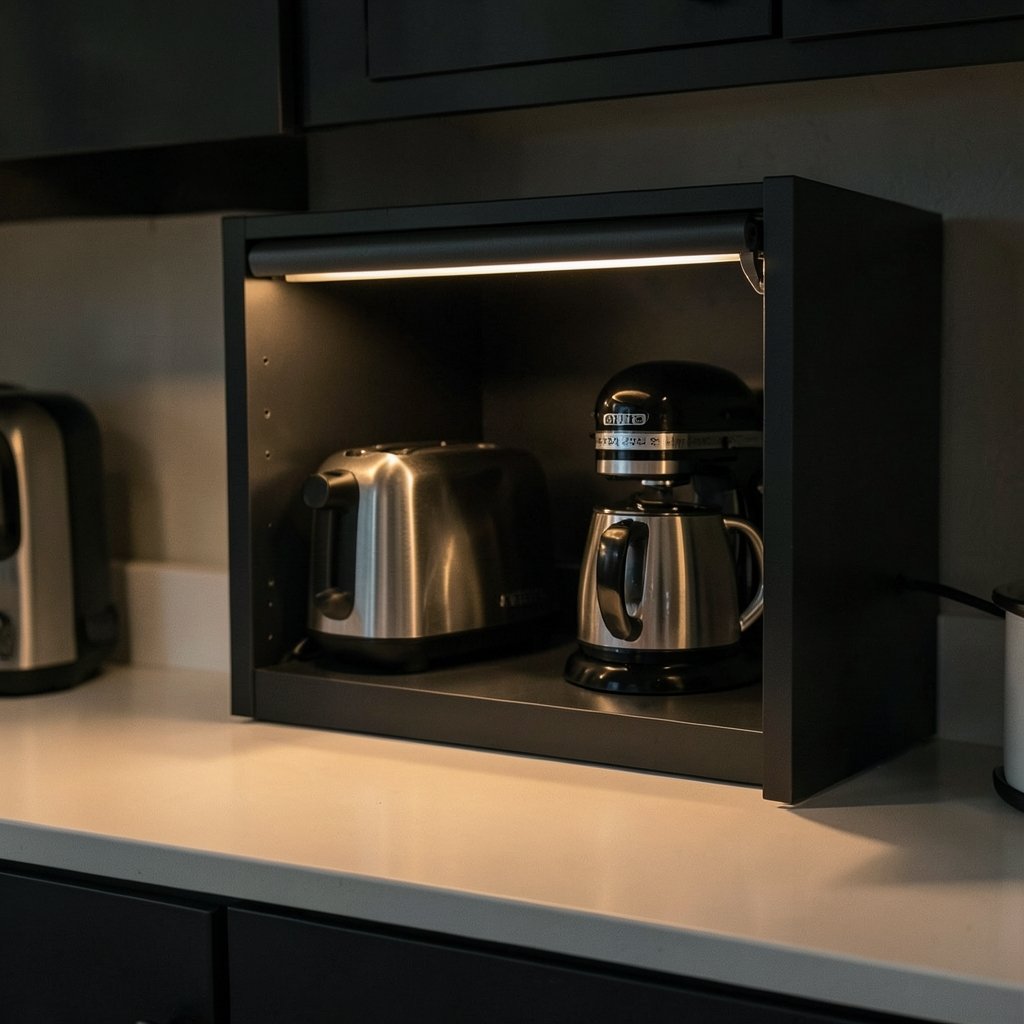
The appliance garage is the friendliest version of this idea. It is not a powered appliance itself. It is a storage feature, usually a shallow cabinet with a door that rolls down like a tiny garage door or lifts up and out of the way. You keep the toaster and the stand mixer on the counter, then close the door and the clutter disappears.
The feature spread through American kitchen design in roughly the 1980s and 1990s, when open-plan kitchens made counter clutter a visible problem. The exact first use is uncertain, but the logic is easy to follow: people wanted the convenience of countertop appliances without looking at them all day.
In practice, the appliance garage works best when three rules are followed:
- Leave ventilation space. A closed box around a hot appliance traps heat. Toasters and air fryers need room to breathe, and some manufacturers warn against operating them inside a closed cabinet at all.
- Plan the outlet inside the compartment. Retrofitting power into a finished cabinet is expensive. If the garage has no outlet, the appliance has to be pulled out every time, which defeats the purpose.
- Keep the door mechanism simple. Roll-down tambour doors collect grease and crumbs. Lift-up doors with good hinges age better.
The most common mistake is treating the garage as pure storage. It is a workspace. If the door, the outlet, and the clearance are not planned together, the compartment becomes a place where appliances go to be forgotten.
Combination Machines: Two Appliances, One Box
The most mature form of appliance-in-appliance design is the combination unit. These are not novelties. They are engineered products with their own trade-offs.
| Combination type | What sits inside what | Main advantage | Main trade-off |
|---|---|---|---|
| Combo washer dryer | Dryer function inside the washer drum | One footprint, one hookup | Smaller loads, longer cycles |
| Microwave over range | Microwave inside a range hood housing | Saves counter space, vents cooking | Limited venting power, awkward height |
| Fridge with ice and water module | Dispenser and filter inside the fridge door | Convenience, filtered water | More parts to fail, filter upkeep |
| Built-in coffee machine | Brewer inside cabinetry | Clean lines, plumbed water option | Hard to repair, high cost |
| Wine cooler in an appliance run | Cooling unit inside a cabinet column | Matches surrounding design | Heat management in tight spaces |
The washer-dryer combo deserves special attention because it is the purest example of the category. One machine washes and then dries the same load without anyone moving clothes. The catch is capacity: a combo typically dries a smaller load than it washes, so a full wash load often has to be split before drying. Ventless heat-pump drying, now common in these units, is efficient but slow.
Microwave-range-hood combinations follow a similar pattern. They save space by stacking functions, but the venting is usually weaker than a dedicated hood, and the microwave sits at a height that is uncomfortable for shorter users. These are real compromises, not deal-breakers, but buyers should know them before the cabinets are cut.
Built-In Appliances and the Blurred Line With Furniture
Built-in coffee machines and wine coolers sit inside cabinetry and sometimes inside a longer run of appliances, which blurs the line between appliance and furniture. This is a design trend rather than a formal category. No single standard defines it, and manufacturers use terms like “integrated,” “built-in,” and “flush-fit” loosely.
The practical consequence is that installation quality matters as much as product quality. A built-in coffee machine needs a water line, a drain option, and clearance for heat. A wine cooler needs airflow at the front or rear depending on its design. When these units are packed into a tight column, heat builds up and compressors work harder.
A useful rule of thumb: any appliance designed to disappear into cabinetry needs a service plan. Repairs often mean pulling the unit out of the cabinet, and that is far easier when the installer left slack in the lines and access panels behind the toe kick.
Smart Appliances and the Modules Inside Them
Modern networked appliances can contain sub-appliances or modules. A refrigerator may include a camera and a screen. An oven may include a camera that lets you check on a roast from another room. A dishwasher may include sensors that adjust the cycle.
The “appliance inside an appliance” framing is common in trade press, but it is not a standardized term. What matters for buyers is that every added module is another component that can fail independently. A dead screen does not stop a fridge from cooling, but it can trigger service calls and add cost.
There is also a data question. Cameras and connected modules collect information about usage. Buyers who care about privacy should check what the device sends and whether core functions still work without an account or an internet connection. A smart module should be a bonus, not a dependency.
Safety, Heat, and Electrical Load
Putting one appliance inside another raises real engineering questions about heat, ventilation, and electrical load. When a heat-producing device is enclosed, the enclosure has to manage that heat. When two high-draw appliances share a circuit, the circuit has to handle the combined load.
In the United States, UL 858 covers household electric ranges and UL 923 covers microwave ovens. In Europe, the EN 60335 series sets out safety requirements for household appliances. The exact clauses that address combined appliances are best confirmed with the standards bodies and with the manufacturer’s installation instructions, which should always take priority over general advice.
For readers planning a kitchen or laundry room, a few practical checks prevent most problems:
- Read the clearance requirements in the manual. “Zero clearance” is a claim, not a universal truth, and it usually applies only to specific surfaces.
- Confirm the circuit. A combo washer dryer, a built-in coffee machine, and a microwave can each draw significant current. Adding them to one circuit invites tripped breakers.
- Plan ventilation for enclosed units. Appliance garages, tall cabinets, and stacked columns all restrict airflow.
- Check the warranty terms for built-in installation. Some warranties are voided by improper enclosure.
Regulators also treat combined appliances as their own case. The EU’s Ecodesign and energy labelling rules handle washer-dryers under specific regulations, which complicates any simple “appliance in appliance” claim about efficiency. A combo’s energy label reflects the combined product, not two separate machines added together.
A Short History of Stacking Functions
The idea is older than it looks. Early iceboxes had separate compartments for ice and food, a simple form of function-within-function. Early electric ranges included built-in warming ovens. Dates for these developments are approximate and best confirmed against museum and archive sources.
What changed in recent decades is scale and electronics. Mechanical stacking gave way to digital integration. A modern oven contains a warming drawer as well as a control module, a fan, sensors, and sometimes a camera. The nesting has become more granular, and that has made repair and replacement more complicated.
What Works in Practice, and What Does Not
After years of watching these products enter homes, some patterns hold up well and others do not.
What works:
- Appliance garages with a dedicated outlet and a simple lift-up door.
- Combo washer dryers in apartments where a separate dryer is impossible.
- Built-in coffee machines in households that will pay for annual descaling and service.
- Microwave-range-hood combos in small kitchens where counter space is the binding constraint.
What tends to disappoint:
- Enclosed cabinets around heat-producing appliances with no ventilation plan.
- Combination units bought at the largest capacity without checking the dry load rating.
- Smart modules that require an account for basic functions.
- Built-in appliances installed without access panels for service.
The common thread is planning. Appliances inside appliances reward people who think about airflow, power, and repair access before the cabinets go in. They punish people who treat integration as a purely visual choice.
Conclusion
Appliances inside appliances are not a gimmick. They are a practical response to small homes, open kitchens, and the desire for fewer visible machines. The pattern shows up in appliance garages that hide countertop clutter, in combo washer dryers that fit where two machines cannot, and in built-in units that disappear into cabinetry. Each version trades something away, whether it is drying capacity, venting power, or ease of repair.
The buyers who end up happiest are the ones who ask three questions before purchasing: what is inside what, how does it stay cool, and how does a technician reach it. Answer those honestly and the nesting works. Skip them and the convenience turns into a service call. For more on how these products fit together in a real home, explore occcy.
FAQ
What is an appliance garage?
An appliance garage is a small compartment built into a kitchen counter or upper cabinet that hides small appliances such as a toaster or mixer behind a roll-down or lift-up door. It is a storage feature, not a powered appliance itself. It became popular in American kitchen design in roughly the 1980s and 1990s, and it works best when it has a dedicated outlet and enough ventilation.
Is a washer-dryer combo really two appliances in one?
Yes, in the practical sense. A combo washer dryer washes and dries in the same drum and housing, so two functions share one machine and one hookup. The trade-off is capacity: these units typically dry a smaller load than they wash, so a full wash load often needs splitting. Ventless heat-pump drying is efficient but slower than a separate dryer.
Are appliances inside appliances safe?
They can be, as long as heat, ventilation, and electrical load are handled properly. Enclosing a heat-producing appliance without airflow is the most common mistake. Check the manufacturer’s clearance requirements, confirm the circuit can handle the combined draw, and never assume a “zero clearance” claim applies to every surface. Installation instructions should always take priority over general guidance.
Why do built-in coffee machines and wine coolers cost so much to repair?
Because the appliance has to come out of the cabinetry before a technician can work on it. Built-in units often need water lines, drain options, and heat clearance, and tight columns make access difficult. Installers who leave slack in the lines and access panels behind the toe kick make future repairs far cheaper. A service plan is worth considering for any appliance designed to disappear into a cabinet.
Do smart appliances with built-in modules last as long?
The core function usually outlasts the smart module. A failed screen or camera on a refrigerator does not stop it from cooling, but it can trigger service calls and add cost. Before buying, check whether basic functions work without an account or internet connection, and ask what data the connected module collects. A smart feature should be a bonus, not a requirement.
What should I check before installing an appliance inside a cabinet?
Check four things: clearance for heat, access to power, airflow through the enclosure, and whether the warranty covers built-in installation. Also confirm the circuit load if other appliances share it. Reading the manual’s clearance section before the cabinets are cut prevents most problems, and it is far cheaper than rebuilding a kitchen after the fact.



