
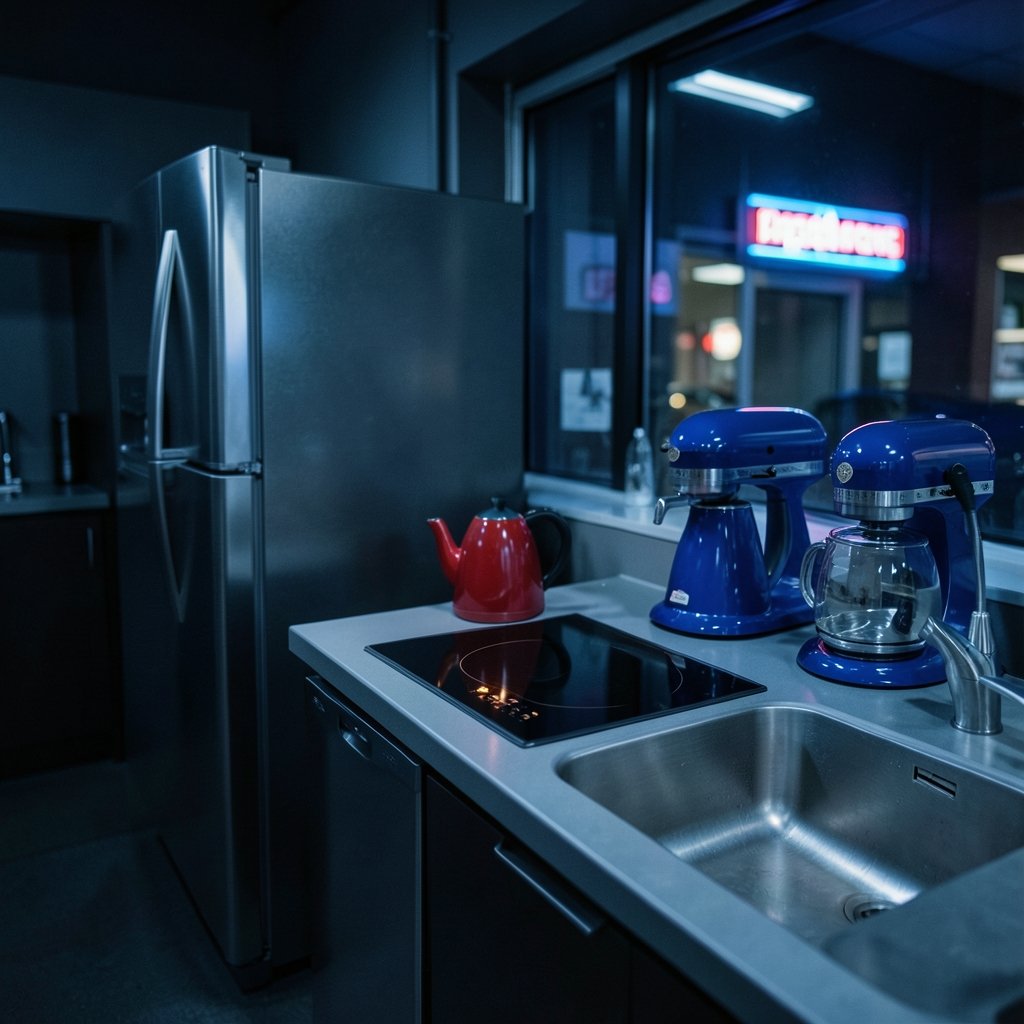
What if the fastest way to end a week of fridge research is not another review page, but a twenty-minute drive to a place where the doors actually open and close?
That is the quiet appeal of appliance showrooms. People search for them when a decision has stalled, when a delivery date is looming, or when the photos online have stopped answering the only question that matters: does this thing feel right in a real kitchen? The search phrase itself is tiny, but the intent behind it is specific. Someone wants a physical address, a working display model, and a person who can answer questions without a chat window.
This guide covers how local results are actually ranked, how to filter showrooms before visiting, what to check on the floor, and the mistakes that send people home with the wrong machine.
What the search phrase really means
When a query includes “near me,” search engines treat it as a request for results close to the user’s current location. An explicit place name overrides that assumption, so typing a suburb or a district shifts the map even if the phone is sitting somewhere else.
The ranking itself is not a simple distance filter. Local results are ordered by relevance, distance, and prominence. A showroom two miles away can appear below one five miles away if the closer store’s listing is thin, its category tags are wrong, or its profile has not been touched in years. That is worth knowing before concluding that the closest option is the only option.
Map data behind these tools comes from several sources, including openly licensed datasets that require attribution, which is one reason pin locations occasionally drift a block or two. Treat the pin as a hint, not a guarantee, and confirm the street address before setting off.
How to run the search without wasting a Saturday

Most people type the phrase, tap the first three results, and drive. A slower five-minute version works better.
- Search with a neighborhood, rather than only the phrase. “Appliance showroom” plus a district name usually returns fewer, more accurate results than the bare query.
- Switch between map view and list view. The map reveals clusters and gaps. The list reveals hours, categories, and whether a place is a showroom or a repair depot with a desk.
- Check the category label on each listing. A business listed as a general hardware store may carry only a handful of floor models.
- Read the newest reviews, not the highest-rated ones. Recent reviews mention staffing, stock, and whether displays are powered on. A five-year-old five-star review tells you almost nothing.
- Suggest corrections when a listing is wrong. Business profiles are partly community-maintained, and closing hours or a moved entrance can be fixed through the platform’s edit process.
If the hunt is part of a wider errand run, it helps to think about the whole trip the way you would plan a food stop. The same logic behind finding takeout food near me find good food fast applies here: cluster your stops, check hours twice, and never assume a place is open because a map says so. (Best thai food near me)
Showroom, big-box store, or warehouse club?
Not every place with appliances on the floor does the same job. The format changes what you can learn in person.
| Format | What you can do there | Typical trade-off |
|---|---|---|
| Dedicated showroom | See full suites, compare finishes side by side, talk to a specialist | Narrower stock, often order-based with lead times |
| Big-box store | Touch models, take one home the same day | Displays may be unplugged or missing parts |
| Warehouse club | Buy a proven model cheaply | Almost no demonstration, limited advice |
| Builder or kitchen studio | Coordinate a whole kitchen, see cabinetry integration | Appointment usually required |
A dedicated showroom is built around the idea of inspection. Retail researchers have studied “showrooming” since the early 2010s, the habit of examining a product in a store and then buying it elsewhere, often online. Showrooms know this happens. Many respond by offering installation bundles, haul-away service, or price matching rather than trying to win on sticker price alone.
That means the honest question is not “where is the cheapest unit” but “where can I learn enough to buy once.” A showroom that lets you open every drawer and hear the ice maker run is doing a different job than a warehouse shelf.
What to check on the showroom floor
A display model can tell you a great deal if you test it properly. Most visitors do not.
- Open and close everything. Doors, drawers, and freezer compartments. A handle that feels loose on the floor will feel worse loaded with food.
- Listen. Ask staff to power on a dishwasher or range hood. Noise ratings on paper are hard to translate into a real kitchen.
- Check the clearance. Measure the gap you actually have, including trim and door swing, before you fall for a wider model.
- Read the energy label. In the United States, most major appliances carry a yellow EnergyGuide label showing estimated annual energy use or cost. In the EU and UK, several product groups moved to a rescaled A to G rating from March 2021, retiring the old A+ grades. Compare labels on the floor rather than relying on memory.
- Ask what is not included. Power cord, water line, mounting kit, and old-unit removal are frequent surprises.
- Confirm the delivery window in writing. Lead times on ordered finishes can stretch for weeks.
Practical tip that saves real money: bring a photo of your kitchen wall and a tape measure. Showroom lighting flatters every finish, and a stainless panel that looks warm under track lights can read cold in a north-facing kitchen.
Common mistakes people make
The same errors show up again and again in showroom parking lots.
Trusting the map pin over the address. Listings get edited, and a relocated store can linger online for months. Call ahead if the trip is long.
Visiting without measurements. Doorways, stair turns, and cabinet openings decide more purchases than color preference does.
Comparing models that are not comparable. A display unit on clearance may be a discontinued line with no matching pieces left, which matters if you plan to add a matching microwave later.
Ignoring the service side. Ask who handles warranty repairs locally and how long a typical visit takes. A beautiful showroom with no service network is a showroom for someone else’s problem.
Skipping the paperwork check. Confirm the model number on the quote matches the one on the floor. Similar-looking units often differ by a single digit and a few hundred dollars.
Forgetting the second stop. Many buyers visit one showroom, then buy blind online. Visiting two showrooms in one afternoon gives you a genuine comparison, and it costs an hour.
Timing, stock, and the quiet season
Appliance buying has a rhythm. New model lines tend to arrive in waves, and older inventory gets marked down when floor space is needed for the incoming set. Holiday weekends bring genuine promotions, though the discount is often on delivery or installation rather than the unit itself.
Stock is the bigger variable. Popular sizes and finishes sell out first, and a showroom may have the display but not the box. Ask directly: is this in the local warehouse, the regional one, or backordered from the factory? The answer changes your timeline more than any sale price will.
If you are coordinating a broader household to-do list around the same trip, the same cluster-and-confirm approach that works for best salads near me applies to errands: group them, confirm hours, and leave slack for one stop running long.
When a showroom visit is not worth it
Honesty helps here. A showroom trip is a poor use of an afternoon in a few situations.
If you already know the exact model, have seen it in person elsewhere, and only need the lowest price, a warehouse club or online order will usually win. If you are replacing a unit in a rental and the spec is fixed, there is little to learn from a display.
The visit earns its keep when you are choosing between two or three real candidates, when finishes must match existing cabinetry, when the installation is complicated, or when you need to see how a suite looks together rather than as isolated product shots.
What to bring and what to ask
A short checklist turns a browse into a decision.
- Measurements of the opening, including depth and height clearance.
- Photos of the surrounding cabinets and the power or water connections.
- A list of two or three candidate models with model numbers.
- Questions about delivery, installation, haul-away, and the return window.
- A notebook or phone note for the model numbers you actually liked.
The single best question to ask a specialist is also the simplest: what do people bring back? Return data, even described loosely, reveals the models that photograph well and live badly.
Reading reviews like a local
Reviews are the closest thing to a preview. Sort by newest and look for patterns rather than outliers. Three mentions of a slow delivery process in the last two months is a signal. One furious review about a scratched floor is noise.
Watch for reviews that describe the visit rather than only the purchase. Comments about staff knowledge, whether displays were working, and how crowded the floor felt on a weekend tell you what the trip will actually be like. A showroom with a quiet weekday morning and a fully powered display wall is worth more than one with a bigger ad budget.
Conclusion
Finding an appliance showroom nearby is the easy part. Search engines handle the geography, and a map will point you at a door. The harder, more useful work is what happens after you walk through it: measuring the gap, opening the drawers, reading the energy label, and asking who will fix the machine in year four.
Treat the showroom as a place to gather evidence, not a place to be sold to. Bring measurements, compare two locations if you can, and write down model numbers before you leave the parking lot. Do that, and the phrase that started the search turns into a decision you will not have to revisit every time the ice maker cycles on.
Ask about the floor model itself. Display units are sometimes sold at a discount once a line is discontinued, but they have been powered on, wiped down, and leaned on for months. Ask whether the warranty still applies in full and whether the unit ships with all accessories. A cheap floor model with a shortened warranty is rarely the bargain it appears to be.
Confirm the return window before delivery, not after. Return policies for major appliances are shorter than for small goods and often require original packaging. Ask who pays for return shipping if the unit does not fit through the doorway, and get the answer in writing on the quote.
Note the model year. Manufacturers quietly revise models without changing the name, so a unit built two years ago may differ from the current listing. The serial plate inside the door or on the back panel settles it.
One last habit worth keeping: photograph the showroom’s spec sheet and the model plate together. When you get home, the photo answers most of the questions that come up while measuring, and it saves a second trip. The showroom visit is a short investment that pays off over the decade you will spend with the appliance.



