
What if the most expensive appliance in your home isn’t the one with the highest price tag, but the one quietly draining power and patience year after year? That’s the question worth asking before any purchase. Electric appliances fill our kitchens, laundry rooms, and hallways, yet most buying decisions come down to a sale sticker and a brand name people recognize. The smarter path is understanding how these machines are rated, regulated, and built, so the money spent lands on something that works hard and lasts.
What Counts as an Electric Appliance?
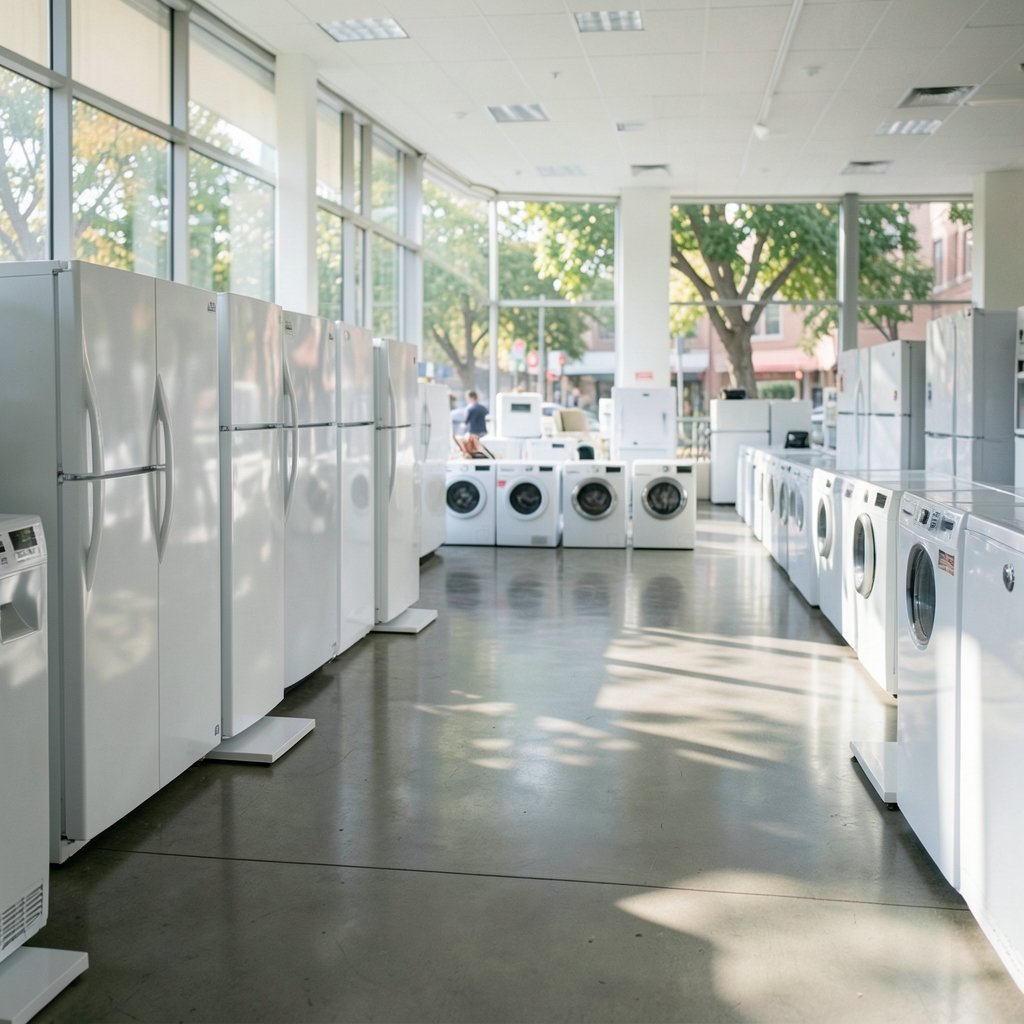
The category is broader than most people think. It covers anything that plugs in and performs a household task: refrigerators, washing machines, dryers, dishwashers, ovens, microwaves, vacuum cleaners, kettles, irons, and room air conditioners. Small personal devices like hair dryers and electric toothbrushes belong to the same family of products and often fall under the same safety rules.
The dividing line that matters most in practice is between major appliances (large, fixed, energy-hungry units) and small appliances (portable, lower-draw devices). Major appliances are where the lifetime electricity cost dwarfs the purchase price. A refrigerator runs 24 hours a day, every day, for a decade or more. That continuous duty cycle is exactly why it deserves more scrutiny than a toaster ever will.
The Labels That Tell You the Real Story
Two labeling systems dominate the global market, and understanding each one prevents a lot of expensive confusion.
In the United States, Energy Star is a voluntary labeling program run jointly by the Environmental Protection Agency and the Department of Energy. It launched in 1992 and now covers refrigerators, dishwashers, clothes washers, room air conditioners, and many other product classes. A product carrying the label meets efficiency criteria set above the federal minimum. That distinction matters: the mandatory floor and the voluntary badge are not the same thing. Federal minimum efficiency standards themselves are set by the Department of Energy under the Energy Policy and Conservation Act of 1975, later amended by the National Appliance Energy Conservation Act of 1987. Every appliance sold legally in the U.S. clears that floor; only some clear the higher bar.
In the European Union, the energy label was rescaled in 2021. The familiar A+++, A++, and A+ classes were removed, and products were re-rated on a plain A to G scale, with the top classes deliberately left empty at first. This is the detail that trips people up. A shopper seeing a “B” rating might assume the product is mediocre, when in fact B was among the best ratings available at relaunch. The empty top slots were a design choice, leaving room for future innovation to be rewarded. Reading the label without that context leads to backwards conclusions.
Underneath the labels sits the EU Ecodesign framework, established by Directive 2009/125/EC, which sets minimum requirements for energy-related products including household appliances. It’s the legal machinery that pushes inefficient designs off the shelf entirely.
| Region | System | Type | What it means for buyers |
|---|---|---|---|
| United States | Energy Star | Voluntary | Above-minimum efficiency; a useful shortlist filter |
| United States | DOE standards | Mandatory | The legal floor every unit must clear |
| European Union | Energy label (A–G) | Mandatory disclosure | Comparative rating; top classes may be sparse by design |
| European Union | Ecodesign | Mandatory | Inefficient models cannot be sold at all |
Safety Is Not a Marketing Claim
Every appliance sold in a regulated market has passed safety testing, whether or not the packaging brags about it. The foundational international standard for household electrical safety is IEC 60335-1, first issued in 1970 and revised periodically since. It covers the general requirements that keep a device from shocking, overheating, or catching fire under normal and reasonably foreseeable use.
In the United States, the Consumer Product Safety Commission, established in 1972, administers consumer-product safety rules and maintains a public database of reported incidents. That database is a genuinely underused tool. Before buying an unfamiliar brand, a few minutes spent checking incident reports tells you more than any star rating on a retail site.
The practical takeaway is simple: a certification mark is a baseline, not a bonus feature. What actually matters at home is installation and use. Overloaded extension cords, appliances crammed against walls with no airflow, and lint traps that never get cleaned cause far more real-world problems than manufacturing defects do.
Where the Electricity Really Goes
Standby power, often called vampire draw, is the electricity a device consumes while switched off or idle. The International Energy Agency estimated standby power at roughly 5 to 10 percent of residential electricity use in developed countries, a figure published around 2001. That number is an estimate from an older study and varies widely by country and year, so it should not be treated as a fixed rule. Still, the direction is clear: devices that stay plugged in and warm to the touch are costing something.
Among major appliances, refrigerators are the standout energy consumers because they never switch off. Comparative consumption data published through efficiency programs makes this easy to verify when shopping. A modestly more efficient fridge can save more over its lifetime than a deep discount on an inefficient one.
Practical habits that reliably reduce consumption:
- Match appliance size to household size. A huge fridge in a two-person home wastes space and power.
- Run dishwashers and washing machines with full loads, and use eco cycles where available.
- Clean refrigerator coils and dryer lint filters on a schedule, not when something smells.
- Group small appliances on switched power strips so standby draw ends at the flick of a switch.
- Check door seals annually by trapping a sheet of paper; if it slides out easily, the seal is failing.
Common Mistakes Buyers Make
The most frequent error is comparing purchase prices while ignoring running costs. A cheap appliance with a poor efficiency rating can cost more within three years than a better-rated model that costs more upfront. The second error is buying oversized. Bigger capacity feels like better value until it’s half empty and working just as hard.
A third mistake is misreading labels, particularly the EU A–G scale, where an empty top class is a design feature rather than a warning. A fourth is skipping the safety database check on unfamiliar brands. And a fifth, surprisingly common, is assuming a higher price guarantees better energy performance. It doesn’t. Price reflects features, materials, and brand positioning; efficiency is a separate measurement entirely.
For anyone mapping out a broader purchase decision across multiple device types, the same logic applies whether the product is large or small, which is why guidance on how to choose best electric pressure washers real household work follows a similar path: define the real task, check the ratings, then compare running costs.
Repair, Warranty, and the Long Game
Right-to-repair rules affecting appliances have expanded in the United States, though coverage remains fragmented by state. Massachusetts’ 2012 automotive right-to-repair law is often cited as precedent, and several states have since considered broader electronics and appliance repair rules. There is no single federal appliance repair law, so buyers should not assume one exists. What does exist is a growing expectation that spare parts and service documentation remain available.
This matters because the biggest hidden cost in appliance ownership is often replacement, not electricity. A machine that can be repaired cheaply and kept for fifteen years beats a slightly more efficient model that fails at year six. Before buying, check whether parts are sold to independent repairers and whether the warranty covers labor or parts only.
At end of life, disposal rules differ by region. In the EU, the WEEE Directive (2012/19/EU) governs waste electrical and electronic equipment, including both large and small household appliances, and sets collection and recycling targets. That’s why retailers in many European countries must take back old units. In the U.S., disposal is handled at state and municipal level, so checking local rules before hauling an old fridge to the curb is worthwhile.
Matching the Machine to the Job
Not every appliance decision is about energy. Some are about whether the device does the job at all. A musician shopping for a practice instrument, for example, faces a completely different set of trade-offs than a homeowner replacing a washer, and the evaluation criteria shift toward feel, amplification, and portability. A useful parallel is how to electric violin it works who its buy breaks down suitability by user type rather than by spec sheet alone. The same principle holds for kitchen appliances: buy for the task you actually perform weekly, not the one you imagine performing someday.
A quick suitability check before any appliance purchase:
| Question | Why it matters |
|---|---|
| How often will this run per week? | Determines whether efficiency premiums pay back |
| Does the size fit my space and household? | Oversizing wastes both money and energy |
| Are replacement parts available locally? | Predicts repairability and lifespan |
| What does the safety incident database show? | Flags problem models before you buy |
| What is the estimated annual energy use? | Turns the sticker price into a real cost |
Conclusion
Electric appliances reward a little homework more than almost any other household purchase. The labels are there, the safety databases are public, and the running costs are predictable once you know where to look. The winning approach is unglamorous: match the machine to the real job, read the rating scale correctly, check incident reports on unfamiliar brands, and weigh repairability alongside efficiency. Do that, and the appliance that earns its place is the one you stop thinking about because it simply works, year after year, without quietly draining the budget.
Frequently Asked Questions
What does the Energy Star label actually mean?
It is a voluntary U.S. certification run jointly by the Environmental Protection Agency and the Department of Energy, launched in 1992. Products carrying it meet efficiency criteria set above the mandatory federal minimum. It is a useful shortlist filter, not a guarantee of quality or durability.
Why did EU energy ratings change to A–G in 2021?
The old A+++ scale had run out of room at the top, so products were re-rated on a simpler A to G scale from March 2021, with the highest classes deliberately left empty. An empty top class signals room for future innovation, not a shortage of efficient products. A B rating under the new scale is genuinely strong.
Are electric appliances safe to use without extra checks?
Every legally sold appliance meets baseline safety requirements, including the international standard IEC 60335-1, first issued in 1970. Real-world risk usually comes from use, not manufacture: overloaded circuits, blocked ventilation, and uncleaned lint filters. Checking the CPSC incident database is worthwhile for unfamiliar brands.
How much power do appliances waste when switched off?
Standby or vampire draw is real, and the International Energy Agency once estimated it at roughly 5 to 10 percent of residential electricity use in developed countries. That figure dates from around 2001 and varies by country and year, so treat it as a rough indicator rather than a fixed rule.
Which appliance uses the most electricity in a typical home?
Refrigerators are consistently among the heaviest users because they run continuously, day and night, for their entire service life. That continuous duty is why fridge efficiency deserves more attention than almost any other single purchase decision in the home.
Do I have a legal right to repair my appliances?
Not under any single federal U.S. law. Right-to-repair coverage is fragmented by state, with Massachusetts’ 2012 automotive law often cited as precedent and several states considering broader rules. Before buying, check whether parts are sold to independent repairers and what the warranty actually covers.