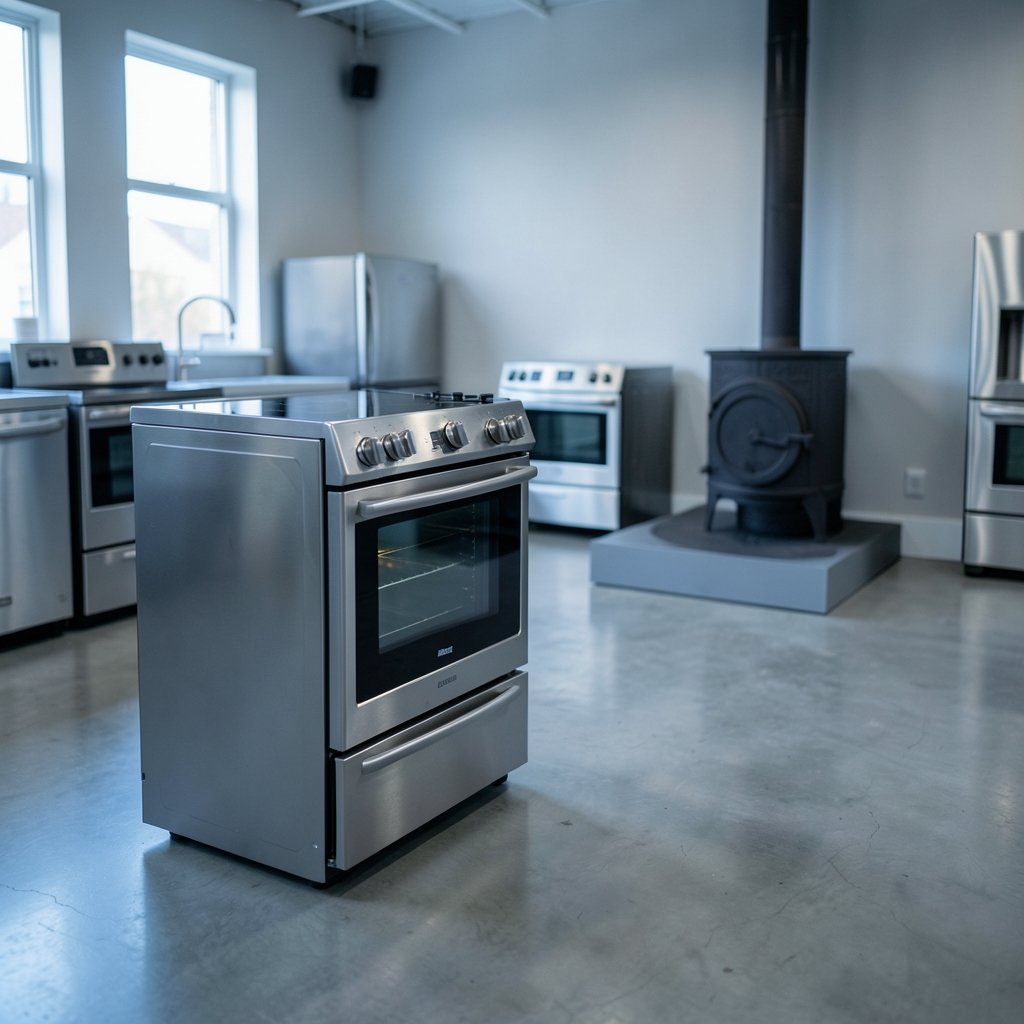
Quick Answer: Where to buy stoves near me?
You can buy a stove near you at big-box home improvement stores, local independent appliance dealers, specialty hearth shops, and manufacturer showrooms, and most of these now let you check local stock online before you drive over. The fastest route is a store locator on a retailer’s site plus a phone call to confirm the exact model is on the floor, since online “in stock” labels and real shelf inventory do not always match.
The word “stove” splits into three very different purchases: a freestanding range that combines a cooktop and oven, a built-in cooktop or wall oven, and a wood or pellet heating stove. Each one lives in a different kind of store, so deciding which one you mean is the real first step.
Before you commit, compare fuel type, available width, whether installation and haul-away are included, delivery timing, certification labels for gas and wood units, and any local permit rules that apply to your address.
Why the Search “Near Me” Goes Wrong So Often

Local search results are personalized by device location and IP address, so two people in the same city can see completely different store lists. That is not a bug in your phone; it is how local rankings work. The practical fix is to type a specific ZIP code into a retailer’s own store locator instead of trusting the map pack at the top of the results.
The second problem is vocabulary. In the United States, “stove” usually means a freestanding range with burners on top and an oven below. In the United Kingdom and Australia, the same word can mean a cooker, and in rural areas it often means a wood-burning space heater. If you search “stove” and get fireplace shops when you wanted a kitchen appliance, add a qualifier: gas range, electric range, induction cooktop, or wood stove. That one extra word reshuffles the entire result page.
A third issue is that showroom inventory is thin. Most dealers display a handful of models and order the rest from a warehouse. The range you saw online may not exist within 200 miles, and that is normal. Calling ahead saves a wasted afternoon.
The Main Places to Buy a Stove Near You
Big-box home improvement stores
Large chains carry the widest in-stock selection of mainstream ranges, usually in the $500 to $1,500 band. They publish store locators, delivery windows, and installation policies online. The tradeoff is that floor staff may not know much about the difference between convection and true convection, and installation is often subcontracted. Ask specifically whether the crew handles gas line hookup or only slides the unit into place.
Independent appliance dealers
Local dealers tend to carry better brands, employ their own installers, and handle haul-away of the old unit. They also price-match more often than people assume. This is where you go if you want a salesperson who has actually used the products. If you are comparing online tools while you shop, some of the same logic applies as when weighing Canva alternatives and where other tools actually win — the biggest name is rarely the best fit for every buyer.
Specialty hearth and wood stove shops
Wood and pellet stoves are a different category entirely. These units are regulated for emissions, and a certified hearth specialist can confirm the unit carries the required EPA certification label and advise on chimney clearance. Big-box stores sell some wood stoves, but the expertise and the service network usually live at specialty shops.
Manufacturer showrooms and builder channels
High-end brands run their own showrooms in major metros, where you can see finishes and test knobs and controls. Builder supply yards are another option if you are remodeling and your contractor is already sourcing appliances.
| Store type | Best for | Typical price band | Installation included? |
|---|---|---|---|
| Big-box retailer | Mainstream gas and electric ranges, fast delivery | $500–$1,500 | Often extra, sometimes subcontracted |
| Independent dealer | Better brands, service, haul-away | $700–$3,000 | Frequently bundled |
| Hearth specialist | Wood and pellet stoves, chimney work | $1,500–$5,000+ | Usually quoted separately |
| Manufacturer showroom | Premium and pro-style ranges | $3,000+ | Varies by dealer |
What to Check Before You Drive to a Store
Measure the opening first. Standard range widths are 30 inches, with 24-inch and 36-inch options for tight kitchens and pro-style setups. Write down width, depth, and height, then check that the door swing and adjacent counters will not block anything.
Confirm the fuel hookup. A gas range needs a gas line and often a dedicated electrical outlet for the igniter. An electric range needs a 240-volt circuit. Swapping fuel types is a bigger job than swapping brands.
Ask about the old unit. Haul-away is sometimes free, sometimes $50, and sometimes not offered at all. Get it in writing before delivery day.
Check certification. Gas ranges sold in the U.S. are certified to the ANSI Z21.1 standard, and the Consumer Product Safety Commission publishes guidance on carbon monoxide risks from fuel-burning appliances. Wood stoves should carry an EPA certification label showing they meet current particulate limits.
Verify local rules. Some cities and states have moved to restrict new gas connections in new construction, and rules vary widely and keep changing. Check with your local building department rather than assuming a national rule applies.
Delivery, Installation, and Permits
Replacing a range is usually a straight swap, but installing a wood stove or running a new gas line often requires a permit and an inspection under local building codes. Skipping the permit can complicate a future home sale, so it is worth the phone call.
Delivery timing is the other hidden variable. Mainstream models ship in days; specialty finishes and pro-style ranges can take six to twelve weeks. If your kitchen is torn apart, order early and confirm the delivery window in writing.
One practical tip from people who have done this: photograph the old hookup before the crew arrives. It settles arguments about whether a valve or outlet was already there.
Buying Used: Where the Deals and the Risks Live
Marketplace listings, estate sales, and scratch-and-dent outlets can save serious money. Scratch-and-dent is the safer bet because the unit still carries a warranty and the retailer handles delivery.
Private sales are riskier. A used stove may lack safety certification, may have been part of a recall, or may have a cracked igniter the seller never mentions. Check the model number against the CPSC recall database at saferproducts.gov before you hand over cash, and never test a gas unit without a proper connection. If you are paying a private seller in person, treat it like any other cash purchase and read up on a cash money order near me and where to buy one fast and cheap so you are not caught short at pickup.
How Online Buying Fits In
Buying a range online works well when you already know the model. The retailer delivers and installs through a local partner, and you get the same unit for less. The catch is that returns are painful for something that heavy, so measure twice.
Online is also where you compare specifications side by side. Before you buy, look at the cost of the accessories and delivery add-ons, the same way you would compare fees when you get money orders near you and check the best places and what they cost. The sticker price is rarely the final number.
Common Mistakes That Cost People Money
The most frequent error is buying on looks alone and discovering the oven door will not open fully because a counter is in the way. The second is assuming installation is included when it is a $150 line item. The third is skipping the permit on a gas or wood installation. The fourth is ordering a discontinued floor model without confirming the warranty transfers.
A quieter mistake: not asking about the delivery path. A 36-inch range will not fit through every doorway, and crews will not remove railings to make it work.
Conclusion
Finding a stove near you is less about the map and more about matching the store to the purchase. Big-box retailers win on speed and price for mainstream ranges, independent dealers win on service and haul-away, and hearth specialists are the right call for anything that burns wood. Measure your opening, confirm the fuel type, ask who installs it, and check the certification label before money changes hands. Do that, and the “near me” search turns into a single, confident trip.
FAQ
How do I find a stove store within a few miles of my ZIP code?
Use a retailer’s own store locator and enter your ZIP code directly rather than relying on the map results at the top of a search page. Then call the store and ask for the specific model number, because online stock labels and actual floor inventory often differ.
Is it cheaper to buy a stove at a big-box store or a local dealer?
Big-box stores usually win on entry-level pricing, while independent dealers often match or beat those prices on better brands and bundle delivery, installation, and haul-away. Compare the total installed cost, not the sticker price.
Do I need a permit to install a new stove?
Replacing a range in the same spot often needs no permit, but running a new gas line or installing a wood stove frequently does. Local building departments set the rules, and requirements vary by city and state.
What is the difference between a stove and a range?
In U.S. usage, a range is the freestanding unit with a cooktop and oven combined, and “stove” is commonly used as a synonym. A cooktop is just the burners, and a wood stove is a heating appliance with no cooking function at all.
Can I buy a wood stove at a regular appliance store?
Some big-box stores carry them, but specialty hearth shops are the better choice because they can confirm the EPA certification label and advise on chimney clearance and local code requirements.
How long does delivery take for a new stove?
Mainstream in-stock models usually arrive within days to two weeks. Special-order finishes and pro-style ranges can take six to twelve weeks, so order early if your kitchen is already under construction.
Two more checks belong on that pre-purchase list. First, confirm the electrical outlet type and its placement: many gas ranges need a standard 120-volt outlet for the igniter and clock, while electric models need a 240-volt circuit, and an outlet hidden directly behind the unit can prevent the range from sliding flush against the wall. Second, ask about the delivery window in hours, not days. Crews often give a four-hour block, and someone has to be home to sign and open the door for the installers.
It also helps to know what the store will not do. Most retailers will not move a refrigerator or disconnect a water line to clear a path, and many will not haul away a unit that still has a gas connection attached. Clear the route yourself, shut off the valve if local rules allow, and have the old range pulled out before the crew arrives. That single step prevents the most common delivery-day surcharge.
Finally, keep the paperwork. Save the receipt, the warranty card, and the model and serial numbers in one folder, and register the unit with the manufacturer if the retailer has not done it. If a recall is issued later, the registration is how you find out, and the serial number is how you prove which unit you own. With those details settled, the store you choose matters far less than the questions you ask before you walk in.