Quick Answer: Where to buy cheap appliances?
Cheap appliances come from a handful of reliable places: retailer clearance aisles, manufacturer-refurbished programs, graded and ex-display stock, independent local dealers, and well-timed sales events in late November and January. Each route trades something different, whether that is warranty length, cosmetic condition, or model age.
Refurbished and graded machines sit closest to new, while second-hand marketplaces and auction sites carry the lowest prices and the highest risk. End-of-line models are often identical inside to the newest version but cost far less once a new model year launches.
Before buying, compare the energy rating and estimated running cost, the warranty terms, the seller’s return window, delivery and installation fees, and whether statutory consumer rights apply to the purchase.
Why the Sticker Price Is Only Half the Story
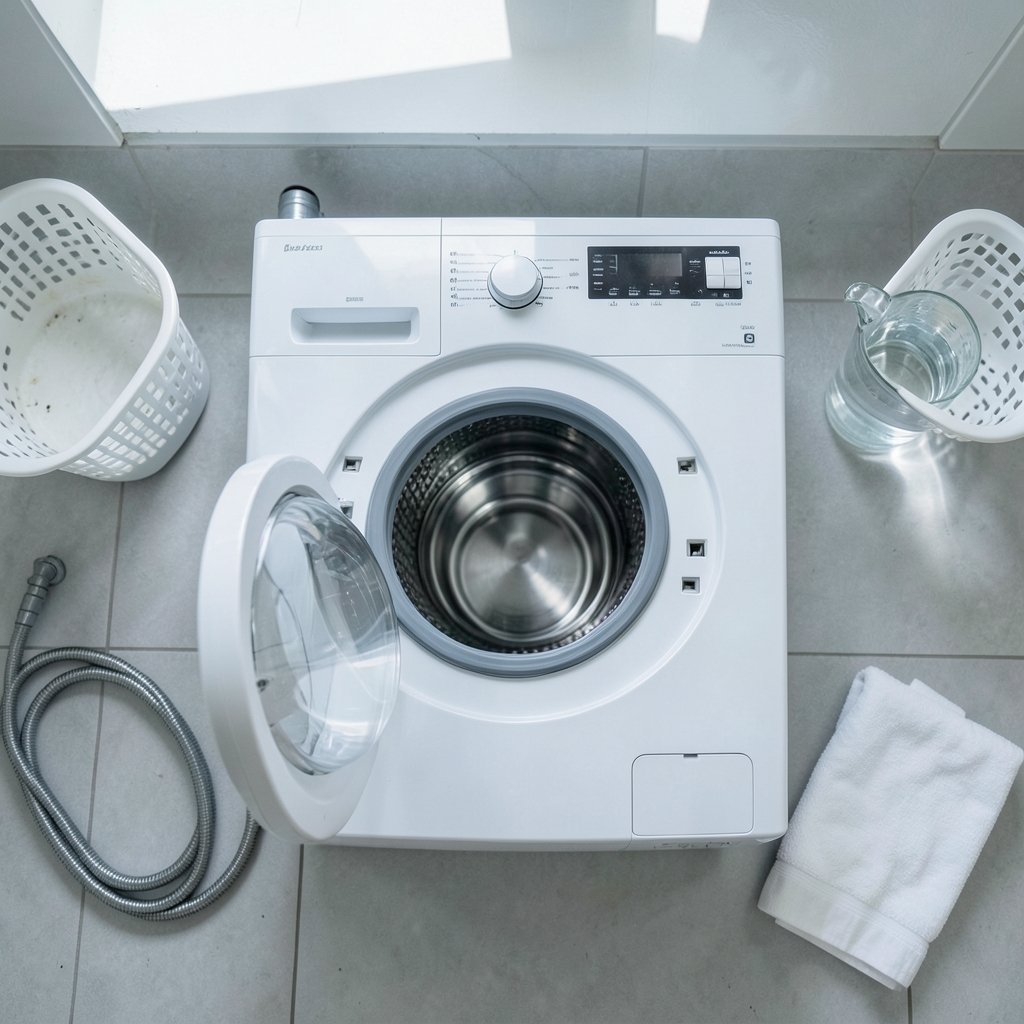
A washing machine at £299 feels like a bargain until you work out that it costs more to run than a £450 model. That gap is real, and it is the single biggest mistake buyers make when chasing cheap appliances. The purchase price is a one-time hit. Energy and water consumption keep charging you every week for a decade or more.
The energy label system changed across the UK and EU from 1 March 2021, when the old A+, A++ and A+++ tiers were scrapped and the scale returned to a plain A to G. That means an appliance labelled A today is genuinely efficient, not merely average wearing a plus sign. If you are comparing a cheap older unit against a newer one, check which labelling era each falls into before you assume the ratings line up.
The practical rule: for fridges, freezers, washing machines and dishwashers, add the estimated annual running cost over the expected lifespan to the purchase price. A cheap appliance that guzzles power is rarely cheap at all. Buyers in the US have a similar tool in the yellow EnergyGuide label, which the FTC requires on many appliances and which shows estimated annual energy use or cost so models can be compared like for like.
Retailer Clearance, Ex-Display and End-of-Line Stock
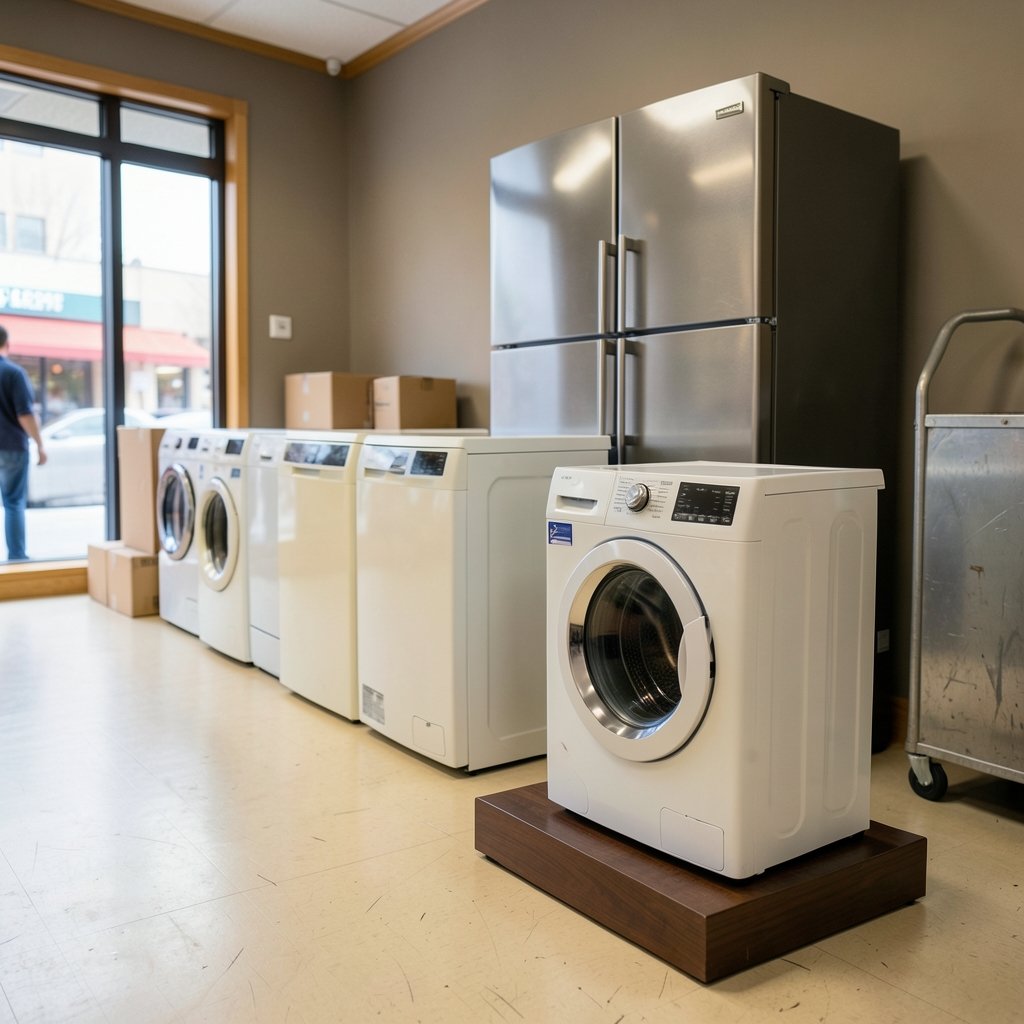
The most overlooked source of cheap appliances is the shop floor itself. Large electrical retailers routinely discount display models, customer returns and end-of-line stock to clear space. These units are usually fully functional, may carry a full manufacturer warranty, and can be marked down heavily simply because the box is missing or the model is being replaced.
End-of-line timing is the lever here. When a manufacturer launches a new model year, the outgoing version drops in price even though the internals are often near-identical. If you do not need the newest interface or app connectivity, buying the previous generation is one of the cleanest ways to save 20 to 40 percent without touching second-hand goods.
Two practical tips make this work. First, ask staff directly about ex-display and returned stock, because it is often stored out the back rather than displayed. Second, inspect the unit before paying, note any cosmetic damage on the receipt, and confirm in writing that the warranty still applies. A scratched side panel you will never see once the machine is installed is not a real problem.
Refurbished and Graded Appliances Explained
Manufacturer-refurbished appliances are returned units that have been inspected, repaired where needed, and resold, usually with a warranty. Retailer-graded stock works on a similar principle but the grading language is not standardised across sellers. One retailer’s “A-grade” may mean “like new with original packaging” while another uses it for “fully working with visible marks”. Always treat the seller’s own written definition as the source of truth, not the letter.
| Source | Typical saving | Warranty | Risk level |
|---|---|---|---|
| Manufacturer refurbished | 20-40% | Usually 6-12 months | Low |
| Retailer graded or ex-display | 15-35% | Often full or partial | Low to medium |
| End-of-line new stock | 20-40% | Full manufacturer | Low |
| Independent local dealers | 10-25% | Varies, often good | Low |
| Second-hand marketplaces | 40-70% | None or seller-only | Medium to high |
| Auction and house clearance | 50-80% | None | High |
The middle rows of that table are where most sensible buyers land. Refurbished and graded stock gives you a genuine discount without the unknowns of a private sale, and you keep statutory protection because you are buying from a business.
Independent Dealers and Local Shops
Independent electrical shops are an underrated option, especially for anyone who wants advice alongside a discount. They often stock graded units, take trade-ins, and will negotiate on older floor stock in a way that big chains rarely do. Local dealers also tend to handle delivery and installation themselves, which can save real money compared with add-on fees at larger retailers.
There is a trade-off in range and online convenience, but for a single large purchase the personal service often justifies the trip. It also gives you a physical address to return to if something goes wrong, which matters more than people expect when a fridge fails in week three.
Buying Second-Hand Without Getting Burned
Second-hand marketplaces and auction sites offer the lowest prices of all, and that is exactly where the risk concentrates. A private seller is not a business, so statutory consumer protections generally do not apply in the same way. You are relying on the seller’s honesty and your own inspection.
What actually works in practice: ask for the model number and search for its age and known faults before agreeing to anything. Ask the seller to plug it in and demonstrate it running, and if they refuse, walk away. Check door seals, listen for unusual noise, and look for rust or water marks around the base. For anything bulky, factor in van hire or delivery, because a “cheap” machine that costs £60 to move is not cheap.
If you are weighing up smaller budget purchases alongside a big appliance, the same logic of hidden costs applies to everyday items, and it is worth understanding how the price you see compares with what you actually pay once fees and extras land, as explored in this look at cash money order near me where buy one fast cheap.
Timing Your Purchase Around Sales Cycles
Retail discounting clusters around predictable moments. Late November, spanning Black Friday and Cyber Monday, is the heaviest discount period of the year for large appliances, and the January sales follow close behind as retailers clear stock for the new financial year. End-of-line discounts arrive whenever a manufacturer refreshes a range, which varies by brand.
The mistake people make is buying in a hurry. If a fridge dies on a Tuesday, most households buy by the weekend and pay full price. Where you can, use a temporary fix or borrow a unit and wait for the next sale window. The savings on a large appliance frequently run into three figures.
There is a parallel lesson in other product categories where timing and channel choice swing the price dramatically. Fragrance buyers, for instance, wrestle with whether discount bundles are worth it, a question examined in this piece on whether perfume mystery box blind buy fragrance bundles really work. The principle is identical: the cheapest headline price is not the same as the best value.
Know Your Rights Before You Pay
In the UK, the Consumer Rights Act 2015 requires goods to be of satisfactory quality, fit for purpose and as described. It also gives a short-term right to reject faulty goods within 30 days of purchase. This matters enormously when buying cheap or refurbished appliances, because it applies regardless of what the seller’s own policy says.
A manufacturer warranty sits on top of those statutory rights, not instead of them. A deal that strips out the warranty is not necessarily stripping out your legal protection, but it does remove a convenient repair route. Keep receipts, keep the product listing or description, and note the condition at purchase.
Buyers in the EU gained a further layer when right-to-repair rules covering large household appliances were adopted in 2024, with member states required to transpose them by 31 July 2026. The UK is not covered by that directive and its rules differ, so do not assume the same repair obligations apply on both sides of the Channel.
Common Mistakes That Cost Real Money
Buying on price alone tops the list. A cheap appliance with a poor energy rating can cost more over its life than a mid-priced efficient model, and cheap models sometimes skimp on parts that fail early.
Skipping the measuring tape is the second classic error. Appliances that do not fit the gap, the doorway or the cupboard are not bargains, and returns on large items are painful. Measure the space, the access route and the door swing before ordering.
Third, ignoring delivery and installation fees. A £30 saving online can vanish when a two-person delivery and old-appliance removal adds £50. Fourth, assuming all “graded” labels mean the same thing across retailers. Fifth, buying without checking who honours the warranty and whether it is transferable.
Smaller purchases deserve the same scrutiny. Anyone comparing budget electronics knows how quickly a cheap option becomes a false economy, and the same reasoning behind choosing the best e readers 2026 actually matters before you buy applies to any device where the cheap version cuts corners on the features you will actually use.
Where the Genuine Bargains Usually Hide
Across all these channels, a few patterns hold. The best value tends to sit in manufacturer-refurbished stock and end-of-line new models, both of which combine a real discount with proper warranty cover. Ex-display units from large retailers come close behind, provided you inspect them and confirm the warranty in writing.
Second-hand bargains exist, but they reward patience and inspection rather than speed. Auction and house clearance sales can produce remarkable finds for buyers who can collect quickly and accept no warranty at all.
The wider point is that “where” matters less than “how”. Buyers who compare running costs, check the energy label era, confirm warranty terms, measure their space and time the purchase around sales cycles consistently pay less than those who simply grab the first cheap listing they see.
Conclusion
Cheap appliances are not hard to find. Cheap appliances that stay cheap over their lifetime are the real prize, and they come from a shortlist of sensible sources: manufacturer-refurbished programs, retailer graded and ex-display stock, end-of-line models from independent dealers, and well-timed purchases during the late-November and January sale windows.
The discipline that separates a good deal from an expensive mistake is straightforward. Check the energy rating and estimated running cost, confirm what the warranty actually covers, verify the seller’s definition of “graded”, measure the space before ordering, and keep every receipt so your statutory rights remain easy to enforce. Do those things and the discount is real rather than only a number on a label.
Frequently Asked Questions
Are refurbished appliances as good as new ones?
They can be. Manufacturer-refurbished units are inspected and repaired to working condition and usually come with a warranty of six to twelve months. The main difference is cosmetic wear and a shorter guarantee period. Check the seller’s written condition description before buying, because grading standards vary between retailers.
Is it cheaper to buy appliances online or in store?
Neither is automatically cheaper. Online retailers often win on headline price but add delivery and installation fees, while physical stores offer ex-display and returned stock that never appears online. Compare the total cost including delivery, removal of the old appliance and any installation charge before deciding.
When is the best time of year to buy a cheap appliance?
Late November, around Black Friday and Cyber Monday, is the heaviest discount period, with the January sales close behind. End-of-line models also drop in price whenever a manufacturer launches a new range. If your appliance fails outside those windows, a short wait can pay for itself.
Does a manufacturer warranty replace my consumer rights?
No. A manufacturer warranty is an extra layer on top of statutory rights, not a replacement for them. In the UK, the Consumer Rights Act 2015 gives a 30-day short-term right to reject faulty goods, and that applies regardless of what the warranty says.
How can I tell if a cheap appliance will cost more to run?
Check the energy label and the estimated annual energy use. Labels were rescaled to a plain A to G from 1 March 2021 in the UK and EU, so an A rating now means genuinely efficient rather than average. Multiply the annual running cost by the years you expect to keep the appliance, then add it to the purchase price.
Is buying a second-hand appliance from a private seller risky?
It carries more risk than buying from a business, because statutory consumer protections generally do not apply to private sales. Ask to see the appliance running, check seals and look for rust or water damage, and confirm the model number so you can research its age and known faults before agreeing a price.