Which appliance in your home is most likely to break first? Ask ten homeowners and you will hear ten different stories. One swears by a basic top-load washer that has run for fifteen years without a hiccup. Another has replaced a smart refrigerator’s control board twice in three years. The anecdotes are vivid, but they rarely agree. So what does the actual evidence say about the most reliable appliances?
The honest answer is more nuanced than any “best brand” list suggests. Reliability data exists, but it comes from a handful of sources with real limitations. Understanding what those sources measure, and what they miss, is the difference between buying a dependable machine and buying a marketing promise.
Why “Most Reliable” Is Harder to Measure Than It Sounds
Reliability sounds like a simple concept: does the thing keep working? In practice, nobody agrees on how to measure it.
Some organizations count reported problems per model-year. Others track repair rates, owner satisfaction, or how long a machine lasts before a major failure. Because these definitions differ, rankings from different sources can contradict each other without either one being wrong. A brand that scores well on owner satisfaction may rank poorly on repair frequency, simply because satisfied owners forgive problems that frustrated owners report.
There is another problem: the data that would settle the question is largely private. Repair companies know exactly which brands they visit most often, but that information is proprietary and rarely published. That leaves two main public sources: subscriber surveys and consumer-review aggregators. Both carry selection bias, because people who respond to surveys are not a random sample of all appliance owners.
Anyone who claims a definitive brand ranking is overselling the certainty of the evidence. What the data does support is a set of patterns about design, features, and repairability that hold up across sources.
The Strongest Pattern: Simple Designs Fail Less
If you want one reliable rule, it is this: fewer features and simpler mechanical designs tend to produce fewer repairs. This theme shows up again and again across consumer reporting.
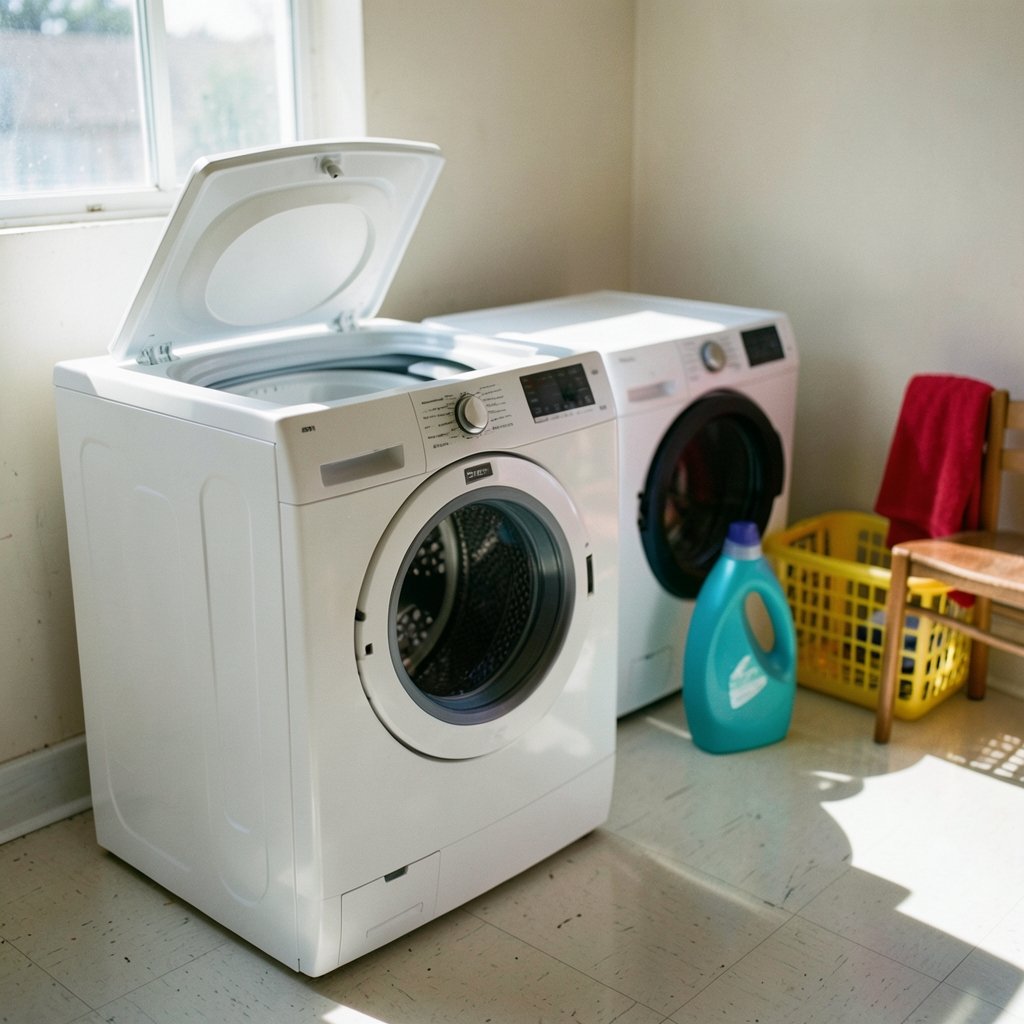
The clearest example is washing machines. Top-load models with agitators have repeatedly been found to be more reliable than front-loaders and feature-heavy machines in subscriber reliability surveys. Part of the reason is mechanical: a front-loader adds a door seal, a more complex suspension, and a drain system that has to handle more water pressure. Each added component is another thing that can fail.
Front-loaders also carry a well-documented history of mold and mildew complaints. The issue has been prominent in consumer reporting since roughly the mid-2000s, and manufacturer guidance itself tells owners to clean door gaskets and leave the door ajar between loads. That is not a defect so much as a design trade-off, but it shapes how owners experience the machine and how often they call for service.
The same simplicity principle applies elsewhere. Basic refrigerators with fewer electronic controls draw fewer repair calls than models with smart displays and Wi-Fi modules. A range with mechanical knobs avoids the control-board failures that plague some touchscreen models. Smart features are genuinely convenient, but they add circuit boards, sensors, and software that can fail independently of the appliance’s core job.
Where Complexity Still Earns Its Place
None of this means complex appliances are bad buys. A front-loader uses less water and detergent, and a smart thermostat can cut energy bills. The point is that complexity is a reliability cost, and buyers should weigh it deliberately rather than assume that more features mean a better machine.
What Efficiency Rules Do and Do Not Tell You
Appliance shoppers often confuse efficiency ratings with reliability signals. They are separate things, and mixing them up leads to bad decisions.
In the United States, appliance energy use is regulated under the Energy Policy and Conservation Act of 1975, with standards set by the Department of Energy and test procedures laid out in 10 CFR Part 430. The familiar yellow EnergyGuide label, required on many major appliances, shows estimated annual energy use and cost. It is genuinely useful for comparing operating costs, but it says nothing about how long a machine will last or how often it will need repair.
Efficiency standards do shape design indirectly. Compressors, motors, and insulation choices are all influenced by energy rules, and those components affect how a machine performs over time. But a machine that meets a strict efficiency standard is not automatically more reliable than one that barely clears it.
In the European Union, the picture is slightly different. Ecodesign and energy-labelling rules adopted around 2019, applying from 2021, require durability and repairability information for some appliances, including washing machines, dishwashers, and refrigerators. That is regulatory data rather than survey data, but it gives buyers something the US label does not: clues about how long a product is designed to last and how easy it is to fix.
Repairability: The Reliability Factor Buyers Forget
A machine that breaks and can be fixed in a day is very different from one that breaks and becomes scrap. Repairability is arguably as important as failure rate, and it is finally getting attention.
Right-to-repair laws are changing the landscape. Several US states have enacted legislation covering consumer electronics and some appliances, with coverage of large appliances varying by state. The details matter: a law that covers phones may not cover your dishwasher, and rules continue to evolve. Buyers who care about longevity should check what applies in their jurisdiction rather than assume.
In practice, repairability comes down to a few practical questions:
- Are spare parts available to independent repair shops, or only through the manufacturer?
- Are service manuals and diagnostic codes accessible?
- Is the machine designed so a technician can reach common failure points without dismantling the whole unit?
- Does the warranty require using only the manufacturer’s service network?
A brand that scores well on initial reliability but locks down parts can still leave you replacing a five-year-old appliance because a $200 control board is unavailable. When comparing models, treat parts availability as part of the reliability picture, not a footnote.
Extended Warranties: Usually Not the Answer
Extended warranties are marketed as protection against exactly the failures reliability data tracks. The evidence suggests they are often poor value for appliances.
Consumer reporting has repeatedly argued this point in buying guides, and the logic is straightforward. Appliance failure rates within warranty periods are low enough that the expected repair cost is usually below the warranty price. The warranty seller prices the policy to cover repairs plus overhead plus profit, which means the average buyer pays more than the average repair would cost. If a machine is prone to expensive failures, that is a sign to choose a different model, not to buy insurance for it.
There are exceptions. A very expensive built-in appliance with a poor repair record might justify coverage, and some credit cards extend warranties for free. But as a default rule, putting the warranty money toward a better-built model is the stronger move.
Building a Reliability-Focused Buying Process
Instead of chasing a brand name, buyers can follow a process that stacks the available evidence in their favor. This is also where disciplined delivery and operations thinking helps: the same principles of testing, monitoring, and reducing complexity that make software systems dependable apply to choosing hardware you want to last. Teams that document their deployment practices in a Gitops implementation guide build reliable delivery pipeline already understand that reliability comes from simplicity and verification, not from adding more moving parts.
For appliances, the process looks like this:
- Define the core job. A washer needs to clean clothes. A fridge needs to keep food cold. List the features you will actually use weekly, and treat the rest as optional.
- Favor proven designs. Agitator top-loaders, basic refrigerators, and ranges with mechanical controls have long track records.
- Check repair support. Ask whether local technicians service the brand and whether parts are readily available.
- Read reliability surveys critically. Look at problem rates by model rather than only brand averages, and note the survey year.
- Compare operating costs separately. Use the EnergyGuide label for energy estimates, and do not let efficiency numbers stand in for durability.
- Skip the extended warranty unless the math clearly favors it.
Common Mistakes That Undermine Reliability
Even a well-chosen appliance can fail early if owners make predictable errors. Overloading a washer strains the suspension and bearings. Skipping gasket cleaning on a front-loader invites mold. Blocking refrigerator vents forces the compressor to work harder. Ignoring lint buildup in a dryer creates both a fire risk and premature failure. None of these are exotic; they are the everyday habits that separate a fifteen-year machine from a five-year one.
Installation matters too. A washer that is not leveled vibrates itself apart. A fridge with insufficient clearance overheats. A dishwasher connected without a proper air gap can back up. Paying attention during installation is one of the cheapest reliability investments available.
How to Read Reliability Data Without Being Misled
Survey-based rankings deserve respect, but they need context. A few habits keep buyers from overreading them.
First, check the sample and the year. A ranking based on a few hundred responses from one year is weaker evidence than a multi-year pattern. Second, distinguish brand averages from model-level results. A brand can have one excellent model and several poor ones; the average hides both. Third, watch for definition drift. If one source counts “any reported problem” and another counts “failures requiring a technician,” their rankings will diverge for reasons that have nothing to do with quality.
Finally, remember that reliability is not the same as satisfaction. A noisy but dependable machine may earn low satisfaction scores. A sleek machine with occasional glitches may earn high ones. Decide which measure matters for your household before you shop.
Conclusion
The most reliable appliances are rarely the most feature-packed or the most heavily marketed. Across the available evidence, a consistent picture emerges: simpler mechanical designs, proven categories like agitator top-loaders and basic refrigerators, accessible parts, and careful installation and maintenance all push the odds in your favor. Efficiency labels tell you about operating costs, not durability, and extended warranties usually cost more than the repairs they cover. Brand rankings can be a starting point, but they are survey-based, definition-dependent, and worth reading with healthy skepticism. Choose the simplest machine that does the job well, confirm that it can be repaired, and treat reliability as a property you protect over time rather than a badge printed on the box.
Frequently Asked Questions
Are top-load or front-load washing machines more reliable?
Top-load washers with agitators have generally shown better reliability in subscriber surveys than front-loaders and feature-heavy models. The simpler design has fewer components that can fail, and front-loaders carry a long-documented history of mold and mildew complaints around the door gasket. Front-loaders still offer water and detergent savings, so the trade-off is real, but on pure reliability the simpler design tends to win.
Does a higher energy efficiency rating mean an appliance is more reliable?
No. Energy ratings measure how much electricity a machine uses, not how long it lasts. The EnergyGuide label estimates annual energy cost, and federal standards under the Energy Policy and Conservation Act set minimum efficiency levels. Efficiency rules can influence component choices, but a highly efficient appliance is not automatically more dependable than a less efficient one.
Are extended warranties worth it for appliances?
Usually not. Failure rates within warranty periods are typically low enough that the expected repair cost falls below the policy price, and the seller builds overhead and profit into every policy. The money is often better spent upgrading to a better-built model. Exceptions exist for expensive built-in appliances with weak repair records, or when a credit card already extends coverage for free.
How do right-to-repair laws affect appliance reliability?
They affect repairability, which shapes how long an appliance stays useful after a failure. Several US states have passed right-to-repair legislation, but coverage of large appliances varies, and rules keep changing. Before buying, check whether independent shops can get parts and service information for the model you are considering.
Why do different sources rank appliance brands differently?
Because they measure different things. Some count reported problems per model-year, others track repair rates or owner satisfaction. Survey samples also carry selection bias, and repair-industry data is largely proprietary. Rankings can conflict without either source being wrong, so look for multi-year patterns and model-level results rather than a single brand average.
What is the single best way to make an appliance last longer?
Treat maintenance as part of ownership. Level the machine during installation, keep vents and clearances open, clean front-loader gaskets, empty lint filters, and avoid overloading. These habits prevent the most common premature failures and cost almost nothing compared with a repair call or an early replacement.