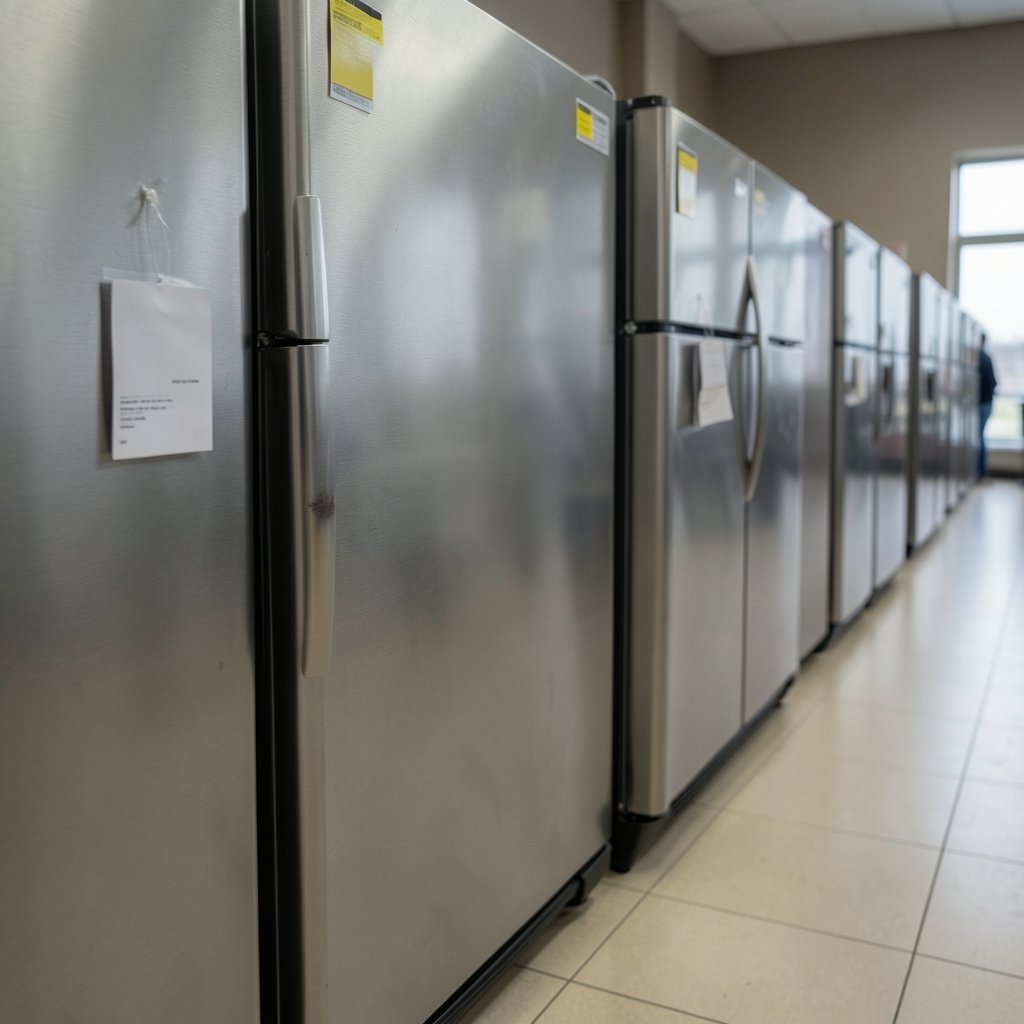
Have you ever stood in a showroom, phone in hand, staring at a sticker that says “A-rated” or “ENERGY STAR certified,” and wondered whether any of it actually tells you if the fridge will last five years or five months? You’re not alone. Kitchen appliance ratings are everywhere, but they measure wildly different things, and mixing them up is one of the most common and expensive mistakes shoppers make. (Many oz cup answer that actually works kitchen)
A rating can describe how much electricity a machine sips, how well it washed a stain in a lab, how often owners reported a breakdown, or simply how loudly it hums. Those are four different questions with four different answers. This guide walks through what each type of rating really means, where the numbers come from, and how to combine them into a decision you won’t regret.
What Kitchen Appliance Ratings Actually Measure
Most ratings fall into one of four buckets. Knowing which bucket you’re looking at solves half the confusion before you even compare models.
| Rating type | What it tells you | Who typically produces it |
|---|---|---|
| Energy ratings | Estimated running cost or efficiency class | Government labeling programs |
| Performance ratings | Measured cleaning, cooling, or cooking results | Independent labs and test magazines |
| Reliability ratings | How often a brand or model needs repair | Owner surveys, repair-industry data |
| Noise ratings | Sound output in decibels | Standardized acoustic tests and labels |
A fridge can be extremely efficient and still be a poor performer that frosts up in the vegetable drawer. A dishwasher can ace a lab test and still break down in year three. The trick is to read at least two buckets before you commit.
Energy Ratings: The Labels You See in Stores
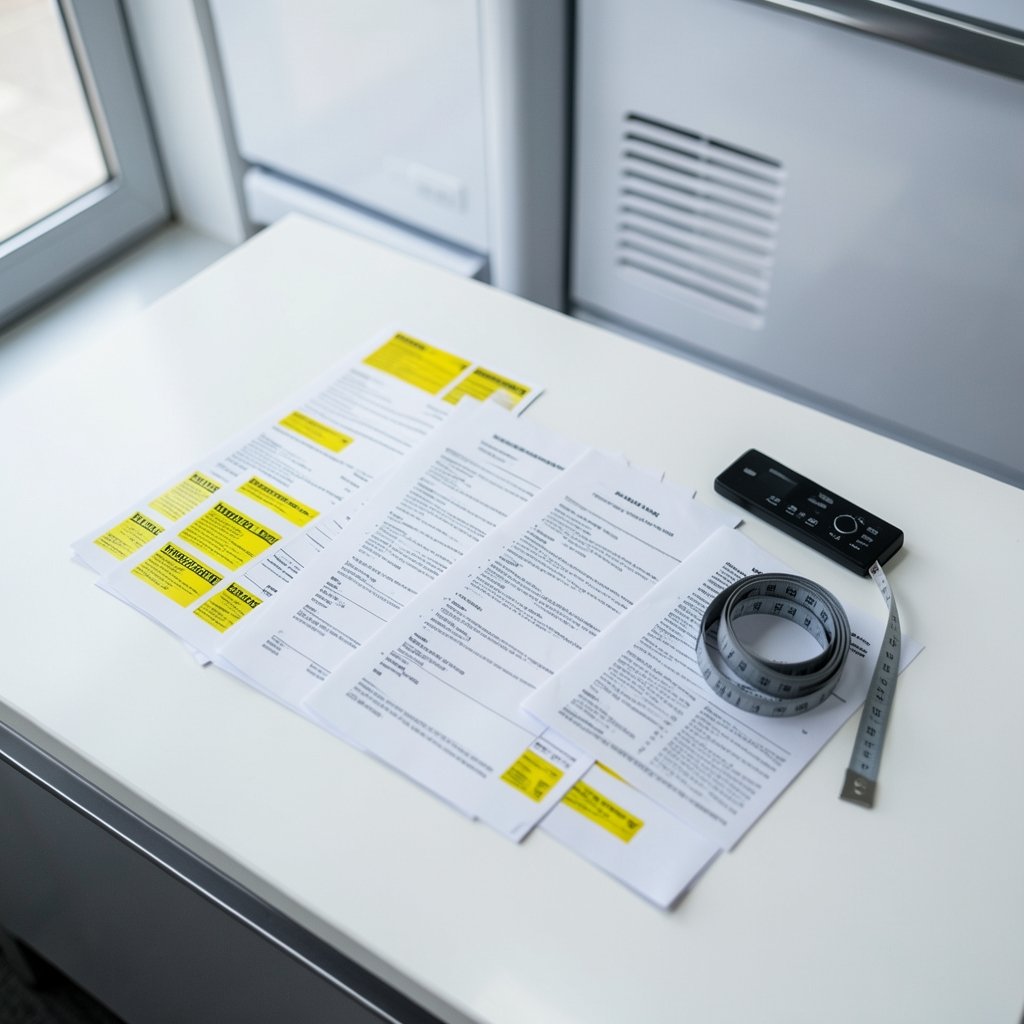
The US EnergyGuide label
In the United States, most new refrigerators, freezers, dishwashers, and room air conditioners must carry a yellow EnergyGuide label. It shows estimated yearly energy use or cost and, where required, a comparison range so you can see where a model sits against similar products. The requirement comes from the FTC’s Appliance Labeling Rule, part of 16 CFR Part 305, which grew out of the 1979 rulemaking era. The label is a useful reality check, but it’s an estimate based on standardized assumptions, not a promise about your kitchen.
ENERGY STAR certification
ENERGY STAR is a voluntary program that sets efficiency criteria above the federal minimum for categories including refrigerators, dishwashers, and clothes washers. Here’s the catch most shoppers miss: qualification criteria get revised periodically. “ENERGY STAR certified” means different things depending on when the model qualified, so an older certified unit may not meet today’s bar.
The EU A–G scale
Europe took a different route. Under the framework Regulation (EU) 2017/1369, household appliance labels were rescaled from the confusing A+++/A++/A+ tiers back to a simple A–G scale. Refrigerators, washing machines, washer-dryers, dishwashers, and televisions were rescaled from 1 March 2021; lamps followed from 1 September 2021. Under the new scale, the top class A was initially empty for some categories because no models yet met it. That’s not a printing error. It’s a deliberate design choice to leave headroom for innovation.
Delegated regulations set the detailed label content. Dishwashers fall under Regulation (EU) 2019/2017, and household washing machines and washer-dryers under 2019/2016, both applying from 1 March 2021. These labels show energy per 100 cycles rather than a yearly cost estimate.
That difference matters. A US EnergyGuide figure and an EU A–G class are not directly comparable. Articles that rank “the most efficient appliances in the world” by lumping them together are conflating two different measurement systems. If you’re moving between regions, reset your expectations rather than assuming an A-rated European model beats an ENERGY STAR American one.
Federal minimum standards
Behind every label sits a legal floor. The Department of Energy sets minimum energy-conservation standards for covered appliances, and those standards get updated by rulemaking over time. A rating’s meaning therefore depends on the standard in force when the model was tested. This is why a ten-year-old “efficient” fridge can look like a energy hog next to a budget model bought today.
Performance Ratings: The Lab Tests That Actually Compare Models
Energy labels won’t tell you whether a dishwasher removes baked-on cheese. For that, you need independent test organizations.
Consumer Reports rates appliances using its own laboratory tests and does not accept advertising. Its overall scores combine measured performance with predicted reliability and owner-satisfaction survey data for some categories. That blend is genuinely useful, but it also means a single overall score hides the trade-offs underneath. Always open the individual test results.
Which? in the UK buys products anonymously and tests them in its own labs, also without advertising. Its ratings sit behind a subscription, which affects how easily you can verify a claim someone quotes at you.
Stiftung Warentest in Germany is a state-funded foundation that publishes test magazine and rates goods on a five-level scale from sehr gut (very good) down to mangelhaft (poor). It’s often held up as a model of independent testing.
The practical takeaway: a performance rating is only as good as the test behind it. Lab tests use standardized loads, standardized soil, and standardized conditions. Your kitchen is not standardized. A dishwasher that shines in a lab with precisely dosed detergent may struggle with your family’s greasy roasting pans. Use lab ratings to narrow the field, then read owner comments about the specific tasks you care about.
Reliability Ratings: Where the Numbers Get Shaky
Reliability is the rating shoppers care about most and understand least. Most reliability scores come from self-reported owner surveys or repair-industry service data. Both have known weaknesses. Survey samples can skew toward certain demographics, and people who had a dramatic failure are more likely to respond than people whose machine quietly worked for eight years. That’s recall bias, and it’s baked into the data.
None of this makes reliability ratings useless. A brand that consistently lands at the bottom across multiple survey years is probably telling you something real. But a one-point gap between two brands is noise. Treat reliability ratings as a coarse signal, not a precision instrument.
A few habits that work in practice:
- Look for reliability data broken down by appliance type, not brand-wide averages. A company can build excellent fridges and mediocre dishwashers.
- Check whether the rating covers the specific model line, or just the badge on the door.
- Cross-reference at least two sources before you write off a brand.
- Remember that a long warranty is not a reliability rating. It’s a bet the manufacturer is making.
Noise Ratings: Decibels Are Not a Linear Scale
Appliance noise is usually reported in dB(A), which is A-weighted to approximate how human hearing responds to different frequencies. Because the scale is not linear, a jump from 44 to 48 dB is more noticeable than the numbers suggest. EU labels for washing machines and dishwashers include airborne acoustic noise emissions, which makes cross-model comparison easier than in regions where noise figures are purely voluntary.
For open-plan kitchens, noise deserves more weight than most shoppers give it. A dishwasher at 44 dB can run during a dinner conversation; one at 52 dB will dominate the room. If you’re designing a small space where the machine sits close to the sofa, it’s worth reading up on how layout choices affect the whole room, including budget-friendly approaches covered in these small kitchen remodeling ideas budget smart upgrades that keep costs sane. Lighting choices matter too, and if you’re adding under-cabinet LEDs, this guide to the led strip diffuser kitchen cabinets fix dots glare hotspots explains how to avoid the dotted, glary look that ruins a clean install.
How to Combine Ratings Into One Decision
Here’s a workflow that works in practice. Start with the energy label to eliminate the worst running costs. Then check independent performance tests for the tasks you actually do. Then scan reliability data for red flags. Finally, weigh noise and physical fit against your room.
Common mistakes to avoid:
- Trusting one number. An overall score of 85 tells you almost nothing on its own.
- Ignoring the test date. Standards and criteria change. A rating from six years ago may not reflect current rules.
- Comparing across regions. US and EU efficiency schemes use different thresholds and revision histories.
- Overweighting sticker price. Running costs and repair odds often matter more over a decade.
- Skipping the manual’s fine print. Some efficiency claims depend on specific settings or installation conditions.
Small practical details also shape satisfaction more than ratings do. If you cook from recipes constantly, conversion mistakes get annoying fast, and this explanation of the many tablespoons cup kitchen conversion that trips everyone up will save you from guesswork. Baking leans on precision, so the many teaspoons tablespoon kitchen conversion that saves time is worth bookmarking, and volume questions like the many oz cup answer that actually works kitchen come up more often than you’d think. (Led strip diffuser kitchen cabinets fix dots glare hotspots)
Where Ratings Fit in a Bigger Purchase
Ratings are inputs, not verdicts. A model with a slightly lower efficiency class but a stellar repair record and a quiet motor may be the better buy for your household. A top-rated dishwasher that doesn’t fit under your counter is a zero.
It also helps to think about how the appliance fits your daily life. If you work from a home office in the kitchen, noise ratings jump in importance. If you batch-cook for a family, capacity and cleaning performance outweigh a small efficiency difference. If you rent, reliability matters less than purchase price because you won’t own the repair bill.
One more consideration: standards evolve. Minimum efficiency requirements get updated, labeling rules get amended, and certification criteria get revised. A rating is a snapshot of the rules at one moment. Before buying, check whether the label you’re reading reflects the current version of the program, not an older one still floating around on a retailer’s spec sheet.
Reading the Fine Print Like a Pro
Three habits separate confident buyers from confused ones. First, find the test methodology. Any credible rating organization publishes how it tests, and if you can’t find that page, discount the score. Second, check the sample. A rating based on one unit is an anecdote; a rating based on hundreds of owner responses is data. Third, match the test to your use. A lab that tests with lightly soiled dishes is measuring a different job than the one your Sunday roasting pan demands.
Independent testing bodies earn their reputation by refusing advertising and buying products anonymously. That independence is the whole point. When a rating comes from a retailer’s own “expert review,” treat it as marketing with numbers attached.
Conclusion
Kitchen appliance ratings are not a single truth. They’re a stack of overlapping signals, each answering a different question: how much energy it uses, how well it performs, how often it breaks, and how loudly it complains. The shoppers who end up happiest are the ones who read at least two of those signals, check when the rating was issued, and refuse to compare numbers from different countries as if they were the same thing.
Start with the label, verify with independent tests, sanity-check with reliability data, and finish with the details that only you know about your kitchen. Do that, and the sticker on the showroom floor becomes a starting point instead of a sales pitch.
Frequently Asked Questions
What is the difference between ENERGY STAR and an A rating?
They belong to different programs with different thresholds. ENERGY STAR is a US certification that sits above the federal minimum efficiency standard and gets revised periodically. An A rating is the top class on the EU’s A–G label, which was rescaled from 1 March 2021 for most large appliances. Neither is directly comparable to the other.
Are kitchen appliance ratings reliable?
It depends on the source and the type. Lab performance tests from independent, ad-free organizations tend to be solid and repeatable. Reliability ratings based on owner surveys are weaker because of sample skew and recall bias, so treat small differences between brands as noise rather than signal.
Why does the EU energy label have an empty A class?
The rescaling deliberately left headroom at the top so manufacturers had room to improve. For some categories, no models initially met the new A criteria, which is why the class looked empty. It’s a design feature, not a labeling error.
Do higher energy ratings mean better performance?
No. Efficiency ratings measure energy use, not cleaning or cooling results. A highly efficient dishwasher can still perform poorly on tough soil, and a powerful performer can be mediocre on efficiency. You need separate performance data to judge results.
How much does noise rating matter?
More than most shoppers expect, especially in open-plan homes. Noise is reported in dB(A), which is not a linear scale, so small number differences can be noticeable. For kitchens where the appliance sits near living space, prioritize quiet models.
Can I compare US and EU efficiency ratings directly?
No. US EnergyGuide labels show estimated yearly energy use or cost, while EU labels show energy per 100 cycles on an A–G scale. The underlying tests, thresholds, and revision histories differ, so cross-region rankings should be treated with caution.