
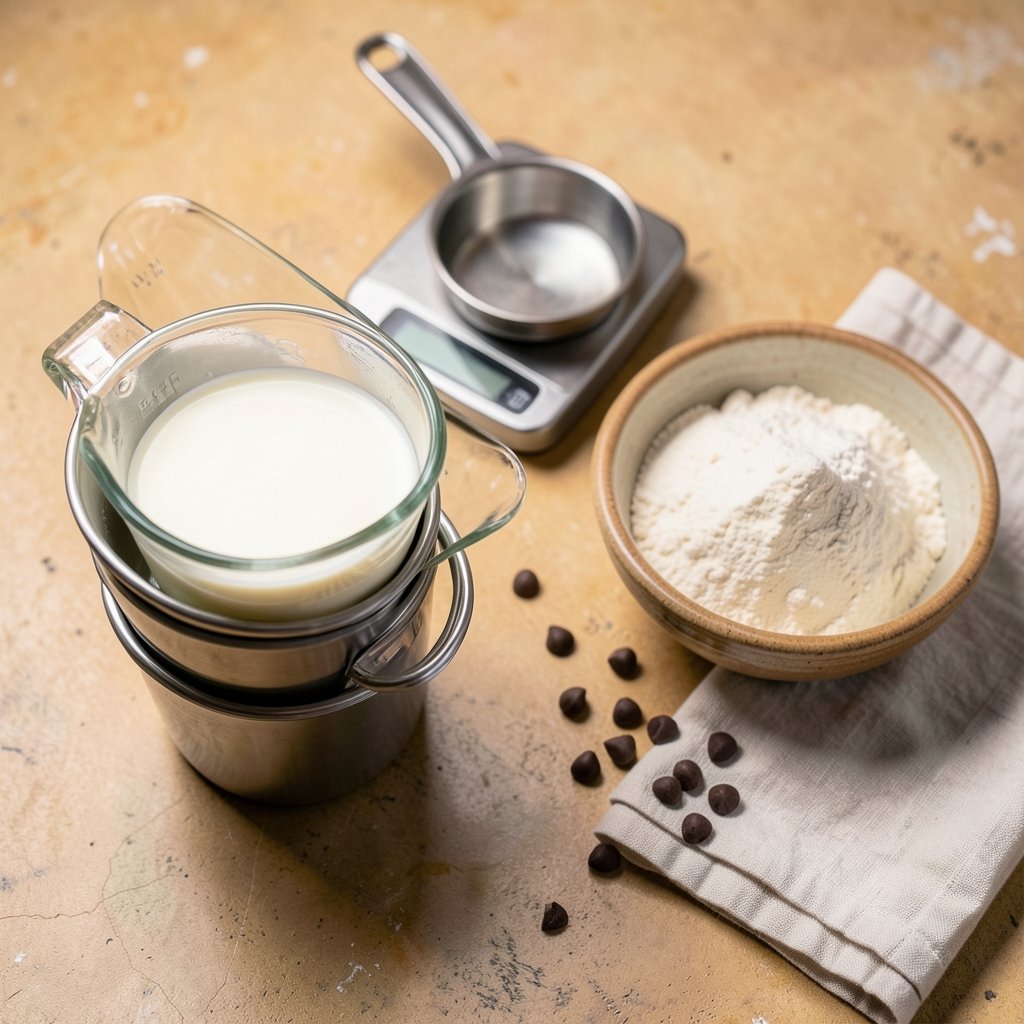
Quick Answer: How many oz in a cup?
One U.S. customary cup holds exactly 8 U.S. fluid ounces, which is about 236.6 milliliters. That single ratio, 1 cup equals 8 fl oz, is the number behind most American recipes, and it scales cleanly upward: 2 cups are 16 fl oz, 4 cups are 32 fl oz, and 16 cups make a gallon.
The number shifts depending on which cup system is in play. A U.S. legal cup used on nutrition labels is 240 mL, a metric cup is 250 mL, and an old British Imperial cup is 10 Imperial fluid ounces, roughly 284 mL. (Cup (unit)))
Before trusting any conversion, check the recipe’s country of origin, whether the ingredient is liquid or dry, whether the measure is volume or weight, and whether the label uses fluid ounces or ounces by weight.
Why This Simple Question Trips Up So Many Cooks
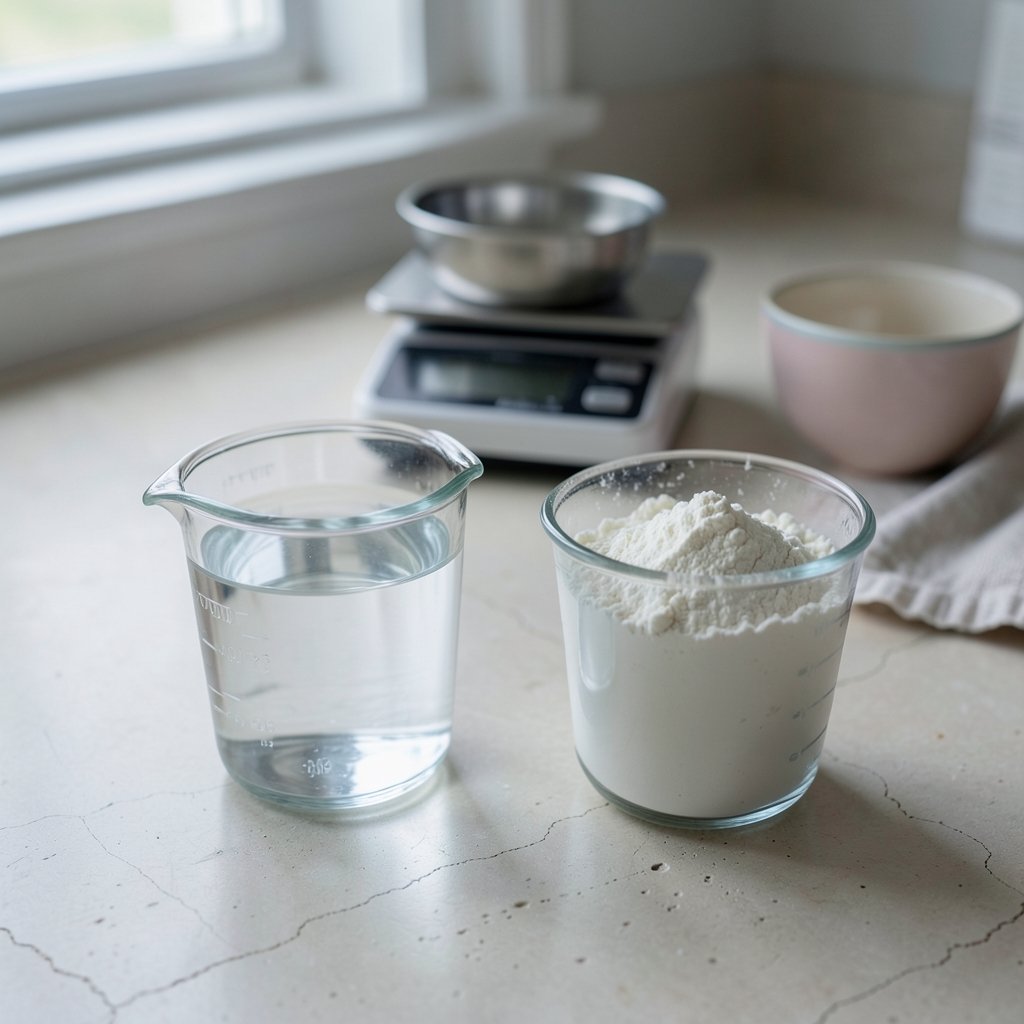
A home baker pulls up a recipe, sees “1 cup of milk,” and reaches for a measuring cup. No problem. Then the same recipe asks for “8 oz of chocolate chips,” and the confusion starts. Is that a cup? A scale? Something else entirely?
Here is the part that catches people: fluid ounces measure volume, while ounces measure weight. They share a name and nothing else. A cup of water weighs about 8 ounces. A cup of all-purpose flour weighs roughly 4.25 ounces. Same cup, wildly different scale reading.
That mismatch explains why the same recipe can produce a moist cake in one kitchen and a dry brick in another. The cup never changed. The assumption about what “oz” meant did.
This guide gives the exact numbers for every cup system, shows where the traps are, and provides practical fixes that work on the counter rather than only on paper.
The Core Conversion: 8 Fluid Ounces Per U.S. Cup
The standard U.S. cup is defined as 8 U.S. fluid ounces, or 236.588 mL. The U.S. fluid ounce itself is 1/128 of a U.S. gallon, which means the whole system locks together in neat powers of two.
| U.S. Measure | Fluid Ounces | Milliliters |
|---|---|---|
| 1 tablespoon | 0.5 fl oz | 14.79 mL |
| 1/4 cup | 2 fl oz | 59.15 mL |
| 1/3 cup | 2.67 fl oz | 78.86 mL |
| 1/2 cup | 4 fl oz | 118.29 mL |
| 1 cup | 8 fl oz | 236.59 mL |
| 2 cups (1 pint) | 16 fl oz | 473.18 mL |
| 4 cups (1 quart) | 32 fl oz | 946.35 mL |
| 16 cups (1 gallon) | 128 fl oz | 3,785.4 mL |
That chain, 1 cup to 16 tablespoons to 48 teaspoons, is worth memorizing. When a recipe calls for 6 tablespoons of oil and the only clean tool is a cup measure, the math is 6 divided by 16, or 0.375 cups, which is 3 fl oz. The same logic explains why so many people second-guess themselves at the counter, and a walkthrough of the common tablespoon-to-cup kitchen conversion that trips everyone up clears it up in a minute. (NIST Unit Conversion Overview)
The gallon end of the scale is just as tidy. Sixteen cups fill a gallon, and a gallon holds 128 fluid ounces. The U.S. and Imperial systems diverge sharply there, which is why the 128 vs 160 fluid ounce gallon comparison matters for anyone cooking from British sources.
Not Every Cup Is 8 Ounces: The Four Cup Systems
The phrase “one cup” hides at least four different volumes. Knowing which one a recipe uses prevents most kitchen disasters.
| Cup System | Fluid Ounces | Milliliters | Where It Shows Up |
|---|---|---|---|
| U.S. customary | 8 fl oz | 236.59 mL | Most American recipes and cookbooks |
| U.S. legal (labeling) | 8.12 fl oz | 240 mL | Nutrition Facts panels |
| Metric cup | 8.45 fl oz | 250 mL | Australian, Canadian, NZ recipes |
| Imperial (UK) cup | 10 fl oz | ~284 mL | Older British recipes |
The differences look tiny on paper. A metric cup is only about 4 percent larger than a U.S. cup. But scale that across a recipe with 4 cups of flour and the gap becomes a couple of extra tablespoons of dry ingredient, which is enough to change a cookie’s spread or a bread’s crumb.
The U.S. legal cup is the sneakiest of the bunch. It exists purely for nutrition labeling, set at 240 mL so manufacturers have a round number to work with. It is not a cooking measure, and it should never be used to scale a recipe. Still, it explains why a serving of cereal listed as “1 cup” on the box does not quite match the cup in the drawer.
Liquid Ounces vs. Dry Ounces: The Mistake That Ruins Baking
Pour a cup of water onto a kitchen scale and it reads about 8 ounces. Scoop a cup of flour the same way and the scale reads around 4.25 ounces. Same volume, half the weight.
This is where the fluid-ounce and the weight-ounce part ways. A fluid ounce describes how much space a liquid fills. An ounce describes how heavy something is. Chocolate chips, nuts, shredded cheese, and berries all sit somewhere in between, and each one converts differently.
The practical fix is a kitchen scale. Weighing dry ingredients removes the guesswork entirely. A cup of flour scooped straight from the bag can weigh anywhere from 4 to 5.5 ounces depending on how packed it is, which is a 30 percent swing in a single ingredient.
For anyone without a scale, the spoon-and-level method is the reliable fallback:
- Fluff the flour in its container with a spoon.
- Spoon it gently into the measuring cup.
- Level the top with a straight-edge knife without pressing down.
That method lands close to the standard 4.25 ounces per cup far more consistently than dunking the cup into the bag.
Where Ounces and Cups Fit Into the Bigger Measurement Picture
Cups and ounces are just one rung on a ladder that runs from teaspoons up to gallons. Once the relationships click, most recipe math becomes mental arithmetic.
A quart holds 4 cups, or 32 fluid ounces, and a gallon holds 16 cups. That quart-to-cup relationship gets its own treatment in this breakdown of how many cups are in a quart in US and UK measures, which is handy when a soup recipe is written in quarts but the pot markings are in cups.
The metric side of the ladder creates its own friction. A liter is 1,000 mL, which works out to about 4.23 U.S. cups. Recipes from Europe and Australia often use liters and milliliters, so the conversion chain from ounces to liters to cups is worth keeping close, and this guide to ounce-to-liter conversions in US and UK measures covers the tricky spots.
One more trap worth flagging: the U.S. fluid ounce and the Imperial fluid ounce are not the same size. An Imperial fluid ounce is about 28.4 mL, while a U.S. fluid ounce is 29.57 mL. A British recipe calling for 8 fluid ounces delivers slightly less liquid than an American one calling for the same number. The gap is small per cup but compounds across a large batch.
A Practical Conversion Cheat Sheet for Real Cooking
Most home cooks do not need a perfect conversion. They need one that is close enough not to wreck dinner. Here is how to handle the situations that come up most often.
Cooking from a U.S. recipe with metric tools
Multiply cups by 236.6 to get milliliters. Half a cup becomes about 118 mL, and a third of a cup lands near 79 mL. Rounding to 120 mL and 80 mL is fine for liquids and most batters.
Cooking from a British or Australian recipe
Check the source first. Australian recipes almost always mean the 250 mL metric cup, which rounds beautifully to 250 mL. Older British recipes may mean the 10-fl oz Imperial cup, so treat those with suspicion and convert to weight when possible.
Scaling a recipe up or down
Convert everything to fluid ounces or grams first, then scale. Doubling a recipe written in cups works fine for liquids. For dry ingredients, doubling by weight is far safer than doubling by volume.
Reading nutrition labels
Ignore the “cup” on the label for cooking purposes. It is the 240 mL legal cup, and it is there for regulatory consistency, not for your mixing bowl.
Common Mistakes That Throw Off the Math
A few habits cause most of the errors people blame on bad recipes.
Using a coffee mug as a measuring cup. A standard mug holds 10 to 12 fluid ounces, not 8. A recipe built on mug-sized cups will run 25 to 50 percent over on liquids.
Packing brown sugar when the recipe says to pack it, and packing flour when it does not. Brown sugar is meant to be packed, flour is not. Treating them the same way throws off the weight of both.
Confusing ounces with fluid ounces on a scale. A scale set to ounces measures weight. If a recipe says 8 fl oz of milk, weighing out 8 ounces of milk happens to work because milk is close to water’s density. It fails badly for oil, honey, and anything syrupy.
Assuming every country’s cup is the same. This is the single biggest source of drift when cooking from international cookbooks and food blogs.
Skipping the level-off step. A heaped cup of flour can weigh nearly 6 ounces. That is a 40 percent overshoot on a single cup, enough to turn a tender muffin into a doorstop.
When Precision Actually Matters (And When It Doesn’t)
Not every recipe demands a scale and a calculator. Soups, stews, sauces, and marinades are forgiving. A little extra broth or a splash less wine rarely ruins the pot.
Baking is the opposite. Cakes, breads, pastries, and macarons depend on precise ratios of flour to liquid to fat. A 10 percent error in flour can mean the difference between a domed loaf and a dense one. When a baking recipe lists weights in grams, use them. The recipe writer put them there for a reason.
The same logic applies to coffee brewing, where the water-to-grounds ratio drives flavor more than most people realize. A standard cup of brewed coffee is measured in fluid ounces, but the strength depends on grams of coffee per ounce of water, which is why brewing guides lean on scales rather than scoops.
Conclusion
The short answer is 8 fluid ounces per U.S. cup, and that number handles the vast majority of American recipes without a hitch. The longer answer is that “cup” is a moving target across countries and contexts, and “ounce” can mean either volume or weight depending on the sentence it appears in.
The fix is not memorizing a dozen conversions. It is building two habits. First, check where a recipe comes from before trusting its cup. Second, weigh dry ingredients when precision matters and use volume measures for liquids.
Do those two things and the kitchen math stops being a source of anxiety. It becomes what it should have been all along: a quick glance at a measuring cup and a confident pour.
FAQ
Is 8 oz the same as 1 cup?
For liquids, yes. One U.S. customary cup holds exactly 8 U.S. fluid ounces. The catch is that this only applies to fluid ounces. Eight ounces of weight is a different measurement, and a cup of a dry ingredient like flour weighs closer to 4.25 ounces, not 8.
How many dry ounces are in a cup?
It depends entirely on the ingredient. A cup of flour weighs about 4.25 ounces, a cup of granulated sugar about 7 ounces, and a cup of rolled oats around 3.5 ounces. There is no single conversion because dry ounces measure weight while cups measure volume, and every ingredient has a different density.
Why does a metric cup hold more than a U.S. cup?
A metric cup is defined as 250 mL, while a U.S. cup is 236.59 mL. The metric system favors round numbers, so countries that adopted it standardized on 250 mL for recipe writing. The difference is about 4 percent, or roughly 1.3 extra teaspoons per cup.
How many ounces are in a half cup?
A half cup holds 4 U.S. fluid ounces, or about 118 mL. In tablespoons, that is 8 tablespoons, and in teaspoons, 24. For dry ingredients, the weight in ounces will be roughly half of whatever a full cup weighs for that specific ingredient.
Does the cup on a nutrition label match a measuring cup?
Not exactly. Nutrition labels use the U.S. legal cup, defined as 240 mL, which is slightly larger than the 236.59 mL customary cup. The gap is small enough to ignore for everyday eating but large enough that label-based portion math will never line up perfectly with a kitchen measuring cup.
How do I convert cups to ounces without a chart?
Multiply the number of cups by 8 to get fluid ounces. Three-quarters of a cup becomes 6 fl oz, one and a half cups becomes 12 fl oz, and so on. For milliliters, multiply cups by 236.6. For a quick estimate, treat 1 cup as 240 mL and the math stays easy in your head.



