
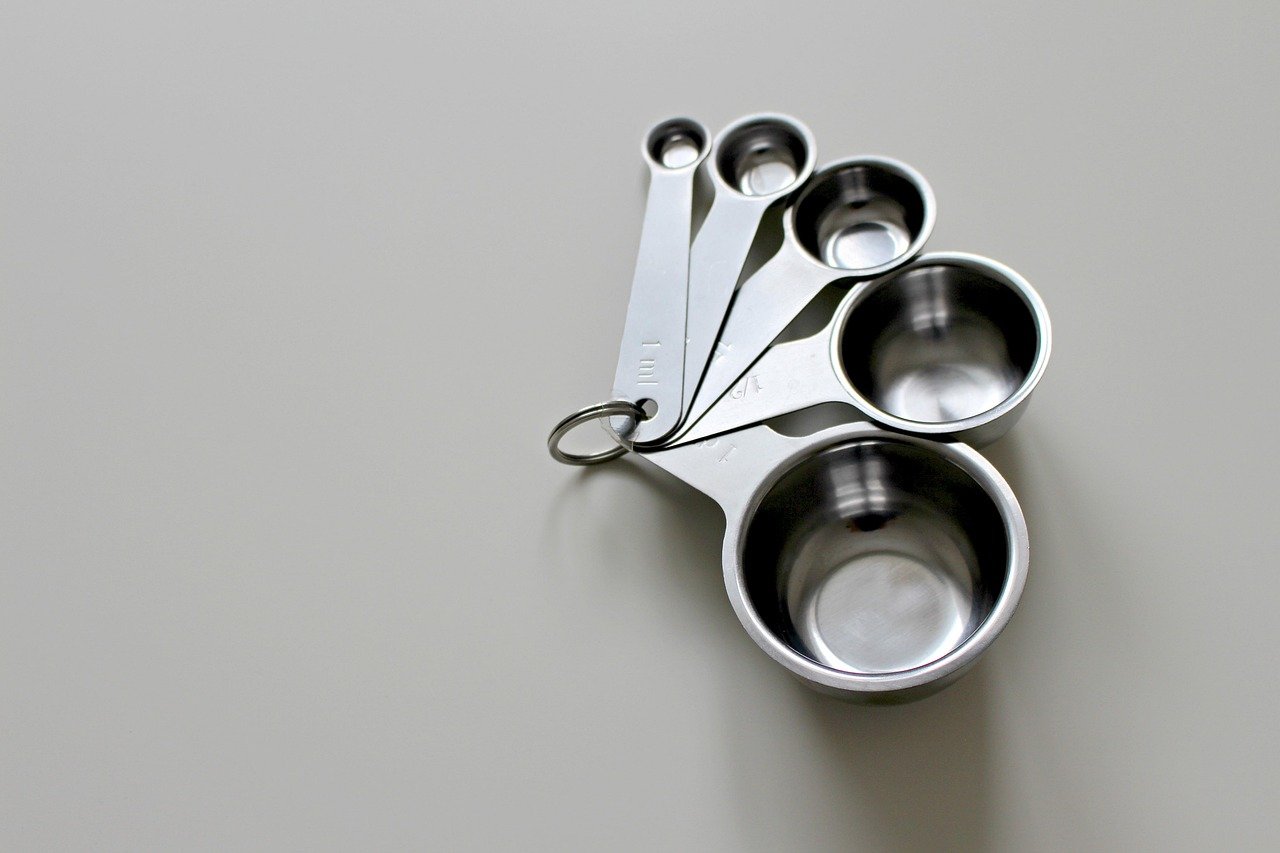
Quick Answer: How many tablespoons in a cup?
There are 16 tablespoons in one U.S. cup. That number comes from simple math: a U.S. cup holds 8 fluid ounces, and each fluid ounce equals 2 tablespoons. So whether a cook is halving a cake recipe, doubling a soup, or scaling up a batch of cookies, the core ratio stays the same: 1 cup = 16 tablespoons.
The answer shifts slightly once a recipe crosses borders. A metric cup (250 mL) works out to about 16⅔ fifteen-milliliter tablespoons, and an Australian tablespoon is 20 mL, so an Australian cup holds only 12.5 of those spoons. Nutrition labels in the United States use a legal cup of exactly 240 mL, which still equals 16 tablespoons.
Before committing to a conversion, a cook should check the recipe’s country of origin, the spoon size on the label, whether the ingredient is wet or dry, and whether the recipe means a U.S., metric, or imperial cup. Getting those four details right prevents most baking failures. (NIST Unit Conversion)
Why This Conversion Matters More Than It Seems
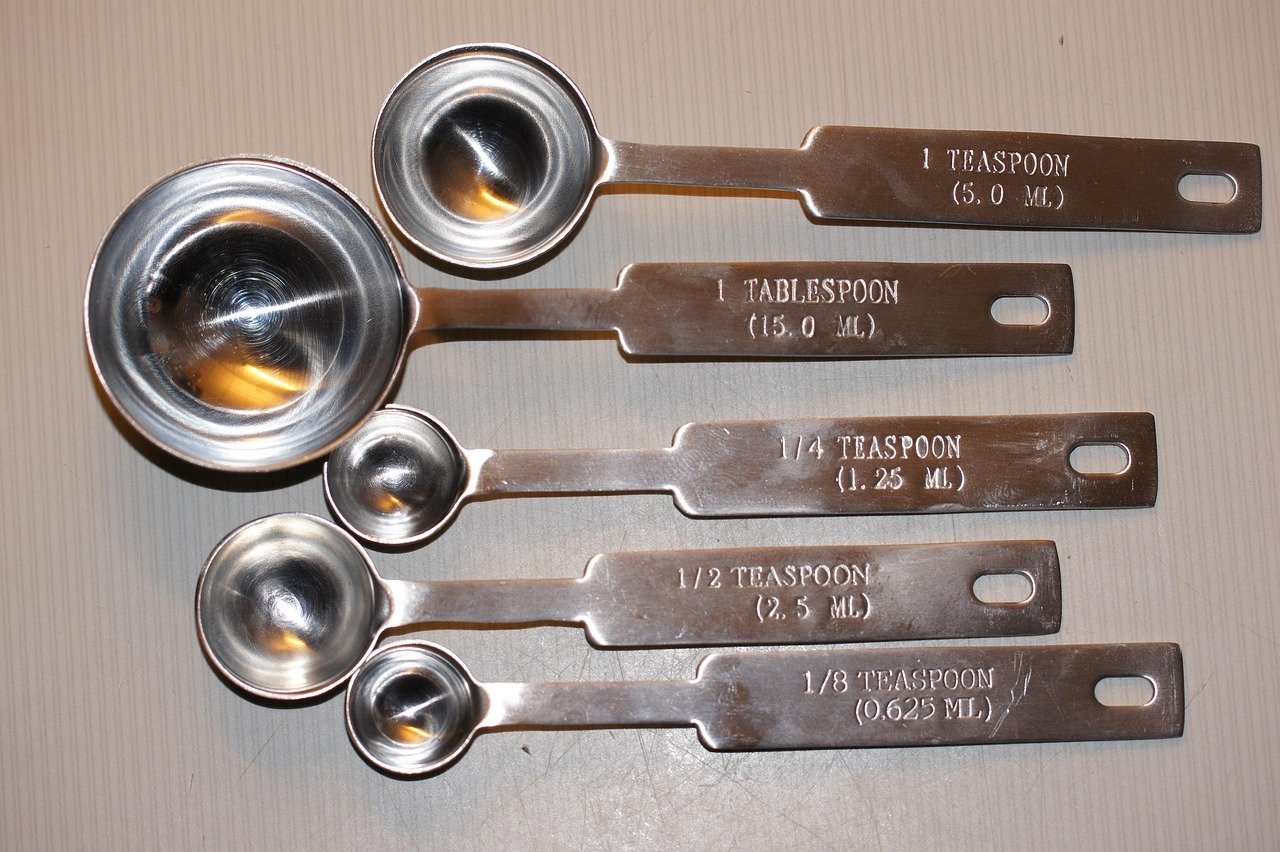
Picture the scene. Someone is halfway through a recipe for birthday cake, the flour is already in the bowl, and the measuring cup has vanished into the dishwasher. The recipe calls for one cup of milk. The only tool left is a tablespoon. Panic sets in, followed by a quick phone search.
That little moment of kitchen chaos is exactly why the 16-tablespoon rule is worth memorizing. Baking is chemistry with butter, and small measurement errors compound fast. A few extra tablespoons of liquid can turn a crisp cookie dough into a sticky puddle. Too little flour and a cake collapses in the middle.
The good news is that the U.S. system is refreshingly tidy. Every common fraction of a cup converts cleanly into tablespoons, and once the pattern clicks, it stays in the head for life. The trickier part is knowing when the tidy American answer does not apply, which is where most people get burned.
The Basic Math Behind 16 Tablespoons
The conversion rests on a simple chain of definitions. A U.S. cup contains 8 fluid ounces. A U.S. fluid ounce contains 2 tablespoons. Multiply 8 by 2 and the result is 16. From there, everything else falls into place, because a tablespoon holds 3 teaspoons and a cup therefore holds 48 teaspoons.
In precise metric terms, the U.S. tablespoon is half a fluid ounce, or about 14.79 mL, and the U.S. cup is roughly 236.6 mL. Those numbers come from the official tables of U.S. customary units maintained by the National Institute of Standards and Technology, which publishes the general tables of units of measurement used for U.S. customary volume. It is the same reference that underpins commercial scales and measuring devices sold in the United States.
Here is the full conversion ladder in one place:
| Cup fraction | Tablespoons | Teaspoons |
|---|---|---|
| 1 cup | 16 tbsp | 48 tsp |
| ¾ cup | 12 tbsp | 36 tsp |
| ⅔ cup | 10 tbsp + 2 tsp | 32 tsp |
| ½ cup | 8 tbsp | 24 tsp |
| ⅓ cup | 5 tbsp + 1 tsp | 16 tsp |
| ¼ cup | 4 tbsp | 12 tsp |
| ⅛ cup | 2 tbsp | 6 tsp |
The awkward fractions deserve a note. A third of a cup is not a whole number of tablespoons, which is why the table breaks it into 5 tablespoons plus 1 teaspoon. Two-thirds of a cup works out to 10 tablespoons plus 2 teaspoons. Cooks who try to eyeball “about 5½ spoons” usually drift off target, and in baking that drift shows up in the final crumb.
When 16 Tablespoons Is Not the Right Answer
The 16-tablespoon rule is solid inside the United States. Step outside and the arithmetic wobbles, because the word “cup” means different volumes in different places. The country-by-country table of cup sizes) shows how far the differences stretch, from the U.S. customary cup near 236.6 mL to the metric cup at 250 mL and the Japanese cup at 200 mL.
The metric cup is the most common source of confusion. At 250 mL, it holds about 16⅔ tablespoons of 15 mL each. That extra two-thirds of a tablespoon rarely ruins a stew, but it can nudge a delicate pastry off course when a recipe has been converted from one system to another without adjustment.
The Australian tablespoon is a bigger trap. Australia standardized its tablespoon at 20 mL, equal to 4 teaspoons rather than 3, as explained in the history and regional definitions of the tablespoon. An Australian cup of 250 mL therefore holds 12.5 Australian tablespoons, not 16. A cook in Sydney following an American recipe with an Australian spoon will overshoot every tablespoon by a third.
Then there is the imperial fluid ounce, used historically in the United Kingdom, which is about 28.41 mL against the U.S. figure of 29.57 mL. The difference between U.S. and imperial fluid ounces explains why old British cookbooks cannot be converted with American spoons and cups without a correction. Modern UK recipes usually list metric weights, which neatly sidesteps the whole mess.
The Nutrition Label Curveball
American cooks who read food packaging run into a third definition. For Nutrition Facts panels, the U.S. Food and Drug Administration defines a cup as exactly 240 mL, a figure set in the serving-size regulations. That legal cup is slightly larger than the customary cup but still equals 16 tablespoons of 15 mL.
In practice, this means the serving size on a bottle of juice and the cup in a recipe book are close enough that no one notices. The distinction matters mainly to food manufacturers and to anyone comparing nutrient values across products from different countries. For home cooking, the takeaway is reassuring: every American “cup” a cook is likely to encounter lands on 16 tablespoons.
Dry Cups vs. Liquid Cups: Same Volume, Different Reality
Here is a fact that surprises many home cooks. A dry measuring cup and a liquid measuring cup both hold 16 tablespoons, yet they are not interchangeable in use. Liquid cups are marked with a pour spout and headroom so the cook can set the cup on the counter and read the meniscus at eye level. Dry cups are designed to be filled to the brim and leveled with a straight edge.
The volume is identical. The behavior of the ingredient is not. Flour settles and compacts, so scooping directly from the bag can pack in 20 percent more than the recipe intends. Sugar behaves similarly. Liquids level themselves, so they are far more forgiving.
The reliable method for dry ingredients is the spoon-and-level technique: stir the flour to loosen it, spoon it into the cup, and sweep off the excess with the back of a knife. For liquids, set the cup on a flat surface and check the line at eye level rather than holding it up in the air. These habits matter far more than the difference between 236 and 240 mL.
Common Mistakes and What Actually Works
Most conversion errors come from a handful of repeat offenders. Knowing them in advance saves a lot of wasted ingredients.
- Using a coffee mug as a cup. Mugs vary wildly, from 6 to 16 ounces. A mug is not a measuring tool, and treating it as one is the fastest route to a lopsided cake.
- Packing brown sugar by default. Brown sugar is the exception to the spoon-and-level rule. Recipes usually call for it packed firmly into the cup, so read the instruction rather than assuming.
- Scooping straight from the canister. This compacts flour and can add several tablespoons per cup. Stir first, then spoon.
- Mixing spoon sizes across countries. An Australian tablespoon holds 20 mL. If a recipe was written in the United States and the spoons were bought in Australia, every tablespoon is a third too big.
- Measuring over the mixing bowl. A slip of the hand dumps extra salt or baking soda into the whole batch. Measure into a small dish first.
- Trusting volume for sticky liquids. Honey and molasses cling to the spoon. A light coating of oil on the measuring spoon helps them release and keeps the count honest.
The same discipline that fixes kitchen measurements applies to bigger systems. Anyone who has watched a large project go sideways knows that small unit mismatches scale into expensive problems, much like the application modernization challenges that make so many projects stall when assumptions are never checked against reality. A recipe and a software migration both fail quietly at first, then loudly.
Handy Conversions Beyond the Cup
Once 16 tablespoons per cup is locked in, the rest of the kitchen math becomes easy. A half cup is 8 tablespoons, a quarter cup is 4, and an eighth cup is 2. Three teaspoons make a tablespoon, so a cup also equals 48 teaspoons. Four tablespoons make a quarter cup, which means a standard stick of butter, at 8 tablespoons, is exactly half a cup. (Cup (unit)))
Scaling recipes gets simpler too. Halving a recipe that calls for ⅓ cup means using 2 tablespoons plus 2 teaspoons, since half of 5 tablespoons plus 1 teaspoon is 2 tablespoons plus 2 teaspoons. Doubling a recipe that calls for ¾ cup means 1½ cups, or 24 tablespoons. Cooks who prefer working in grams can weigh instead, and many professional bakers do, because a digital scale removes the packing problem entirely.
For anyone weighing a kitchen upgrade, the same logic that guides a best k cup coffee maker purchase applies to measuring tools: buy the format that matches how the household actually cooks, not the one with the longest feature list. A set of nested dry cups, a glass liquid cup, and a set of metal spoons covers nearly every recipe in print.
A Note on Global Recipe Reading
Recipes travel now more than ever, and so do the units inside them. A cook browsing international sites will meet cups, milliliters, grams, and ounces in the same afternoon. The safest habit is to check the source country before starting. A recipe from a Canadian or Australian site using cups is probably working in metric cups of 250 mL. A recipe from a U.S. site is almost certainly using customary cups of about 236.6 mL.
When a recipe lists both volume and weight, trust the weight. Professional test kitchens publish gram amounts precisely because they are reproducible. Volume measurements of dry ingredients vary with humidity, settling, and technique in ways that a scale simply does not. The 16-tablespoon rule remains the fastest mental shortcut, but a small digital scale is the quiet hero of consistent results.
International standards bodies and food agencies exist precisely because units need a shared definition. The same instinct that leads countries to agree on measurement conventions shows up in diplomacy, where even a seemingly simple question such as which option best completes a table about the United Nations depends on knowing exactly what each term means before drawing a conclusion.
Conclusion
Sixteen tablespoons make a U.S. cup, and that single number handles the vast majority of home cooking. The math is clean, the fractions are learnable, and the pattern holds across liquid and dry measures alike. The complications arrive only when recipes cross borders, bringing metric cups, Australian spoons, and imperial ounces along with them.
The practical recipe for success is short. Memorize 16 tablespoons per cup and 3 teaspoons per tablespoon. Check where a recipe was written before measuring. Spoon and level dry ingredients instead of scooping. Use a liquid cup for liquids and a dry cup for dry goods. Do those four things and the measuring cup can go missing without derailing dinner.
Frequently Asked Questions
How many tablespoons are in a half cup?
A half cup contains 8 tablespoons. The math is straightforward: divide the 16 tablespoons in a full cup by two. The same logic gives 4 tablespoons in a quarter cup and 12 tablespoons in three-quarters of a cup.
Is a dry measuring cup the same as a liquid measuring cup?
Both hold 16 tablespoons, so the volume is identical. The design differs because the jobs differ. Dry cups are filled to the rim and leveled, while liquid cups have headroom and a spout so the cook can read the line at eye level without spilling.
Why does an Australian cup hold fewer tablespoons?
Australia uses a 20 mL tablespoon rather than the 15 mL spoon common in the United States. Since an Australian cup is 250 mL, it holds 12.5 Australian tablespoons. Using a U.S. recipe with Australian spoons adds roughly a third more of every ingredient measured by the spoonful.
How many teaspoons are in a cup?
There are 48 teaspoons in a U.S. cup. That follows from 16 tablespoons per cup and 3 teaspoons per tablespoon. Teaspoons are handy for small adjustments, such as adding a teaspoon of liquid to reach a third of a cup.
Does the cup on a nutrition label match a measuring cup?
Close, but not exactly. Nutrition labels use a legal cup of 240 mL, while a U.S. customary cup is about 236.6 mL. The gap is under two percent, small enough to ignore in home cooking but relevant when comparing packaged foods across countries.
What is the fastest way to convert a recipe without a cup?
Use tablespoons and teaspoons as the bridge. Count 16 tablespoons for each cup the recipe needs, then break the remainder into fractions. A third of a cup becomes 5 tablespoons plus 1 teaspoon, and two-thirds becomes 10 tablespoons plus 2 teaspoons.



