

Industry analysts have long noted that a large share of large-scale IT transformation efforts fall short of their goals, and application modernization sits near the top of that list. The pattern is familiar: a company commits to replacing a decades-old system, the budget is approved, the kickoff meeting is upbeat, and eighteen months later the project is quietly descoped. The technology rarely causes the failure. People, process, and politics do. (Software modernization)
This article looks at the real obstacles teams hit when they try to modernize applications, what separates the projects that succeed from the ones that quietly die, and the practical moves that actually help. It is written for the people in the room where these decisions get made: engineering leads, product owners, and the executives who sign the checks.
What “modernization” actually means, and why the word causes trouble
The single biggest source of confusion is that application modernization describes a spectrum, not a single activity. At one end sits a simple rehost, often called lift-and-shift, where an application moves to cloud infrastructure with minimal changes. At the other end sits a full rewrite, where the codebase is rebuilt from scratch on a new architecture.
In between live many options: replatforming onto managed services, refactoring modules, wrapping legacy systems behind APIs, or replacing a package outright with a SaaS product.
This matters because teams often agree to “modernize” without agreeing on which of these they mean. One group hears “move it to the cloud by Q3.” Another hears “rebuild it properly.” Both are reasonable readings, and the mismatch surfaces months later as a budget fight.
A useful discipline is to write the definition down before any work starts. A one-page statement covering scope, target architecture, success criteria, and what is explicitly out of scope prevents a surprising number of conflicts.
Challenge 1: Legacy systems nobody fully understands
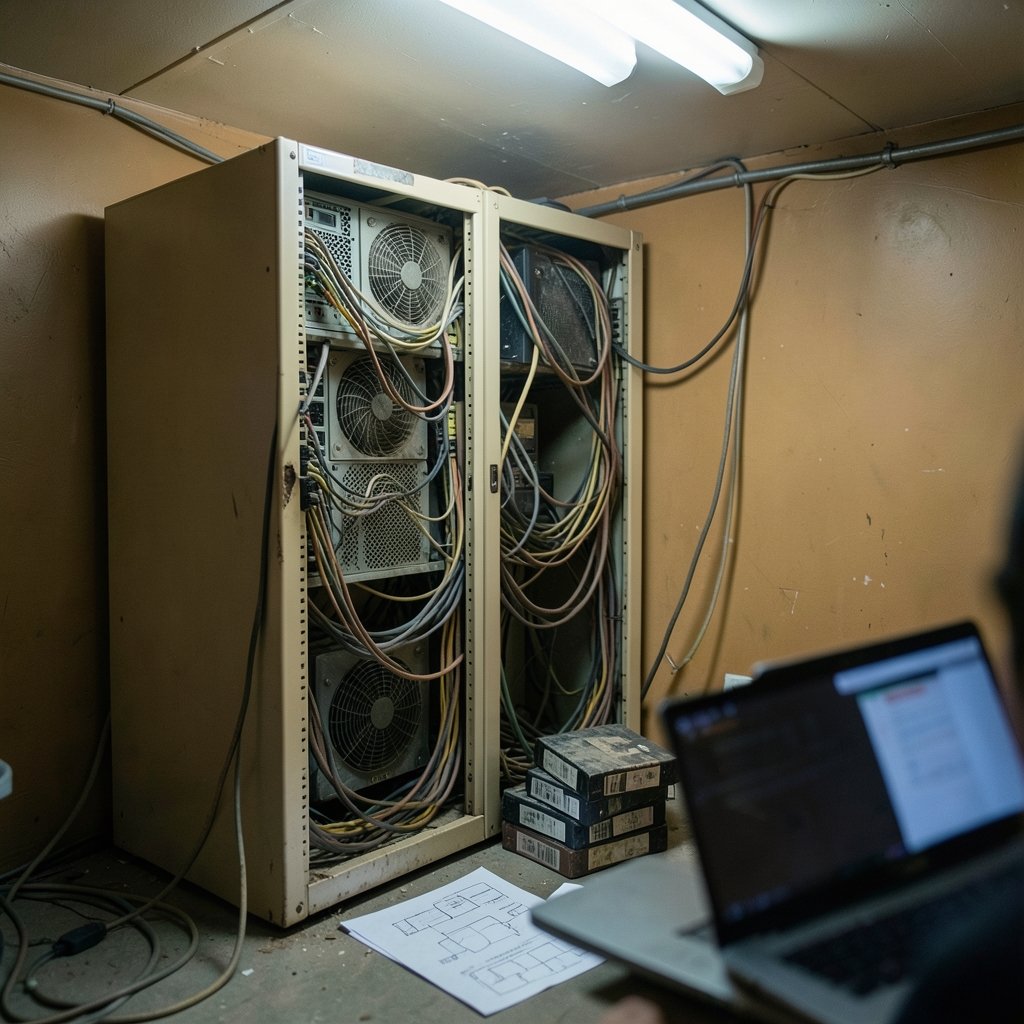
The most common blocker is not technical debt in the abstract. It is the specific, practical problem that no one currently employed understands how the system works.
Legacy applications accumulate undocumented behavior over decades. Business rules live in stored procedures, scheduled jobs, and hard-coded exceptions that were added for a customer who left in 2009. The original authors have retired. The documentation, if it exists, describes a version of the system that no longer runs.
What actually helps
- Instrument before you touch. Run the legacy system with logging and dependency mapping for several weeks. Real traffic patterns reveal what the code comments never did.
- Treat the old system as the specification. Where documentation and behavior disagree, behavior wins. Capture it in tests.
- Use the strangler pattern. Route a slice of functionality to the new system while the old one keeps running. If the slice fails, roll back the route, not the project.
The strangler approach is widely recommended precisely because it keeps risk bounded. A big-bang cutover concentrates all the risk into one weekend. Incremental routing spreads it across months, where mistakes are survivable.
Challenge 2: The business case is genuinely hard to build
Modernization benefits are diffuse and arrive late. Costs are immediate and visible. That mismatch makes these projects unusually vulnerable when budgets tighten.
Maintenance savings are real but often smaller than promised, because the legacy system still has to run during the transition, so you pay for both. Agility gains are real but hard to quantify in a spreadsheet. Meanwhile the invoice for cloud infrastructure, consultants, and backfill hiring lands in the current quarter.
A more honest way to frame the case
| Weak framing | Stronger framing |
|---|---|
| “Reduce technical debt” | “Cut the two-week release cycle to two days, measured by deployment frequency” |
| “Improve security” | “Close the four open findings on the audit report by Q2” |
| “Enable innovation” | “Free 30% of engineering capacity currently spent on unplanned maintenance” |
| “Move to cloud” | “Reduce recovery time from 36 hours to under 2 hours” |
The pattern: tie every claimed benefit to a metric someone already tracks. If no one tracks it, either start tracking it first or drop the claim. Inflated business cases get approved and then punished when the promised numbers fail to appear.
It is also worth naming the cost of doing nothing. Legacy systems carry licensing fees, security exposure, and hiring penalties, since engineers increasingly avoid shops running decades-old stacks. Those costs are real, ongoing, and usually invisible because they are baked into the baseline.
Challenge 3: The skills gap is real and specific
Modernization requires a combination of skills that rarely sits in one team: deep knowledge of the legacy stack, cloud-native architecture, DevOps practice, and security engineering. The people who know the old system best are often the least interested in learning the new one, and that is not a character flaw. It is a rational response to being asked to retrain while also keeping the lights on.
Common mistakes here:
- Hiring only for the target state. Teams that staff exclusively for the new stack lose the institutional knowledge needed to migrate safely.
- Assuming training solves it. A course does not replace years of context. Pairing matters more than curriculum.
- Ignoring retention risk. The engineers who understand the legacy system are the most marketable people on the team. If the modernization plan makes their role feel like a dead end, they leave at exactly the wrong moment.
What works in practice is deliberate pairing: mixed teams where legacy experts and cloud engineers work side by side on the same slice, with knowledge transfer as an explicit deliverable rather than a hopeful side effect.
Challenge 4: Ownership is unclear, so decisions stall
Modernization crosses organizational boundaries. The application may be owned by one business unit, hosted by central IT, secured by a compliance team, and funded by a committee. Every architectural decision then requires consensus across four groups with different incentives.
This is where projects slow to a crawl. Not because anyone disagrees about the goal, but because no one has authority to make the trade-offs.
The fix is structural, not motivational. Name a single accountable owner with decision rights over architecture and sequencing. Establish a small steering group for funding and risk acceptance. Then let the technical team make technical calls without re-litigating them upward. Teams that skip this step often find that their “agile” modernization runs on a six-week approval cycle.
Challenge 5: Security and compliance constraints shape everything
Regulated industries cannot simply lift and shift. Data residency rules, audit trails, access controls, and retention requirements all constrain the target architecture, and they often force sequencing decisions that look odd from a pure engineering standpoint.
A frequent mistake is treating compliance as a final gate rather than a design input. When security review happens at the end, findings arrive too late to influence architecture, and the team ends up bolting controls onto a design that never accounted for them.
Bringing a security engineer into design reviews from week one is unglamorous and consistently effective. It also tends to reduce scope creep, because constraints get surfaced while they are still cheap to accommodate.
Challenge 6: Vendor lock-in and the second migration
Moving to managed platform services solves real problems quickly. It also creates new dependencies. Teams that lean heavily on proprietary services sometimes discover, years later, that leaving is as hard as the original migration was.
This is not an argument against managed services. It is an argument for knowing which dependencies are acceptable and why. A practical approach is to keep core business logic portable and let infrastructure concerns be platform-specific. That way the expensive-to-replace part stays under your control.
Similar reasoning applies to tooling choices in adjacent projects. Even something as simple as picking up a browser-based challenge like the Tap Road game for a team break is trivial; picking a platform that owns your data model is not. The stakes scale with how deeply a choice gets embedded.
Challenge 7: Modernization never gets the runway it needs
Legacy systems are load-bearing. The business runs on them every day. That means modernization work competes directly with feature work for the same engineers, and feature work always has a louder advocate.
The predictable result: modernization gets 20% of a team’s attention, progress is slow, momentum dies, and the project is declared a failure. The failure was in the staffing model, not the idea.
What actually works is dedicated capacity. A standing team whose only job is migration, protected from interrupt work, with a funded roadmap that spans budget cycles. If the work is real, it needs real headcount. Part-time modernization is the most expensive way to not modernize.
Challenge 8: Change management gets skipped
The new system will work differently. Screens move, workflows change, and the shortcuts people built over fifteen years stop working. If the people who use the system every day are not involved until training week, adoption suffers and the promised benefits never materialize.
Involving frontline users early, even in small ways like reviewing workflows or testing prototypes, surfaces objections while they are still fixable. It also builds the informal advocates who make a rollout go smoothly. This is the cheapest risk reduction available, and it is the one most often cut when timelines tighten.
Common mistakes that show up again and again
Across projects, the same errors recur with striking regularity.
- Rewriting everything at once. Full rewrites discard years of embedded business logic and usually run long.
- Skipping the inventory. Teams that do not map dependencies discover them mid-migration, at the worst possible time.
- Measuring activity instead of outcomes. “Lines of code migrated” tells you nothing about whether the business is better off.
- Declaring victory at cutover. The old system lingers for years because decommissioning was never planned or funded. Retiring it is part of the project, not an afterthought.
- Underestimating data migration. Moving the application is often easier than moving and reconciling decades of data.
A related trap is tool sprawl. Teams adopt a migration tool, a monitoring platform, and a new CI pipeline all at once, then spend months integrating them. Sequencing tools to match the migration sequence is usually faster, and it keeps attention on the actual work. The same principle of matching effort to the real task applies in lighter contexts too, whether someone is working through a Mr Flip game challenge or comparing editions of a release before committing, as with Modern Warfare 4 vault edition vs standard 2026. Understand the scope before you spend.
How AI agents fit into modernization work
AI-assisted tooling has become a genuine part of the conversation, particularly for code comprehension, test generation, and documentation of legacy systems. These tools are useful for the tedious parts: summarizing what a module does, drafting tests that capture current behavior, and flagging dead code.
They are not a substitute for understanding. A generated summary of a legacy module can be confidently wrong, and treating it as ground truth is a fast route to broken business rules. The sensible pattern is to use these tools to accelerate discovery, then verify against actual system behavior. For anyone weighing where agent-based tools genuinely help versus where they add noise, a grounded overview of what an AI agent is with examples and applications is a reasonable starting point.
Conclusion
Application modernization fails for reasons that have little to do with technology choices. It fails when scope is undefined, when the business case is inflated, when no one owns the decisions, and when the work is staffed part-time against a full-time problem.
The projects that succeed tend to share a profile: a narrow first slice, a named owner with real authority, honest metrics, dedicated capacity, and a plan for retiring the old system rather than just running the new one alongside it. None of that is glamorous. All of it is learnable, and most of it is cheap compared with the cost of a stalled program that consumes budget for years without changing anything.
Frequently asked questions
What is the biggest challenge in application modernization?
In practice, it is the knowledge gap. Legacy systems often contain undocumented business rules that no current employee fully understands, which makes safe change difficult. Technical debt is a symptom; the underlying problem is lost institutional knowledge.
How long does application modernization usually take?
It depends entirely on scope. A single application replatformed onto managed services can take a few months, while a portfolio-wide program commonly spans several years. Any estimate that does not specify which definition of modernization is in play should be treated with suspicion.
Is it better to rewrite or refactor a legacy application?
Refactoring incrementally is usually safer, because it keeps risk bounded and preserves working behavior. A full rewrite makes sense when the existing architecture genuinely cannot support the target requirements, but it should be a deliberate decision with a clear justification, not the default.
Why do so many modernization projects go over budget?
Most commonly because the business case underestimated the cost of running both systems during the transition, and because the work was staffed part-time alongside feature delivery. Discovery costs, data migration, and decommissioning are also routinely left out of initial estimates.
How do you get executive buy-in for modernization?
Tie the benefits to metrics leadership already cares about, such as release frequency, incident recovery time, audit findings, or maintenance headcount. Vague promises about agility rarely survive a budget review, while a concrete target with a named owner usually does.
Can AI tools replace the need for legacy expertise?
No. AI tools can speed up code comprehension, test generation, and documentation, which is genuinely valuable. But their output must be verified against real system behavior, and someone still needs the judgment to know when a generated answer is wrong.



