
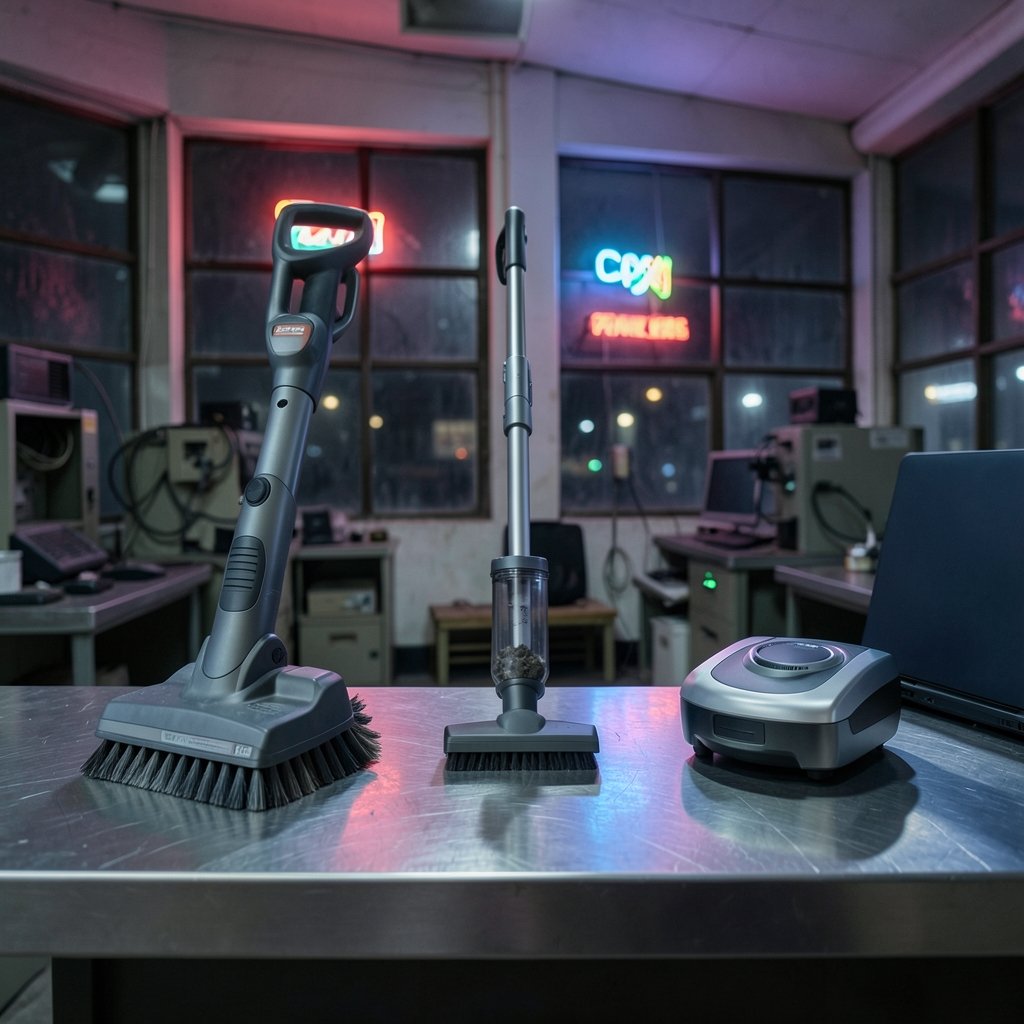
What if the biggest problem with buying a cordless sweeper isn’t the price, the brand, or even the battery? It’s that nobody agrees on what the phrase actually means. Walk into one store and you’ll find a motorized push sweeper with spinning brushes. Open a browser and you’ll see lightweight stick vacuums and palm-sized desktop sweepers wearing the same label. The term is not a standardized product category, and retailers apply it inconsistently. That single fact explains most of the confusion, the bad reviews, and the returns. Once you know which machine you’re actually looking at, the buying decision gets a lot simpler.
What Counts as a Cordless Sweeper?
The label “cordless sweeper” covers three genuinely different products that share only one trait: they run on a battery and have no power cord.
Manual push sweepers with a motor. These are rotating-brush machines with a small dustbin and no real suction. The brushes flick debris into a tray. They handle crumbs, cereal, pet hair, and tracked-in grit on hard floors in seconds, which makes them ideal for quick cleanups between proper vacuuming sessions.
Cordless stick vacuums marketed for hard floors. These have genuine airflow, filters, and often a motorized floor head. Many manufacturers describe them as sweepers in marketing copy, especially the cheaper models aimed at kitchens and entryways.
Handheld and desktop sweepers. Small battery units for countertops, stairs, car interiors, and workbenches. Useful in narrow spots, limited everywhere else.
The distinction matters because these machines are not interchangeable. A brush-only sweeper will not pull fine dust out of a rug the way a filtered vacuum will. A stick vacuum costs several times more and needs filter maintenance. Knowing which category you’re shopping in prevents the most common mistake: buying a sweeper expecting vacuum performance.
A Short History That Explains the Design
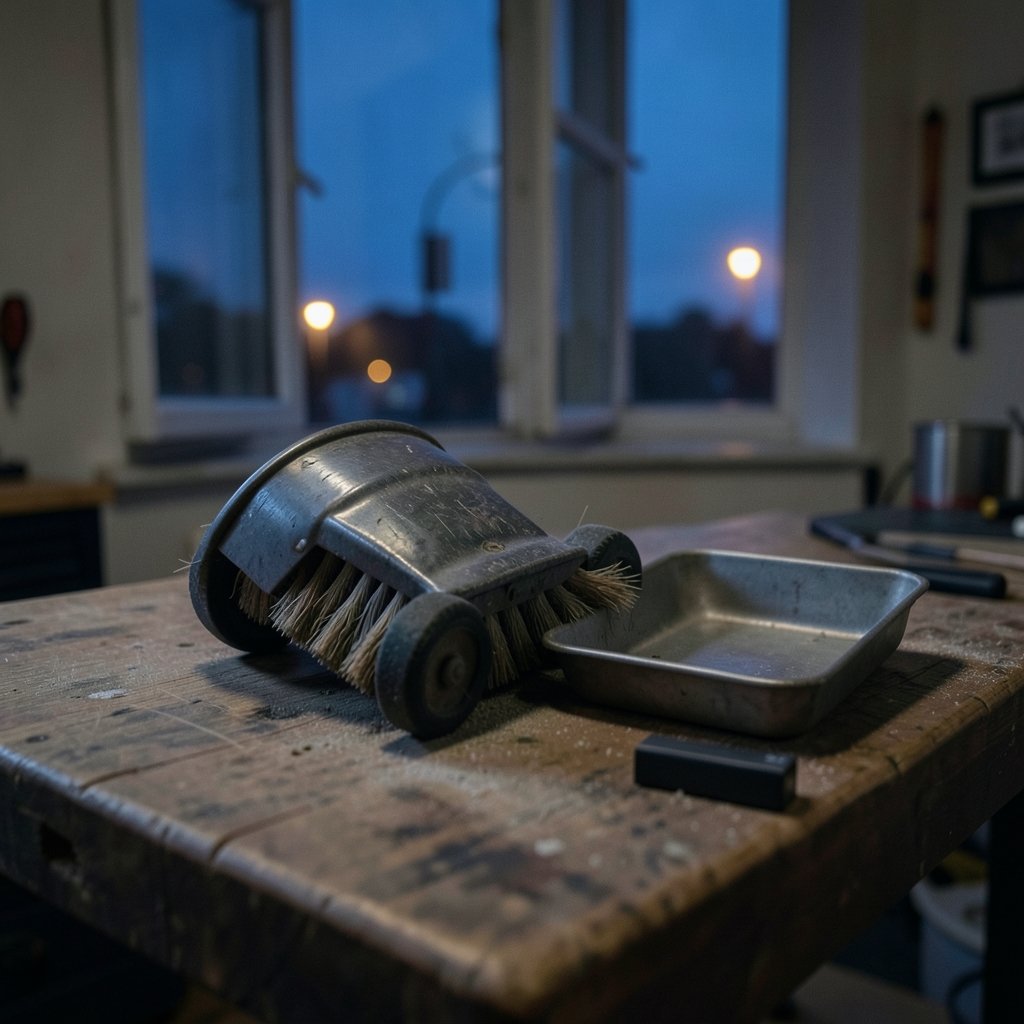
Manual carpet sweepers predate electric vacuum cleaners by decades. The Bissell carpet sweeper was patented in 1876 and worked on a principle that still holds today: wheels turn brushes, brushes lift debris, debris lands in a tray. No motor, no battery, no cord.
Cordless motorized sweepers are a much later variant, and they only became practical once battery technology caught up. That history is worth keeping in mind. The core mechanical idea is nearly 150 years old because it works well for surface debris. The battery is the new part, and the battery is also the part most likely to disappoint you.
Brush-Only or Suction: Which One Do You Actually Need?
This is the decision that matters most, and it’s usually buried under marketing language. Here’s how the two approaches compare in real use.
| Feature | Brush-only cordless sweeper | Cordless stick vacuum |
|---|---|---|
| Best for | Crumbs, hair, grit on hard floors | Mixed floors, rugs, fine dust |
| Fine dust capture | Limited; can re-suspend dust | Good with sealed filtration |
| Runtime | Long, since no suction motor | Shorter; suction drains cells |
| Maintenance | Empty tray, clear brush roll | Empty bin, wash or replace filters |
| Noise | Quiet | Noticeably louder |
| Typical cost | Low to moderate | Moderate to high |
| Rugs and carpet | Surface debris only | Meaningful pickup |
The pattern is consistent. If your home is mostly tile, laminate, or vinyl and your main problem is visible debris, a brush-only sweeper is fast, quiet, and cheap to run. If you have rugs, allergies, or fine dust, you want suction and a sealed filter.
One practical warning that rarely appears in product listings: sweepers that rely on brushes without HEPA filtration can stir fine dust back into the air rather than removing it. For allergy sufferers, public-health guidance generally favors vacuums with sealed filtration. If anyone in the household reacts to dust, that single point should steer the purchase.
Battery Reality: Runtime Claims Versus Your Floor
Manufacturer runtime figures are usually measured in low-power mode with a fresh battery. Real-world runtime drops as the battery ages, as brushes load up with hair, and as you move from smooth tile to anything textured. This is a general pattern across cordless floor care, not a knock on one brand.
Most cordless floor-care devices today use lithium-ion cells, while older or budget models may still use nickel-metal-hydride. Lithium-ion packs are subject to transport testing rules and, in the EU, to the Batteries Regulation (EU) 2023/1542, which entered into force in August 2023 and phases in requirements including removability and replaceability of portable batteries from 2027. Translation for shoppers: replaceable batteries are becoming the norm, and a model with a user-swappable pack will outlast one with a sealed cell.
Disposal deserves a mention too, because it’s where many people get it wrong. Portable batteries should be collected separately in the EU, and US rules vary by state, with California classifying many lithium-ion batteries as universal waste. Curbside recycling is usually not the answer. Check local rules before tossing a dead pack in the bin.
If you want to go deeper on how battery and build choices affect everyday gear, the same logic that applies to choosing the right cord diameter and fiber twist applies here: match the specification to the job, not to the marketing.
How to Compare Specs Without Getting Fooled
There is no single consumer-facing standard for sweeper pickup performance comparable to the IEC 62885 series, which covers dry vacuum cleaning performance for household use. That means manufacturer runtime and pickup numbers are not directly comparable unless the test method is stated. A few habits cut through the noise.
- Look for a stated test mode. If runtime is quoted “in eco mode,” assume normal mode is shorter.
- Check the dustbin volume in liters, not adjectives. A 0.3-liter bin needs emptying constantly on a big floor.
- Confirm whether the brush roll is removable. Hair wraps around fixed brushes and stays there.
- Check battery replaceability before you buy, not after the warranty ends.
- Read the weight. A sweeper you have to carry up stairs at 3 kg feels very different from one at 1.5 kg.
- Verify filter availability. A vacuum with no replacement filters for sale is a disposable appliance.
That last point connects to a broader trend. France introduced a repairability index in 2021, and EU ecodesign rules for vacuum cleaners, starting with Regulation (EU) No 666/2013 and later revisions, keep pushing products toward better efficiency and repairability. Buyers benefit when they check these signals instead of assuming all models are equally serviceable.
Safety, Standards, and the Fine Print
Cordless appliances sold in the US generally fall under UL 1017, the safety standard for vacuum cleaners, blower cleaners, and household floor finishing machines. In the EU, the Low Voltage Directive and EMC Directive apply, with EN 60335-2-2 covering vacuum cleaners. Battery charging adds charger-safety requirements on top.
In practice, this means buying from a seller who can show compliance is worth a small price premium. Cheap unbranded imports sometimes skip certification, and the charger is where shortcuts hurt most. A sweeper is a low-risk appliance right up until a faulty charger is left plugged in overnight.
Common Mistakes People Make
Buying on suction claims alone. A sweeper with strong airflow but a leaky bin just blows dust around. Sealed systems matter more than peak numbers.
Ignoring the floor mix. A brush-only sweeper bought for a carpeted flat becomes a shelf ornament within a month.
Skipping the filter wash schedule. Filters clog, airflow drops, and the machine gets blamed for weak performance that a five-minute rinse would fix.
Storing the battery empty or on the charger permanently. Both shorten pack life. Partial charge and room temperature are kinder.
Assuming cordless means maintenance-free. Brushes need de-hairing, bins need emptying, and contacts need occasional cleaning.
There’s a useful parallel in other gear categories: people often misjudge capacity and performance because the advertised number and the usable number are different things. The same confusion shows up when an external SSD shows less capacity than advertised, and the fix is identical: understand what the spec actually measures before you feel cheated.
Where a Cordless Sweeper Fits in a Cleaning Routine
The honest answer is that a sweeper is a supplement, not a replacement. It shines in three situations:
- Between deep cleans. Quick passes after meals or before guests arrive.
- High-traffic hard floors. Entryways, kitchens, and bathrooms where grit appears daily.
- Fast, quiet cleanups. Early mornings or late nights when a full vacuum is too loud.
It struggles with deep carpet, fine dust, and large debris that clogs a small tray. Households that expect one device to do everything usually end up owning two anyway. Budgeting for a modest sweeper plus a capable vacuum often costs less than one premium hybrid that does neither job brilliantly.
For small organizations and side businesses, the same reasoning applies to tool spending: pick the tools that remove the most repetitive work per dollar. That’s the logic behind the best AI tools that help nonprofits do more with less, and it holds for cleaning equipment too. The cheapest useful tool beats the expensive one you never reach for.
Conclusion
The cordless sweeper is a genuinely useful category hiding behind a badly defined name. Decide first whether you need brush-only sweeping or real suction with filtration. Then check the things marketing pages gloss over: bin size, brush removability, battery replaceability, filter availability, and certification. A quiet brush sweeper for hard floors and a filtered vacuum for rugs will outperform any single compromise purchase. Match the machine to the mess, and the cordless sweeper earns its place by the door.
Frequently Asked Questions
What is a cordless sweeper?
It is a battery-powered cleaning device with no power cord. The label covers rotating-brush push sweepers with a dustbin and no suction, lightweight cordless stick vacuums marketed for hard floors, and small handheld or desktop units. Because the term is not standardized, always check which type a product listing describes.
Is a cordless sweeper as good as a vacuum?
Not for deep cleaning. Brush-only sweepers lift surface debris from hard floors but capture little fine dust and can re-suspend it. Vacuums with sealed HEPA filtration are better for rugs, carpet, and allergy sufferers. A sweeper works best as a fast supplement between proper vacuuming sessions.
How long does a cordless sweeper battery last?
Manufacturer runtime figures are typically measured in low-power mode with a fresh battery. Real runtime falls as the pack ages, brushes load with hair, and surfaces get rougher. Expect noticeably shorter runs after a year or two of regular use, especially on sealed batteries that cannot be replaced.
Can I put a sweeper battery in the trash?
Usually not. Portable batteries should be collected separately in the EU, and US rules vary by state, with California classifying many lithium-ion batteries as universal waste. Take dead packs to a designated battery or e-waste collection point rather than a curbside bin.
Do cordless sweepers need much maintenance?
More than most owners expect. Empty the bin after each use, cut hair off the brush roll regularly, wipe the charging contacts, and wash or replace filters on suction models according to the manual. Skipping these steps is the most common reason a working sweeper starts performing poorly.
What should I check before buying one?
Confirm the type, the dustbin volume in liters, whether the brush roll is removable, whether the battery is user-replaceable, and whether replacement filters are sold. Look for safety certification such as UL 1017 in the US, and read the weight, since a heavy sweeper gets used far less often.



