
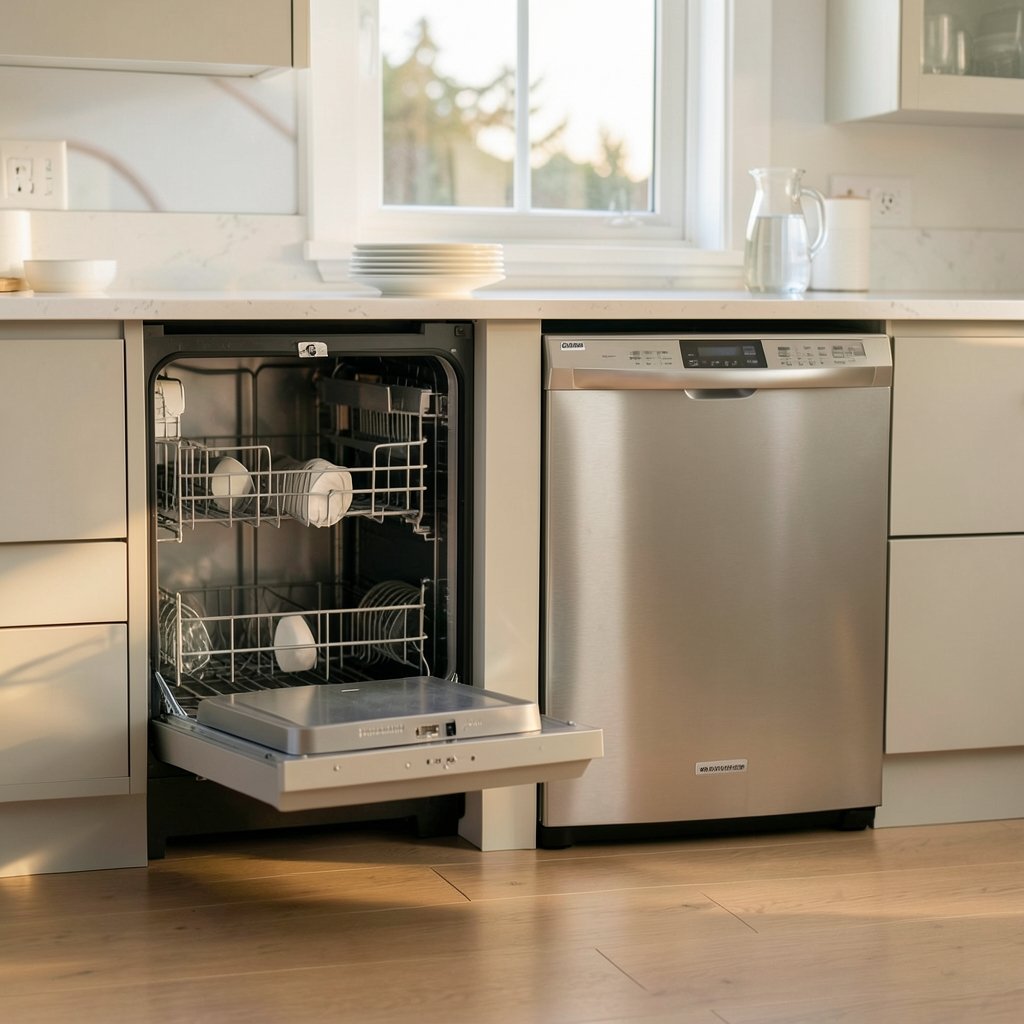
What if the most expensive dishwasher in the showroom quietly loses to a mid-priced model from a brand you have never thought about? That happens more often than most shoppers expect. The label on the door tells you far less than the engineering behind it, the warranty terms inside the manual, and how easy the machine is to repair five years down the road. Picking among the best dishwasher brands is less about chasing a logo and more about matching a brand’s strengths to how your kitchen actually runs.
This guide breaks down the brand landscape the way a careful buyer would: by ownership, reliability patterns, noise, efficiency, service networks, and the small details that decide whether you love the machine or resent it. No hype, no invented rankings. Just the factors that hold up when you compare brands side by side.
Why the Brand Name Matters More Than the Price Tag
Two dishwashers can look identical on the showroom floor and behave completely differently after three years of daily loads. The brand determines who builds the pump, how the racks are coated, whether parts stay available, and how quickly a technician can get to your kitchen.
There is a useful comparison here from the chatbot world. When researchers dig into AI chatbot case studies covering ten brands and their real ROI numbers, the lesson is the same one that applies to appliances: the headline promise rarely matches the lived result. A brand’s reputation is built on what happens after the sale, not on the spec sheet.
Three things genuinely separate brands:
- Build quality of hidden parts. Pumps, seals, and spray arms fail first. Brands that over-engineer these last longer.
- Service depth. A great machine with a thin repair network becomes a headache in rural areas.
- Parts longevity. Some brands stock components for a decade; others discontinue them fast.
The Ownership Map: Fewer Brands Than You Think
Most shoppers do not realize how concentrated the appliance world is. A handful of parent companies own the names on the showroom floor. That matters because brands under the same corporate roof often share platforms, factories, and sometimes even repair networks.
| Parent group | Brands under its roof | General positioning |
|---|---|---|
| BSH | Bosch, Siemens | Premium engineering, quiet operation |
| Whirlpool Corporation | Whirlpool, KitchenAid, Maytag, Amana | Broad range, strong mid-market presence |
| Electrolux | Electrolux, Frigidaire | Value to mid-premium, wide availability |
| Haier | GE Appliances (since 2016) | Large US footprint, mainstream pricing |
| Midea and others | Various value brands | Budget-focused, growing share |
This map is useful because it explains why two “different” brands sometimes feel identical inside. It also explains why a parent company’s reputation for reliability can bleed across its labels. Ownership can change, so it is worth a quick check on a company’s own corporate page before you commit.
How to Judge a Brand Without Getting Fooled
Brand claims are marketing. Independent testing and owner surveys are signal. Consumer Reports runs annual appliance testing and reliability surveys that remain among the most-cited independent inputs for “best brand” claims, though specific rankings shift year to year. Treat any single ranking as one data point, not a verdict.
Here is a practical comparison framework that works regardless of which brand you are eyeing:
| Factor | What to check | Why it matters |
|---|---|---|
| Noise (dB) | Lower is quieter; under 45 dB is very quiet | Open-plan kitchens amplify sound |
| Capacity | Place settings per standard test method | Families run more loads |
| Water and energy use | Per-cycle figures on the efficiency label | Small differences add up yearly |
| Warranty | Full coverage vs. component-specific terms | Tub and motor coverage varies widely |
| Repair network | Local technician availability | A quiet machine you cannot fix is useless |
| Cycle flexibility | Eco, quick, heavy, sanitize options | Real households need variety |
One trap: comparing water and energy use across brands without matching the cycle type. Eco cycles and normal cycles are tested differently, so a brand that looks efficient may simply be quoting its best-case cycle. Always compare like with like.
Reliability Versus Satisfaction: The Split That Trips Up Buyers
Here is a finding that surprises a lot of shoppers: brands that score well on owner satisfaction do not always top repair-rate surveys, and the reverse is also true. A brand can delight owners with quiet operation and sleek design while quietly logging more service calls than a plainer competitor.
That divergence matters because most buyers weight the wrong signal. Satisfaction surveys capture how a machine feels to live with. Repair surveys capture how often it breaks. You want a brand that does reasonably well on both, not one that wins on a single metric.
Practical advice from the field: ask a local appliance repair technician which brands they see least often for major failures. Their answer is often blunt and occasionally contradicts the showroom narrative. It is one of the most honest signals available, and it costs nothing.
Efficiency Labels: Reading Them Correctly
Efficiency certification is where brand marketing gets loudest. In the US, Energy Star is the EPA and DOE labeling program, and qualifying dishwashers must meet specified energy and water limits. Those criteria have tightened over time, so an older certified model and a newer one are not directly comparable.
In Europe, the picture changed significantly. The EU rescaled its energy label to a plain A to G scale without the old A+/A++ classes, and that rescaling applied to dishwashers from 1 March 2021. If you are comparing a European brand’s claims across label generations, you are comparing two different scales. That is a genuine source of confusion, not a brand flaw.
US federal minimum standards are set by the Department of Energy under the Energy Conservation Program for Consumer Products, and those standards have been revised multiple times. The yellow EnergyGuide label you see on appliances is an FTC requirement, and it estimates yearly operating cost. It is a rough tool, but it is consistent across brands, which makes it more useful than a brochure.
Noise and Capacity: The Numbers That Actually Compare
Noise ratings in decibels and capacity in place settings are standardized comparison metrics, which makes them unusually trustworthy. Capacity is typically stated per IEC or EN test methods, so a “14 place setting” claim means roughly the same thing across brands.
A few practical notes:
- Under 45 dB is genuinely quiet. Under 40 dB is near-silent in a normal room.
- Place settings assume a standard load. Real families load differently, so a 12-setting machine can feel roomier than a 14-setting one with awkward rack geometry.
- Third racks are not equal. Some are useful for cutlery; others barely fit a spatula.
Rack design is where brands differentiate most, and it is the hardest thing to judge from a spec sheet. Open the door in the store. Pull the racks out. Load a mental picture of your dirtiest pot. If it does not fit comfortably, the brand’s reputation will not save you.
The Value Question: Where Budget Brands Actually Win
Budget brands get dismissed too quickly. A well-chosen value machine from a large parent group can deliver solid cleaning, decent efficiency, and a wide service network for a fraction of a premium price. The trade-offs tend to show up in noise, rack refinement, and long-term durability rather than in basic wash performance.
There is a parallel worth borrowing from other buying decisions. Take e-bikes: the smart move is to pick a brand that fits your actual life rather than the one with the flashiest spec sheet. Appliances reward the same discipline. Match the machine to your household size, your kitchen layout, and your tolerance for noise, not to a ranking.
Where budget brands genuinely win:
- Second homes and rentals, where durability matters less than cost.
- Small households that run a few loads a week.
- Tight kitchens where a compact model from a mainstream brand beats a premium full-size unit that will not fit.
Where they lose: heavy daily use, open-plan living where noise is constant, and households that expect a machine to last a decade.
Service Networks and Warranty Fine Print
Warranty length varies by brand and by component. A common pattern is one year of full coverage, with longer terms on specific parts like the tub, racks, or motor. Those component warranties sound generous until you read what they exclude, and labor is frequently excluded after the first year.
Before buying, check three things:
- Who services the machine locally. A brand with no authorized technician within an hour’s drive is a risk.
- What the component warranty actually covers. “Lifetime tub warranty” often means parts only, not labor.
- Whether parts stay available. Ask how long the brand stocks replacement components for discontinued models.
The service question is where a strong brand can stumble. A premium name with a thin rural network can be a worse practical choice than a mid-tier brand with a technician ten minutes away. Availability, service depth, and price all differ by country, so US-centric rankings do not automatically transfer to other markets.
Where Brand Reputation Shows Up in Unlikely Places
Brand discipline is a strange and useful teacher. Consider watches: a railroad-era name built its reputation on precision and standardization, and that legacy still sells today, as this look at a railroad watch brand that still glows today shows. Appliances follow the same logic. A brand that standardized its internals and stood behind them earns loyalty that outlasts any single model year.
The same pattern appears in food and drink. A distillery that keeps one production method for generations builds trust that marketing cannot buy, which is exactly what makes this Dutch pot still vodka brand different. Dishwasher brands that stick with proven platforms rather than chasing every trend tend to have fewer surprises in year five.
Common Mistakes Buyers Make
Even careful shoppers stumble in predictable ways. Watch for these:
- Buying on noise rating alone. A quiet machine that cannot fit a roasting pan is a bad trade.
- Ignoring the service network. Check local repair options before you fall in love with a model.
- Comparing efficiency across different label generations. The scales changed, and older claims are not equivalent.
- Skipping the rack test. Rack geometry decides daily usability more than any spec.
- Assuming a premium brand guarantees a premium experience. Parent-company platforms blur the lines between labels.
Conclusion
The best dishwasher brand is not a single name. It is the brand whose engineering, service network, and price align with your household. Premium groups like BSH earn their reputation on quiet operation and build quality. Whirlpool’s family of brands covers the middle of the market well. Electrolux and GE Appliances offer broad availability and sensible value. Budget names from large parent groups can be genuinely smart buys for lighter use.
Judge brands on the things that hold up: repair rates alongside satisfaction, standardized noise and capacity figures, honest efficiency comparisons, and a service technician you can actually reach. Get those right, and the logo on the door becomes a detail rather than a gamble.
FAQ
Which dishwasher brand is the most reliable?
There is no single winner, and any claim to one should be treated with suspicion. Reliability surveys and owner-satisfaction surveys often disagree, and rankings shift year to year. The safer approach is to check independent testing, ask a local repair technician which brands they see least often, and confirm that service is available in your area.
Is a more expensive dishwasher brand always better?
No. Price buys quieter operation, better rack design, and more refined build quality, but basic wash performance is solid across most price tiers. A mid-priced machine from a large parent group with a strong local service network can outperform a premium model in practical terms.
How many decibels is considered quiet for a dishwasher?
Under 45 dB is generally considered quiet, and under 40 dB is near-silent in a normal room. If your kitchen opens onto a living area, prioritize a lower rating. If the machine sits in a separate room, noise matters far less and you can spend that budget elsewhere.
Do Energy Star and EU energy labels compare directly?
No. Energy Star is a US certification with criteria that have tightened over time, while the EU rescaled its label to a plain A to G scale, applied to dishwashers from 1 March 2021. Comparing claims across those systems, or across label generations, is not apples to apples. Match the cycle type too, since eco and normal cycles are tested differently.
How long should a dishwasher last?
Most machines last roughly a decade with regular use, though this varies widely by brand, water hardness, and how heavily the machine runs. Component warranties often outlast the full-coverage period but usually cover parts only. Checking parts availability before you buy is a practical way to protect that lifespan.
Does brand ownership really affect quality?
It can. Brands under the same parent group often share platforms, factories, and sometimes service networks, so a parent company’s engineering standards can carry across its labels. That is why two differently named machines can feel similar inside. Ownership changes over time, so verify current corporate information before you commit.



