
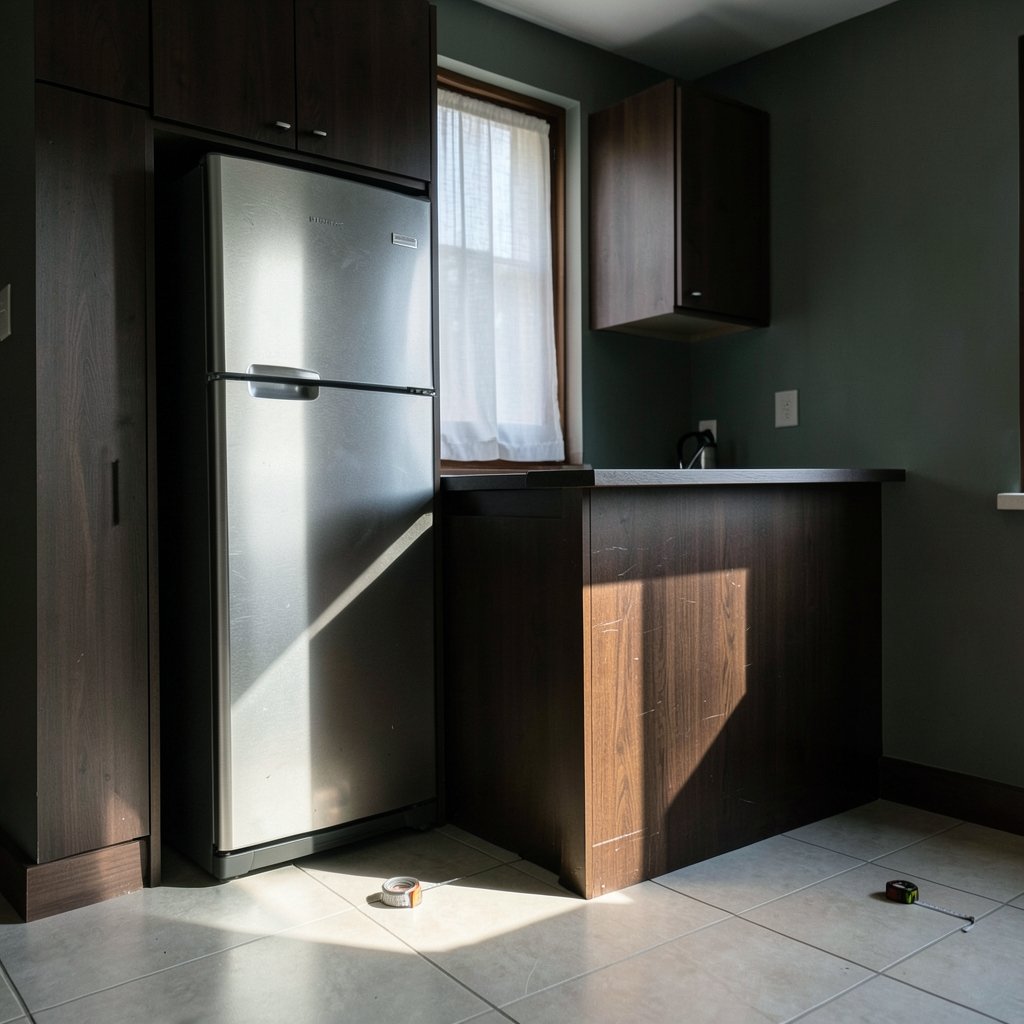
What if the fridge you’ve been eyeing fits your kitchen perfectly on paper, but the doors won’t open past the counter? That’s the trap waiting inside the phrase best counter depth fridge. The label sounds precise. It isn’t. Counter depth is a retail category, not a formal standard, and the numbers behind it drift from brand to brand. Pick the wrong model and you get a fridge that sticks out anyway, loses usable space, or blocks the drawer you open every morning. Pick the right one and your kitchen suddenly looks built for the appliance instead of the other way around. (Does walmart do money orders expect at counter)
What “Counter Depth” Actually Means
Standard kitchen base cabinets run about 24 inches deep. That figure is the whole reason the term exists. A counter-depth refrigerator is designed so its cabinet roughly lines up with that line, typically landing around 24 to 25 inches deep. Standard-depth fridges, by comparison, run roughly 30 to 36 inches.
Here’s the catch nobody mentions at the showroom: that depth usually measures the box, not the finished unit. Handles, hinges, and door bins add inches. A fridge sold as counter depth can still poke two or three inches past your countertop once it’s installed and loaded with a gallon of milk in the door.
The label is also used loosely. Some manufacturers slap “counter depth” on models up to 28 or 30 inches deep. Others have quietly shifted what they call standard depth. The practical rule is simple and slightly annoying: ignore the label, read the spec sheet, and compare actual numbers with handles included.
The Real Trade-Off: Looks Versus Capacity

Counter-depth models generally hold less than standard-depth fridges of the same exterior width. The box is shallower, so the volume is smaller. That’s physics, not marketing spin. For a household that shops weekly and cooks most nights, the difference is noticeable, especially in the freezer.
Think of it like a money counter machine that promises speed but jams on wrinkled bills — the spec sheet looks great until daily use exposes the gap. The same logic applies here. A beautiful flush fit means nothing if you’re playing freezer Tetris every Sunday. Buyers who need maximum storage often do better with a standard-depth model and a carefully planned layout, while buyers who care most about sightlines and walkway space tend to be happier with counter depth.
| Feature | Counter Depth | Standard Depth |
|---|---|---|
| Cabinet depth | About 24 to 25 inches | About 30 to 36 inches |
| Finished depth with handles | Usually greater than cabinet depth | Usually greater than cabinet depth |
| Usable capacity | Lower for the same width | Higher for the same width |
| Visual fit | Roughly lines up with counters | Protrudes past counters |
| Price tendency | Often higher for similar features | Often lower for similar features |
Measure These Five Things First
Most counter-depth regrets trace back to skipped measurements. Do these before you fall in love with a model.
- Cabinet depth. Measure from the wall to the front edge of your base cabinets, not the countertop edge.
- Countertop overhang. Standard counters overhang the cabinet by roughly an inch or so. That overhang is what your fridge doors have to clear.
- Finished depth with handles. Find this on the spec sheet or measure a floor model. Add door bins if the manufacturer lists them separately.
- Door swing and side clearance. Counter-depth fridges often need extra room so doors open past drawers and adjacent counters. Some use zero-clearance hinges, but you have to confirm that for the specific model.
- The path in. Doorway width, hallway turns, and stair landings decide whether the fridge reaches your kitchen at all.
Write the numbers down. Bring a tape measure to the store. A salesperson who can’t produce a spec sheet with handle depth listed is not the person to trust with a four-figure purchase.
Counter Depth vs. Built-In vs. Panel-Ready
These three get mixed up constantly, and the price gap between them is large.
Counter-depth freestanding models are the middle option. They’re shallower than standard fridges, they ventilate from the back or bottom, and they’re designed to stand mostly on their own visually.
Built-in refrigerators are engineered to sit flush and are typically shallower and considerably more expensive. They’re part of the cabinetry plan, not an afterthought.
Panel-ready models accept custom door panels so the fridge disappears into the kitchen. They cost more and demand precise cabinetry work.
If your goal is a kitchen that looks intentional without a remodel, counter depth is usually the sweet spot. If you’re mid-renovation and the budget allows, built-in or panel-ready delivers the flush look more reliably.
Energy and Running Costs
Counter depth doesn’t automatically mean lower energy use. Efficiency is governed by federal appliance standards and disclosed on the yellow EnergyGuide label, which lists estimated kWh per year. Compare that number across models rather than assuming a smaller box wins. A well-insulated counter-depth fridge with an efficient compressor can beat a cheaper standard-depth unit, and vice versa.
Two practical notes. First, a fridge crammed against a wall with no air clearance works harder. Second, door bins stuffed with heavy bottles stress hinges and gaskets. Both habits cost you money over a decade of ownership, regardless of which model you buy.
Features Worth Paying For (and Ones to Skip)
Not every upgrade earns its price. Here’s how the value usually shakes out.
Worth it: adjustable shelving that actually moves, a freezer you can organize without excavation, solid door bins, and a warranty that covers the sealed system for a meaningful period.
Situational: ice makers and water dispensers. They’re convenient, but they eat interior space and add a common failure point. If your household doesn’t use ice daily, skip them.
Usually skip: smart screens and app connectivity on a fridge. The novelty fades faster than the warranty. Put that money toward a better compressor or a quieter model.
Noise is another underrated spec. Open-plan kitchens amplify compressor hum. If your living room shares a wall with the kitchen, listen to a running floor model or check decibel ratings before committing.
Common Mistakes Buyers Make
The same errors show up again and again in counter-depth purchases.
- Trusting the label over the tape measure. “Counter depth” on the box does not guarantee a flush fit.
- Forgetting the handles. A 24-inch cabinet with three-inch handles is a 27-inch problem.
- Ignoring the door swing. A door that hits the island every time is a daily annoyance you can’t unsee.
- Assuming capacity parity. Two fridges with the same width can differ substantially in usable liters.
- Skipping the delivery path. Measure the front door before the sale, not after.
- Overlooking clearance specs. Manufacturers publish required air gaps. Ignoring them shortens the fridge’s life.
There’s a parallel in how people misjudge everyday tools: online converters promise instant answers, but the money counter online tools can’t do everything, and a fridge spec sheet can’t either. The details you verify yourself are the ones that save you.
How to Compare Models Without Getting Fooled
Build a simple comparison sheet before you shop. Columns for cabinet depth, finished depth with handles, usable capacity in cubic feet, kWh per year, noise rating, warranty length on the sealed system, and required clearance. Fill it in from spec sheets, not from memory or a sales pitch.
Then rank by what you actually live with. If your kitchen is narrow, depth and door swing come first. If you cook for five, capacity outranks aesthetics. If the fridge sits beside a wall, clearance requirements become non-negotiable.
One more habit that pays off: check the model’s current status before buying. Appliance lines get discontinued quietly, and a great price on a discontinued unit can mean parts scarcity later. A quick look at recall notices and owner forums takes five minutes and occasionally saves a headache. The same instinct applies to any connected device in your home; when a breach hits, as with the double counter discord bot breach that exposed 28 million accounts, the lesson is that convenience features carry obligations. A fridge with a smart screen is a small computer in your kitchen. Treat it like one.
Matching the Fridge to Your Kitchen’s Layout
Layout decides more than style ever will. A few common situations and what tends to work:
Galley kitchen. Depth is king. A true counter-depth model keeps walkways usable, and a single-door or French-door configuration with tight hinges prevents traffic jams.
Fridge beside a wall. Door swing and clearance specs matter more than capacity. Check whether the model needs side gap or offers zero-clearance hinges.
Fridge at the end of a run. A counter-depth unit here reads as intentional cabinetry rather than an appliance parked in the open.
Open-plan kitchen and living space. Prioritize noise ratings and a clean front profile. You’ll notice both every evening.
Small household, big kitchen. Capacity matters less. Spend the budget on efficiency and quiet operation instead.
If you’re also planning around seasonal schedules and household logistics, the same discipline applies as when people map out lent 2027 dates and the 40-day count to prepare; the plan only works if the dates and details are checked against reality. Kitchen planning rewards the same rigor.
Conclusion
The best counter depth fridge isn’t the one with the flashiest label. It’s the one whose finished depth, door swing, clearance needs, and usable capacity match your actual kitchen and your actual grocery habits. Measure your cabinets, measure the overhang, demand the spec sheet with handles included, and compare kWh per year instead of assuming. Counter depth buys you sightlines and walkway space at the cost of interior volume. Whether that trade is worth it depends entirely on numbers you can verify with a tape measure in about ten minutes. Do that first, and the showroom becomes a lot less confusing.
Frequently Asked Questions
How deep is a counter depth refrigerator really?
Cabinet depth typically lands around 24 to 25 inches, but finished depth with handles and hinges usually runs greater. Some manufacturers stretch the label to 28 or 30 inches, so always check the spec sheet for the specific model rather than trusting the category name.
Does counter depth mean less storage space?
Generally yes. For the same exterior width, a shallower box holds less volume than a standard-depth model. The gap is most noticeable in the freezer. Households that shop in bulk often prefer standard depth for that reason.
Will a counter depth fridge sit flush with my counters?
Not automatically. Handles, hinges, and door bins protrude, and countertop overhang adds another variable. Many counter-depth models still stand slightly proud of the counter line. Measure the finished depth and compare it to your counter edge before buying.
What clearance does a counter depth fridge need?
It varies by model. Some need side gaps for doors to swing past drawers and counters, while others use zero-clearance hinges. Manufacturers publish required air clearance in the installation guide, and ignoring it can shorten the appliance’s life and raise energy use.
Is counter depth worth the extra cost?
It depends on your priorities. If walkway space, sightlines, and a kitchen that looks planned matter most, the premium is usually justified. If maximum storage per dollar is the goal, a standard-depth model often wins.
Do counter depth fridges use less energy?
Not necessarily. Efficiency is set by federal appliance standards and disclosed on the EnergyGuide label as estimated kWh per year. Compare that figure across models directly instead of assuming a smaller box uses less power.



