
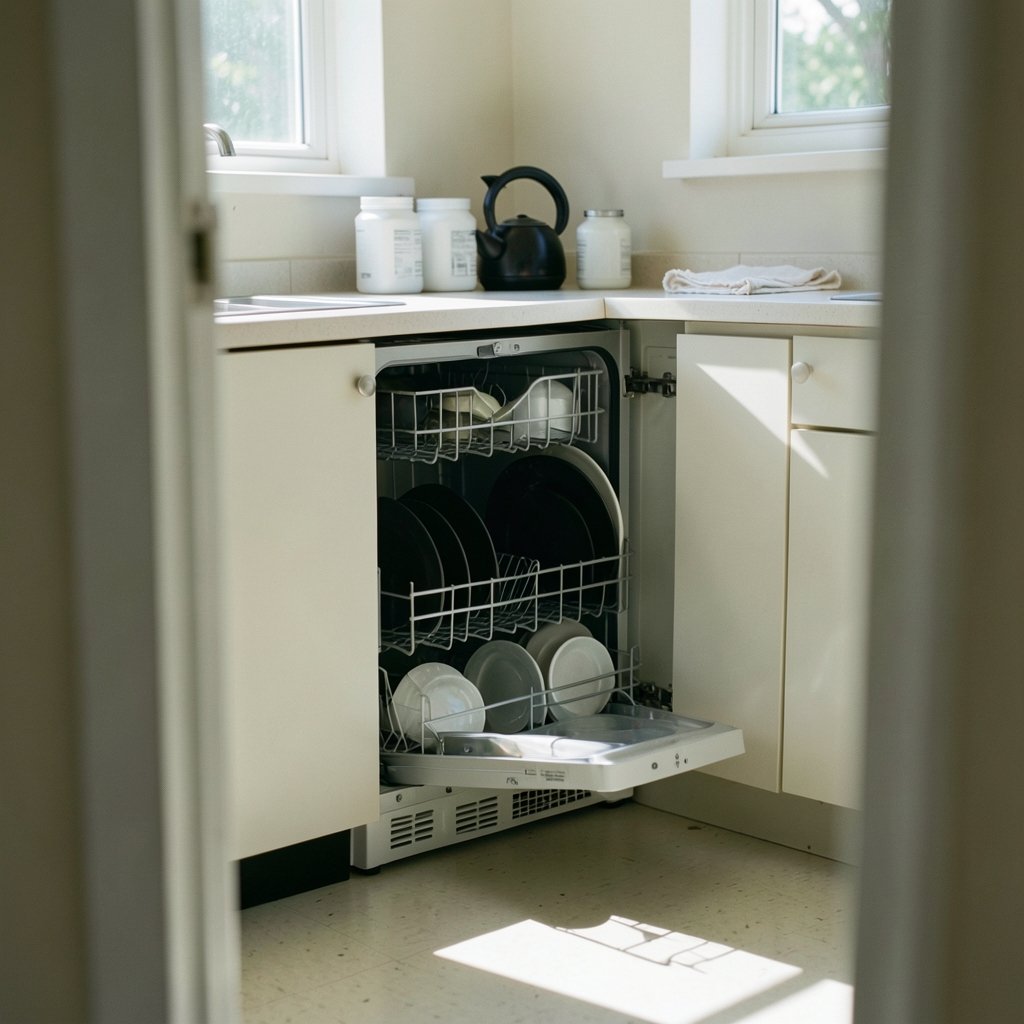
What if the cheapest dishwasher on the shelf turned out to be the most expensive one you ever owned? It happens more often than people think. A budget machine that guzzles electricity, breaks down in year three, or needs a repair part nobody stocks can quietly cost more than a mid-range model that just keeps running.
The good news is that “affordable” and “cheap” are not the same thing, and the gap between them is where smart buyers live. This guide walks through what makes a dishwasher genuinely good value, where budget models cut corners, and which numbers on the spec sheet deserve your attention before you hand over any money.
Why the Sticker Price Is Only Half the Story
Here is the number most shoppers ignore: over a typical ten-year life, electricity and water costs can rival or even exceed the price difference between a budget dishwasher and a mid-range one. The purchase price is a one-time hit. Running costs compound every single week.
That changes the math completely. A machine that costs a little more upfront but sips power and water can end up cheaper by year four or five. This is the same logic that makes people rethink bigger purchases too, whether they are weighing affordable home renovation ideas that actually pay off or deciding whether a premium washer really gives you commercial-grade durability for the money. Total cost of ownership beats sticker shock every time.
So the first rule of buying an affordable dishwasher: treat the price tag as the down payment, not the full bill.
Reading the Energy Label Without Getting Fooled
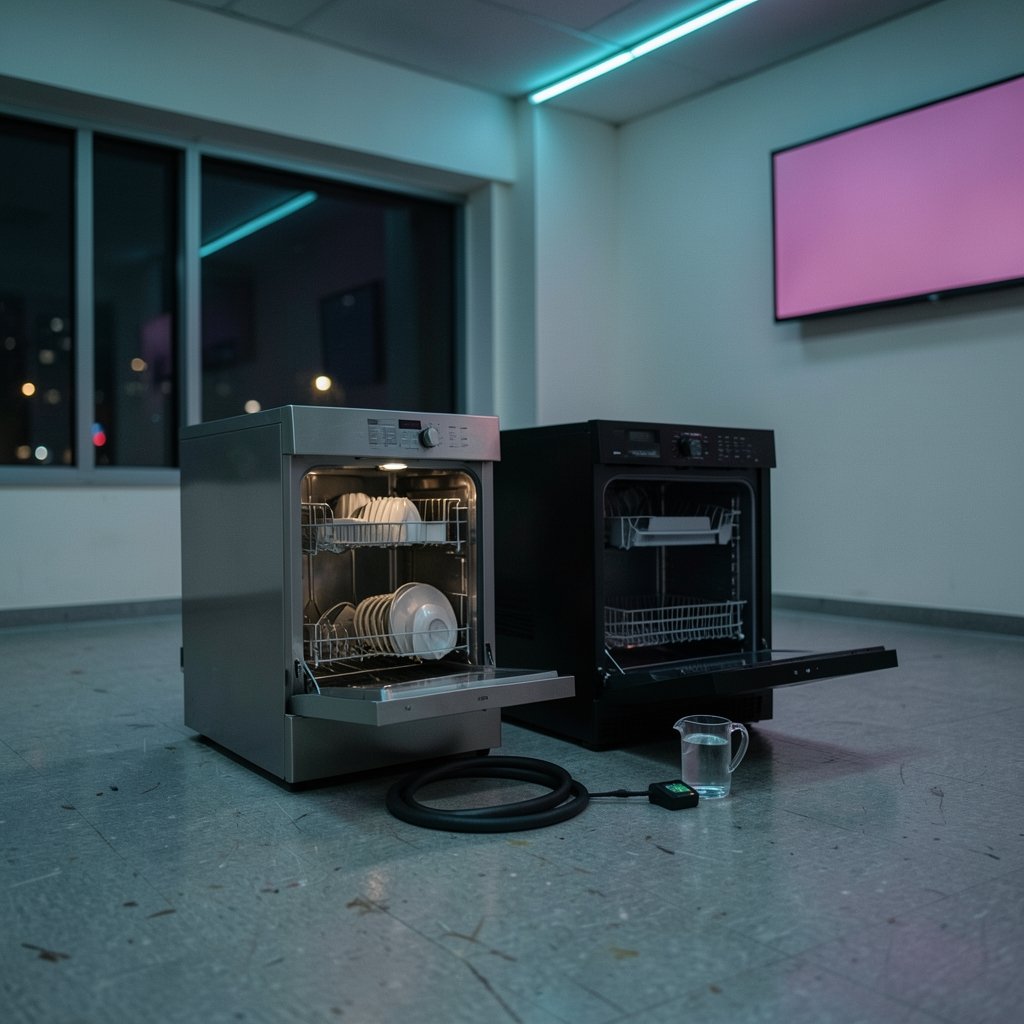
Energy labels are useful, but only if you know what changed. In the EU, dishwashers sold since 1 March 2021 carry a rescaled A to G energy label with a new energy-efficiency index. The old A+++ ratings were retired entirely. If a seller still advertises “A+++ efficiency,” that label is from the old system, and the machine is likely older stock.
In the US, the yellow EnergyGuide label estimates annual energy use and cost using a standard formula: kilowatt-hours per year multiplied by a national average electricity price. That is an estimate, not a promise. Your real bill depends on local tariffs and how often you run the machine.
A few practical tips for reading labels in the store:
- Compare kWh per 100 cycles, not per year, when possible. It normalizes the numbers.
- Check the water consumption figure alongside energy. Efficient full-size models typically use roughly 9 to 13 litres (about 2.5 to 3.5 US gallons) per normal cycle, while older or less efficient units use much more.
- Look at which program the label figures refer to. Eco modes flatter the numbers; a heavy pots cycle can use far more.
- Ignore “quick wash” claims unless the label reflects them. Fast cycles often trade efficiency for speed.
One common mistake: buying based on the big letter grade alone and ignoring the actual kWh figure. Two machines can both wear an A label while one uses noticeably less energy. The number matters more than the letter.
Capacity, Size, and Fitting It Into Your Kitchen
Capacity is usually stated in place settings. Full-size European models commonly run 12 to 14 place settings. US models also quote place settings, but the definitions differ between markets, so cross-market comparisons are unreliable. If you are comparing a European import spec sheet with a US one, do not assume the numbers mean the same thing.
Physical size is the constraint that catches people out. Standard full-size machines are typically 60 cm (24 inches) wide, while slimline models run about 45 cm (18 inches). Under-counter and freestanding versions have different installation needs. Before you fall in love with a model, measure the gap, check the door swing clearance, and confirm where the water supply and drain will connect.
Water hardness is the quiet killer of budget dishwashers. If you live in a hard-water area and never adjust the machine’s hardness setting or top up the salt, limescale builds up, heating elements work harder, and the machine dies young. Cheap models often have basic or awkward hardness settings, so check the manual before buying. A machine that fits your water is worth more than one with a fancy display.
Noise: The Spec Nobody Checks Until It Is Too Late
Noise is rated in dB(A), measured under the IEC 60704 series of standards for household appliances. Affordable models commonly land around 44 to 52 dB(A). Anything below roughly 44 dB(A) counts as genuinely quiet.
Why does this matter for an affordable buy? Because open-plan kitchens are everywhere, and a 52 dB(A) machine running during dinner conversation is noticeable. It is not a dealbreaker, but it is the kind of detail that turns a good purchase into a daily annoyance. If your kitchen opens onto a living area, spend a little of your budget on lower decibels rather than extra programs you will never use.
Where Budget Dishwashers Cut Corners
Affordable machines are not magically worse at washing dishes. Most of them clean fine. The savings usually come from somewhere else, and knowing where helps you judge the trade.
| Feature | Typical budget model | Typical mid-range model |
|---|---|---|
| Noise level | 46 to 52 dB(A) | 42 to 46 dB(A) |
| Baskets and racks | Basic wire, fewer adjustments | Flexible, folding tines |
| Third rack for cutlery | Often missing | Common |
| Drying method | Residual heat | Heat exchange or fan-assisted |
| Programs | Core cycles only | Eco, intensive, half-load, delay |
| Warranty | Often 1 to 2 years | Often 2 to 5 years |
| Spare parts availability | Varies widely by brand | Usually stronger |
The pattern is clear: you are mostly paying for comfort, flexibility, and long-term support rather than raw cleaning power. That is a useful thing to know, because it means a well-chosen budget model can serve a small household perfectly well.
The trap is buying a budget machine from a brand with no local service network. Repair and parts availability belong in your total cost calculation. A cheap machine that cannot be fixed in year four is not affordable. It is disposable. Check warranty length, confirm that spare parts are stocked in your country, and look at whether local technicians service the brand. This mirrors the thinking behind choosing affordable business software that actually fits growing companies: the cheapest option that nobody can support becomes the most expensive one.
The Reliability Question Nobody Can Fully Answer
Here is an uncomfortable truth: independent reliability data for dishwashers is scarce and mostly locked behind paywalls. Consumer organisations that test appliances usually publish their findings to subscribers only. That means public claims like “the most reliable budget brand” are hard to verify, and you should treat them with suspicion, especially when they come from a retailer.
What can you do instead?
- Read owner reviews specifically for problems that appear after one to two years, not first-impression reviews.
- Look for patterns. One complaint is noise; twenty complaints about the same control board is a signal.
- Check how long the brand has sold dishwashers in your market. Longevity usually means parts pipelines exist.
- Ask a local repair technician what they see most often. This is the single most useful five-minute conversation in the whole buying process.
This is exactly the kind of practical check that saves money on other household purchases too, whether you are decoding what each clothing wash care symbol actually means so clothes last longer, or picking a gentle cleanser for retinol routines that will not wreck your skin. The pattern is the same: small research habits prevent expensive mistakes.
Programs, Cycles, and the Eco Mode Reality
Budget machines tend to offer fewer programs, and that is mostly fine. Most households use two cycles: a normal wash and an eco wash. Everything else is decoration.
What actually matters is how the eco mode performs. Eco cycles run longer at lower temperatures, which is how they save energy. A three-hour eco cycle is normal and not a fault. The mistake people make is assuming eco mode is a compromise. In most cases it cleans just as well, provided you scrape rather than rinse and load the machine sensibly.
Two practical habits that stretch any dishwasher, budget or not:
- Skip the pre-rinse. Modern machines and detergents handle food residue, and rinsing wastes hot water.
- Run full loads, but do not overpack. Water needs to reach every surface, and blocked spray arms mean rewashing by hand.
Also check whether the machine has a half-load option if you live alone. It is one of the few extras genuinely worth paying for in a small household.
Setting a Realistic Budget
Affordable is a range, not a number. A sensible approach is to set your ceiling, then decide which two features matter most to you, whether that is quiet operation, a third rack, or a longer warranty. Spend your budget there and accept basic everything else.
If you are juggling several big purchases at once, it helps to see how other buyers weigh value. The same thinking that goes into comparing lease deals or deciding what a model-year carryover really means for buyers applies here: the headline number is the start of the conversation, never the end of it.
A realistic checklist before you commit:
- Confirm the energy and water figures per cycle as well as the annual estimate.
- Check the dB(A) rating against your kitchen layout.
- Verify the warranty length and whether parts are stocked locally.
- Measure the space, the door swing, and the plumbing connections.
- Confirm the water hardness setting is adjustable.
Get those five right and almost any well-supported budget model will serve you well.
Conclusion
The best affordable dishwasher is not the cheapest one on the shelf. It is the machine with low running costs, a noise level you can live with, and a brand that can still fix it in year five. Energy labels, water figures, and decibel ratings tell you more about long-term value than any showroom display ever will. Set a realistic budget, decide which two features matter most, and spend there. Do that, and affordable stops meaning cheap and starts meaning smart.
Frequently Asked Questions
How much should I expect to spend on an affordable dishwasher?
Prices vary too much by country and season for a single figure to hold, and model line-ups change constantly. Instead of chasing a number, set a ceiling and compare machines within it on running costs, noise, warranty, and parts availability. A slightly higher price with lower energy and water use often wins over ten years.
Is a cheaper dishwasher more expensive to run?
Not automatically, but often. Over a typical ten-year life, electricity and water costs can rival or exceed the price gap between a budget and a mid-range model. Always compare the kWh per cycle and the water consumption per cycle alongside the purchase price.
What noise level is acceptable for a budget dishwasher?
Affordable models commonly sit around 44 to 52 dB(A), measured under the IEC 60704 standards. Below roughly 44 dB(A) is considered quiet. If your kitchen opens onto a living space, prioritize a lower decibel rating over extra wash programs.
Do I need to worry about hard water with a budget model?
Yes. Hard water causes limescale, which makes the heating element work harder and shortens the machine’s life. Check that the model has an adjustable water hardness setting, keep the salt topped up, and read the manual rather than assuming the factory setting suits your area.
How many place settings do I actually need?
For one or two people, a slimline model or a full-size machine with a half-load option usually works well. For families, 12 to 14 place settings is the common full-size range. Be careful comparing place settings across different markets, because the definitions are not standardized between them.
What should I check before ordering a specific model?
Measure the space, door swing, and plumbing connections first. Then confirm warranty length, whether spare parts are stocked in your country, and whether local technicians service the brand. A quick conversation with a repair technician about common failures is often more useful than any spec sheet.



