
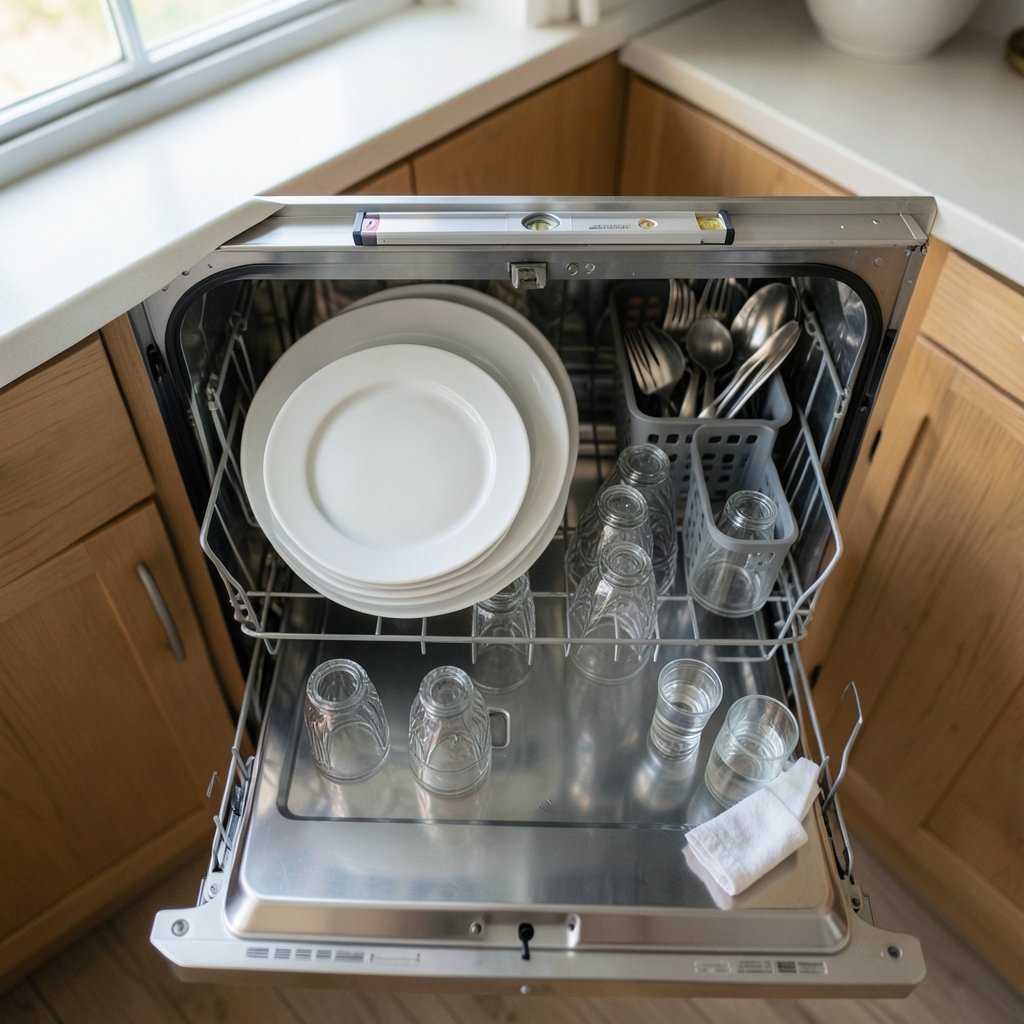
What if the most important number on a new dishwasher’s spec sheet isn’t the one printed in giant font on the showroom sticker? Shoppers walk in hunting for a brand name or a bargain, then walk out with a machine that’s too loud for an open kitchen, too tall for the counter, or too thirsty for a household that runs it twice a day. A new dishwasher is a ten-year purchase disguised as a weekend errand. Getting it right comes down to a handful of decisions most people make in the wrong order.
Start With the Space, Not the Specs
The single most common and most expensive mistake is buying a beautiful machine that doesn’t fit. Standard under-counter dishwashers in the United States are 24 inches wide, while European models are commonly 60 cm, and the two families are not interchangeable without cabinet surgery. Height matters just as much: many models assume a countertop at roughly 34 inches, and a machine with an adjustable feet range that tops out too low will not slide under a stone counter.
Before shopping, measure three things and write them down: the width of the opening, the height from the floor to the underside of the counter, and the depth available behind the door swing. Then check the doorway and stairwell the delivery crew will use. A dishwasher box is bulky, and a tight corner landing can turn a free delivery into a refused one.
Also confirm what the space offers. A dedicated circuit and proper grounding are typical requirements, and local codes in many jurisdictions now call for GFCI or AFCI protection. If the old machine sat on a shared circuit, that is a conversation to have with an electrician before the new unit arrives, not after.
The Energy Label Decoded
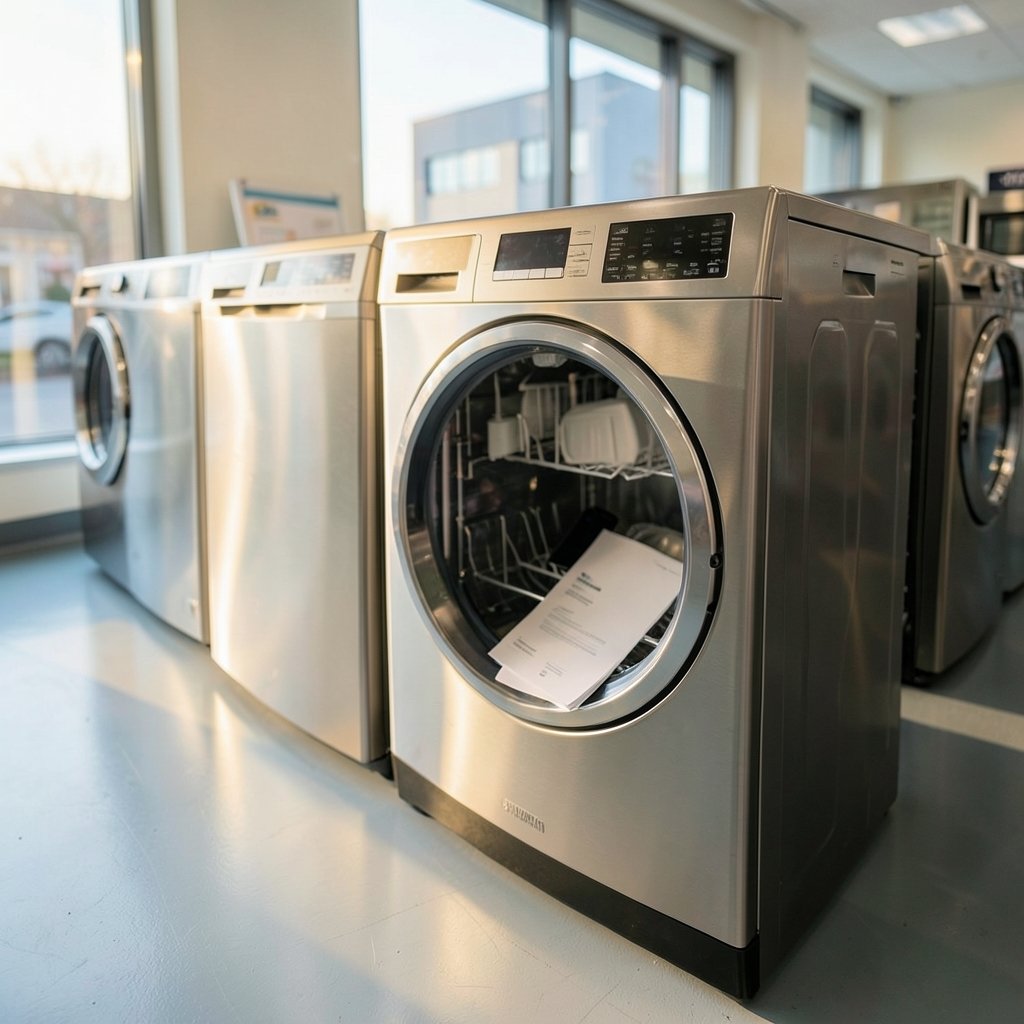
In the EU, dishwashers have carried a rescaled A to G energy label since March 2021, and the old A+++ ratings are retired. Each label includes a QR code that links to a public product database, so a shopper can pull up the exact model’s consumption figures on a phone while standing in the aisle. That is a genuinely useful habit: the label on the shelf and the label on the box do not always describe the same configuration.
In the United States, Energy Star qualification requires a dishwasher to be at least 12 percent more energy-efficient and 30 percent more water-efficient than the federal minimum standard. Federal minimum standards for residential dishwashers date to 2013, and the Department of Energy proposed revisions in 2024, so the rulemaking status is worth checking rather than assuming.
Here is the practical translation:
| What the label says | What it means in a real kitchen |
|---|---|
| Annual energy in kWh | Lower is better, but a difference of a few kWh is pennies per month |
| Water per cycle in litres or gallons | The number that matters most for daily habits |
| Noise in dB(A) | The number that matters most for open-plan homes |
| Eco or normal program duration | Longer cycles usually use less energy, not more |
Modern full-size machines typically use roughly 9 to 13 litres, or about 2.5 to 3.5 US gallons, per normal cycle. Hand-washing the same load is often estimated at 40 litres or more. That gap is the real argument for a dishwasher, and it collapses if you pre-rinse every plate under a running tap. Scrape, don’t rinse, is the rule that makes the efficiency numbers true.
Noise: The Spec Nobody Regrets Paying For
Noise is measured in dB(A), and the scale is not intuitive. A quiet model sits around 39 to 45 dB(A), while very quiet machines reach the low 30s. Because the decibel scale is logarithmic, the gap between 44 and 38 is more noticeable than the numbers suggest. Measurement standards differ between regions, and manufacturers test to their own declared conditions, so treat published figures as a comparison tool rather than a promise.
If the kitchen opens onto a living area, or if anyone in the house works from home, spend the extra money here. If the dishwasher lives in a separate utility room behind a closed door, save it. Buyers who skimp on noise and then discover the machine runs at midnight tend to regret it more than any other compromise, because there is no retrofit for a loud pump.
Drying Technology Is Where the Money Goes
Two machines with identical energy scores can dry dishes very differently. Traditional condensing dryers rely on residual heat and a final rinse aid; they leave plastics wet. Models with a heating element dry faster but push hot air around, which is unkind to thin plastic. Newer designs use heat-pump drying or zeolite drying, which lower energy use and avoid the plastic-melting blast of hot-air drying. Adoption rates and exact savings vary by model, so the honest test is a store demo or a review that measures real loads.
A related feature worth understanding is the third rack. It is excellent for cutlery and long utensils and terrible for tall glasses, because it steals vertical space. If the household runs mostly tall items, the third rack is a downgrade disguised as an upgrade.
Smart Features: Useful, Gimmicky, and Somewhere in Between
Connected dishwashers can start a cycle remotely, suggest programs based on soil level, and alert a phone when rinse aid runs low. Some of that is genuinely handy. Some of it is a subscription-shaped solution to a problem nobody had.
The features that earn their keep in practice:
- Adjustable racks and folding tines for awkward pots and stemware.
- A delay start so the machine runs on off-peak electricity or after bedtime.
- A half-load or zone-wash option for small households.
- A soil sensor that adjusts water use instead of running a fixed program.
The features that rarely do:
- A screen that duplicates buttons already on the door.
- Voice control for a machine you load by hand anyway.
- App-only settings that vanish if the manufacturer drops support.
One practical note: settings buried in an app are settings you will never change. A machine with clear physical controls and a short manual is easier to live with than one that requires a login to switch to eco mode.
Repairability and the Long Game
A dishwasher is a wet, hot, mineral-heavy environment. Hoses scale, filters clog, and spray arms lose pressure. The question is not whether something will fail but whether it can be fixed affordably.
In the EU, ecodesign rules for dishwashers have required spare parts availability for a set number of years and access to repair information since 2021. In the United States, several states have enacted right-to-repair laws, though whether they cover dishwashers specifically varies by state. Before buying, check whether the manufacturer sells filters, spray arms and door seals directly to consumers, and whether a local technician services the brand. A cheap machine from a brand with no local service network is not cheap.
This is the same logic that applies across the laundry room. People who choose a Speed Queen washer for commercial-grade durability are buying years of serviceability, not a spec sheet. The dishwasher equivalent is a brand with a parts catalog and a repair manual.
Installation Day: What to Have Ready
Installation is where a smooth purchase turns into a saga. A few preparations prevent most of it.
- Clear the cabinet and the floor path before the crew arrives.
- Shut off the water supply to the old machine if you are removing it yourself.
- Check the drain connection. A new machine may need a different hose route or a higher loop than the old one.
- Confirm the electrical setup matches the unit’s requirements, including any local GFCI or AFCI rules.
- Run a test cycle the same day, with the manual open, before the installer leaves.
The first cycle should be a short one with no dishes, just to check for leaks at the supply line and drain. A slow drip behind the cabinet is easy to miss and expensive to fix once the counter is back in place.
Loading and Care Habits That Extend Life
A new dishwasher’s lifespan is mostly determined by what goes into it. A few habits matter more than any feature.
Scrape food into the bin rather than rinsing it down the sink. Rinsing wastes the water advantage the machine was bought for. Load knives point-down and keep them out of the cutlery basket’s sharp end. Do not put cast iron, most wooden items, or anything with a heat-sensitive print in the bottom rack. And check the care label on anything questionable: the clothing wash care symbols and what each label icon actually means apply to textiles, but the same principle of reading the label first applies to dishwasher-safe plastics and glassware.
Clean the filter monthly. It takes two minutes and prevents most odor complaints. Run a hot cycle with a dishwasher cleaner every few months if the water is hard. Use rinse aid, because it does more for drying performance than most people expect. And if a wool garment ever ends up in the wrong appliance, the recovery path is the same as for hand-washing: the guide to washing a wool sweater without shrinking it covers the cold-water, no-agitation rules that apply to delicate textiles generally.
The Budget Question
Dishwashers cluster into three rough tiers, and the differences are mostly noise, drying technology and build quality rather than cleaning power.
| Tier | Typical strengths | Typical compromises |
|---|---|---|
| Entry level | Cleans well, low price | Louder, plastic tub, basic drying |
| Mid range | Quiet operation, stainless tub, better racks | Fewer smart features |
| Premium | Heat-pump drying, very low dB(A), flexible loading | Higher price, complex controls |
The mid range is where most households get the best value, because noise and a stainless steel tub are the two upgrades people notice every single day. Premium makes sense when the kitchen is open-plan or the machine runs more than once a day.
Whatever the tier, check the warranty terms for labor versus parts. A long parts warranty with a one-year labor limit still leaves a real bill when a pump fails in year three.
Conclusion
A new dishwasher rewards a buyer who measures the cabinet first, reads the energy label second, and listens for the noise rating third. The features that matter are the boring ones: a quiet pump, a stainless tub, adjustable racks, a filter you can reach, and a brand that sells parts. The features that sell the machine in the showroom, screens and apps and voice control, rarely change how a Tuesday night feels. Buy for the decade, not the delivery day, and the machine will quietly earn its place under the counter.
Frequently Asked Questions
How long should a new dishwasher last?
Most full-size dishwashers last roughly eight to twelve years with regular filter cleaning and proper loading. Hard water, frequent heavy cycles and a lack of rinse aid shorten that. Repairability rules in the EU and right-to-repair laws in some US states are designed to make those years more serviceable.
Is a quieter dishwasher worth the extra money?
Yes, if the kitchen opens onto a living space or the machine runs in the evening. Going from about 44 dB(A) to the low 30s is a noticeable change, and there is no way to retrofit a quieter pump. In a closed utility room, the premium buys little.
Do I need to pre-rinse dishes before loading?
No. Scraping food into the bin is enough for modern machines with soil sensors. Pre-rinsing under a running tap wastes the water advantage that makes a dishwasher the more efficient choice, often using more water than the cycle itself.
What is the difference between EU and US dishwasher sizes?
Standard US under-counter models are 24 inches wide, while European models are commonly 60 cm, which is slightly wider. Height and depth assumptions also differ. Always measure the actual opening rather than relying on the nominal size.
How much water does a new dishwasher use per cycle?
Modern full-size machines typically use roughly 9 to 13 litres, or about 2.5 to 3.5 US gallons, per normal cycle. Figures vary by test method and program, so compare models using the same standard, such as the EU label database or Energy Star listings.
Should I buy a dishwasher with a third rack?
It depends on what you wash. A third rack is excellent for cutlery and long utensils but reduces the height available for tall glasses and stemware. Households that run mostly tall items often do better with a two-rack design and a well-organized cutlery basket.



