
Why do two dryer reviews of the same model so often reach opposite conclusions? One calls it a quiet, efficient workhorse. Another says it wrinkles everything and takes forever. Both writers may be honest. The problem is usually not the machine. It is the way the review was done, what it measured, and what it left out.
Dryers are among the hardest appliances to review fairly. They are simple machines wrapped in complicated claims about capacity, efficiency, and fabric care. This guide explains how professional dryer reviews are built, where the numbers come from, which specifications actually predict satisfaction, and how to spot a review that will not help you.
What Dryer Reviews Actually Measure
A serious dryer review usually rests on a few measurable things: energy use per cycle, moisture left in the load at the end, cycle time, surface temperature, noise, and how much creasing appears after the drum stops. Each one is testable, but each one is also easy to test badly.
Most published energy figures trace back to government test procedures. In the United States, dryer energy consumption is measured under the Department of Energy’s appliance test rules in 10 CFR Part 430, which define the standardized cycle used for the EnergyGuide label. That label, required under the Federal Trade Commission’s Appliance Labeling Rule in 16 CFR Part 305, gives an estimated yearly energy use or cost. When a review quotes “estimated yearly cost,” it is usually repeating a label figure rather than measuring anything itself. That is fine, as long as the reviewer says so.
In Europe, the picture changed in March 2021. A rescaled energy label for tumble dryers, introduced under Regulation (EU) 2019/2013 and the framework Regulation (EU) 2017/1369, dropped the old A+/A++/A+++ grades and returned to a plain A to G scale with a new efficiency index. This matters when you read older reviews: a dryer praised as “A+++” in 2019 is not directly comparable to an “A” rated machine today. Performance is measured under harmonised standards, chiefly EN 61121, which sets out how energy and programme duration are determined.
The Three Dryer Types, and Why Reviews Keep Returning to Them
Almost every buying decision comes down to how the machine removes moisture. Reviews that skip this distinction tend to confuse readers with spec sheets.
| Type | How it works | Strengths | Watch-outs |
|---|---|---|---|
| Vented | Pulls in room air, heats it, pushes moist air outdoors through a duct | Fast cycles, lower purchase price, simple design | Needs ducting to the outside; lint and vent problems are a real fire risk |
| Condenser | Heats air, condenses moisture into a tank or drain | No external vent needed; flexible placement | Slower, uses more energy than heat pump; tank must be emptied |
| Heat pump | Reuses heat through a refrigerant circuit | Lowest energy use per cycle, gentler drying temperatures | Higher price, longer cycles, needs regular cleaning of filters and condenser |
Heat-pump models generally use substantially less energy per cycle than vented or ordinary condenser dryers. Reviews often quote specific percentages, but those figures are model-specific and depend on the test cycle, so treat a dramatic number as a claim to check rather than a law of physics.
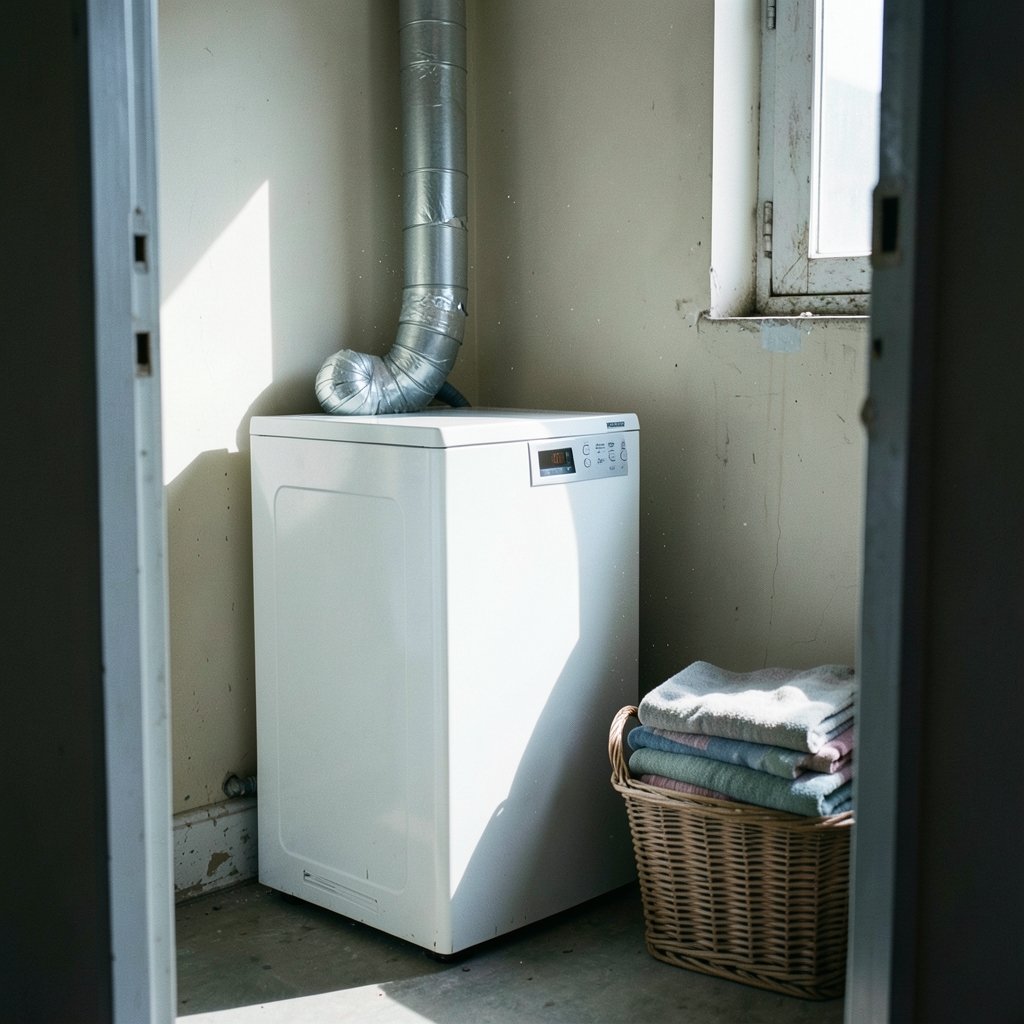
Installation constraints deserve more weight than most reviews give them. A heat-pump dryer squeezed into a cold garage may run far less efficiently than the brochure suggests. A vented machine with a long, kinked duct will dry slowly no matter how good its rating is. If you want to understand why venting matters so much, a step-by-step guide to cleaning a dryer vent explains the fire risk and the airflow problem in practical terms.
Capacity Claims: The Spec That Misleads Most
“Cubic feet” sounds precise. It is not standardized across brands. Some manufacturers quote total drum volume, others something closer to usable space, and the shape of the drum changes how much laundry actually tumbles freely. A review that compares a 7.4 cu. ft. machine from one brand with a 7.4 cu. ft. machine from another is comparing two numbers that may have been measured differently.
What works better in practice is weight. Most people overfill dryers, and overloaded drums cause the exact complaints reviewers blame on the machine: long cycles, damp patches, and heavy wrinkling. A useful review will say how full the drum was during testing, because a half load and a stuffed load behave like two different appliances.
Where Review Methods Diverge
Lab testing and laundry-room reality are not the same thing. EN 61121 and the DOE procedure use defined loads, controlled conditions, and repeatable cycles. Real households mix towels with synthetics, run the dryer in a humid basement, and forget to clean the lint filter. That gap explains most of the disagreement between professional reviews and owner complaints.
A few practical habits separate a trustworthy review from a decorative one:
- Check whether the reviewer names the test standard or says the numbers come from the label.
- Look for the load size and fabric mix used in each test.
- See whether cycle time is reported alongside energy use, since efficient machines are often slower.
- Note whether the review mentions filter and condenser cleaning, because heat-pump performance drops when maintenance slips.
- Be suspicious of a single headline score with no method behind it.
This same discipline applies well beyond appliances. If you have ever wondered how a review site arrives at a number, the comparison of Metacritic, OpenCritic and Steam scores shows how three honest systems can rank the same thing differently. The lesson transfers directly to dryers: the score is only as good as the method underneath it. (Metacritic vs opencritic vs steam reviews read each score)
Reading Efficiency Ratings Without Getting Fooled
Efficiency labels are useful, but they are averages. A dryer rated for low annual energy use may still cost more to run if you dry many small loads, because heat-pump units often perform best with fuller drums. Conversely, a cheap vented dryer in a mild climate with a short, clean duct can be perfectly sensible.
One point that surprises many US shoppers: to the best of available knowledge, the ENERGY STAR residential program has not covered clothes dryers, so a dryer marketed as “energy efficient” is not necessarily carrying that certification. Check the current ENERGY STAR product list before trusting a badge on the box.
Be careful with review dates too. Efficiency rules change, test procedures get amended, and a five-year-old review may describe a model that has since been revised. Cross-check the model number in addition to the name.
What Owner Reviews Add, and What They Don’t
Owner reviews are excellent at surfacing long-term annoyances: a door that swings the wrong way, a buzzer nobody can silence, a lint filter that is awkward to reach. They are poor at measuring energy use, because almost nobody tracks it.
The bigger problem is manipulation. Paid or incentivized reviews distort ratings on every platform, and the damage runs both ways: shoppers get misled and honest sellers get buried. The mechanics of how paid Amazon reviews backfire on buyers and sellers are worth understanding before you weight a star average heavily. Look for reviews that mention a specific model number, a purchase date spread over months, and complaints that repeat across many reviewers. Repetition is a better signal than star count. (Free vpns safe use honest answer most reviews skip)
For bigger financial decisions, the same skepticism pays off. Anyone comparing loan offers should read what borrowers should check in BMG Money reviews before signing, because the gap between marketing copy and contract terms is where trouble lives. A dryer is a smaller commitment, but the principle is identical: verify the claim, not the tone.
Matching the Machine to Your Actual Laundry
Reviews rarely ask the question that decides satisfaction: what does your laundry actually look like? A household of five with sports kit and bath towels needs capacity and speed. A single professional with delicate shirts needs gentler drying and a wrinkle-care cycle. Someone in a flat with no external wall needs a condenser or heat-pump unit, full stop.
There is a related trap in combination appliances. Washer-dryer units are reviewed on both functions, but their drying capacity is usually about half their washing capacity, and condenser drying is slow. If you are shopping for one of these, it helps to see how reviewers weigh the trade-offs in coverage of the best washer dryer brands, because the drying half of the machine is where most disappointment originates. (Washing machine with dryer best brand)
Two more practical notes from how these machines behave in real homes:
- Ducting beats specs. A short, straight, rigid metal duct with a clean exterior flap does more for drying speed than an upgrade in drum size. Flexible foil ducts collect lint and choke airflow.
- Moisture sensors need clean contacts. Sensor-dry models stop when they detect dampness. Residue from dryer sheets coats the sensor bars, so the machine runs long and the review’s efficiency claim quietly stops applying to your laundry room.
How to Compare Dryer Reviews Side by Side
When several reviews disagree, build a small comparison instead of picking the loudest voice.
| Question | Good sign in a review | Warning sign |
|---|---|---|
| Was the method stated? | Names the test standard or label source | “We tested it thoroughly” with no details |
| Is cycle time reported? | Time given for each load type | Only energy figures, no minutes |
| Is capacity realistic? | Load weight or drum fill described | Only the cu. ft. number repeated |
| Is maintenance covered? | Filter and condenser cleaning discussed | No mention of upkeep |
| Is the model identified? | Exact model number and year | Vague name only |
If you want to see how much difference a single variable can make, look at a comparison of a filament dryer versus a dry box for 3D printing filament. Both dry things, both get reviewed, and the reviews only make sense once the reviewer separates drying from storing. Dryer reviews reward the same split: separate the drying performance from the storage, installation, and maintenance around it.
Conclusion
Dryer reviews are not verdicts. They are arguments, and the good ones show their work. The useful review tells you which test standard produced the energy number, how full the drum was, how long the cycle ran, and what the machine demands in cleaning and ducting. The unhelpful one hands you a score and a slogan.
Buy the dryer that fits your laundry, your space, and your tolerance for maintenance. Read the label for efficiency, read the manual for installation limits, and read reviews for the details nobody prints on a spec sheet. When a review and a label disagree, trust the label for numbers and the review for lived experience, then check the model year on both. That habit will serve you better than any single star rating, and it works whether you are buying a dryer, a gadget, or anything else with a glossy box and a hopeful number on the front.
FAQ
Do dryer reviews use the same test for every country?
No. US figures usually come from the Department of Energy test procedure behind the EnergyGuide label, while European figures follow the rescaled label introduced in March 2021 and harmonised standards such as EN 61121. The numbers are not directly comparable across regions, and older European reviews use a retired A+ to A+++ scale.
Are heat pump dryers always the most efficient choice?
They are generally the most efficient type per cycle, but the advantage shrinks with small loads, cold rooms, and neglected filters. A well-installed vented dryer with a short, clean duct can be a reasonable choice in some homes. Compare estimated yearly cost for your own usage pattern rather than assuming.
Why do reviews disagree about the same dryer?
Mostly because of method. Lab tests use defined loads and controlled conditions, while owners mix fabrics, overload drums, and skip maintenance. Load size, ambient humidity, and duct condition can change cycle time and results more than the model itself.
How much should I trust star ratings from owners?
Use them as a source of specific complaints, not as a score. Look for repeated details across many reviews, check dates, and discount suspiciously enthusiastic short reviews. Incentivized reviews distort averages in both directions, so patterns beat percentages.
Does an energy efficient label mean low running costs?
Not automatically. Labels report standardized annual estimates, and real cost depends on how often you run the machine, how full each load is, and how well the installation performs. A low-rated machine used badly can cost more than a good one used well.
What is the most overlooked specification in dryer reviews?
Venting and drainage requirements. A machine that cannot be installed cleanly in your space will underperform regardless of its rating. Check duct length limits, whether a condenser tank or drain hose is needed, and how accessible the filters are before anything else.



