
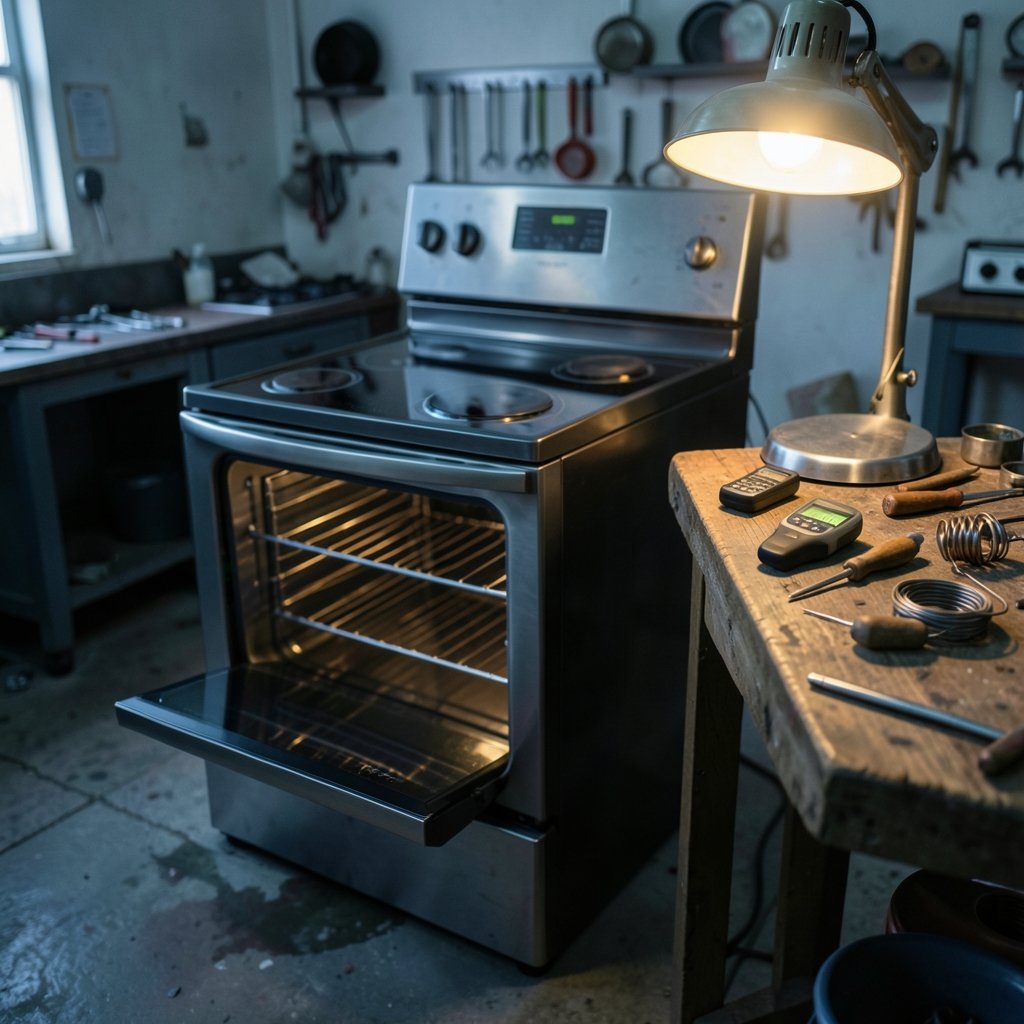
What if the biggest difference between a frustrating electric range and a genuinely great one has almost nothing to do with how it looks on the showroom floor? Walk into any appliance store and every range glows under warm lights, every knob feels solid, and every sales tag promises “even baking.” Then you get it home, and the cookies come out with a dark back row and pale front row, or the simmer setting goes from “barely warm” to “volcano” with no stop in between. The gap between marketing and reality is where most buyers get burned.
This guide cuts through that gap. It covers what actually matters in an electric range oven, where shoppers waste money, and which features earn their keep after the first month of cooking.
What “Electric Range Oven” Actually Means
First, a definition that trips people up. A range is a single freestanding or slide-in unit that combines a cooktop and an oven. A wall oven is just the oven, built into cabinetry. When someone searches for the “best electric range oven,” they almost always mean the combined appliance, so that is the focus here.
Within electric ranges, there are two cooktop technologies:
- Radiant electric: Coil or flat glass elements that glow red and transfer heat to the pan. Cheap, simple, and very common.
- Induction: A magnetic field heats the pan itself rather than the glass. The surface stays cooler, response is faster, and it needs ferromagnetic cookware (cast iron, most stainless steel, some enamel).
Induction is technically a subset of electric cooking, which is why it lands in this category. It is also where the biggest price jumps live.
The Specs That Matter and the Ones That Don’t
Manufacturers love feature lists. Here is how to read them without getting distracted.
| Spec | Matters a lot? | Why |
|---|---|---|
| Oven capacity (cu. ft.) | Yes, if you host | 5.0+ cu. ft. fits a big turkey and two racks comfortably |
| Convection type | Yes | True convection (third heating element + fan) beats “convection-assisted” |
| Simmer control | Yes | The single most common complaint on cheap electric ranges |
| Self-cleaning | Sometimes | Pyrolytic cleaning works but creates smoke and heat; steam-clean is gentler |
| Wi-Fi and app control | Rarely | Nice for preheating, not worth a price premium |
| Number of cooktop zones | Yes | Check zone sizes as well as the count |
| Fingerprint-resistant finish | Barely | It helps, but no finish is truly fingerprint-proof |
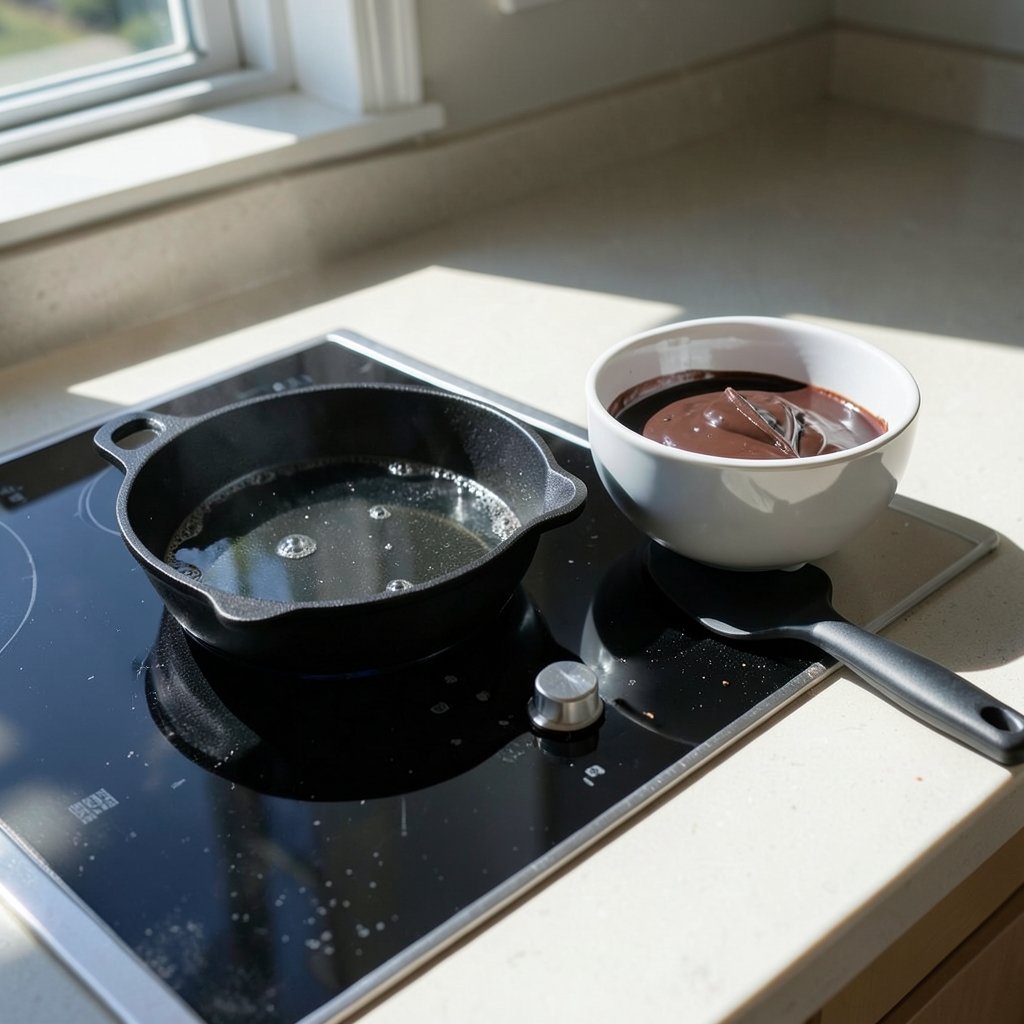
The simmer control point deserves emphasis. Radiant coil ranges often have a narrow usable band between “off” and “boiling,” which makes melting chocolate or holding a sauce a chore. Induction and higher-end radiant glass tops with multiple power levels handle low heat far better.
Radiant vs. Induction: The Real-World Trade-Off
Induction is often described as transferring roughly 85 to 90 percent of its energy to the pan, versus around 70 to 75 percent for radiant electric. Those figures circulate widely, so treat them as directional rather than gospel. The practical takeaway holds up: induction heats faster and wastes less heat into the kitchen.
But induction has friction points nobody mentions in the brochure:
- Cookware audit. If a magnet does not stick to the bottom of your pot, it will not work. That can mean replacing a whole set.
- Noise. Induction cooktops hum, and some pans rattle faintly. It is usually minor, but sensitive cooks notice.
- Cost. Induction ranges typically run several hundred dollars more than comparable radiant models.
- Repairs. Induction boards are pricier to fix than a simple coil element.
For buyers who cook a lot and already own good stainless or cast iron, induction is often worth it. For a rental unit, a second kitchen, or a household on a tight budget, a well-reviewed radiant glass-top range does the job.
Oven Performance: Where Cheap Ranges Give Themselves Away
The cooktop gets all the attention, but the oven is where daily frustration builds. Three things separate good ovens from bad ones.
Temperature accuracy. A good oven holds within a narrow band around the set temperature. Budget ovens can swing 25 to 50 degrees, which explains why your recipe’s 350°F bake behaves like 375°F. An inexpensive oven thermometer is the best ten dollars any new range owner can spend, and it will tell you within a week whether the unit needs calibration.
Evenness. This is the back-row-of-cookies problem. True convection (a fan plus a dedicated third element) solves most of it. “Convection” without the third element just moves hot air around and helps less than the label implies.
Broiler strength. A weak broiler makes browning cheese or finishing a steak impossible. Look for broilers described as high-output, and check whether the element is in the oven cavity or tucked into a drawer below (drawer broilers are much weaker).
Sizing and Installation Traps
Electric ranges almost always need a 240-volt circuit, typically with a NEMA 14-50 or 10-50 receptacle. That has real cost implications. If a kitchen currently has a gas line and no 240V outlet, adding one can run several hundred dollars in parts and labor before the range is even delivered.
Other practical checks before buying:
- Measure the opening, not the old appliance. Widths are usually 30 or 36 inches, but depth and height vary, and slide-in models need precise counter alignment.
- Confirm the door swing and handle clearance against adjacent cabinets and walkways.
- Check the delivery path. Tight stairwells and narrow doorways have ruined many delivery days.
- Verify the plug type on the model you choose, since some units ship without a cord.
- Ask about haul-away for the old unit, which is often a paid add-on.
A common mistake: buying a beautiful slide-in range and discovering the old freestanding unit left a gap in the countertop that now needs a filler kit. Measure twice.
Safety and Efficiency Labels Worth Understanding
Every electric range sold in the U.S. should meet UL 858, the safety standard for household electric ranges. That is the baseline, not a differentiator, but it is worth knowing the number when comparing spec sheets.
On efficiency, two myths persist. First, ENERGY STAR does not cover ranges or ovens, so any “ENERGY STAR rated range” claim on a sales floor deserves a hard look. Second, federal minimum efficiency standards for cooking products were revised in a final rule published in January 2024, with phased effective dates. The exact timeline has been subject to later regulatory and legal activity, so buyers should not build a purchase decision around a specific compliance date.
In the EU, electric ovens carry an energy label under rules dating to 2014, with a revision under discussion in recent years. If you are shopping in Europe, check the label’s current format rather than assuming an older one.
Matching the Range to Your Actual Life
The best electric range oven is the one that fits how you cook, not the one with the longest feature list. A few honest profiles:
The weeknight scrambler. Two people, fast meals, one sheet pan at a time. A mid-priced radiant glass-top with true convection and a decent simmer zone is plenty. Spending extra on induction here buys speed but not much else.
The weekend baker. Cakes, breads, and cookies where evenness matters. Prioritize true convection, a reliable oven thermometer (buy one regardless), and a proofing or bread-proof setting if available.
The serious home cook. Induction cooktop plus a strong convection oven is the sweet spot. Fast response on the cooktop, predictable heat in the oven.
The host. Capacity and a strong broiler matter more than anything. Check that a large roasting pan fits with the rack in a usable position.
For readers also weighing bigger purchases, it helps to see how other categories handle the same “range” question, whether that is range rover lease deals or best wi fi routers 2026 actually delivers speed at range. The lesson transfers: the spec sheet rarely tells the whole story. (Bitcoin stuck range fed midterms 2026 strategy that works)
Common Mistakes Buyers Make
These come up again and again in owner forums and repair tech anecdotes.
- Skipping the thermometer test. New owners assume a new oven is accurate. It often is not, and a five-degree calibration fixes months of bad baking.
- Buying convection and never using it. Convection changes bake times and sometimes requires lowering the temperature. Learn the conversion or the feature is wasted.
- Ignoring the control panel. Touch panels look modern but can be fussy with wet or floury hands. Knobs are boring and reliable.
- Underestimating cleaning. Pyrolytic self-clean works but smells and takes hours. Steam-clean cycles are quicker and gentler on racks.
- Overpaying for smart features. App preheat is convenient. It is not worth several hundred dollars.
How to Test a Range in the Store
Showrooms are not kitchens, but you can still learn a lot in ten minutes.
- Open and close the oven door. It should feel solid, not tinny, and the hinges should not fight back.
- Slide the racks in and out. Cheap racks bind when loaded.
- Press every control. Look for clear labeling and no lag.
- Check the cooktop zone sizes against your biggest and smallest pans.
- Ask what the warranty covers and for how long, especially on the control board.
If a store will not let you handle the appliance, that is a signal about the after-sale experience too.
Where to Buy and What to Expect
Big-box stores, appliance specialty shops, and online retailers all sell the same models, but service differs. Specialty dealers often handle delivery, installation, and haul-away in one visit and are more likely to stock parts. Big-box stores win on price and financing. Online is fine for research but risky for large appliances unless the return policy is generous and clearly stated.
Timing matters too. Appliance promotions cluster around holiday weekends and model-year changeovers, when last year’s version drops in price. The trade-off is limited stock on popular sizes. Buyers who need a specific 30-inch slide-in may find selection thinner during clearance events.
Conclusion
The best electric range oven is not the most expensive one on the floor. It is the one whose cooktop matches your pans, whose oven holds temperature, and whose controls you can actually live with for a decade. Start with the circuit and the cutout dimensions, decide between radiant and induction based on your cookware and budget, then insist on true convection and a usable simmer setting. Spend ten dollars on an oven thermometer and you will know more about your range than any showroom ever tells you. Get those basics right, and the fancy features become a bonus rather than a distraction.
Frequently Asked Questions
Is induction better than radiant electric?
For most frequent cooks, yes. Induction heats faster, responds almost instantly, and keeps the surrounding surface cooler. The catch is cookware compatibility and a higher purchase price. Radiant electric remains the better value for light use and tight budgets.
Do electric ranges need a special outlet?
Almost always, yes. Most electric ranges require a 240-volt circuit with a NEMA 14-50 or 10-50 receptacle. If the kitchen only has a standard 120-volt outlet or a gas line, an electrician will need to install the circuit, which adds to the total cost.
Is a convection oven worth the extra money?
True convection, which uses a fan plus a dedicated third heating element, is worth it for anyone who bakes or roasts regularly. It improves evenness and reduces the pale-front, dark-back problem. “Convection-assisted” ovens without the third element deliver much less benefit.
Are ENERGY STAR rated ranges a thing?
No. ENERGY STAR does not currently cover ranges or ovens. If a salesperson claims a range is ENERGY STAR rated, ask for documentation. Federal minimum efficiency standards apply to cooking products, but that is a different program from the ENERGY STAR label.
How long should an electric range last?
Most electric ranges last roughly 10 to 15 years with normal use. Control boards and heating elements are the most common failure points. Extended warranties rarely pay off, but keeping the manual and registering the product helps with parts and service later.
What size range fits a standard kitchen?
Thirty inches is the most common width in U.S. kitchens, with 36-inch models in larger or more upscale layouts. Always measure the actual cutout opening rather than the old appliance, and confirm depth and height, since slide-in models require precise alignment with countertops.



