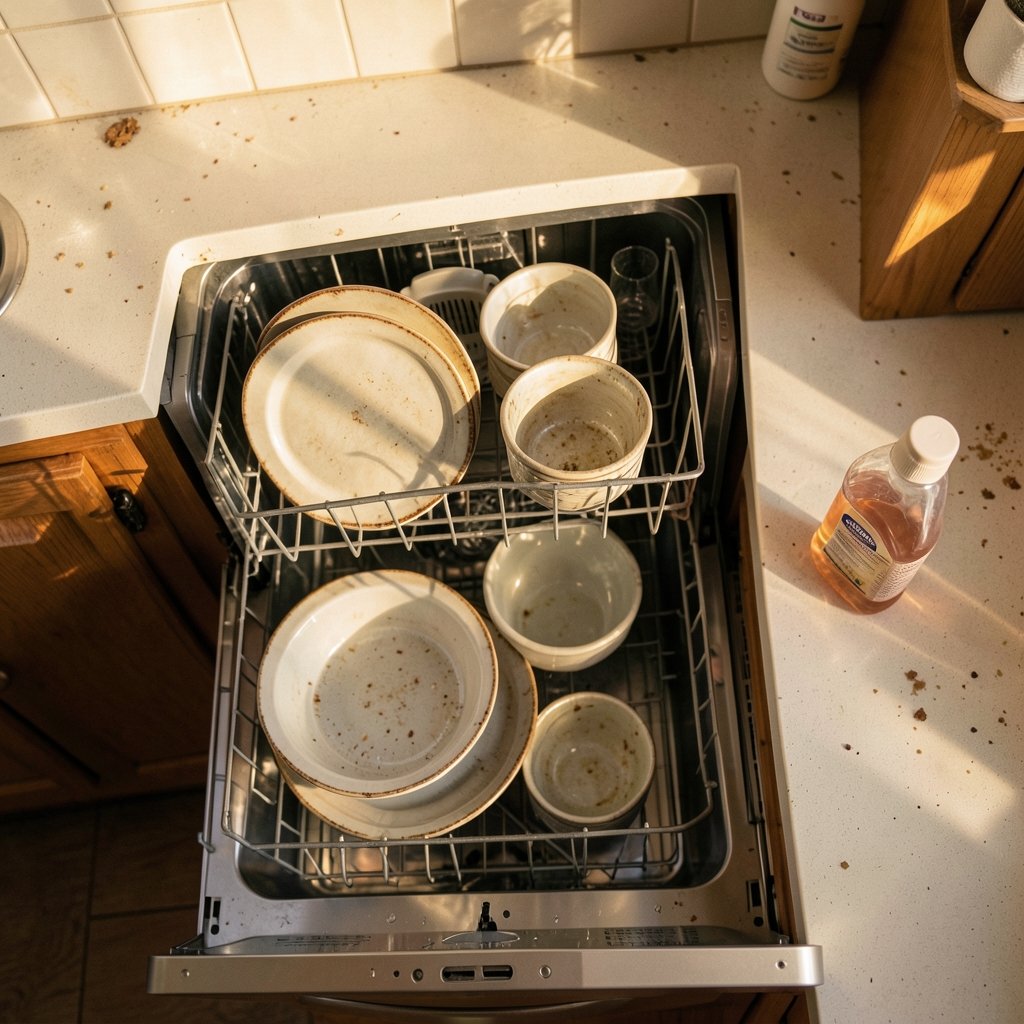
What if the biggest reason your dishes come out spotty has nothing to do with the machine at all? That question drives every search for the “best cleaning dishwasher.” Shoppers scroll through spec sheets, compare cycle times, and stare at energy ratings, hoping a number will tell them which machine scrubs best. The answer is messier and more useful: cleaning results depend on machine design, water chemistry, detergent, loading habits, and maintenance. Get those right and a mid-range dishwasher can outperform a premium one that has been neglected.
This guide breaks down what actually drives cleaning results, how to read the labels without being fooled, and where most people go wrong.
Why “Best Cleaning” Is Harder to Pin Down Than It Sounds
Energy labels are not cleaning scores. Since March 2021, dishwashers sold in the EU carry a rescaled A–G energy label that reports energy use, water consumption per cycle, and noise. In the US, ENERGY STAR qualified dishwashers must be meaningfully more efficient than the federal minimum, with thresholds revised on their own schedule. None of that tells you how well a machine removes baked-on lasagna.
Cleaning performance gets tested separately, using standardised methods such as IEC 60436 for household dishwashers and AHAM procedures in the US. Those tests apply a defined soil load, a set water hardness, and a specific detergent. Change any one variable and rankings shift. That’s why a machine that tops one test round can land mid-table in another.
Practical takeaway: treat any “best cleaning” claim as conditional. Ask what soil was tested, at what water hardness, and with which detergent. If a manufacturer or reviewer can’t answer, the claim is marketing.
The Real Drivers of Clean Dishes

Water temperature and cycle design
Enzyme-based detergents, which rely on protease and amylase, work best at moderate temperatures. Very hot cycles can denature those enzymes before they’ve done their job on food residue. A well-designed normal cycle holds a moderate wash temperature long enough for enzymes to act, then finishes with a hot rinse. Machines that blast everything at maximum heat often clean worse on everyday loads, not better.
Spray arm coverage and filtration
Poor cleaning usually traces back to two mechanical issues: water not reaching the dishes, and dirty water being recirculated. Blocked filters and obstructed spray arms are among the most commonly cited causes of disappointing results. A dishwasher with excellent hydraulics and a clogged filter will lose to a basic model that’s properly maintained every single time.
Water hardness
Hard water reduces detergent efficiency and leaves limescale on glassware and heating elements. Hardness is measured in mg/L calcium carbonate or German degrees (°dH). If your supply runs hard, a built-in salt-based softener is one of the few features genuinely worth paying for.
Rinse aid
Rinse aid lowers surface tension so water sheets off rather than forming droplets. That means faster drying and fewer spots, especially on plastic. Skipping it is one of the most common reasons people blame the machine for results that are really a chemistry problem.
Reading the Numbers Without Being Fooled
| Spec or claim | What it measures | What it does not tell you |
|---|---|---|
| EU energy label (A–G) | Energy, water per cycle, noise | Cleaning performance |
| ENERGY STAR qualification | Efficiency vs. federal minimum | How well it scrubs |
| Litres per cycle (roughly 9–13 for full-size models) | Water consumption under test conditions | Real-world use with your habits |
| IEC 60436 test result | Performance under a defined soil and hardness protocol | Your kitchen, your detergent |
| “Best in test” badge | One test round, one method | Whether it still holds next year |
Modern full-size dishwashers typically use roughly 9 to 13 litres per normal cycle. Hand-washing the same load usually uses far more, which is why the efficiency case for dishwashers is strong even before cleaning enters the conversation.
Consumer test organisations publish independent cleaning scores using standardised soil tests, and their picks change with each round. Cite the test date, not a permanent verdict. A machine that won two years ago may have been discontinued or beaten since.
Features That Genuinely Improve Cleaning
Not every feature earns its price. These do:
- Adjustable or third racks that let you angle plates properly so spray reaches soiled surfaces.
- A dedicated intensive zone or lower-rack boost for pots and pans, so you don’t run a full hot cycle for one dirty saucepan.
- Built-in water softening where hardness demands it.
- A short pre-rinse or soak option for dried-on residue, which beats scraping aggressively.
- Sensor-driven cycle adjustment, which tunes water and time to how dirty the load actually is.
Features that sound impressive but rarely move the needle: app connectivity, interior lighting, and ever-longer cycle menus nobody uses.
Detergent, Salt, and Rinse Aid: The Unsexy Heroes
A surprising share of “my dishwasher is broken” complaints resolve with better consumables. Enzyme detergents suit everyday mixed loads at moderate temperatures. Chlorine or bleach-based products handle staining well but can be harsh on some materials, so read the box before using them on delicate items.
Salt matters more than most people realise. In hard-water areas, skipping salt refills lets scale build up on the heating element and cloud your glasses permanently. Rinse aid is cheap and directly improves drying. If you’ve been running all three-in-one tablets and wondering why glasses still spot, check your salt level first.
There’s a broader lesson in how small maintenance choices compound, whether you’re dealing with appliance fluids or household upkeep. The same principle shows up in guides like robot vacuum cleaning solution alternatives that actually work, where the right consumable matters more than the gadget.
Loading and Maintenance Habits That Change Results
Common mistakes, in rough order of how much damage they do:
- Overloading. Plates pressed together block water. Leave gaps.
- Putting bowls face-up. They fill with dirty water. Angle everything downward.
- Blocking the spray arms. Long utensils and cutting boards are frequent culprits.
- Never cleaning the filter. Rinse it weekly under the tap; a greasy film means a proper wash.
- Skipping the hot cycle occasionally. A monthly hot run with a machine cleaner keeps odours and grease in check.
- Ignoring the door seal and salt compartment. Both attract grime and cause problems quietly.
If you want a useful benchmark for when professional cleaning is worth paying for versus doing yourself, the logic in duct cleaning waste money when it pays off when it doesnt translates well: spend where the payoff is measurable, skip the upsell.
How to Compare Two Dishwashers in the Shop
Forget the sticker price for a moment and run this checklist:
- Does it have a softener if your water is hard?
- Are the racks adjustable, and does the layout fit your plates and glasses?
- What does the normal cycle use in water and energy, not the eco cycle?
- How long is the normal cycle? Three-hour defaults annoy people into using quick washes that clean poorly.
- Is there a half-load option for smaller households?
- What does the filter look like, and how easy is it to remove?
A machine that fits your load shape and water chemistry will beat a higher-rated model that doesn’t. That’s the whole game.
Getting More From the Machine You Already Own
Before buying anything, try this sequence. It costs almost nothing and fixes a large share of complaints:
- Refill salt and rinse aid.
- Clean the filter thoroughly.
- Check spray arms spin freely and clear any blockages.
- Run a hot cycle with a machine cleaner.
- Switch to a quality enzyme detergent and dose per load size, not per tablet.
- Load with gaps and angle everything downward.
If dishes still come out gritty after that, the problem is likely mechanical: a failing pump, a clogged inlet, or a scaled heating element. That’s when a repair assessment makes sense.
The same “fix the basics first” instinct applies across the home. If your screens look grimy no matter what you do, the technique in clean laptop screen without damaging coating is a good reminder that method beats product. And if you’re chasing better air quality alongside cleaner dishes, clean dehumidifier coils better airflow lower bills covers the maintenance angle in similar detail.
Where Independent Testing Still Helps
Consumer organisations remain the best available shortcut, provided you read them carefully. Their scores come from standardised soil tests, which makes them more comparable than marketing claims. But three caveats apply:
- Scores are time-stamped. A 2023 winner may not be on sale in 2026.
- Test soil differs. Starchy versus fatty residue produces different rankings.
- Water hardness in the lab may not match yours. A machine tuned for soft water can underperform at home.
Use independent tests to build a shortlist, then apply the checklist above to pick from it.
Conclusion
The best cleaning dishwasher isn’t a single model you can point to and be done with. It’s the machine that matches your water hardness, your load shape, and your willingness to maintain it. Efficiency labels measure energy and water, not scrubbing power. Test standards give you a fair comparison only when you know what was tested. And the biggest single lever, the one almost everyone overlooks, is the boring trio of salt, rinse aid, and a clean filter.
Buy for fit and function. Maintain it properly. Use decent detergent. Do those three things and most dishwashers, even modest ones, will deliver clean dishes night after night.
Frequently Asked Questions
What does “best cleaning dishwasher” actually mean?
It means the machine that removes the most soil under your real conditions: your water hardness, your detergent, and your loading habits. There is no single regulated cleaning score. Energy labels measure efficiency, and independent tests measure performance under a specific protocol. A dishwasher that wins one test can lose another depending on the soil type used.
Do expensive dishwashers clean better than cheap ones?
Not automatically. Above a certain price, you’re often paying for quieter operation, better racks, and smarter sensors rather than raw cleaning power. A well-maintained mid-range machine with a working softener and clean filter regularly outperforms a neglected premium model. Spend extra on water softening and rack flexibility if you spend extra at all.
How much water does a dishwasher use per cycle?
Full-size models typically use roughly 9 to 13 litres per normal cycle, depending on the model and test standard. That’s usually far less than washing the same load by hand. Treat those figures as a range rather than a promise, since real-world use varies with cycle choice and load size.
Why are my dishes still dirty after a cycle?
Check four things in order: the filter, the spray arms, the salt level, and your loading pattern. Blocked filters and obstructed spray arms are among the most common causes of poor results. If all four are fine and dishes still come out gritty, suspect a mechanical fault such as a failing pump or a scaled heating element.
Is rinse aid really necessary?
For drying and spot prevention, yes, especially with plastic items and in hard-water areas. Rinse aid lowers surface tension so water sheets off instead of forming droplets that leave mineral spots. If you skip it, you’ll likely see more spotting and longer drying times regardless of which machine you own.
How often should I clean the dishwasher filter?
Rinse it weekly under warm running water, and give it a deeper clean monthly. Run a hot cycle with a dedicated machine cleaner roughly once a month to shift grease and odour buildup. In hard-water areas, check the salt compartment at the same time, since scale accumulates quietly and reduces cleaning performance over months.