A good game night starts with a title everyone at the table can understand and enjoy. When parents and kids have different ages, attention spans, and tastes, picking one game can take longer than expected. You want a choice that feels fun for children without leaving adults watching the clock.
These picks cover quick rounds and longer play, cooperative and competitive styles, and a range of ages. A gateway game is an approachable tabletop game that introduces players to familiar board-game ideas and play patterns. The right choice depends on who is playing and how long everyone wants to sit together.
You will find options for a preschooler’s first turns, two-player evenings, and larger family groups. Some games reward teamwork; others offer a friendly contest or a quiet puzzle. The best fit is the one people want to play, not simply the one with the most pieces.
Key Takeaways
- Choose for the youngest player’s real skills, not just the box age.
- Match the game’s length to the time and energy you have.
- Look for a play style that suits the people at your table.
- Two-player, cooperative, and larger-group choices all have a place.
- A quick game can make a busy evening easier to enjoy.
The best first pick is the one your family will be happy to bring back to the table.
How Do You Choose a Game Everyone Can Learn?
Start by matching the game’s teach time and expected length to the attention span of the youngest player. A family game with simple turns gives new players a clear first move and less time waiting. A teach of 10 to 15 minutes and playtime of 30 to 45 minutes are useful targets, not hard limits.
Family-game experts use those ranges as helpful guides. A short teach makes it easier for people to join in, while a familiar turn pattern helps them stay involved. A longer game may still work when everyone wants a big challenge and has time to finish.
Choose a game whose first turn you can explain before the youngest player loses interest. Treat the age on the box as a starting point, not a full test of fit.
Box ages cannot tell you everything about reading, patience, or confidence. The youngest player may be ready for a game rated above their age, or may need help with one rated for them. Think about what they can do at the table today.
Player count matters, too. Some games change when you add people, while others need a certain group size to work well. If your group often changes, check the supported range and think about whether waiting through other turns will suit your children.
For another kind of family night, compare tabletop play with multiplayer Switch games, including how many people each mode supports. That can help you plan around who is joining, not just what is already on the shelf.
If a game cannot be explained clearly before everyone loses interest, choose a simpler first option.

Which Best Family Board Games Work for Most Game Nights?
For a family that wants one confident starting point, choose Bomb Busters for shared problem-solving. It suits adults and kids who enjoy working toward one result, while Cascadia offers a calmer puzzle and Kingdomino fits a shorter session. These five picks make a useful US shortlist, not a claim that one title suits every table.
For adults who want more thoughtful decisions, start with Cascadia or Harmonies. Creature Comforts brings a woodland theme and a longer session, while each option below has a different group-size fit. Use the table to compare the basics before you settle on a game.
| Game | Players | Playtime | Best fit |
|---|---|---|---|
| Bomb Busters | 2-5 | 30 minutes | Cooperative deduction |
| Cascadia | 1-4 | 30-45 minutes | Nature-themed tile laying |
| Harmonies | 1-4 | 30-45 minutes | Ecosystem building |
| Creature Comforts | 1-5 | 45 minutes | Woodland-themed play |
| Kingdomino | 2-4 | 15-25 minutes | Short terrain-tile play |
People seeking the best family board games for adults may prefer the extra choices in Cascadia or Harmonies. Those games invite players to weigh options, rather than rely only on quick reactions. Their nature themes also give the table a calm look, though the decisions still deserve attention.
This top 10 family board games shortlist introduces five useful options here and more across the full recommendations. It covers different types of gaming, group sizes, and session lengths for families in 2026. The strongest pick for tonight depends on who is present and what kind of play sounds fun.
Use the player-count and playtime columns to rule out titles that do not fit tonight’s group.

Which Games Fit a Short Game Night?
A 15-minute game can be easier to fit between dinner and bedtime than a longer strategy session. Trouble takes around 15 minutes, while Shadowlands can end in less than 10 minutes or stretch to 20 when players get blocked. Those times leave room for a quick round, but pauses can change how long it feels.
For a young child, waiting between turns may make a short game seem long. Keep the setup ready and give each player a clear next move. Quick rounds work best when people know when the session will end.
- Agree on a stopping point before the first turn.
- Set up the board before inviting everyone to the table.
- Keep the rules explanation brief and show a sample move.
These small choices help the group start playing sooner. They also prevent a quick game from turning into a long search for pieces or a full rules lesson. If a child gets tired, a planned finish can feel fairer than stopping during a tense turn.
Choose a clear stopping point before starting if a child is likely to tire before the game ends.
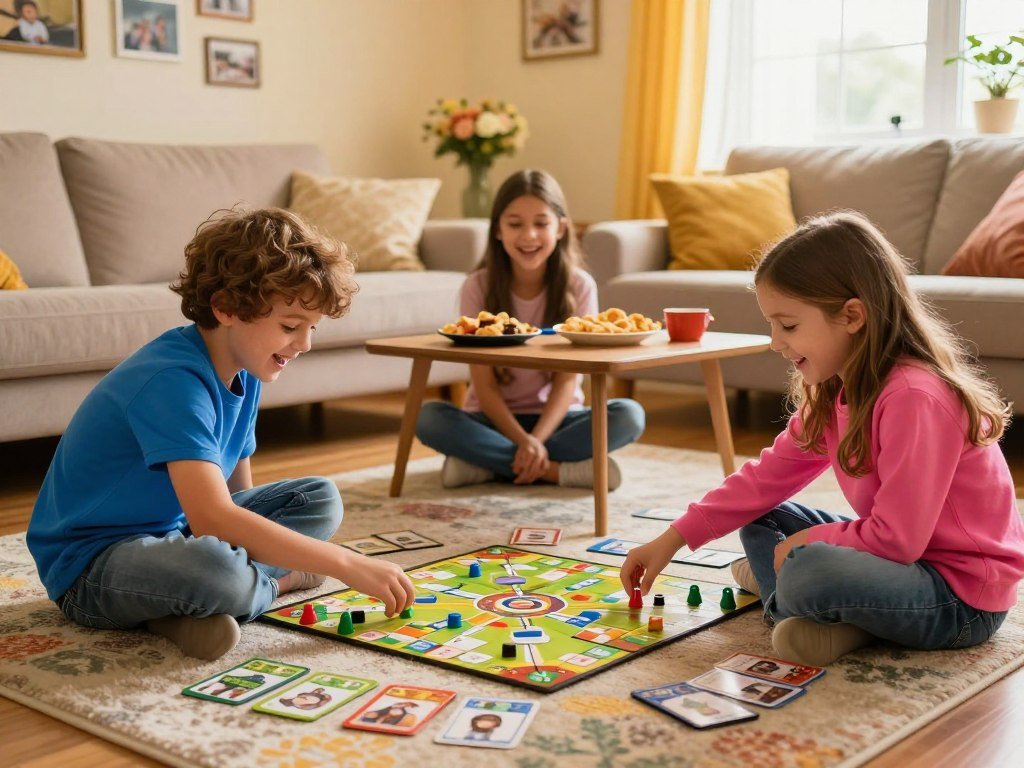
Which Cooperative Games Put Everyone on One Team?
Choose a cooperative game when the fun comes from solving a problem together rather than beating another player. Bomb Busters and The Lord of the Rings: The Fellowship of the Ring Trick-Taking Game both put players on the same side. Cooperation changes the goal, but it does not remove tough choices.
Bomb Busters Turns Wire Deduction Into a Shared Challenge
In Bomb Busters, players work together to defuse a bomb by figuring out which numbered wire tiles to cut. The tiles show numbers from 1 through 12, so players must share clues and think through their choices. A wrong move can affect the whole team.
The game includes 66 missions, each with a different setup or challenge. That gives families new problems to solve after they learn the basic idea. Bomb Busters won the 2025 Spiel des Jahres, listed on the official award winners page.
The Fellowship of the Ring Offers a Solo or Group Option
The Lord of the Rings: The Fellowship of the Ring Trick-Taking Game is rated ages 10+. You can play it solo or with friends, which makes it a flexible choice for a player who may not have a full group.
Trick-taking asks players to follow patterns and make choices with the cards they hold. The shared goal can suit families who like card play, though players still need to communicate. It is a different kind of teamwork from deducing numbered wires.
A shared result can feel encouraging, but it can also make a poor decision matter to everyone. Players may need to listen, explain a choice, and accept a result they did not want. That is part of the challenge, not a flaw in the game.
Before starting, agree that mistakes are part of the shared challenge, not a reason to assign blame.

Which Games Bridge Different Ages?
A mixed-age group needs a game where the youngest player can take a real turn without leaving adults bored. Creature Comforts suits groups whose youngest player is 8 or older, with woodland-themed play and a 45-minute session. A shared table works best when children can make choices and adults still have decisions to consider.
Creature Comforts supports 1 to 5 players and carries an age rating of 8+. Its longer play gives the group time to settle into its choices. It may fit a family that wants more than a quick round, as long as everyone has the energy for it.
Escape from Atlantis offers a different feel. The game began in the mid-1980s and features a three-tier 3D island, boats, and sea monsters. Its raised board and visible pieces give children things to notice as play unfolds.
That tactile setup can help the game feel lively, but a striking board does not guarantee that every rule will suit every child. A shared table does not require everyone to have the same skill level. It does require the youngest player to do more than watch.
Some adults enjoy careful planning, while children may prefer visible movement and clear choices. A game can still bring them together when each player has a meaningful role. Look at the turn structure as well as the theme before choosing.
Choose a theme and turn structure that give the youngest player something to do beyond watching.
Which Nature-Themed Games Make Room for Strategy?
For a family drawn to nature themes, Cascadia is the clearest starting point for a landscape puzzle. It won the 2022 Spiel des Jahres and gives players a visual task to build around. Artwork can feel peaceful while the choices still ask for thought.
The games below share natural settings, but the decisions differ. Cascadia focuses on placing tiles, Harmonies asks players to build an ecosystem, and Pergola centers on choices about what scores points.
| Game | Theme | Core activity | What the decision feels like |
|---|---|---|---|
| Cascadia | Nature | Tile laying | Build a landscape |
| Harmonies | Ecosystem | Build an ecosystem | Make linked choices |
| Pergola | Gardenlike growing | Choose what scores points | Balance scoring choices |
Harmonies is a nature-themed ecosystem-building game published in 2024. Its linked choices may appeal to players who like to see how one move affects later options. That can make the game feel more involved than its peaceful subject suggests.
Finspan is a streamlined strategy game in the Wingspan universe. Families who already enjoy nature themes may like its setting, while new players can focus on whether its decisions fit their group. Theme alone does not tell you how much planning a game asks for.
Some nature-themed games look gentle but still reward careful choices. A child drawn to animals or plants may enjoy the pictures without wanting a puzzle that takes close thought. Talk about the activity, not just the art.
Pick the title whose decisions sound enjoyable, not just the one whose artwork matches the room.
What Are the Best Two-Player Picks for Parent and Child?
For a parent and child playing without siblings, Toy Battle offers a clear two-player starting point. The game is designed for two players and includes multiple battle maps. Families do not need a game that supports four or more players when two people will play.
Toy Battle Keeps Its Matches Short and Tactical
Toy Battle suits families seeking a tactical contest, with more than one map to change the match. Its age rating is 7-8+, so consider the child’s comfort with the game’s choices. A two-player game can give each person frequent turns without a large group waiting.
Garden Rush Builds a Puzzle From Vegetable Patterns
Garden Rush is another two-player option, rated ages 8+. Players draft vegetables, then harvest them by completing patterns. That gives a parent and child a shared puzzle, with each person building toward their own result.
Small-Box Drafting Games Work Well on Trips
Architects of Amytis is a two-player option rated ages 8-10+. Solstis is also rated ages 8-10+, and its drafting play fits a small travel package. Both give you alternatives when a larger board would be awkward to pack.
Travel-friendly size matters when the game must fit beside clothes, snacks, or books. Solstis can suit a trip where two people want a game during a quiet break. Choose it for its compact format, not because every travel game needs to use cards.
| Game | Players | Age rating | Useful fit |
|---|---|---|---|
| Toy Battle | 2 | 7-8+ | Multiple battle maps |
| Garden Rush | 2 | 8+ | Pattern-making |
| Architects of Amytis | 2 | 8-10+ | Two-player option |
| Solstis | 2 | 8-10+ | Travel-friendly drafting |
A dedicated two-player game can be more satisfying than a larger game that leaves one person waiting for extra players. Check whether the child likes a direct contest or a puzzle with separate goals. That small preference can shape the whole evening.
If the game will travel, choose the compact option before packing bulky pieces.
What Should Preschoolers Play First?
A first game works best when a young child can understand what to do on a turn and see a quick result. Mooki Island takes five minutes to play and is rated ages 4-5+. Visible actions can be easier for a preschooler than holding several rules in mind.
Mooki Island Keeps Play to Five Minutes
A five-minute session gives a preschooler a chance to try a game without a long wait. Mooki Island is a simple option to consider for ages 4-5+, though age ratings do not promise that a child can play alone. Sit nearby and help as needed.
Picture and Memory Games Build Early Confidence
Pengoloo uses color recognition, memory, and chance. Its mix of skills gives a young player more than one way to take part. A lucky result can also keep a child interested when remembering a detail proves hard.
Shopping List uses picture cards that players match to a shopping list. Pictures can help a child follow the goal before they read words on the cards. It is a clear way to make matching the main task.
Adult help may still be needed for taking turns or working out what a rule means. That support does not make a game a poor fit. It gives the child a chance to learn the routine with someone beside them.
Watch how the child responds during the first few turns. If they enjoy choosing a card or finding a color, the game has already given them a useful way in. A long explanation can make that first step harder.
For a child new to tabletop play, favor visible actions over rules that require holding several steps in memory.
Which Games Suit Ages 6 and 7?
Cascadia Junior is a strong pick when you want a game that can become more challenging as a child gains experience. It starts at age 6+ and includes ways to raise difficulty for older or more experienced players. Adjustable challenge gives the game room to change with a child’s skills.
Cascadia Junior Adds Room to Grow
Cascadia Junior offers a gentle entry point, then adds difficulty for players ready for more. That makes it useful when children at the table have different levels of experience. A family can keep the same game while changing how much thought each round asks for.
Micro Macro Kids Can Be Played Solo or Together
Micro Macro Kids is rated ages 6-7+ and supports solo or cooperative play. A child can look for details alone or share the task with someone else. That choice helps the game fit more than one kind of afternoon.
Duck and Cover Fits a Bigger Children’s Group
Duck and Cover is rated ages 6-7+ and supports up to 7 players. It suits a larger group of children when a two-person game would leave someone out. The group size is its clearest practical advantage.
The age on a box is a guide, not a promise that every child will enjoy every game with the same rating. Some children like searching for details, while others want a contest with more direct turns. A familiar age label cannot predict that difference.
| Game | Age rating | Play mode or group fit |
|---|---|---|
| Cascadia Junior | 6+ | Adjustable difficulty |
| Micro Macro Kids | 6-7+ | Solo or cooperative |
| Duck and Cover | 6-7+ | Up to 7 players |
For children in this age range, look at the action they repeat each turn. A child who enjoys spotting details may prefer a search, while another may like making a move. The same age can bring very different interests to the table.
Let the child’s interest in the activity guide the choice as much as the age on the box.
Which Games Give Ages 8 to 10 More to Think About?
Jungo is a useful step up when a child is ready to compare the strength of card plays. Rated ages 7+, it uses a ladder-climbing rule: play a card or set ranked higher than the previous play. One clear rule can create a lot of tactical choices.
Jungo Adds Ranked Card Decisions
Jungo gives players a reason to watch what has already been played. A stronger card or set can beat the last play, so timing matters. Children who enjoy familiar card games may find that structure easy to recognize.
Dice and Bag-Drawing Games Use Different Kinds of Luck
Mythical Dice is rated ages 8+ and turns trick-taking into a dice game. It can suit a child who likes the idea of tricks but wants dice instead of a hand of cards. The dice bring chance into each choice.
Gardlings is also rated ages 8+, but its play feels different. Players draw from a bag and place tiles, with push-your-luck choices shaping the result. A player must decide when to risk another draw and when to stop.
Strategy Picks for Players Age 10+
Critter Kitchen is rated ages 10+ and asks players to gather ingredients and compete for spaces. They use those choices to impress a food critic. Its mix of collecting and competition gives older children more to weigh.
If a card-centered option sounds better, The Lord of the Rings: The Fellowship of the Ring Trick-Taking Game is rated ages 10+ and works solo or with friends. It offers a different kind of card challenge from Jungo’s ranked plays.
More strategy is not automatically an upgrade. A child may enjoy a complex choice but still need help tracking turns or remembering what other players did. Make sure the extra thinking adds fun rather than confusion.
Choose one new mechanic at a time so a harder game still feels learnable.
Which Games Work for Larger Family Groups?
If the guest list may reach nine, Hot Streak gives the clearest stated player-count fit. It supports 2 to 9 players, making it a useful option for a group that may grow. Check the real head count before you choose for a gathering.
Orapa Mine is rated ages 10+ and works for two players or more. That makes it flexible when a group may shrink after people arrive. Zenith is also rated ages 10+ and supports both team play and two-player play.
- Confirm the expected player count before setting out the game.
- Check whether the game supports teams if your group wants them.
- Consider whether the ages present meet the game’s rating.
Different player limits can change the feel of a family gathering. A game that works with two may not work with a large group, and a party pick may need more people to feel lively. Read the group fit before you open the box.
Confirm who is actually playing before choosing a title for a family gathering.
Which Classic Family Games Are Worth Considering?
A familiar title can make a good gateway game, but its mechanics still need to fit the people at the table. Catan, Ticket to Ride, and Azul each offer a different central activity. Familiar names are not always the easiest choices for new players.
- Catan suits players who want resource trading and settlement building.
- Ticket to Ride fits players who enjoy building routes across a map.
- Azul offers a tile-laying puzzle for players who like careful placement.
Classic family board games can feel familiar before anyone knows how they play. Catan asks players to trade and build, while Ticket to Ride makes route choices central. Azul focuses on arranging tiles, so each game draws on a different kind of planning.
Those differences can affect how competitive a game feels. A classic title may invite more planning than a new player expects, even when its pieces look simple. Choose based on the main activity, not the age of the game’s name.
The least experienced player may enjoy route building but dislike trading, or prefer placing tiles over either. Give them a short description of the main task before bringing the box to the table. That helps the group start with a shared idea of what it will do.
Choose the classic whose central activity sounds fun to the least experienced player.
How Much Should You Budget for a Family Board Game?
For a current budget comparison, the listed examples range from $19.99 for Kingdomino at Amazon to $49.99 for Catan at Mox Boarding House. A listed price is a snapshot, not a promise of today’s price. Edition, retailer, and timing affect what a shopper sees.
The prices below show selected listings from 2026. They give you a starting point for comparing similar options, not a guarantee that each store still has the same offer. The edition matters, especially when a game has more than one version.
| Game | Retailer | Listed price | Listing year |
|---|---|---|---|
| Bomb Busters | Amazon | $36.54 | 2026 |
| Cascadia | Amazon | $31.99 | 2026 |
| Harmonies | Walmart | $31.99 | 2026 |
| Kingdomino | Amazon | $19.99 | 2026 |
| Creature Comforts | Gamescape | $49 | 2026 |
Bomb Busters was also listed at Walmart for $38.40. Cascadia was listed at Barnes & Noble and Mox Boarding House for $39.99 each, while Harmonies was listed at Amazon for $31.99.
Kingdomino was listed at Walmart for $24.99. Catan and Ticket to Ride (2025 Edition) were each listed at Mox Boarding House for $49.99. Azul was listed there for $39.99.
Compare the same version when you shop across retailers. A low price for one edition may not match the contents or format you planned to buy. Shipping or other checkout costs may also change the total you pay.
Check the edition and the final checkout price before deciding that one option is cheaper.
Which Game Mechanics Match Your Family’s Style?
Think about the kind of decision your family enjoys before choosing by theme alone. Can’t Stop uses push-your-luck dice play, while Cartographers is a flip-and-write game and Viticulture uses worker placement. A player who enjoys risk may like the first; planners may prefer the latter styles.
Push-your-luck play asks you to decide when to press on and when to stop. Cartographers gives players a map to fill in, while worker placement gives them actions to plan. Those patterns can feel different even when the games share a calm look.
- Do players enjoy luck, or do they want more control over each choice?
- Would they rather compete directly or work toward shared goals?
- Does waiting for other turns cause frustration?
Use those answers to picture what a round will feel like. Someone who likes risk may enjoy testing their luck, while a player who wants to plan several actions may prefer a map or worker-placement game. The fun often comes from the decisions, not the theme.
Familiar mechanics can still feel demanding when a game combines several systems. A player may know cards or dice but find it harder to track them alongside a map, special actions, and scoring rules. One known feature does not make every other rule simple.
When the group disagrees about luck, start with a short game before choosing a longer one. A quick test can reveal whether the tension feels fun to everyone.
If players disagree about the amount of luck they want, test a short game before buying a longer one.
How Can You Make Game Night Easier for Kids and Adults?
A calm start often matters as much as choosing the right title. A little preparation can help parents keep kids involved while adults learn the rules too. Set up first, then teach the first turn before adding exceptions.
UNO can suit children around 4 or 5 and up, depending on their number recognition. Tiny Polka Dot shows numbers from 0-10 in several forms, including numerals, ten frames, and dot patterns. Those formats let children match the same number in different ways.
- Set up the game before calling everyone over.
- Teach the first turn, then explain exceptions when they matter.
- Let children handle simple pieces or scorekeeping when they want to.
- Stop before frustration turns into an argument.
Family play can give children a chance to practice learning, turn-taking, and communication. It can also help them handle an unlucky result, though no game teaches every skill in the same way. Adults can model patience without turning each round into a lesson.
Parents looking at video games as another option can compare family-friendly gaming consoles by play style, game access, and ongoing costs. Check age ratings and content details for each game, and include subscriptions or accessories in your budget.
Some children like counting points, while others would rather move pieces or draw cards. Offer a simple task without making it a job. Let the child decide whether they want to help with that part of play.
End the session before frustration takes over. A good stopping point leaves the group with a reason to play again.
Put the game away while the group is still enjoying it, so it remains an easy invitation next time.
Conclusion
The most dependable choice is one that fits both the people playing and the time they have. Choose for the youngest player’s real abilities, then match the game’s length and style to the evening. A short puzzle may suit a busy night, while a shared challenge can work when everyone has more time.
Ask everyone who will play to choose between a quick session, a cooperative challenge, or a more strategic puzzle. Then pick a fitting title from these game recommendations and let the group help make the call.
Choose one title together and set it on the table for your next open evening.
FAQ
Can one family game work for solo play and a group?
Yes, some family games support solo play and a group, while others fit a smaller range. The Lord of the Rings: The Fellowship of the Ring Trick-Taking Game can be played solo or with friends. Cascadia supports 1 to 4 players. Check the player options before choosing, especially if the group often changes from one game night to another.
How long should a family game take?
A 30-45 minute session is a useful target for many family game nights. Shorter games can fit a tight evening or a younger child’s attention span. The right length also depends on whether players want a quick round or a deeper challenge. If you are unsure, choose a game that can end cleanly after one round.
What makes a board game easy to teach?
Rules that take 10 to 15 minutes to learn make a useful target for a family game. Simple turns and a clear first move help new players join without needing every rule at once. You can show one example turn, then explain special cases when they come up. A game is easier to teach when players can see what to do next.
Is a cooperative game always easier for children?
No, a cooperative game can still challenge children with complex rules or hard choices. A shared goal removes direct winner-versus-loser pressure, but players still need to follow the game and decide what to do. Some children like solving a problem together, while others prefer a clear individual turn. The play style does not determine the difficulty by itself.
Can a two-player game be a good travel game?
Yes, a two-player game can work well for travel when it is small enough to pack. Solstis is a two-player drafting game rated ages 8-10+ and small enough to take on trips. Its format can suit a parent and child during a quiet break. Check that the pieces fit your bag and the space where you plan to play.
Should I treat the age on a game box as a strict cutoff?
No, treat the box age as a starting point, then consider the youngest player’s reading, turn-taking, and patience. A child may enjoy a game rated for an older group with some help, or may find a same-age game frustrating. Cascadia Junior includes ways to raise difficulty for older or more experienced players. Watch the child’s interest as well as their skill.