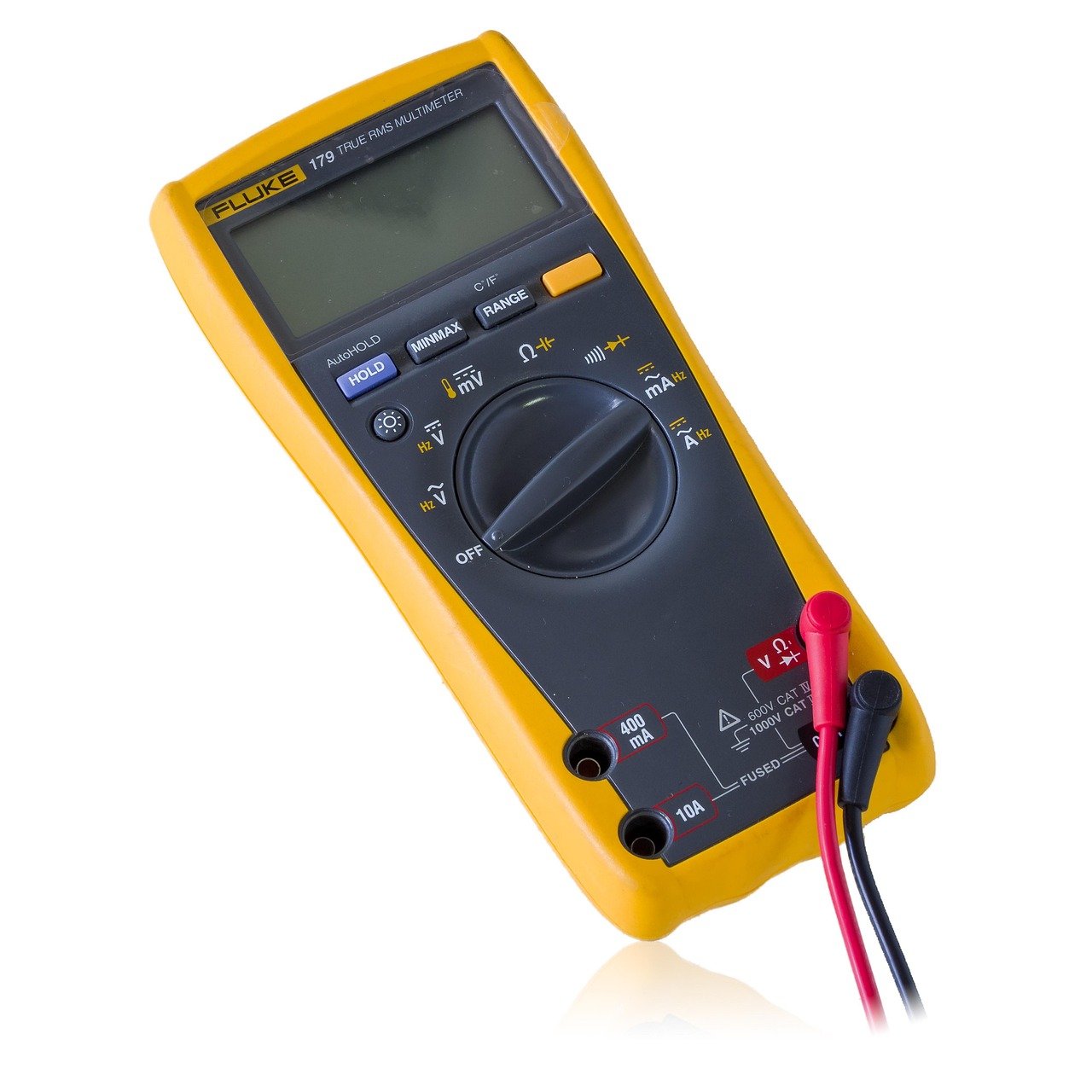
What if the most important difference between two digital multimeters isn’t the number of digits on the screen, but whether the meter survives the day you accidentally probe a live panel?
That question matters in every real multimeter comparison. Spec sheets emphasize counts and accuracy. Safety engineers focus on something else: whether the meter can handle the transient energy where you plan to use it. If the meter fails that test, display resolution will not help.
This comparison walks through the specs that matter, the ones that mislead, and how to match a meter to the work you actually do.
Start With Safety, Not Specs
Before comparing counts or accuracy, check the CAT rating. IEC 61010-1 defines measurement categories (CAT I through CAT IV) and pollution degrees for test equipment. A meter’s rating, such as CAT III 600 V, tells you the transient environment it is designed to survive.
Here’s why that matters in practice. Mains transients can far exceed nominal voltage, and a meter rated for the wrong category can arc or explode under fault conditions. A CAT II meter is fine for household appliance outlets. A CAT III meter belongs on distribution panels and fixed installations. CAT IV covers the service entrance, where surge energy is highest.
Common mistake: buying a high-count meter with a weak CAT rating because the display looked impressive. A 6000-count meter with a proper CAT III 600 V rating is a safer tool for panel work than a 20000-count meter rated only CAT II.
In the US, multimeters may fall under UL 61010-1, which is harmonized with the international standard. Edition dates vary, so confirm the current edition before relying on a compliance claim.
Counts and Accuracy Are Not the Same Thing
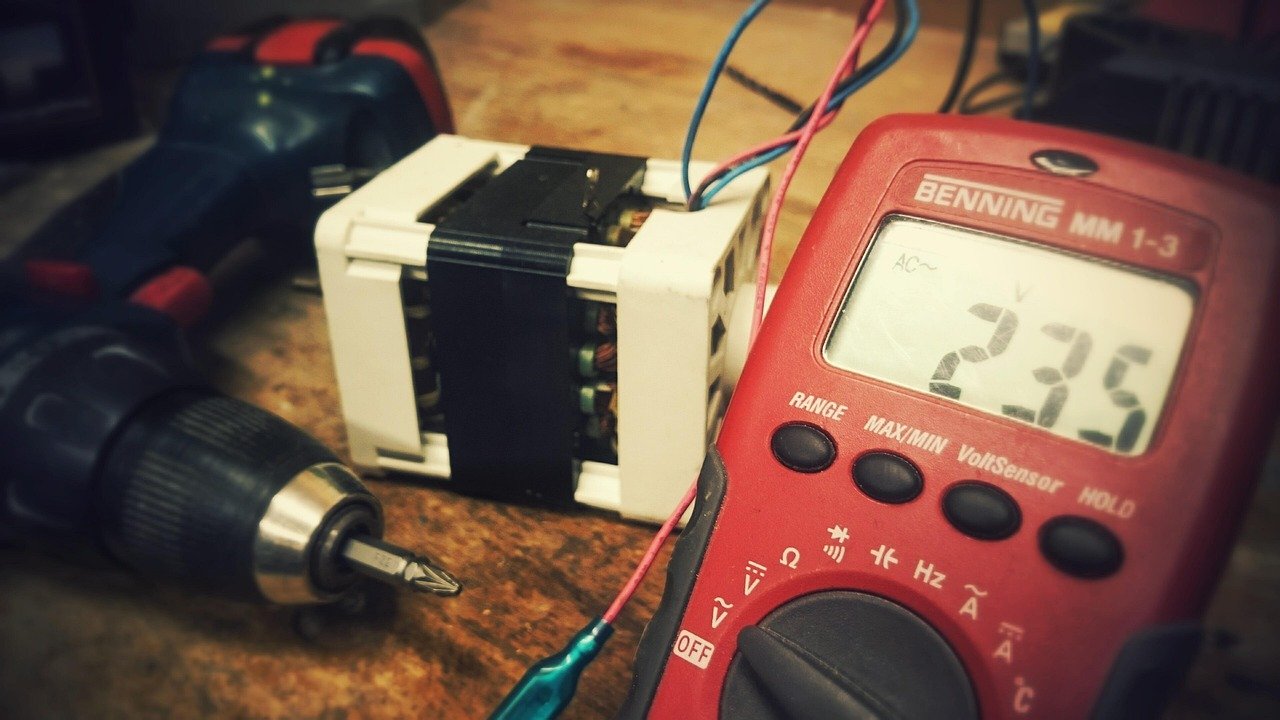
This is where most comparisons go sideways. Counts describe display resolution. A 2000-count meter shows about three and a half digits; a 6000-count meter shows more. Accuracy is specified separately, usually as ±(% of reading + digits).
A higher count does not by itself mean higher accuracy. A meter can display lots of digits and still be less accurate than a lower-count model with a tighter accuracy spec. Resolution is what you can see. Accuracy is how close that reading is to reality.
There’s a second trap. Manufacturer accuracy specs are often stated at 23 °C ±5 °C and degrade outside that range. Comparing headline accuracy figures across brands without checking temperature coefficients can mislead. If you work in a hot garage or a cold warehouse, the datasheet’s temperature coefficient line matters more than the big number on the box.
True RMS vs. Averaging: Pick Based on Your Signals
True RMS meters compute the root-mean-square of a waveform, so they read non-sinusoidal AC correctly. Averaging meters are calibrated for sine waves and can be off by a wide margin on distorted waveforms.
When does this bite you? Variable-frequency drives, dimmer circuits, switching power supplies, and anything with a chopped or noisy waveform. On clean mains sine waves, both types agree. On distorted signals, they can diverge sharply.
If your work is residential wiring and simple appliances, an averaging meter is often adequate. If you touch drives, HVAC inverters, or modern electronics, true RMS is worth the premium.
Resolution vs. Uncertainty: A Distinction Worth Understanding
Displayed digits are resolution. Uncertainty is accuracy. Measurement science guidance from standards bodies makes clear these are different concepts, and conflating them is one of the most common errors in meter comparisons.
Practically, this means a meter showing 4.987 volts isn’t claiming the true value is within a millivolt. It’s claiming the display can resolve to that digit, with a separate accuracy band around it. When a comparison table lists “accuracy” without a calibration context, treat it as marketing until proven otherwise.
To compare accuracy, you need traceable calibration. Without a calibration certificate or a known reference, two meters that disagree tell you only that they disagree, not which one is right.
Burden Voltage: The Spec Nobody Prints on the Box
In current-measurement mode, the meter inserts a shunt resistance into the circuit. That resistance creates a burden voltage that can disturb the circuit under test. Lower-burden designs and clamp accessories reduce this effect.
Why does it matter? If you’re measuring current in a low-voltage circuit, the meter’s own resistance can drop enough voltage to change the circuit’s behavior, or even make a marginal device fail to start. Clamp meters sidestep the problem entirely by measuring magnetic field instead of breaking the circuit.
Practical tip: for anything sensitive, measure current with a clamp or calculate it from a voltage drop across a known resistor. Save the inline current mode for circuits that can tolerate the insertion.
Building a Comparison Table That Means Something
Most comparison tables compare the wrong things. Here’s a framework that holds up across price tiers.
| Spec | Why It Matters | What to Watch For |
|---|---|---|
| CAT rating and voltage | Safety under transient faults | Match to your work environment, not your budget |
| Counts | Display resolution only | Not a proxy for accuracy |
| Accuracy spec | Closeness to true value | Check the temperature range and coefficient |
| True RMS | Correct AC on distorted waveforms | Essential for drives and electronics |
| Burden voltage | Disturbance during current measurement | Lower is better; consider a clamp |
| Calibration | Traceability of accuracy claims | Ask for a certificate |
| Input protection | Survival of mistakes | Fuses, PTCs, and ratings on the jacks |
A useful comparison also notes what a meter lacks. No backlight, no min/max capture, no data hold, no auto-ranging. Those features matter differently depending on whether you’re on a bench or up a ladder.
Feature Tiers: What You Get as the Price Climbs
At the entry tier, expect basic voltage, resistance, and continuity, modest counts, and a CAT II rating. These meters are fine for hobby work and low-energy circuits.
The mid tier brings true RMS, better input protection, CAT III ratings, and useful features like min/max and capacitance. This is where most working technicians land.
The upper tier adds tighter accuracy, better temperature stability, data logging, and ruggedized construction. Whether that’s worth it depends on whether you need the extra precision or just want the durability.
If you’re comparing tools across categories, the same logic applies to software: the comparison between ChatGPT Go, Plus, and Pro shows how tiered plans trade features for price in much the same way. And if your work involves evaluating competing tech claims, the AI model comparison of GPT 6.1 Sol, Sonnet 5.5, and Gemini 4 Argon is a useful reminder that headline numbers rarely tell the whole story.
Practical Buying Advice That Actually Works
Here’s what experienced techs do, and what beginners get wrong.
Match the meter to the worst environment you’ll enter. If there’s any chance you’ll open a panel, buy CAT III. Don’t buy for the average case.
Check the fuses and jacks. Good meters have high-energy fuses on current inputs and clearly rated jacks. Cheap meters sometimes skimp here, which is exactly where a mistake becomes dangerous.
Buy a meter you can calibrate. A meter with no calibration path is a meter you can’t trust for anything that matters. Traceable calibration is the difference between a reading and a measurement.
Don’t chase counts. A 6000-count meter with solid accuracy and a good CAT rating beats a 20000-count meter with a vague accuracy spec.
Test the leads. Leads fail more often than meters. Good silicone leads with proper ratings are worth the upgrade, and they’re often the weak link in a cheap kit.
Learn the burden voltage of your current mode. Every meter has one. Knowing yours prevents the classic mistake of blaming a circuit for a problem the meter created.
Where Multimeters Fit in a Bigger Toolkit
A multimeter is one instrument in a broader measurement picture. Digital twins and monitoring systems increasingly rely on sensor data that starts with the same fundamentals: voltage, current, resistance, and the confidence that your readings are traceable. The real-world examples of digital twins show how far that data can travel once it’s trustworthy.
Budget also shapes tool choices. The same way buyers weigh what digital marketing services actually cost against the value delivered, electricians weigh meter price against calibration cost, replacement fuses, and the risk of a wrong reading. A cheap meter that fails calibration annually can cost more over five years than a better one bought once.
Conclusion
A digital multimeters comparison comes down to three questions: Is it safe where you’ll use it? Is its accuracy trustworthy and traceable? Does it handle the signals you actually measure?
Counts are easy to compare and easy to overvalue. CAT ratings, accuracy at temperature, true RMS capability, and burden voltage are harder to compare and far more important. The best meter for most people is not the one with the biggest display. It’s the one rated for the environment, calibrated to a known reference, and suited to the waveforms on the bench.
Buy for the worst case. Calibrate on a schedule. And treat every spec sheet as a claim until you’ve checked the conditions behind it.
Frequently Asked Questions
What is a CAT rating on a multimeter?
A CAT rating comes from IEC 61010-1 and describes the transient environment a meter is designed to survive. CAT II covers household outlets, CAT III covers distribution panels and fixed installations, and CAT IV covers the service entrance. The rating is paired with a voltage, such as CAT III 600 V.
Does a higher count mean a more accurate multimeter?
No. Counts describe display resolution. Accuracy is specified separately as ±(% of reading + digits). A high-count meter can be less accurate than a lower-count model. Always compare the accuracy specification and its temperature range rather than the count alone.
Do I need a true RMS multimeter?
It depends on your signals. True RMS meters read non-sinusoidal AC correctly. Averaging meters are calibrated for sine waves and can be off by a wide margin on distorted waveforms. If you work with variable-frequency drives, dimmers, or switching supplies, true RMS is worth it.
What is burden voltage and why does it matter?
Burden voltage is the voltage drop caused by the meter’s shunt resistance when measuring current. It can disturb the circuit under test, especially in low-voltage circuits. Lower-burden designs and clamp accessories reduce the effect.
How often should a multimeter be calibrated?
It depends on use and requirements, but annual calibration is common for professional work. Accuracy comparison requires traceable calibration. Without it, two meters that disagree tell you only that they disagree, not which one is correct.
Is a cheap multimeter safe for panel work?
Only if it carries the correct CAT rating for that environment. A meter rated for the wrong category can arc or explode under fault conditions. For panel work, look for CAT III at the appropriate voltage, proper fusing on current inputs, and clearly rated jacks.
What about auto-ranging versus manual ranging? Auto-ranging is convenient and reduces the chance of misreading a range, but it can slow continuity checks and briefly overshoot on changing signals. Manual ranging is faster and more predictable in repetitive work. Many technicians prefer auto-ranging for general diagnostics and manual mode for continuity and in-circuit resistance checks.
Should I care about input impedance? Yes. Most meters present around 10 MΩ, which is fine for power circuits but can load high-impedance nodes. Some meters offer a low-impedance mode to bleed ghost voltages, while others provide a high-impedance mode for sensitive electronics. Know which mode you’re in before trusting a reading.
Are cheap meters ever the right choice? For low-energy hobby work, a budget meter with honest specs is fine. The line is drawn at safety: never use an uncertified meter on mains or panels, regardless of price.